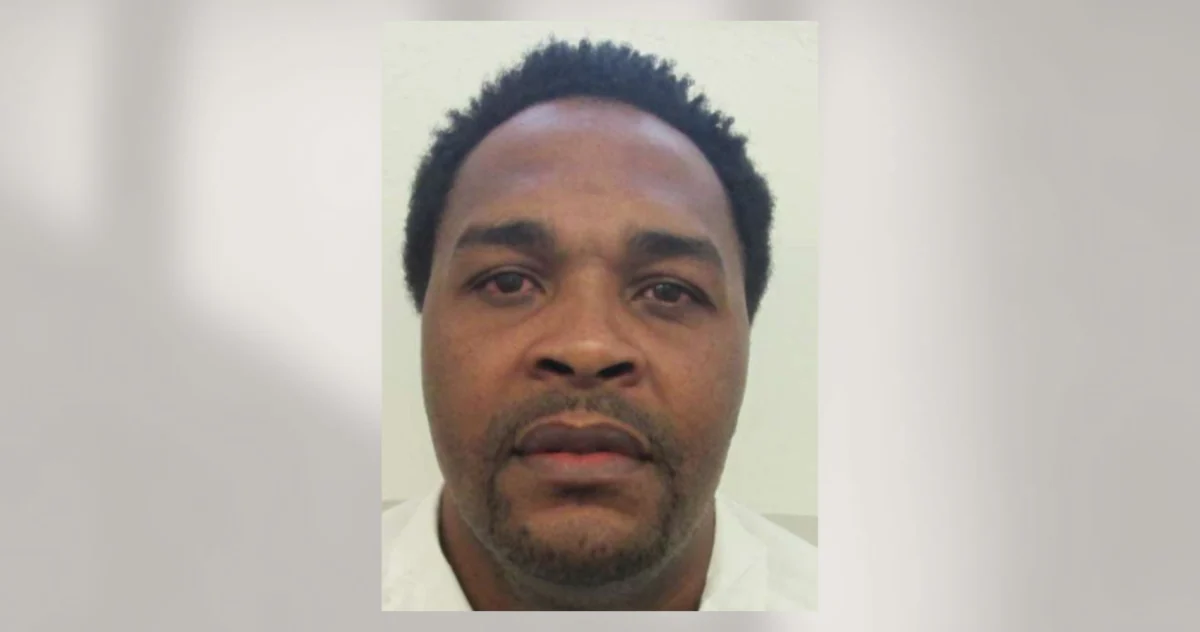
The U.S. Supreme Court on Thursday delivered a significant ruling in favor of Terry Pitchford, a Black man from Mississippi who has been on death row for nearly two decades. The Court’s 5-4 decision vacated Pitchford’s conviction and death sentence, affirming that he was denied a fundamental opportunity to challenge the prosecution’s racially motivated jury strikes, a violation of the landmark Batson v. Kentucky precedent. This ruling casts a renewed spotlight on systemic racial discrimination within the American justice system, particularly concerning jury selection practices, and reinforces the imperative for trial courts to rigorously uphold constitutional safeguards against such bias.
The Supreme Court’s Scrutiny of Procedural Fairness
Justice Brett Kavanaugh penned the majority opinion, which emphasized a critical procedural breakdown in Pitchford’s 2006 trial in Grenada County, Mississippi. The Court found that the trial court abruptly halted the Batson inquiry at its second step, thereby preventing defense counsel from presenting arguments that the prosecutor’s stated race-neutral reasons for striking Black prospective jurors were merely pretexts for discrimination. This third and final step of the Batson framework is crucial for exposing and remedying racially motivated jury selection. "In this case," Justice Kavanaugh wrote, "whether due to confusion, oversight, an overly hurried jury selection process, or some other cause, things broke down, and the ordinary trial-court procedure for resolving Batson claims at step three never occurred—notwithstanding the repeated efforts of Pitchford’s counsel to pursue and preserve the Batson objection." The decision reversed the U.S. Court of Appeals for the Fifth Circuit, which had previously overturned a federal district court’s grant of habeas relief to Pitchford, and remanded the case for a new trial.
The Case of Terry Pitchford: A Detailed Chronology
The journey that led Terry Pitchford, now 40, to the nation’s highest court began tragically in 2004. At just 18 years old, Pitchford, alongside another Black teenager, Eric Bullins, then 16, attempted to rob a grocery store near Grenada, Mississippi. During the robbery, the white store owner was fatally shot three times by Eric Bullins, while Pitchford fired into the floor.
The legal paths for the two teenagers diverged significantly. Due to his age, Eric Bullins was not eligible for the death penalty. He subsequently pleaded guilty to manslaughter and received a 20-year prison sentence. Terry Pitchford, however, was charged as an accomplice with capital murder in Grenada County, a jurisdiction where approximately 40% of the population was Black at the time.
During jury selection for Pitchford’s trial, the process exhibited clear disparities. Of 40 Black residents who reported for jury service, five were excused for statutory cause. A substantial 30 Black prospective jurors were then excused for cause, primarily due to their expressed views on the death penalty, a common occurrence in capital cases that can disproportionately affect minority representation. This left only five Black individuals in the remaining pool of prospective jurors.
It was at this juncture that the prosecution, led by District Attorney Doug Evans, used its peremptory strikes to remove four of these five remaining Black prospective jurors, leaving only one Black person to serve on Terry Pitchford’s jury. Defense counsel immediately raised a Batson objection, arguing that the strikes were racially motivated. The trial court acknowledged a prima facie case of discrimination (Step 1) and required the prosecutor to offer race-neutral explanations for the strikes (Step 2). However, the critical failure occurred when the trial court concluded its analysis there, denying the Batson challenge without allowing the defense to demonstrate that the prosecutor’s "race-neutral" reasons were merely a pretext for racial discrimination (Step 3).
The almost entirely white jury found Mr. Pitchford guilty on February 8, 2006, and sentenced him to death the very next day.
Appellate Journey and Federal Intervention:
Pitchford’s appeals through the Mississippi state courts proved unsuccessful. The Mississippi Supreme Court, in rejecting his Batson claim, stated that his lawyers had failed to rebut the prosecutor’s stated reasons. This interpretation overlooked the trial court’s explicit action of preventing such rebuttal.
The case then moved into the federal habeas corpus system. In 2023, a federal district court recognized the procedural error, granting Pitchford federal habeas relief. The court clarified that the record demonstrably showed defense counsel attempted to argue pretext but was "cut off" by the trial court, effectively denying them the opportunity to complete the Batson challenge. Because the trial court had "full-stop ended its Batson analysis" at Step 2, never proceeding to Step 3, the federal court vacated Pitchford’s conviction and death sentence, remanding for a new trial.
However, the U.S. Court of Appeals for the Fifth Circuit reversed this decision, prompting Pitchford to seek review from the Supreme Court, which ultimately sided with the district court’s findings.
Understanding Batson v. Kentucky and its Critical Steps
The Supreme Court’s decision hinges on the principles established in Batson v. Kentucky (1986), a landmark ruling that prohibits prosecutors from using peremptory challenges to exclude potential jurors solely on account of their race. This ruling was a vital step in addressing historical injustices in jury selection, where all-white juries were often empaneled to try Black defendants, particularly in the Jim Crow South.
Batson established a three-step process for evaluating claims of racial discrimination in jury selection:
- Step One: Prima Facie Case. The defendant must first show that they are a member of a cognizable racial group and that the prosecutor has used peremptory challenges to remove members of the defendant’s race from the jury panel. The circumstances surrounding the strikes must raise an inference that the prosecutor used the strikes to exclude jurors on account of their race.
- Step Two: Race-Neutral Explanation. If the defendant makes a prima facie showing, the burden shifts to the prosecutor to articulate a race-neutral reason for the strike. This reason does not need to be persuasive or even plausible, only non-discriminatory on its face.
- Step Three: Pretext Determination. The trial court must then determine whether the defendant has proven purposeful racial discrimination. This is where the persuasiveness of the prosecutor’s explanation comes under scrutiny. The defense counsel must be given the opportunity to argue that the asserted race-neutral reasons were not the actual reasons for the strike—i.e., that they were pretextual. The court must assess the credibility of the prosecutor’s explanation in light of all the circumstances, including any pattern of strikes against minority jurors, the prosecutor’s questions during voir dire, and even the demeanor of the prosecutor.
The Supreme Court’s ruling in Pitchford’s case makes clear that skipping Step Three is a fundamental procedural error that undermines the entire Batson framework and denies a defendant their constitutional right to a jury selected free from racial bias.
A Prosecutor’s Troubling Record: The Shadow of Doug Evans
The significance of the Pitchford decision is amplified by the involvement of District Attorney Doug Evans. This marks the second time the U.S. Supreme Court has overturned a capital conviction based on a Batson claim against Evans.
The first instance occurred in 2019, with the highly publicized case of Curtis Flowers. Flowers, a Black man, was tried an astonishing six times for the same 1996 quadruple murder in Winona, Mississippi. Across these six trials, Evans struck 41 of the 42 Black prospective jurors he could have struck. The numbers were staggering, revealing a clear pattern. In Flowers’ sixth trial, Evans removed five of the six Black prospective jurors, resulting in a jury composed of 11 white individuals and one Black individual, which ultimately convicted Flowers and sentenced him to death.
In the 7-2 Flowers decision, Justice Kavanaugh, again writing for the majority, powerfully stated: "The numbers speak loudly. The State’s relentless, determined effort to rid the jury of Black individuals strongly suggests that the State wanted to try Flowers before a jury with as few Black jurors as possible, and ideally before an all-white jury." He further admonished the Mississippi Supreme Court for failing to consider Evans’s extensive record of racially biased jury selection in that case, writing, "We cannot ignore that history. We cannot take that history out of the case."
The federal district court in Pitchford’s case directly referenced this "troubling case history" by "the same district attorney in the same judicial district," asserting that it was well known when Pitchford’s case reached the Mississippi Supreme Court. The district court correctly identified that this pattern should have been examined by the state appellate court as part of the "totality of the circumstances" analysis required by Batson. The Supreme Court’s latest ruling effectively reinforces this view, sending a strong message that a prosecutor’s historical pattern of behavior cannot be ignored when evaluating claims of racial bias.
Broader Context: Racial Bias in Jury Selection and the Death Penalty
The Pitchford ruling resonates deeply within the ongoing national conversation about racial justice and systemic inequities in the criminal legal system. Studies consistently show that racial bias, both implicit and explicit, continues to plague jury selection. The use of peremptory challenges, while ostensibly allowing attorneys to shape a fair jury, has historically been a potent tool for excluding minority jurors, particularly Black jurors, from panels.
Data from organizations like the Equal Justice Initiative (EJI) and academic research reveal a disturbing pattern:
- Disproportionate Strikes: Black prospective jurors are often struck at significantly higher rates than white prospective jurors, even when they express similar views or backgrounds.
- Impact on Outcomes: Juries with fewer minority members are statistically more likely to convict minority defendants, and in capital cases, more likely to impose death sentences. A 2016 study by the American Civil Liberties Union (ACLU) found that in some Southern states, prosecutors were more than three times as likely to strike Black prospective jurors than white ones.
- Historical Legacy: The practice of excluding Black citizens from juries has deep roots in American history, dating back to the post-Reconstruction era and continuing through the Civil Rights movement, designed to maintain white supremacy and deny Black defendants fair trials. While Batson was intended to curb this, its enforcement has often been inconsistent, allowing subtle forms of discrimination to persist.
Mississippi, a state with a significant Black population and a history deeply intertwined with racial segregation and discrimination, provides a stark backdrop for cases like Pitchford’s and Flowers’. The state’s criminal justice system, like many others in the Deep South, faces intense scrutiny regarding racial disparities in arrests, sentencing, and the application of the death penalty. Black defendants in Mississippi are disproportionately represented on death row, and cases involving white victims and Black defendants often carry a higher risk of capital punishment.
Reactions and Legal Implications of the Ruling
While specific official statements from all parties are not yet widely available, the Supreme Court’s decision is likely to be met with varied reactions:
- Defense Attorneys and Civil Rights Advocates: Legal organizations dedicated to civil rights and indigent defense will undoubtedly hail the ruling as a critical victory for procedural justice and racial equity. They will emphasize that the decision reinforces the necessary rigor of Batson challenges and underscores the judiciary’s responsibility to prevent discrimination. The ruling will empower defense counsel to demand full Batson hearings and push for greater accountability for prosecutors.
- Prosecutors: The ruling serves as a strong reminder to prosecutors nationwide about the strict constitutional limits on peremptory strikes. While prosecutors aim to seat a jury that will fairly hear their case, they must do so within the bounds of anti-discrimination laws. The continued scrutiny of prosecutors like Doug Evans suggests that a pattern of problematic conduct will not be overlooked by higher courts.
- Legal Scholars: Legal experts will likely analyze the nuances of the 5-4 split, particularly the arguments raised by the dissenting justices. The decision reinforces the court’s commitment to ensuring the "totality of the circumstances" is considered in Batson challenges, especially when a prosecutor has a documented history of discriminatory practices.
The immediate implication of the ruling is that Terry Pitchford will receive a new trial. This does not mean he is exonerated or that his guilt in the underlying crime is disputed by the Supreme Court. Rather, it means his conviction and death sentence were obtained in a manner that violated his constitutional rights to a fair trial, specifically the right to a jury selected free from racial discrimination. The state of Mississippi will now have to decide whether to retry Pitchford, offer a plea agreement, or potentially dismiss the charges, given the passage of two decades since the original offense.
The Path Forward for Terry Pitchford
Terry Pitchford’s case now returns to Mississippi, where the legal process will restart at the trial level. The state will face the challenge of retrying a case that is twenty years old, with all the inherent difficulties of memory, evidence, and witness availability. For Pitchford, this decision offers a renewed chance at a fair legal process, free from the racial bias that marred his initial conviction. It underscores the long, arduous fight for justice that many defendants, particularly those from marginalized communities, must endure within the American legal system.
Ultimately, the Supreme Court’s ruling in Pitchford is more than just a procedural victory; it is a powerful reaffirmation that the integrity of the justice system demands unwavering vigilance against racial discrimination in all its forms. It reminds trial courts of their solemn duty to serve as gatekeepers of constitutional rights, ensuring that every defendant, regardless of race, receives a trial by a jury truly representative of the community and selected without prejudice.