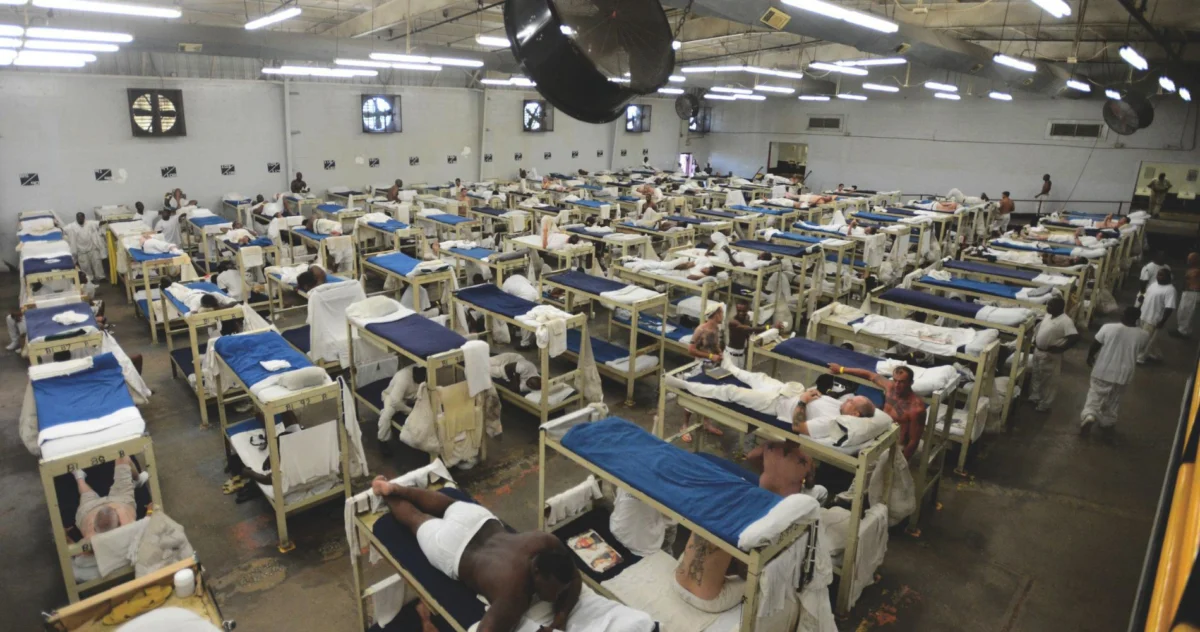
The United States continues to hold the unenviable distinction of incarcerating more people than any other country, and maintains the highest incarceration rate among independent democracies globally, according to the latest comprehensive data from the Prison Policy Initiative (PPI). This pervasive system of detention now confines nearly two million individuals across a vast network of facilities, incurring an annual cost that has escalated to an astonishing $445 billion, a figure five times greater than expenditures just a decade ago.
The Scale of Incarceration: A Detailed Overview
The 2026 report from the Prison Policy Initiative presents a stark snapshot of the American carceral landscape, identifying 1,973,000 people locked up nationwide. This immense population is distributed across an intricate web of 1,566 state prisons, 98 federal prisons, and 3,116 local jails, which serve as the primary entry points into the system and often house individuals awaiting trial or serving shorter sentences. Beyond these traditional facilities, the incarcerated population also includes 1,277 juvenile correctional facilities for youth, 220 immigration detention facilities operated by or on behalf of Immigration and Customs Enforcement (ICE), and 77 Indian country jails, which operate under tribal jurisdiction. The count further extends to military prisons, civil commitment centers for individuals deemed a danger to themselves or others, state psychiatric hospitals that often hold individuals involved in the criminal justice system, and prisons situated in U.S. territories. This diverse institutional architecture underscores the broad reach and multifaceted nature of America’s carceral state, encompassing various legal statuses and administrative purposes.
The financial burden associated with this expansive system is monumental. The PPI report calculates the annual cost to incarcerate nearly two million people in America at a minimum of $445 billion. This figure represents a dramatic increase from the approximately $87 billion spent on jails and prisons in 2015, indicating a significant escalation in public expenditure on detention. The cost encompasses a wide range of outlays, including facility maintenance, staff salaries, inmate healthcare, food, transportation, and administrative overhead. This colossal sum represents a significant allocation of public funds that could otherwise be directed towards education, infrastructure, public health, or preventative crime reduction programs, prompting critical questions about fiscal priorities and the efficacy of current approaches to public safety.
Global Comparison and Exceptionalism
In a global context, the United States’ incarceration statistics are truly exceptional. The U.S. leads the world in the sheer number of people incarcerated, with its nearly two million prisoners far outstripping other populous nations. China follows with an estimated 1.69 million prisoners, though the actual number is likely higher given unknown numbers held in pre-trial detention and other forms of detention. Brazil ranks third with 909,067 prisoners, followed by India with 511,542, and Turkey with 420,798, according to the World Prison Brief from the Institute for Crime & Justice Policy Research. This numerical dominance highlights a fundamental difference in how the U.S. approaches crime and punishment compared to most other countries.
Even more striking is the U.S. incarceration rate, which stands at 580 per 100,000 residents. Among independent democracies, this rate is unparalleled. Globally, only a handful of nations—El Salvador, Cuba, and Turkmenistan—report higher incarceration rates per capita. El Salvador, for instance, has recently seen a dramatic surge in its incarceration rate due to aggressive crackdowns on gang violence, placing it at the top of the global list. However, the U.S. rate remains profoundly high for a nation that prides itself on liberty and democratic values.
The State-Level Anomaly: A Nation of High-Incarceration Jurisdictions
The granularity of the PPI’s analysis further reveals that the problem is not merely a national average masking lower regional rates. Individual U.S. states, when analyzed as independent nations, often exhibit incarceration rates that surpass those of most countries worldwide. A 2024 PPI report found that the incarceration rates of 24 U.S. states, alongside three other nations (El Salvador, Cuba, and Rwanda), eclipse the U.S. nationwide rate. This finding underscores the decentralized nature of mass incarceration, driven by distinct state-level policies, sentencing laws, and policing practices.
Alarmingly, the nine highest incarceration rates in the world, following El Salvador, are found within U.S. states, with all but one located in the American South. States like Louisiana, Mississippi, and Oklahoma consistently rank among the highest, reflecting historical legacies, stricter sentencing guidelines, and differing approaches to criminal justice. Even Massachusetts, which boasts the lowest incarceration rate among U.S. states, would still rank 30th globally if considered an independent country. This places Massachusetts’ rate higher than that of Iran, Colombia, and all the founding nations of NATO, illustrating the pervasive and extreme nature of incarceration across the entire American landscape, from states with the highest rates to those with the lowest. This state-level data powerfully refutes any notion that the national average is skewed by a few outliers; instead, it demonstrates that virtually every corner of the U.S. participates in a carceral system that is globally anomalous.
Historical Context: The Evolution of Mass Incarceration
The current state of mass incarceration in the U.S. is not an accidental phenomenon but the culmination of several decades of policy shifts and societal changes. Prior to the 1970s, the U.S. incarceration rate was relatively stable and comparable to other developed nations. However, beginning in the late 1970s and accelerating through the 1980s and 1990s, a "tough on crime" political rhetoric gained traction. This era saw the implementation of punitive policies such as mandatory minimum sentencing laws, which stripped judges of discretion and required fixed sentences for certain offenses, often related to drug crimes. "Three-strikes" laws, which mandated lengthy or life sentences for repeat offenders, and "truth-in-sentencing" laws, which required offenders to serve a significant portion of their sentences, further contributed to the burgeoning prison population.
The "War on Drugs," initiated in the 1970s and intensified in subsequent decades, played a particularly significant role. It led to increased arrests and convictions for drug-related offenses, disproportionately affecting minority communities. Legislation like the 1994 Violent Crime Control and Law Enforcement Act provided funding for more police officers and prison construction, further cementing the expansion of the carceral system. The rise of private prisons, which profit from the number of incarcerated individuals, also introduced an economic incentive for higher incarceration rates. While some reforms, such as the federal First Step Act of 2018 and various state-level initiatives, have aimed to reduce sentences for non-violent drug offenses and promote rehabilitation, their impact has been insufficient to significantly alter the overall trajectory of mass incarceration. The entrenched nature of these policies and the vast infrastructure built around them present significant challenges to systemic reform.
Profound Societal and Economic Implications
The human cost of mass incarceration extends far beyond the individuals confined within its walls, rippling through families and communities nationwide. The Equal Justice Initiative (EJI) has found that half of all Americans have had an immediate family member incarcerated. This pervasive reach highlights how deeply the carceral system has embedded itself into the fabric of American society. The Sentencing Project reports that on any given day, 2.7 million children in America have a parent in prison or jail, and more than 5.2 million children have experienced parental incarceration during their childhoods.
The impact on these families is devastating. Parental incarceration often leads to significant economic hardship, emotional trauma, and academic difficulties for children, perpetuating cycles of poverty and disadvantage. It destabilizes family units, strains social support networks, and contributes to intergenerational trauma. Communities, particularly those disproportionately affected by high incarceration rates, suffer from the loss of productive members, diminished civic participation, and eroded trust in the justice system. The disproportionate incarceration of Black and Hispanic individuals, driven by systemic biases in policing, sentencing, and judicial processes, exacerbates existing racial inequalities and contributes to ongoing social injustice.
Economically, the $445 billion annual expenditure on incarceration represents not only a direct cost but also a massive opportunity cost. These funds could be invested in early childhood education, mental health services, affordable housing, job training programs, and community-based violence prevention initiatives—all of which have proven to be more effective at reducing crime and fostering stable communities in the long term. Beyond direct costs, there are immense indirect economic consequences: lost wages and tax revenues from incarcerated individuals, increased reliance on public assistance for their families, and the long-term economic disadvantages faced by formerly incarcerated individuals seeking employment. The U.S. economy loses billions of dollars annually due to the exclusion of millions of people from the workforce and the strain placed on social services.
Calls for Reform and Future Outlook
Advocacy groups like the Prison Policy Initiative, the Equal Justice Initiative, and The Sentencing Project consistently highlight these statistics to underscore the urgency of comprehensive criminal justice reform. They contend that the current system is not only financially unsustainable but also morally indefensible, failing to achieve its stated goals of public safety and rehabilitation while causing immense social harm. Experts from these organizations emphasize that reducing incarceration rates requires a multi-pronged approach, including:
- Reforming sentencing laws: Eliminating mandatory minimums and three-strikes laws, and promoting rehabilitation-focused sentencing.
- Addressing racial disparities: Confronting systemic biases in policing, prosecution, and sentencing that disproportionately affect communities of color.
- Investing in alternatives to incarceration: Expanding diversion programs, community-based treatment for mental health and substance abuse, and restorative justice initiatives.
- Reforming bail practices: Moving away from cash bail systems that penalize poverty and contribute to overcrowded jails.
- Improving reentry services: Providing robust support for individuals transitioning from incarceration back into society to reduce recidivism.
- Rethinking the "War on Drugs": Shifting from punitive measures to public health approaches for drug offenses.
Policymakers at both federal and state levels grapple with these challenges, facing pressure from various stakeholders. While bipartisan efforts have emerged in some areas, the political will for truly transformative change often encounters resistance due to deeply ingrained societal attitudes towards crime and punishment. The ongoing debate centers on finding a balance between ensuring public safety and upholding fundamental principles of justice, fairness, and human dignity. The persistent high incarceration rates and the escalating costs demand a critical reevaluation of America’s approach to criminal justice, prompting an urgent call for evidence-based reforms that prioritize prevention, rehabilitation, and community well-being over mere punishment. The journey toward a more equitable and effective justice system remains a defining challenge for the nation.