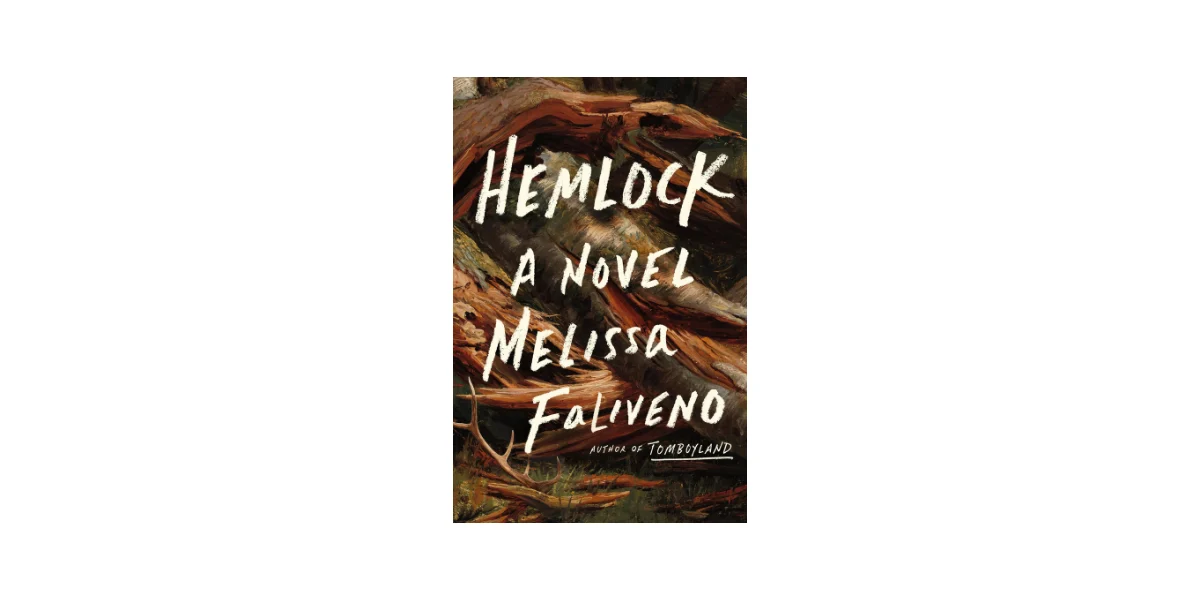
The publication of Melissa Faliveno’s debut novel, Hemlock, marks a significant expansion in the contemporary landscape of Midwestern Gothic literature. Released by Little, Brown and Company, the novel arrives as a highly anticipated follow-up to Faliveno’s critically acclaimed essay collection, Tomboyland. While her previous work established her as a keen observer of gender, geography, and class through a non-fiction lens, Hemlock utilizes the machinery of speculative fiction and psychological horror to explore the visceral realities of intergenerational trauma, addiction, and queer identity in the American Northwoods. The narrative follows a protagonist named Sam, a butch woman who returns to her childhood home in rural Wisconsin to confront the legacy of her missing mother and the physical decay of her father’s cabin.
The Narrative Framework and Chronology of Return
The story is anchored in the rugged, densely forested landscape of northern Wisconsin, a region characterized by its isolation and its distinct cultural identity. The chronology begins with Sam’s return to the family cabin, a structure built by her father that has since fallen into disrepair. Her objective is ostensibly practical: to renovate the property so it can be sold, allowing her and her father to sever their final ties to a place defined by tragedy.
Years prior, the woods surrounding the cabin "swallowed" Sam’s mother, who disappeared under circumstances that remain unresolved. This disappearance serves as the central vacuum of the novel, a mystery that has dictated the trajectory of Sam’s life. As she works on the cabin, the linear progression of the renovation is frequently interrupted by the psychological "haunting" of the environment. The pacing of the novel is deliberately calibrated to mimic the onset of cabin fever, transitioning from a grounded domestic drama into a steep, disorienting descent into psychological horror.
Genre Classification and Literary Comparisons
In its promotional materials, the publisher has categorized Hemlock as a "butch Black Swan," a comparison that highlights the novel’s focus on the physical and psychological toll of transformation and obsession. However, literary analysts and early reviewers have suggested that the work shares a more profound DNA with Stephen King’s The Shining. Like King’s seminal work, Hemlock explores the intersection of a claustrophobic setting, the legacy of paternal (or maternal) failure, and the compounding effects of substance abuse.
The novel occupies a unique niche within "Rural Noir" and "Queer Horror," genres that have seen a surge in popularity over the last decade. By centering a butch protagonist in a space traditionally associated with heteronormative "frontier" masculinity, Faliveno subverts established tropes of the Wisconsin wilderness. The "monster" of the story is multivalent—alternating between a literal presence in the woods, a metaphorical representation of grief, and the internal struggle of the protagonist herself.
The Role of the Wisconsin Northwoods
The setting of Hemlock is more than a backdrop; it is a primary antagonist and a source of the novel’s speculative elements. The Wisconsin Northwoods is an area historically defined by its logging industry and its harsh winters. In Faliveno’s rendering, the region is portrayed with a "lush and wondrous" descriptive intensity that emphasizes both its beauty and its inherent danger.
The title itself, Hemlock, refers to the coniferous trees common to the region, but it also carries the historical weight of the poisonous plant associated with the death of Socrates. This dual meaning—beauty and lethality—permeates the prose. The environmental descriptions serve to ground the more surreal aspects of the story, such as Sam’s interactions with a talking doe. This element of magical realism is handled with a technical precision that prevents it from veering into the whimsical, instead serving as a manifestation of Sam’s deepening isolation and her blurring perception of reality.
Analysis of Addiction and Intergenerational Trauma
One of the most significant thematic pillars of Hemlock is its unflinching portrayal of alcoholism. This is not merely a character trait but a structural element of the narrative. According to public health data from the University of Wisconsin Population Health Institute, rural counties in Wisconsin often face higher-than-average rates of alcohol-related hospitalizations and deaths, a reality that Faliveno reflects in Sam’s daily existence.
In the novel, Sam’s addiction is presented as an "intergenerational curse." The narrative documents the "magic" of addiction—the way whiskey refills appear as if by conjuration and six-packs manifest without memory of purchase. These occurrences are framed within the context of the "fugue state," a psychological condition often exacerbated by trauma and substance abuse. Sam’s frequent blackouts, where she finds herself naked and disoriented in the wilderness, serve as the bridge between the grounded reality of a small-town alcoholic and the speculative horror of a woman becoming "feral."
The novel’s treatment of these themes is notable for its lack of moralizing. Faliveno does not demonize Sam or her mother; instead, she explores the "humanity" within the monstrous. This approach aligns with modern psychological theories on trauma, which suggest that self-destructive behaviors are often maladaptive survival mechanisms passed down through family systems.
Queer Identity and the "Queering" of the Monster Narrative
As a work of queer literature, Hemlock contributes to the growing body of "Midwestern Queer" fiction. The protagonist’s butch identity is central to how she interacts with the world and the wilderness. The "haunting" she experiences is also tied to desire—specifically her attraction to a local woman who represents both a connection to her home and a catalyst for further danger.
The novel "queers" the traditional monster narrative by diverging from the standard arc of hunter versus hunted. Sam is positioned as both the hunter and the prey, a duality that reflects the complexity of queer existence in spaces that are often hostile or indifferent to non-conforming identities. By reclaiming the "monstrous" as a site of power and transformation, Faliveno places Hemlock in conversation with contemporary media like the television series Yellowjackets, which similarly explores the "feral" nature of women in isolation.
Technical Execution and Critical Reception
From a technical standpoint, Faliveno’s transition from non-fiction to fiction is marked by a "visceral and cerebral" prose style. The pacing is described as "tightly executed," lulling the reader into a state of unease that mirrors the protagonist’s psychological state. The use of flashbacks, particularly those involving Sam’s mother, provides the necessary context to understand the present-day stakes while maintaining the central mystery of the disappearance.
Critical reception has highlighted the "immersive" quality of the book. Industry analysts have noted that the novel’s ability to balance "uncertainty and understanding" is a hallmark of high-level literary fiction. The inclusion of mythological elements and the talking deer has been praised for its "care and intention," suggesting that Faliveno has successfully woven folklore into a modern psychological framework.
Broader Impact and Industry Implications
The release of Hemlock comes at a time when the publishing industry is increasingly interested in "place-based" narratives that challenge the coastal bias of American literature. Faliveno’s work joins a cadre of Midwestern writers—such as Bonnie Jo Campbell and Nickolas Butler—who are redefining the "Rust Belt" and "Great Lakes" narratives.
Furthermore, the novel’s success in blending genre elements (horror, speculative, and literary fiction) reflects a broader trend in the market where "high-concept" literary novels are gaining significant traction. By addressing heavy themes like grief and addiction through the lens of a "haunting," Faliveno makes these topics accessible to a wider audience while maintaining the intellectual rigor expected of her work.
Conclusion
Melissa Faliveno’s Hemlock is a multifaceted exploration of the ghosts that inhabit both the physical landscape and the human psyche. Through its meticulous rendering of the Wisconsin Northwoods and its sophisticated portrayal of queer identity and addiction, the novel establishes itself as a significant contribution to contemporary American letters. It serves as a reminder that the most terrifying hauntings are often those we carry within us, rooted in the soil of our upbringing and the blood of our ancestors. As Sam navigates the space between the hunter and the hunted, Hemlock offers a profound meditation on what it means to survive the wilderness of one’s own history.