May 29, 2026 | By Lindsay Kagalis, Social Media Manager
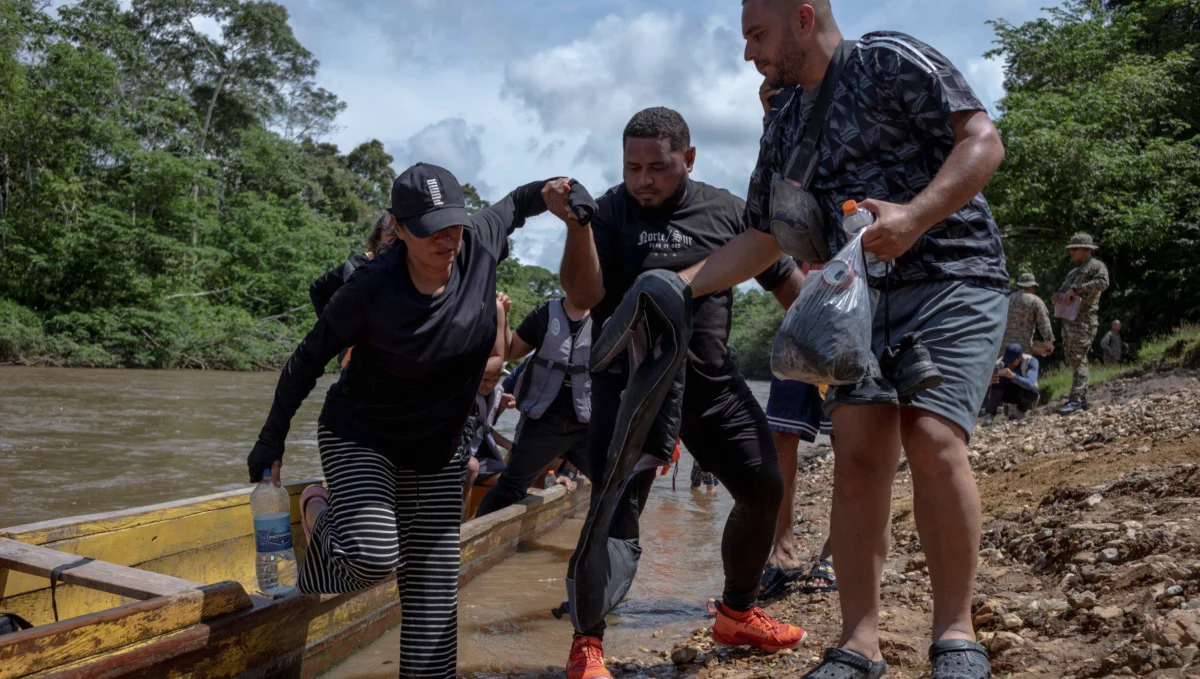
Thousands of individuals who once embarked on perilous journeys through the Darien Gap, a dense jungle region connecting Colombia and Panama, in pursuit of safety and refuge in the United States, are now finding themselves forced into a devastating "reverse migration." This unprecedented shift, driven by increasingly restrictive U.S. immigration policies, has created a humanitarian crisis where the path to safety has become a retreat into uncertainty and further danger. Between February and August of 2025 alone, an estimated 14,000 people, predominantly from Venezuela, Ecuador, and other Central and South American nations, have turned back from their northward trajectory, compelled to travel south once more. This dramatic reversal underscores the profound impact of evolving U.S. asylum laws and border enforcement strategies on vulnerable populations attempting to flee violence, persecution, and economic instability.
The Darien Gap: A Gateway to Peril and Now, a Retreat
The Darien Gap has long been recognized as one of the world’s most treacherous migration routes. Characterized by dense rainforests, rugged terrain, and the presence of armed criminal groups, it presents formidable physical and security challenges. Migrants traversing this path typically face risks of robbery, extortion, sexual violence, disease, and even death. Historically, the Darien Gap served as a critical, albeit dangerous, gateway for those seeking to reach the U.S.-Mexico border and claim asylum. However, recent policy shifts, including the closure of the U.S.-Mexico border to many asylum seekers and the implementation of expedited removal processes, have drastically curtailed legal pathways, forcing many to abandon their northward aspirations.
The U.S. government’s enhanced border security measures and policy changes in late 2024 and early 2025, coupled with the significant cuts to humanitarian assistance in early 2025, have created a cascade of unintended consequences. These policy decisions, aimed at controlling irregular migration, have inadvertently pushed individuals further into precarious situations, transforming the Darien Gap from a point of departure for a hopeful future into a point of return for those facing insurmountable barriers. The closure of the U.S.-Mexico border to asylum seekers, in particular, has rendered the traditional route to the United States virtually impassable for many, leaving them with few viable options.
A Shift in Migration Dynamics: The Unseen Toll on Solo Travelers
While the plight of families and vulnerable groups often garners attention, a significant portion of the migrant population traversing the Americas consists of solo male travelers. These individuals, comprising roughly half of those on the move through the region, often face unique and profound risks, including heightened vulnerability to exploitation and an intensified sense of isolation. Their journeys are frequently characterized by prolonged periods of displacement, sometimes spanning years, fueled by the enduring hope of creating a better future for themselves and their loved ones.
Men like Salem and Nerli exemplify the resilience and enduring hope of these solo travelers. Salem, who has been on the move for nearly six years, found himself in Mexico at the close of 2025, only to be forced to retrace his steps southward. His journey has largely been undertaken alone, marked by a deep-seated self-reliance. "Ever since I left, I’ve never asked anyone for help; I’ve always done what I could to make it on my own," Salem shared, highlighting the stoic determination that defines many in his situation.
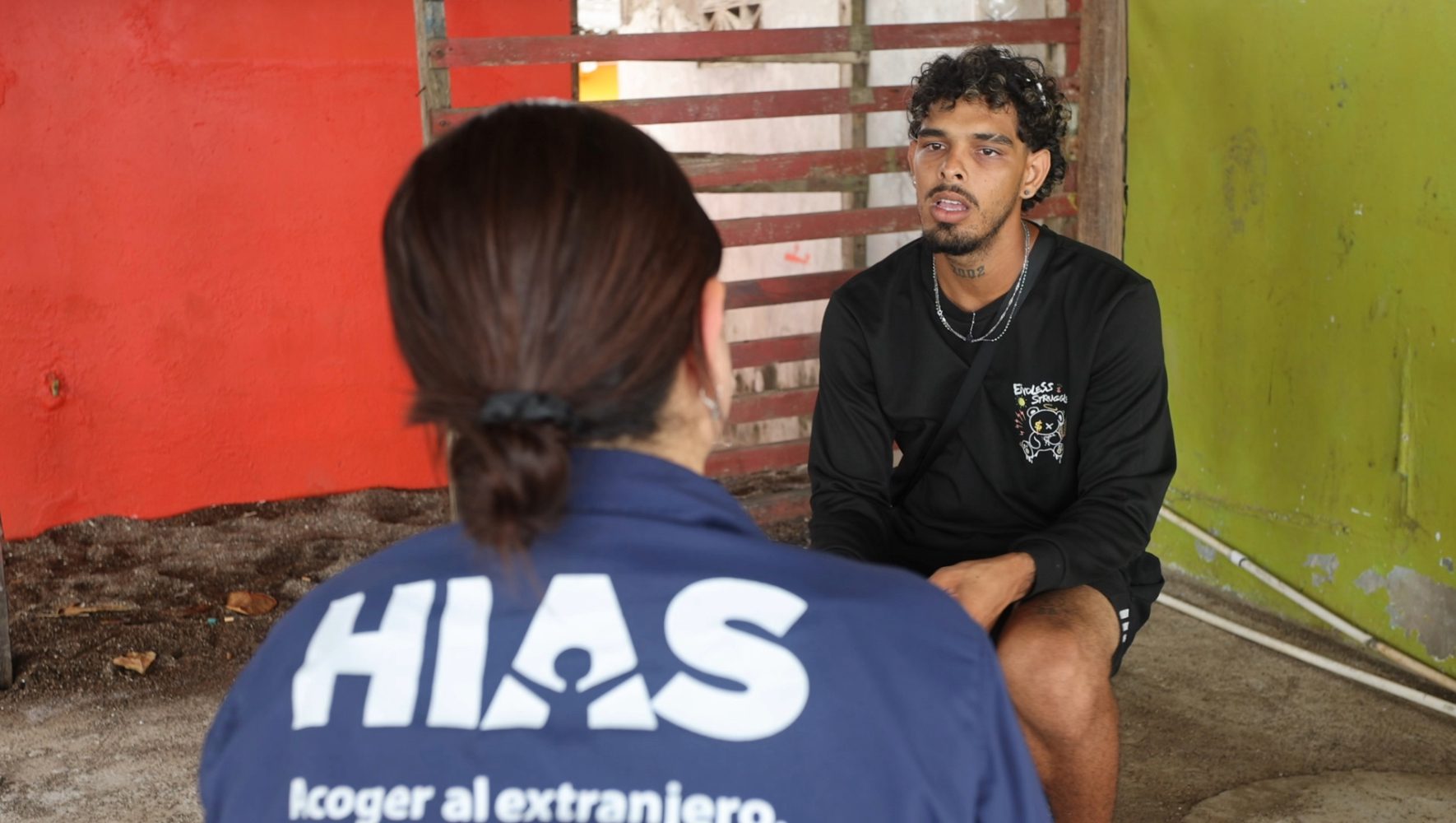
His solitary journey took an unexpected turn when he met his now-wife. Together, they were traveling south towards Colombia, where relatives offered support in preparing for the impending birth of their child. However, upon reaching Panama, Salem’s wife experienced a medical emergency related to her pregnancy. The couple’s desperate search for assistance led them to HIAS Panama’s operations in Miramar.
HIAS Panama: A Lifeline Amidst Shifting Policies
HIAS, an international organization dedicated to providing humanitarian aid to refugees and displaced persons, has been actively engaged in providing critical support to migrants in Panama. The HIAS Panama team in Miramar responded swiftly to Salem and his wife’s urgent needs. They facilitated the calling of an ambulance, provided essential baby supplies and hygiene kits, and arranged a safe space for Salem to rest while his wife received necessary medical care. This intervention underscores the vital role of humanitarian organizations in filling the gaps left by reduced governmental support and the complex challenges of navigating an increasingly restrictive asylum landscape.
The cuts to humanitarian assistance in early 2025, enacted by the U.S. government, have had far-reaching consequences, dismantling programs that once offered food, water, medical care, education, and other essential support to displaced populations globally. The impact of these cuts has been particularly severe in regions where migrants are already vulnerable, exacerbating existing challenges and creating new humanitarian emergencies.
Despite these formidable obstacles, HIAS Panama’s dedicated team continues its work in key transit areas along the Darien Gap route. They offer a range of services, including protection services, mental health care, emergency assistance, and resource sharing, providing a crucial lifeline to those undertaking this arduous journey, whether moving north or south. Yazcari Murillo, HIAS Panama’s Protection Officer, emphasized the importance of human connection in their work: "Each person has a story – and often, it’s good to have that human connection in order to provide service in the best way possible." This personalized approach is essential in addressing the diverse and often traumatic experiences of the migrant community.
The Plight of Solo Male Travelers: Nerli’s Story
Nerli’s story further illuminates the multifaceted challenges faced by solo male migrants. Having been on the move for a decade, his primary motivation is the hope of reuniting with his son, whom he left behind as a toddler. During his recent journey south, Nerli found himself among a group of eight solo travelers accompanying several families. Upon arriving in Panama, faced with limited aid and transportation resources, Nerli and his fellow solo travelers voluntarily stepped aside to allow the families to proceed first.
For over five months, Nerli has been residing in Miramar, volunteering at a migrant shelter known as Casa Rosada (the Pink House). In exchange for his labor – maintaining the shelter’s organization and cleanliness – he receives free accommodation. However, his commitment extends beyond mere necessity. "I’m sort of contributing my own little grain of sand to the migrant community here in Miramar," Nerli shared, articulating a sense of solidarity and purpose derived from his contribution to the collective well-being of fellow migrants.
Broader Implications and the Future of Migration
The phenomenon of reverse migration through the Darien Gap is a stark indicator of the shifting geopolitical and policy landscapes impacting global displacement. It signals a critical juncture where the pursuit of safety and stability has become increasingly fraught with uncertainty and peril. For individuals like Salem and Nerli, the journey is no longer solely about reaching a predefined destination. As the pathways north become more restricted, and the complexities of migration patterns evolve across the Americas, people are forced to make impossible choices, navigating a terrain of instability in their persistent search for safety, dignity, and a semblance of normalcy.
The sustained commitment of organizations like HIAS, bolstered by partnerships such as the one with the Hilton Foundation, remains paramount. Their continued presence and support in Panama are essential for protecting and assisting vulnerable populations, particularly those compelled by changing U.S. immigration policies to embark on a reverse migration southward. The situation highlights the urgent need for comprehensive, humane, and adaptable solutions to address the root causes of displacement and to ensure that asylum remains a viable and accessible recourse for those fleeing persecution and violence. The current trajectory suggests that without a recalibration of policies and a strengthened commitment to international humanitarian principles, the humanitarian crisis at the borders of Central and South America will continue to deepen, with profound implications for regional stability and human rights.