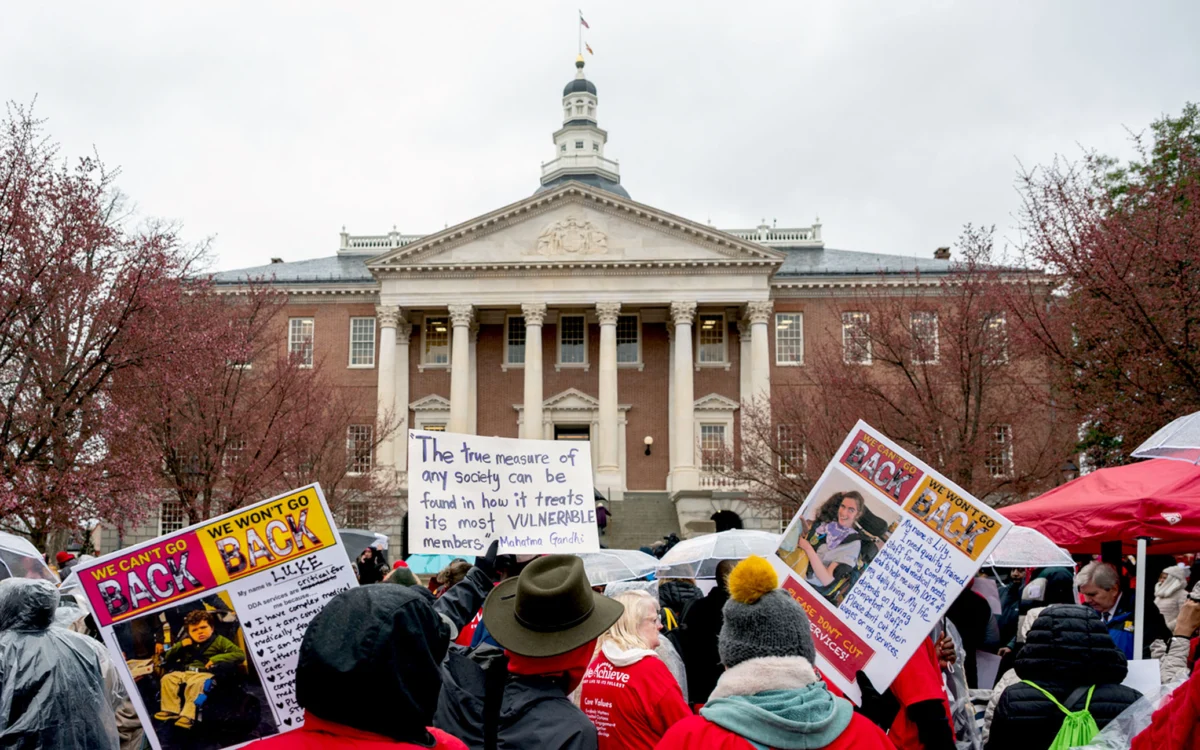
Disability advocates are sounding a grave alarm, warning that a confluence of federal spending cuts and intensified efforts to combat fraud within Medicaid programs are poised to dismantle crucial home and community-based services (HCBS) that enable millions of Americans with disabilities to live independently. These vital services, a cornerstone of modern disability policy, face an existential threat as states grapple with projected federal reductions and a heightened scrutiny that advocates fear will disproportionately impact vulnerable populations.
A Perfect Storm of Fiscal Pressure and Policy Shifts
The immediate catalyst for concern is the "One Big Beautiful Bill Act," a legislative measure passed by Congress last summer. While details of the act’s implementation are still unfolding, its stated aim is to enact significant reductions in federal Medicaid spending over the next decade. Projections suggest these cuts could amount to nearly $1 trillion, a figure that has sent shockwaves through the disability advocacy community. This broad fiscal retrenchment comes at a time when many states are already experiencing budgetary pressures, leading lawmakers in states like Idaho, Missouri, Maryland, Colorado, Utah, and Washington to consider their own proposals to trim funding for HCBS.
Simultaneously, the Trump administration has signaled a strong commitment to rooting out perceived fraud, waste, and abuse within federal benefit programs. President Donald Trump established a dedicated task force this month to spearhead these efforts. This initiative has already manifested in tangible actions, such as the Centers for Medicare and Medicaid Services (CMS) threatening to withhold $2 billion in Medicaid funds from Minnesota and initiating fraud investigations in several other states. While the objective of combating fraud is widely acknowledged as legitimate, disability advocates are deeply concerned about the potential collateral damage to essential services.
The Double-Edged Sword of Fraud Investigations
A key point of contention lies in CMS’s approach to investigating potential fraud within HCBS programs. Advocates report that the agency has, at times, insinuated that the growth in community-based services itself is a potential indicator of fraud. This perspective is deeply troubling to those who have championed the shift from institutional care to community living for decades.
"Home and community-based services are facing a convergence of pressures that threatens to erase years of progress and force more people with disabilities and older adults into institutional settings," stated Kim Musheno, senior director of Medicaid policy at The Arc of the United States. "Unprecedented federal threats to HCBS under the guise of fraud, waste and abuse, combined with the historic Medicaid cuts…and rising demand for services, pose an existential threat to an already fragile developmental disability services system."
The prevailing view among advocates is that an increase in enrollment and utilization of HCBS should be interpreted as a success story, a testament to decades of bipartisan efforts aimed at "rebalancing" the system. Alison Barkoff, a professor of health law and policy at George Washington University and former leader of the Administration for Community Living, articulated this sentiment forcefully: "The growth in HCBS is a result of decades of bipartisan federal and state efforts to ‘rebalance’ funding from institutional care to community-based care. The administration’s blunt enforcement approach – like freezing and withholding funds to programs instead of working with states to identify and prosecute individuals committing fraud – will hurt the very people that CMS is claiming that it is protecting."
The Fragile Ecosystem of Disability Services
The implications of these federal actions are particularly stark for the providers of HCBS, many of whom are small, non-profit organizations operating on thin margins. A comprehensive survey of community-based providers serving individuals with intellectual and developmental disabilities (IDD), released late last year by the American Network of Community Options and Resources (ANCOR), painted a grim picture. The survey revealed that nearly all providers had experienced moderate to severe staffing shortages in the preceding year. This chronic understaffing has direct consequences: 62% of providers reported turning away new referrals, and 52% stated they were considering program cuts.
Lydia Dawson, vice president of government relations at ANCOR, highlighted the precarious financial footing of these organizations. "Many providers of home and community-based IDD services are small, nonprofit organizations that lack the cash flow to sustain even short payment suspensions," she explained. "The system of community-based services for people with I/DD is already in an incredibly fragile state. These challenges stand to get much worse if we see service payment freezes or further reductions in funding for any reason."
A Historical Context: The Evolution of HCBS
The push for home and community-based services gained significant momentum following landmark court cases and advocacy efforts in the latter half of the 20th century. Prior to this shift, institutionalization was the prevailing model for individuals with disabilities, often leading to isolation, neglect, and a significant curtailment of personal autonomy. The Olmstead v. L.C. decision in 1999, a pivotal Supreme Court ruling, affirmed that individuals with disabilities have a right to live in the community rather than in institutions, provided that such placement is appropriate and that the individual will not be a danger to themselves or others.
Medicaid has played a crucial role in funding this transition. Section 1915(c) waivers, for instance, allow states to offer a range of home and community-based services beyond what is typically covered by standard Medicaid benefits, specifically designed to support individuals in living in the community. These services can include personal care, respite care, home modifications, assistive technology, and various therapeutic supports, all aimed at fostering independence and improving quality of life. The growth in HCBS enrollment over the past two decades reflects a societal and policy shift towards valuing community integration and individual choice.
Official Stances and Advocacy Counterpoints
Officials at CMS maintain that their actions are driven by a commitment to program integrity and fiscal responsibility. During a recent hearing of the U.S. House Committee on Energy and Commerce concerning Medicare and Medicaid fraud, Kim Brandt, deputy administrator and chief operating officer at CMS, outlined the agency’s strategy. "CMS remains committed to strengthening oversight and using every tool available to safeguard these programs. Crushing fraud is not simply about recovering funds after the fact. It’s about preventing harm, preserving trust and ensuring that these programs remain strong for current and future generations," Brandt stated, emphasizing the agency’s use of artificial intelligence and other advanced tools to proactively identify and address fraud.
However, a coalition of nearly 200 disability and aging organizations, represented by the Disability and Aging Collaborative and the Consortium for Constituents with Disabilities, has voiced strong opposition to the current approach. In a formal letter to congressional leaders, these groups argued that targeted audits, data-driven oversight, and other measures specifically designed to combat fraud are being overshadowed by broader, more punitive actions. They underscored the fundamental economic reality that community-based care is significantly less expensive than institutional care. Therefore, they contend, undermining HCBS funding not only jeopardizes individual well-being but also represents a fiscally shortsighted policy.
The letter emphatically stated, "More funding, not less, is needed for care. Access to Medicaid HCBS is a matter of life, death and independence for millions of Americans with disabilities, older adults, and their families and loved ones." This sentiment reflects a deep-seated belief that the current trajectory risks undoing decades of progress in disability rights and inclusion.
Broader Implications for Independence and Inclusion
The potential erosion of HCBS funding carries profound implications for the lives of millions of Americans. For individuals with significant disabilities, these services are not merely a matter of convenience but a lifeline that enables them to participate in society, maintain employment, pursue education, and foster meaningful relationships. The loss or significant reduction of these supports would inevitably lead to a greater reliance on more restrictive and costly institutional settings, reversing hard-won gains in autonomy and self-determination.
Furthermore, the economic analysis often cited by advocates suggests that cuts to HCBS could ultimately prove to be a false economy. The long-term costs associated with institutionalization, including higher healthcare expenditures and reduced productivity, often outweigh the purported savings from trimming community-based programs.
As the federal government and individual states navigate complex budget realities and the imperative to ensure program integrity, the voices of disability advocates and the lived experiences of those who rely on HCBS must remain at the forefront of policy discussions. The coming months will be critical in determining whether the foundational pillars of independence and inclusion for people with disabilities will withstand the converging pressures of fiscal austerity and intensified regulatory scrutiny. The stakes, as articulated by advocates, are nothing less than the fundamental right to live a life of dignity and self-determination within one’s own community.