Gerry Boyle has officially concluded his service as a Trustee of the Equality Trust, departing the organization after reaching the constitutional maximum of two three-year terms. His departure, effective March 23, 2026, marks the end of a pivotal era for the United Kingdom’s leading advocacy group focused on reducing social and economic inequality. Boyle, whose background bridges the gap between international business and humanitarian development, has been a cornerstone of the Trust’s governance since 2020, providing oversight during a period characterized by extreme economic volatility, a global pandemic, and a shifting landscape for charitable funding. His exit comes at a time when the Trust is intensifying its efforts to embed the Socio-Economic Duty into the fabric of British governance and to amplify the voices of younger generations disproportionately affected by the wealth gap.
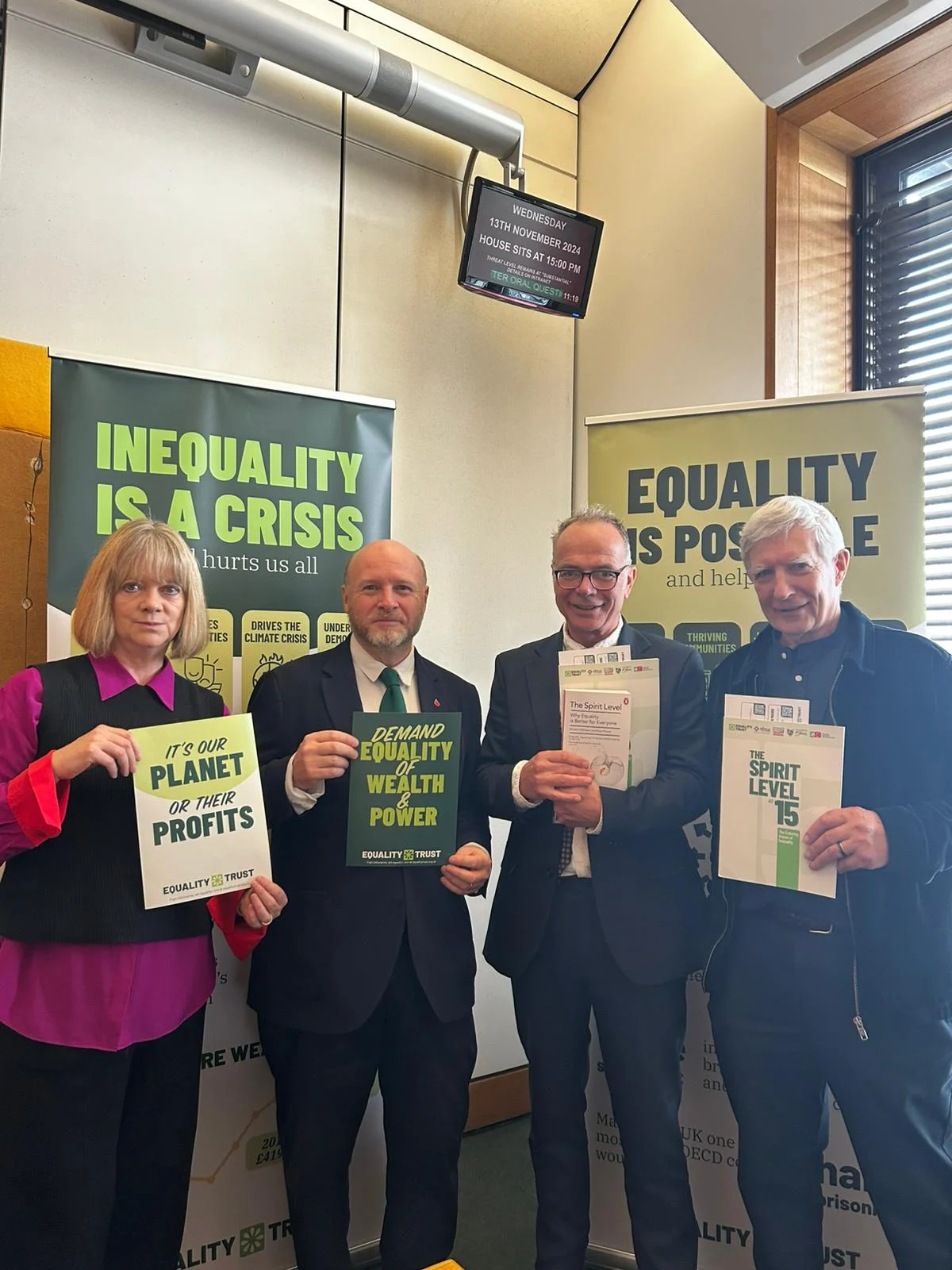
The Equality Trust was established in 2009 by Bill Kerry and the authors of the seminal work The Spirit Level, Professors Richard Wilkinson and Kate Pickett. The organization was founded on the evidence-based premise that societies with high levels of income inequality perform worse across a range of indicators, including physical and mental health, education, imprisonment rates, and social mobility. Boyle’s tenure began as the organization sought to translate these academic findings into actionable policy changes at both the local and national levels. Throughout his six years on the board, Boyle’s expertise in project management and international development was utilized to stabilize the Trust’s internal structures, particularly through his involvement with the board’s finance committee during a period of significant fiscal uncertainty.
A Chronology of Advocacy and Economic Shift (2020–2026)
Boyle’s appointment in early 2020 coincided with the onset of the COVID-19 pandemic, an event that served as a catalyst for widening existing disparities in the United Kingdom. During the first half of his tenure, the Equality Trust focused heavily on the "Build Back Better" movement, advocating for a recovery that addressed the systemic vulnerabilities exposed by the health crisis. Data from the Office for National Statistics (ONS) indicated that during this period, the wealth of the richest households continued to grow, while the bottom 10% of the population faced stagnant wages and rising debt.
By 2022 and 2023, the focus of the Trust shifted toward the cost-of-living crisis. Boyle’s role on the finance committee became increasingly critical as the third sector faced a "double squeeze": rising operational costs and a simultaneous decline in institutional grant availability. In 2024 and 2025, the geopolitical landscape further complicated the Trust’s mission. Significant cuts to international aid budgets by the UK government, alongside similar policy shifts in the United States, created a vacuum in social justice funding. This necessitated a strategic pivot for the Equality Trust, moving away from a reliance on a small number of large-scale grants toward a more sustainable, grassroots-funded model supported by individual donors.
Analyzing the Funding Environment and Institutional Challenges
The financial health of the Equality Trust during Boyle’s terms serves as a microcosm of the broader challenges facing UK-based NGOs. According to the National Council for Voluntary Organisations (NCVO), the real-world value of charitable income in the UK has struggled to keep pace with inflation since 2021. Boyle’s reflections on his departure highlight the "lumpy" nature of grant-based funding, where the loss of a single major benefactor can jeopardize multi-year campaigns.
To mitigate these risks, the Trust, under the guidance of the board, initiated a long-term transition to diversify its revenue streams. This strategy focused on building a robust base of small-scale monthly contributors, a move intended to provide the organization with the "maximum freedom to campaign effectively" without being beholden to the specific agendas of large institutional foundations. This shift is seen by analysts as a necessary evolution for advocacy groups in an era of political polarization, where traditional funding sources may become more risk-averse.
Legislative Milestones: The Socio-Economic Duty
One of the primary successes of the Equality Trust during Boyle’s tenure has been the promotion of the Socio-Economic Duty, as outlined in Section 1 of the Equality Act 2010. Although the duty was never formally commenced by the central government for all public bodies in England, the Equality Trust has been instrumental in a "bottom-up" adoption strategy. By 2026, dozens of local authorities across the UK have voluntarily adopted the duty, requiring them to consider how their decisions can reduce the inequalities of outcome which result from socio-economic disadvantage.
The Trust’s work in this area involved providing frameworks for local councils to measure the impact of their spending and service delivery on marginalized communities. Inferred reactions from local government leaders suggest that the Trust’s data-driven approach provided the necessary political cover to prioritize equity in an era of continued austerity. Boyle noted that seeing the Socio-Economic Duty become a reality in various jurisdictions was among the most rewarding aspects of his service.
Youth Engagement and the Fight Against Fragmentation
As the UK society faced increasing fragmentation due to economic pressures and digital polarization, the Equality Trust expanded its reach to younger demographics. Under the governance of Boyle and his colleagues, the Trust developed initiatives specifically designed to empower young people "at the sharp end of inequality." These programs provided training in advocacy, public speaking, and data analysis, ensuring that those most affected by housing shortages and precarious employment had the tools to challenge the status quo.
Statistical data from the Resolution Foundation reinforces the urgency of this work, showing that by 2026, the "intergenerational divide" remains a primary driver of overall inequality in the UK. Millennials and Gen Z are on track to be the first generations in modern history to be poorer than their parents at the same age, a fact the Equality Trust has used to mobilize a new wave of activists.
Organizational Evolution and Board Diversity
Boyle’s departure also highlights a broader trend in charity governance: the integration of diverse skill sets. His own background in business and international development was intentionally paired with board members from academia, law, and those with lived experience of poverty. This multidisciplinary approach is increasingly viewed as the gold standard for non-profit boards, allowing organizations to remain agile in a complex regulatory and economic environment.
The Trust has maintained a policy of term limits to ensure a constant influx of new perspectives while retaining institutional memory through staggered rotations. While Boyle acknowledged the "hands-off" nature of board membership as a personal challenge compared to his previous role as a project manager, his tenure is regarded by peers as a period of professionalization for the Trust’s internal operations.
Broader Implications and Future Outlook
The departure of a long-standing Trustee like Gerry Boyle occurs at a critical juncture for the UK’s social justice movement. The 2026 economic outlook suggests that while headline inflation may have stabilized, the structural inequalities embedded in the UK economy—such as regional disparities and the concentration of wealth in the Southeast—remain largely unaddressed. The Gini coefficient, a standard measure of income inequality, remains higher in the UK than in most of its European peers, a statistic the Equality Trust continues to highlight in its briefings to policymakers.
The Trust’s future strategy will likely continue to emphasize the findings of The Spirit Level and its successor, The Inner Level, which argue that inequality is not just a matter of economics but a public health crisis that erodes social trust. As the organization searches for a successor to fill Boyle’s vacancy, the focus remains on finding individuals who can navigate the increasingly precarious funding landscape while maintaining the intellectual rigor that has defined the Trust since its inception.
In summary, Gerry Boyle’s six-year contribution to the Equality Trust represents a period of resilience and strategic pivot. From the initial motivation provided by the evidence of social harm caused by inequality to the practical challenges of managing a charity during a global aid crisis, his tenure reflects the complexities of modern activism. As he stands down, the organization remains a vital voice in the national conversation, armed with a more diversified funding base and a proven track record of local legislative influence. The struggle for a more equal society continues, but the foundations laid during this "eventful six years" have positioned the Trust to face the challenges of the late 2020s with renewed vigor.