The landscape of primary education in Côte d’Ivoire is undergoing a fundamental transformation as community-led initiatives bridge the gap between rural agricultural demands and the fundamental right to quality schooling. Since 2012, World Education, an initiative of JSI Research & Training Institute, Inc. (JSI), has spearheaded a multi-faceted approach to address the systemic barriers preventing children in cocoa-growing regions from achieving academic success. Through the CocoaLife Quality Education Project, funded by Mondelez International, the organization is moving beyond traditional aid models to establish self-sustaining educational ecosystems managed by local stakeholders. This initiative targets the intersection of child labor, infrastructure deficits, and administrative gaps that have historically characterized the West African cocoa belt.
The Socio-Economic Context of Ivorian Education
Côte d’Ivoire stands as the world’s largest producer of cocoa, a commodity that serves as the backbone of the national economy. However, the labor-intensive nature of cocoa farming often creates a direct conflict with the academic calendar. In many rural communities, the peak harvest periods coincide with the school year, leading to a phenomenon where children are frequently withdrawn from classrooms to assist in the fields. This economic pressure is a primary driver of child labor, which in turn degrades the quality of education by causing high absenteeism and low academic engagement.
According to Ferdinand Beblai, Country Director for JSI Côte d’Ivoire, the challenges are layered. Beyond the immediate issue of enrollment, the quality of the learning environment and the consistency of attendance remain critical hurdles. Data from 2021 indicates that more than 15% of primary-level students in the country repeat a grade annually. This stagnation often leads to frustration, increased dropout rates, and a cycle of poverty that returns the youth to the fields without the literacy or numeracy skills required for modern agricultural management or alternative career paths.
Chronology of Intervention: From 2012 to the Present
The journey of World Education in Côte d’Ivoire began over a decade ago with a focus on general education quality and the reduction of child labor. The intervention strategy has evolved through several distinct phases:
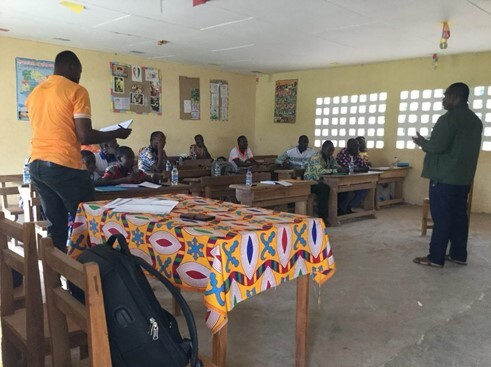
- 2012–2015: Assessment and Tool Development. During this period, World Education focused on identifying the structural weaknesses in school governance. They developed specialized tools to evaluate the functioning of the Comité de Gestion Établissement Scolaire (COGES), the government-mandated community management committees.
- 2016–2020: Capacity Building and Resource Mobilization. The focus shifted toward training COGES members in financial management and transparency. Recognizing that a lack of funding was the primary barrier to school improvement, the project began integrating Mothers’ Associations, youth groups, and cocoa cooperatives into the school governance structure.
- 2021–Present: Sustainability and Income Generation. The current phase emphasizes self-sufficiency. Communities are no longer just recipients of aid but are active entrepreneurs. By launching income-generating activities (IGAs) like poultry farming and crop cultivation, communities are now generating the capital necessary to maintain school buildings and pay for remedial tutoring.
Addressing the Data Gap in Cocoa-Producing Regions
A significant obstacle to effective educational policy in Côte d’Ivoire has been the reliance on high-level national data, which often obscures the specific realities of rural villages. National statistics are typically aggregated at the district level, making it difficult to pinpoint the exact number of school-aged children in a specific remote community.
World Education’s localized data collection has revealed critical insights into the timing of financial hardship. For instance, by tracking community-level data points, the project identified that the period between the two annual cocoa harvests is a time of extreme liquidity shortages for families. During these months, parents often lack the funds to buy basic school supplies, leading to children being kept home. In response, the project implemented a targeted grant system, providing approximately 80,000 francs (USD 140) to the most vulnerable families to ensure that the lack of a notebook or pencil does not result in a child losing a year of schooling.
The COGES Model: A Blueprint for Local Governance
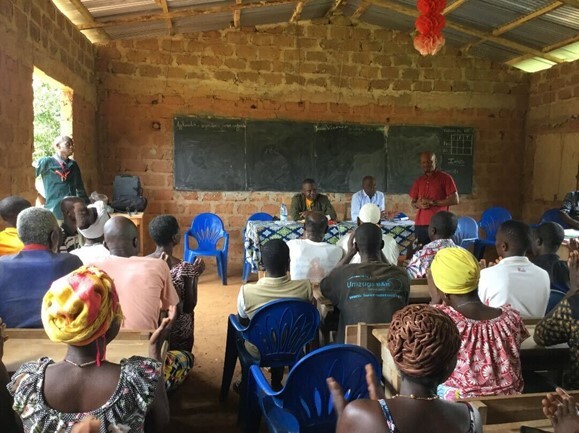
The success of the CocoaLife Quality Education Project is rooted in the revitalization of the COGES (Comité de Gestion Établissement Scolaire). While these committees were established by the Ivorian government to manage teacher and student resources, they were historically underfunded and lacked formal training.
World Education’s intervention has turned these committees into professionalized units capable of managing School Improvement Plans (SIPs). By fostering transparency through meticulous accounting and receipt-tracking, these committees have built a high level of "traceability." This trust encourages local parents and cocoa cooperatives to contribute more to the school fund, knowing that the money will be used effectively for the children’s benefit.
One of the most innovative aspects of the COGES strengthening is the introduction of Income-Generating Activities. In various villages, committees have established maize fields or chicken-rearing operations. The profits from these ventures are funneled directly back into the school. These funds are frequently used to provide stipends for teachers who conduct remedial classes in French and mathematics, targeting students who have fallen behind due to previous absences or poor learning conditions.
Case Study: The Transformation of N’drikro School
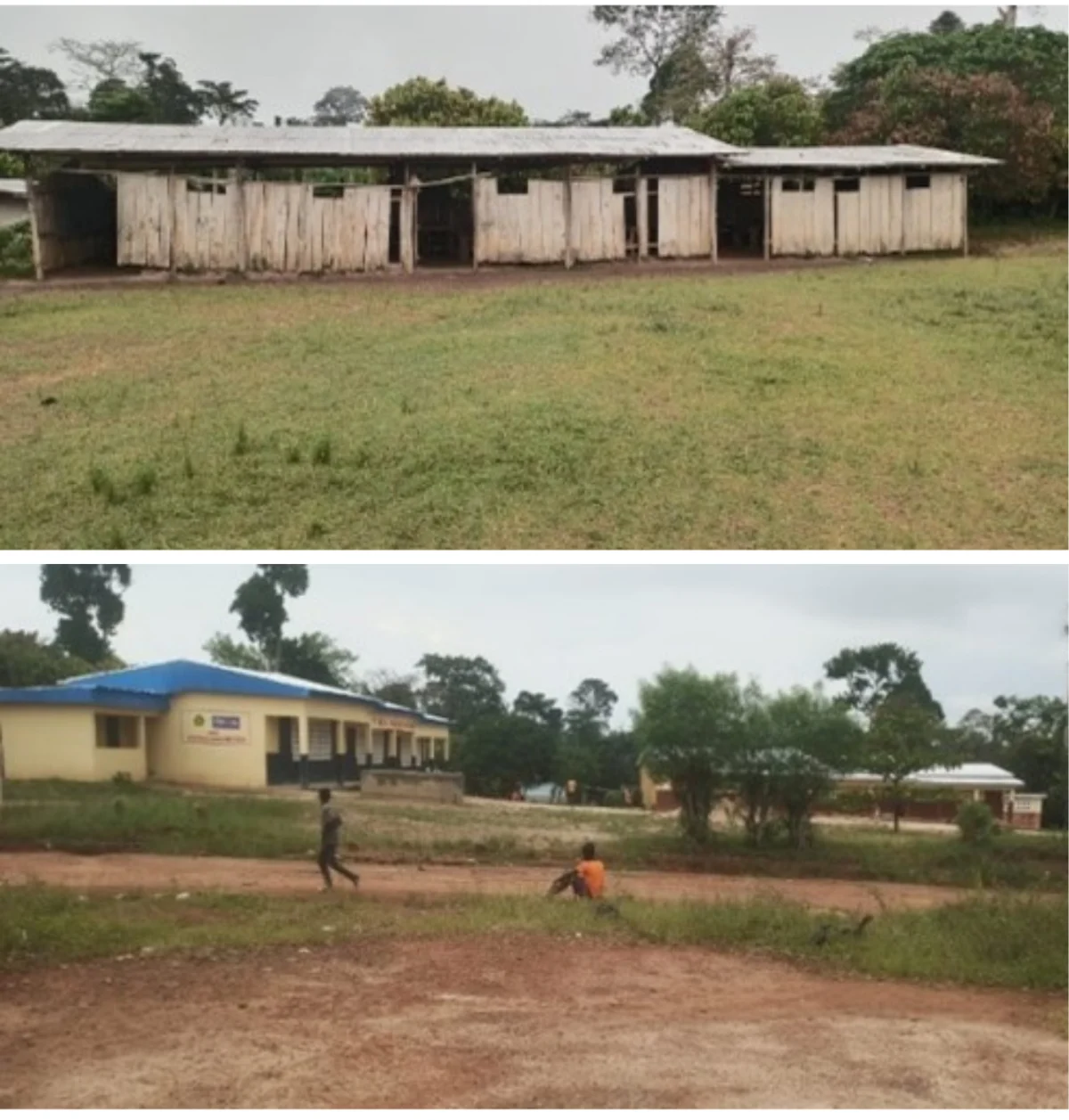
The village of N’drikro serves as a primary example of how community mobilization can replace precarious infrastructure with modern facilities. Prior to the project’s intervention, the N’drikro school consisted of temporary sheds made of wood and straw. These structures were not only dangerous during the rainy season but also lacked basic amenities such as desks, toilets, and administrative offices. The learning environment was characterized by high temperatures and exposure to the elements, which severely hampered student concentration.
Through the COGES, the village leadership collaborated with Village Savings and Loan Associations (VSLA) and youth groups. They leveraged a community-managed cassava field to generate the necessary revenue to augment project funding. The result was the construction of two modern school buildings equipped with proper sanitation facilities and offices.
Beyond the physical structure, the culture of the school changed. N’drikro now hosts "excellence awards" to motivate students and provides structured remedial support. The school has transitioned from a temporary shelter into a permanent community asset, demonstrating that when a community views a school as their own property rather than a distant government project, the standards of care and investment rise significantly.
Broader Implications for the Global Cocoa Supply Chain
The work of World Education and Mondelez International carries implications far beyond the borders of Côte d’Ivoire. As global consumers increasingly demand "ethical chocolate," the pressure on major chocolate manufacturers to eliminate child labor from their supply chains has intensified.
However, experts argue that child labor cannot be solved through monitoring and enforcement alone. It requires the provision of a viable alternative: a high-quality, accessible education system. By improving the quality of schools, the CocoaLife project makes the "choice" to send a child to school more logical for a parent. When schools are nearby, safe, and academically effective, the opportunity cost of keeping a child in the field becomes too high.
Furthermore, the project is changing the perception of education within the farming community. Parents are beginning to recognize that literacy is a vital tool for modern farming. Educated children can read the labels on pesticides and fertilizers, ensuring they are mixed correctly and applied safely, which improves crop yields and environmental safety.
Future Outlook and Government Collaboration
The sustainability of these efforts is being solidified through a formal collaboration protocol between World Education and the Ivorian government. This agreement signifies a shift from a non-governmental pilot project to a recognized national strategy. The government’s involvement ensures that the methodologies developed by World Education—such as the COGES evaluation tools and the IGA models—can be scaled to other regions of the country.
The ultimate goal is "self-sufficiency." Ferdinand Beblai notes that in several communities where World Education has phased out its direct financial support, the COGES committees continue to operate successfully. They continue to fund their own remedial classes and maintain their infrastructure through their own revenue streams. This transition from "aid dependence" to "community ownership" is the hallmark of the project’s success.
As Côte d’Ivoire continues to navigate the complexities of economic growth and social development, the CocoaLife Quality Education Project provides a roadmap for how international NGOs, private corporations, and local governments can collaborate. By placing the power of school management back into the hands of the parents and neighbors who have the most to gain, World Education is ensuring that the next generation of Ivorians is defined not by the labor they provide, but by the knowledge they possess.
The success of these community-led models suggests that the path to ending child labor and improving literacy in West Africa lies in the empowerment of local stakeholders. When the community is invested in the school as a "collective good," the barriers of distance, poverty, and tradition begin to give way to a future where every child has the opportunity to learn in a safe and supportive environment.