Rochester Hills, Mich. – A groundbreaking ceremony on June 4 marked the commencement of Auburn Oaks, a $25 million neuroinclusive neighborhood in Rochester Hills, Oakland County, aiming to provide adults with intellectual and developmental disabilities (IDD) with the opportunity to own their own homes. This initiative addresses a critical unmet need for stable, independent living options, offering peace of mind to both residents and their families. Auburn Oaks is part of a growing movement to create communities where neurotypical and neurodivergent individuals can live together, fostering inclusivity and mutual respect.
Building Towards Independence: The Vision Behind Neuroinclusive Communities
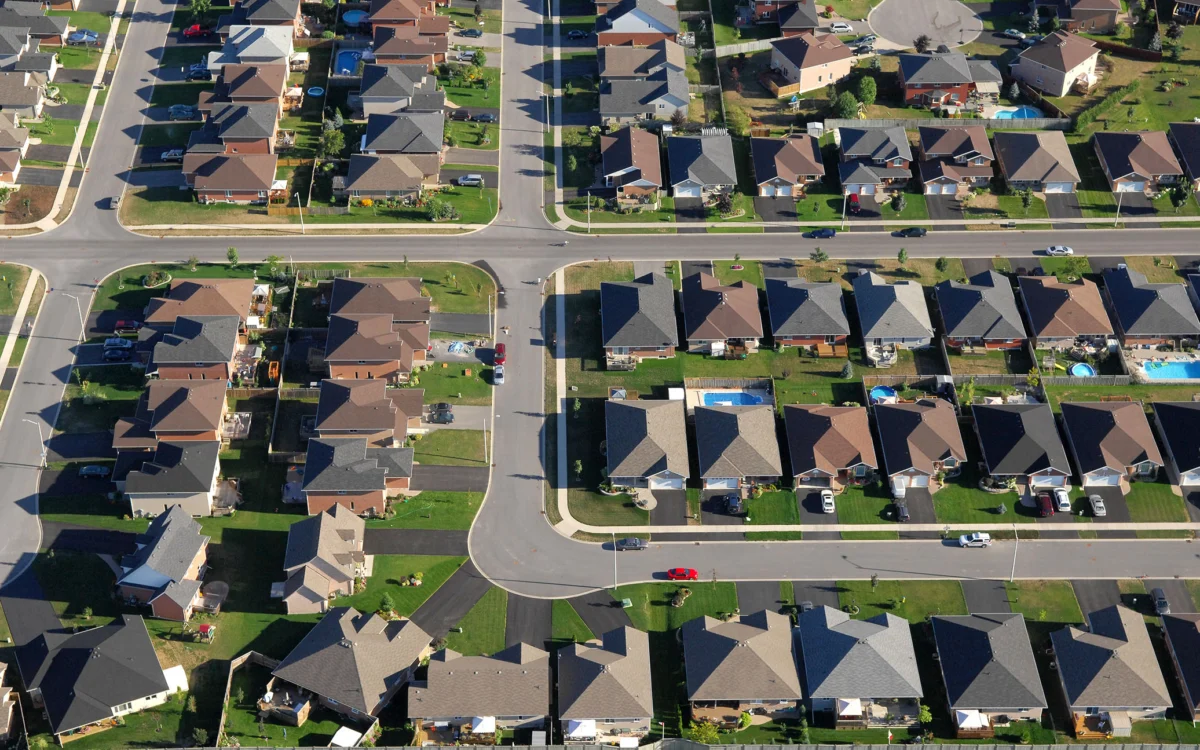
The concept of neuroinclusive neighborhoods, where individuals with and without disabilities co-reside, is a rare yet increasingly vital component of supportive housing solutions. Currently, fewer than 100 such communities are estimated to exist across the United States. Auburn Oaks, developed by Three Oaks Community Builders, will feature 55 homes, including a mix of condominiums, single-family residences, and townhomes. A significant portion, specifically 17 condominiums and two single-family homes, are earmarked for adults with intellectual and developmental disabilities. The remaining homes will be available to neurotypical buyers who are supportive of living in an integrated community. Residents are projected to begin moving into their homes in 2027, according to the current development timeline.
This project is not an isolated endeavor for the region. Auburn Oaks represents the third such neighborhood in Michigan and the second to be established in Rochester Hills. The foundational efforts in this area include Maple Oaks in Saline, a $10 million project completed between 2017 and 2022. This now sold-out community comprises 34 homes, with eight designated for adults with disabilities, their families, or caregivers, as well as families with school-age children with disabilities. The remaining 26 homes were purchased by neurotypical buyers, who have actively embraced the concept of living in a neuroinclusive environment. Initial home prices at Maple Oaks ranged from $180,000 to $250,000, with provisions for discounts and grants specifically for individuals with disabilities.
Rochester Hills’ first neuroinclusive development, Walton Oaks, also a $10 million project, is currently under construction. This neighborhood will consist of 11 single-family homes, three of which will feature up to four suites designed for residents with disabilities. Officials from Three Oaks Community Builders have indicated that the initial residents of Walton Oaks are expected to move in by the end of the current year.
A Collaborative Effort: The Genesis of Three Oaks Community Builders
All three of these pioneering neighborhoods are connected to Plymouth-based Three Oaks Community Builders, a company founded by seasoned developers William J. Godfrey, John E. Zdanowski, and Bruce A. Michael. During the June 4 groundbreaking event, Godfrey clarified a misstatement regarding the cost of Auburn Oaks, specifying that the $35 million figure he initially cited represented the total projected cost for both Rochester Hills projects combined, not solely Auburn Oaks.
Godfrey elaborated on the complex nature of developing neuroinclusive communities, emphasizing that they necessitate a multifaceted funding strategy involving public, private, and nonprofit sources, alongside persistent advocacy. He reiterated his estimation that well under 100 such communities exist nationwide, characterizing the lack of these housing options as a significant oversight across most states. Godfrey underscored the importance of homeownership as a more stable alternative to renting for individuals with disabilities, as rental properties can be sold, potentially leading to disruptive and stressful relocations for residents.
Quantifying the Need: Challenges in Data Collection
Accurately quantifying the demand for such specialized housing is challenging due to the diverse and individualized needs of people with disabilities. While some individuals can live independently, drive, and maintain traditional employment, others require daily assistance with medical management, financial affairs, and personal care. Lynn Sutfin, a spokesperson for the Michigan Department of Health and Human Services, noted the difficulty in obtaining precise figures for individuals living with disabilities, as many may not engage with agency services and thus remain untracked. She stated that there is no comprehensive system at the state or national level to precisely enumerate individuals with disabilities.
However, available data provides some indication of the potential scope of need. The U.S. Census Bureau estimates that approximately 1.58% of Americans live with a significant disability. Based on this figure and the 2024 Census projections, Michigan is estimated to have around 160,219 residents with disabilities, with Oakland County accounting for an estimated 20,491. When considering individuals receiving state support for their disabilities, Michigan has just over 49,000 residents, and Oakland County has 4,771 individuals of all ages receiving such support.
Parent-Led Initiatives and Community Partnerships
The drive behind these neuroinclusive developments is often fueled by the dedication of parents seeking suitable living arrangements for their adult children. Dave Mingle, who joined Three Oaks as a managing partner, cofounded the nonprofit Rochester Housing Solutions with his wife, Heather Mingle. Their motivation stemmed from a desire for their adult son, who has autism, to lead an independent life in his own home, rather than residing in group homes or adult foster care facilities. The Mingles represent a segment of a growing movement of parent-led initiatives focused on establishing small neighborhoods dedicated to supporting residents with disabilities.
Rochester Housing Solutions was established five years ago by the Mingles and a group of other parents who found the existing housing options for their children with disabilities to be "simply not acceptable." These neuroinclusive neighborhoods are the result of collaborative efforts involving families, developers, nonprofit organizations, and other community partners.
Funding the Vision: A Multifaceted Approach
The financial framework for projects like Auburn Oaks is complex, requiring a blend of funding streams. Auburn Oaks is being financed through a combination of sources, including Oakland County’s Oakland Together Housing Trust Fund, the Michigan State Housing Development Authority (MSHDA), Community Housing Network, Three Oaks Communities, Rochester Housing Solutions, F&M Bank, First State Bank, and private equity partners. The county’s housing trust fund has contributed $1.5 million as a low-interest loan (1% interest rate) specifically for land acquisition.
Gerry Seizert, a resident of Bloomfield Hills, embarked on a nationwide search for a community where his daughter Laurel, aged 45, could achieve maximum independence and longevity. Following the passing of his wife in 2018, Seizert’s primary concern became ensuring Laurel’s future security in a welcoming and supportive environment. He expressed his profound relief and happiness that Laurel will soon be a resident of Rochester Hills. "When you come together as a community, in compassion and mutual respect, things happen," Seizert remarked. "It’s not about building houses, but that’s part of it. It’s about what happens after."
Overcoming Barriers: The Role of Financial Education and Support
Kirsten Elliott, President and CEO of Community Housing Network, highlighted that a significant obstacle to stable housing for individuals with disabilities is their frequent association with low-income households. Community Housing Network plays a crucial role by providing essential services such as homebuyer and financial education classes, rental assistance, and support for landlords.
In February, the housing network launched a pilot program designed to offer grants to both developers and homebuyers. This initiative is funded by a $1.7 million grant from MSHDA, with half allocated to multifamily rental projects and the other half designated for homeownership development grants or down-payment assistance. This MSHDA grant is currently supporting four nonprofit organizations, including the two Rochester Hills neighborhoods. Additionally, it is assisting the Grand Rapids-based Genesis Nonprofit Housing Corporation’s 48-unit Heron Woods project, which will provide eight low-income units for individuals with disabilities, and Samaritas’ 46-unit Froebel Place development in Muskegon, which will include two low-income units.
Amy Hovey, Executive Director of MSHDA, explained that her awareness of parental anxieties regarding their children’s futures, stemming from "eye-opening conversations," prompted her to collaborate with Elliott on establishing the pilot program. "I’m happy that we can play a small part in making this a reality," Hovey stated during the Auburn Oaks groundbreaking. Elliott, herself a parent of a son with cerebral palsy, shared her own concerns about his safety and well-being after she is gone, recognizing the immense need for housing solutions and the "peace of mind that is needed for our families."
Local Support and Broader Implications
The city of Rochester Hills has demonstrated strong backing for these initiatives. Council President Jason Carlock confirmed that the city council unanimously approved the plans for both Walton Oaks and Auburn Oaks, stating, "It reflects what’s possible when people come together with a shared purpose." However, Elliott cautioned that without the "layers of funding" from foundations, banks, and other financial institutions, the overall cost of these developments can remain prohibitive.
For instance, a single-family home at Walton Oaks, located at 193 Peregrine St., is listed with a price tag of $879,999. This home features three bedrooms, two-and-a-half bathrooms, and a three-car garage. Elliott explained that while construction costs are fixed, grants and other funding mechanisms are crucial for reducing the purchase price for individuals with disabilities and their families. The estimated monthly payment for this property, based on a 20% down payment, a 30-year fixed-interest mortgage at 6.574%, and a $350 monthly HOA fee, is approximately $5,669. The home is expected to be ready for occupancy in 2027.
Addressing Misconceptions: The Value of Neuroinclusive Neighborhoods
Contrary to potential concerns from some homebuilders that neuroinclusive neighborhoods might negatively impact property values, evidence suggests the opposite. Godfrey noted that many builders shy away from such projects due to this misconception, but the reality is that homes in these integrated communities have demonstrated strong appreciation. For example, a Maple Oaks home that sold for $361,098 in 2021 saw its value increase to $414,000 within four years, representing a 15% appreciation. This performance outpaces the broader market, as the combined single-family and condo median home price in Washtenaw County was an estimated $456,000 at the end of May, an increase from $401,900 in May 2022.
Oakland County Executive Dave Coulter, speaking at the Auburn Oaks groundbreaking, expressed his aspiration for "blended communities" to proliferate not only across Oakland County but throughout Michigan.
Expanding the Model: National and Regional Reach
The influence of Three Oaks Community Builders extends beyond Michigan. The company has partnered with iStrive Community to develop Magnolia Oaks in Middletown Township, New Jersey, which will not be the state’s first neuroinclusive neighborhood. Thrive, a 32-unit community in Red Bank, New Jersey, is currently under construction. This project is a collaboration between the nonprofit Parents with a Plan and the Rutgers Center of Adult Autism Services. Karen Fluharty, founder of Parents with a Plan, articulated her desire for her neurodivergent son to have the opportunity to own a home within a supportive environment.
However, the path to developing these communities is not without its challenges. A planned ambitious $90 million, 280-unit condominium project in Canton Township, known as Canton Oaks, faced an unexpected setback. Three Oaks had initially partnered with the parent-run nonprofit Compass Community Collaborative for this development. Despite receiving unanimous approval from township trustees in December, Compass officials announced on June 1 that Three Oaks had notified them the project would not proceed. Godfrey described the decision as "heartbreaking," explaining that despite significant investment of "blood, sweat, tears, time, and money," the Canton Oaks project was "unfortunately, not financially viable." He remains committed to assisting the affected families in identifying smaller-scale neighborhood opportunities.
The ongoing development of neuroinclusive communities like Auburn Oaks and Walton Oaks signifies a crucial step forward in addressing the housing needs of adults with intellectual and developmental disabilities. These projects not only offer the promise of independent homeownership but also foster a more inclusive and supportive society for all residents.