A significant legal challenge has emerged against new federal Medicaid eligibility requirements, with officials from 25 states and the District of Columbia filing a lawsuit to contest rules that advocates warn could strip essential healthcare coverage from hundreds of thousands of Americans, particularly those with disabilities. The coalition of states argues that the interim final rule, issued by the Centers for Medicare and Medicaid Services (CMS), imposes overly restrictive conditions for maintaining Medicaid benefits, contradicting the intent of Congress and creating an untenable administrative burden.
The core of the dispute lies in the implementation of new work requirements for Medicaid beneficiaries. Under the mandate, which most states are expected to implement by the beginning of next year, many individuals will be required to demonstrate engagement in work, volunteer activities, or educational pursuits for at least 80 hours per month to retain their coverage. This stipulation stems from a broad legislative package approved last summer, which included substantial cuts to Medicaid funding, totaling nearly $1 trillion. While the legislation did incorporate exemptions for individuals deemed "medically frail" or those with "special medical needs," including people with physical, intellectual, or developmental disabilities, the subsequent interim final rule from CMS has significantly narrowed the scope of these exemptions.
The Narrowing of Exemptions and Congressional Intent
Advocates and the suing states contend that the interim final rule, released by CMS in early June, sets an excessively high bar for qualifying for these crucial exemptions. Beyond simply having a qualifying condition, individuals must now prove that their condition "significantly limits their ability to work." This interpretation, states argue, goes beyond what Congress intended when it enacted the legislation.
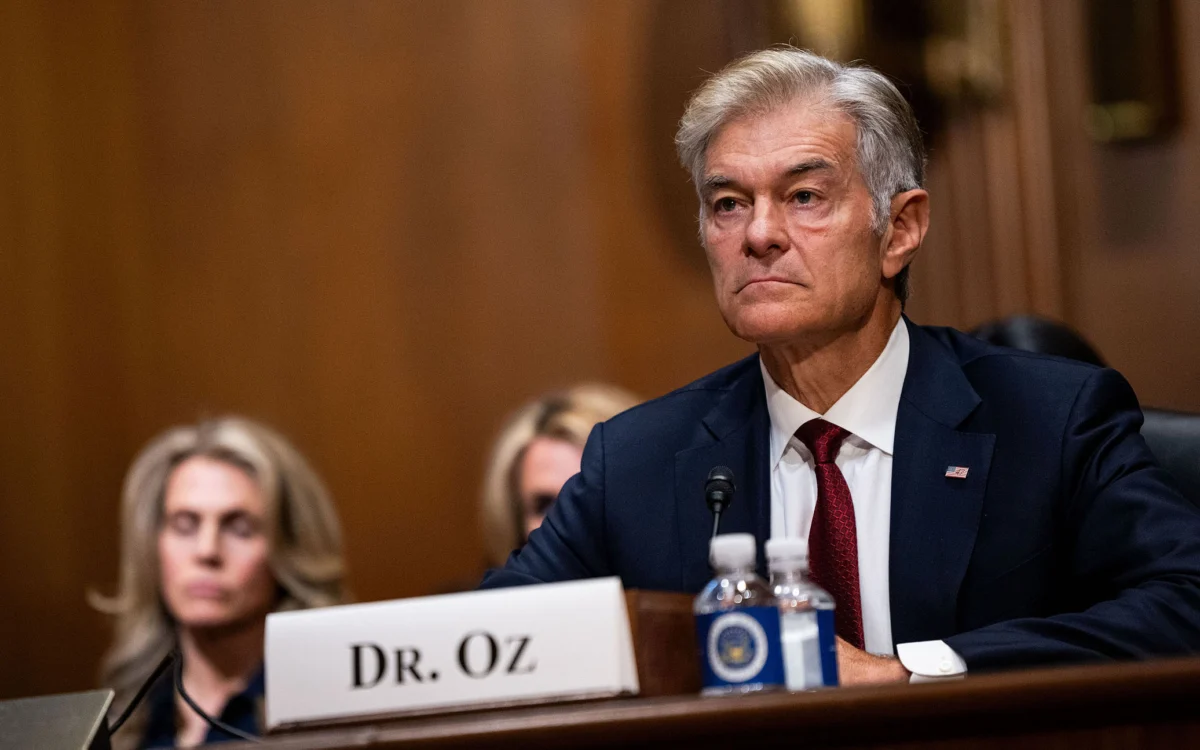
The lawsuit, filed in the U.S. District Court for the District of Massachusetts, names CMS Administrator Mehmet Oz and HHS Secretary Robert F. Kennedy Jr. as defendants, alongside CMS and the U.S. Department of Health and Human Services. The complaint asserts that the Trump administration’s interim final rule is demonstrably more restrictive than the legislative text allows.
"People with disabilities, patients in the middle of cancer treatment, or those struggling with another serious or complex health condition, shouldn’t be at risk of losing the care that helps maintain their health," the lawsuit states. "Nowhere in (the law) does Congress state that individuals’ ability to work must be impaired in order to be ‘medically frail or otherwise have special medical needs,’ or to have a ‘serious or complex medical condition.’"
The states involved in the legal action argue that this restrictive interpretation places them in an "untenable position." They allege that CMS has violated the Administrative Procedures Act by disregarding "substantial evidence" indicating that the "added administrative burdens will cause individuals who are eligible for Medicaid to lose or be denied coverage." Furthermore, the lawsuit claims that the narrow definition of "medically frail" is unlawful and that the rule fails to adequately consider the significant negative impacts on states, Medicaid beneficiaries, and other stakeholders. An additional allegation is that the rule is unconstitutional, as it imposes new requirements that contradict preliminary guidance previously issued by federal officials, thereby disrupting months of planning and preparation by state agencies.
A Timeline of Regulatory Changes and Legal Challenges
The current legal confrontation is the culmination of a series of regulatory actions and legislative decisions. Last summer, Congress passed a sweeping appropriations bill that included significant cuts to Medicaid. This legislation paved the way for states to implement work requirements for certain Medicaid beneficiaries. However, the subsequent issuance of the interim final rule by CMS in June of this year introduced a stricter framework for medical exemptions, which has now triggered this widespread legal challenge.
Prior to the interim final rule, preliminary guidance from federal officials had suggested a more accommodating approach to exemptions for individuals with serious health conditions. This had allowed states to develop implementation plans based on those initial understandings. The abrupt shift in regulatory interpretation has reportedly forced many states to re-evaluate and rework their existing plans, leading to significant administrative disruption and uncertainty.
The lawsuit highlights this disruption, stating that the rule is unconstitutional because it imposes new requirements that run counter to preliminary guidance provided by federal officials, upending months of planning. This has been a recurring theme for states attempting to navigate the complex and often shifting landscape of federal healthcare regulations.
The Potential Impact on Vulnerable Populations
The primary concern driving this lawsuit is the potential loss of Medicaid coverage for individuals with disabilities and those with serious or complex medical conditions. While the law aims to exempt these groups, advocates and state officials argue that the CMS interim final rule creates insurmountable hurdles.
Rhode Island Attorney General Peter F. Neronha, a participant in the suit, expressed strong criticism of the administration’s actions. "This eleventh-hour attempt to further narrow protections for medically frail Medicaid recipients seeks to punish those who cannot fend for themselves," Neronha stated. "Further, this administration is once again attempting to sidestep Congress by unlawfully reinterpreting the law, and coercing the states to rush to implement their last-minute changes or face penalties."
While the work requirements primarily target individuals enrolled through Medicaid expansion, the nuances of Medicaid eligibility mean that some individuals with developmental disabilities could still be affected. Many people with developmental disabilities qualify for Medicaid through eligibility for Supplemental Security Income (SSI), which typically exempts them from work requirements. However, as Kim Musheno, senior director of Medicaid policy at The Arc of the United States, explains, this is not a universal safeguard.
"Some people with IDD may be enrolled through Medicaid expansion because they are waiting for SSI, do not meet SSI’s strict income or asset rules, have not been formally determined disabled or are covered through another pathway," Musheno noted. "Those individuals may have to prove they qualify for an exemption. The law may say people with disabilities should be exempt, but the process for proving that exemption can still cause people to lose coverage."
Administrative Burdens and the "Paperwork Kills Coverage" Phenomenon
Beyond the strict definition of medical exemptions, advocates also fear that the sheer administrative burden of complying with the new requirements could inadvertently lead to coverage losses. The process of documenting work hours, volunteer activities, or educational pursuits, along with proving medical exemptions, can be complex and overwhelming for individuals who may already face significant challenges in their daily lives.
"We know from experience that paperwork kills coverage," said Nicole Jorwic, chief program officer at Caring Across Generations. "Nothing I have seen gives me confidence people eligible through the SSI pathway won’t also be caught up as states grapple with this overstep via regulations." This sentiment reflects a long-standing concern within the disability advocacy community: that bureaucratic hurdles, even when not intentionally designed to exclude, can effectively disenfranchise vulnerable populations.
The complexity of the new rules, coupled with the potential for errors in documentation or application, raises fears that individuals who are genuinely eligible for Medicaid and its exemptions could still find themselves without coverage. This could have devastating consequences for their access to essential medical care, therapies, and support services.
Broader Implications and the States Involved
The lawsuit represents a significant rebuke of federal regulatory authority by a substantial bloc of states. The coalition includes attorneys general from Arizona, California, Colorado, Connecticut, Delaware, Hawaii, Illinois, Maine, Maryland, Massachusetts, Michigan, Minnesota, Nevada, New Jersey, New Mexico, New York, North Carolina, Oregon, Vermont, Virginia, Washington, and Wisconsin, alongside the District of Columbia. Additionally, the governors of Kentucky and Pennsylvania have joined the legal action, underscoring the widespread concern among state leadership.
Their collective demand is for the court to invalidate specific provisions of the interim final rule, aiming to restore a more accessible and less burdensome pathway for maintaining Medicaid coverage, particularly for those with medical needs.
CMS, as is customary with ongoing litigation, has stated that it does not comment on pending legal matters. However, the lawsuit’s arguments and the breadth of state participation signal a potentially protracted legal battle with significant implications for the future of Medicaid and the healthcare access of millions of Americans. The outcome of this case could set a precedent for how federal agencies interpret congressional intent in healthcare legislation and how states are expected to implement complex eligibility rules for vital public health programs. The core of the dispute centers on striking a balance between ensuring program integrity and safeguarding access to care for the nation’s most vulnerable citizens.