ROCHESTER HILLS, Mich. — A groundbreaking initiative is redefining residential living in Oakland County, Michigan, with the development of neuroinclusive neighborhoods designed to empower adults with intellectual and developmental disabilities to achieve homeownership. These pioneering communities aim to foster independence, provide stable living environments, and alleviate the long-standing anxieties of parents concerned about their children’s futures. The concept, while gaining traction, remains a rarity in the United States, with fewer than 100 such developments currently in existence.
The latest milestone in this movement was marked on June 4th with the commencement of construction for Auburn Oaks, a $25 million neuroinclusive neighborhood in Rochester Hills. This ambitious project underscores a growing commitment to creating diverse and supportive living spaces that cater to a wider spectrum of needs within the community.
Auburn Oaks: A Vision for Inclusive Living
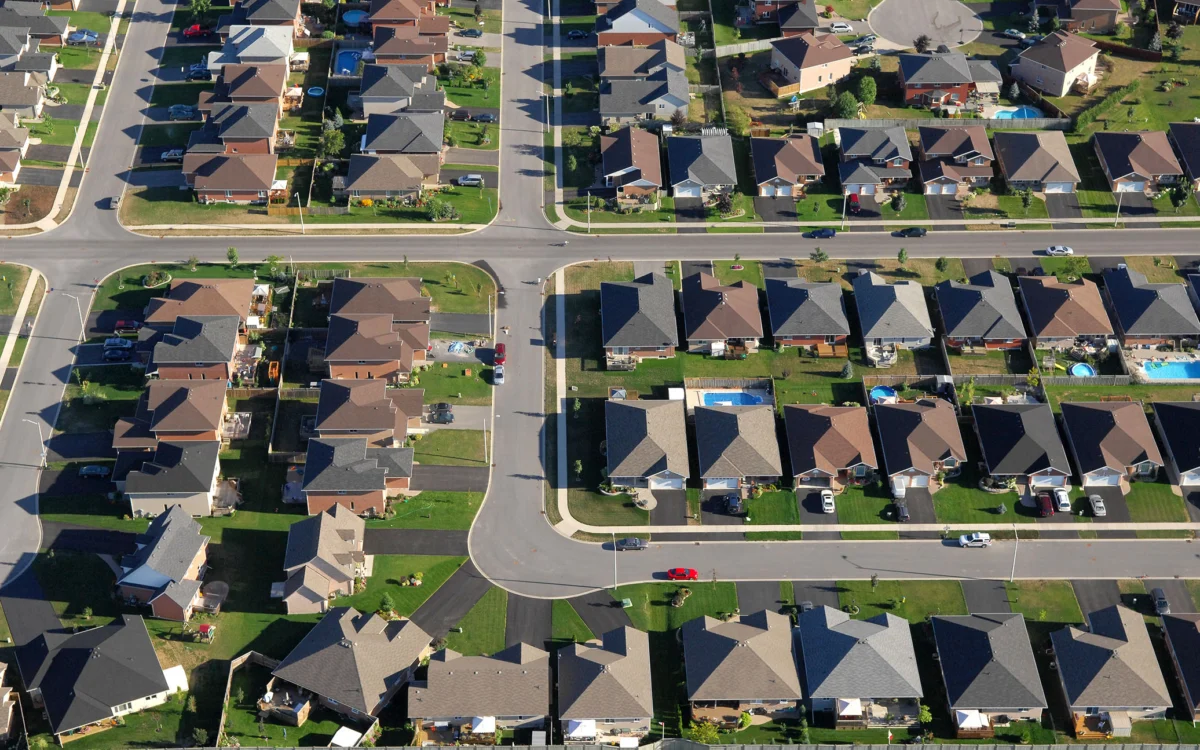
Auburn Oaks is slated to feature 55 homes, encompassing a variety of housing types including condominiums, single-family residences, and townhomes. A significant portion of these residences, specifically 17 condominiums and two single-family homes, will be dedicated to adults with intellectual and developmental disabilities. The remaining homes will be available for purchase by neurotypical individuals who are supportive of and eager to embrace living in an inclusive community. According to the current development timeline, residents are anticipated to begin moving into their new homes in 2027.
This development marks a significant expansion of neuroinclusive housing in Michigan, with Auburn Oaks being the third such neighborhood in the state and the second to be established in Rochester Hills.
Precedent Set: Maple Oaks and Walton Oaks Pave the Way
The foundational work for neuroinclusive communities in Michigan was laid by earlier projects, demonstrating the viability and positive impact of this housing model. Maple Oaks, located in Saline, was one of the first of its kind, with an estimated construction cost of $10 million. Developed between 2017 and 2022, this fully sold-out community comprises 34 homes. Of these, eight were designated for adults with disabilities, their families, and caregivers, or for families with school-aged children who have disabilities. The remaining 26 homes were acquired by neurotypical homebuyers who actively chose to be part of a neuroinclusive environment. Initial pricing for Maple Oaks ranged from $180,000 to $250,000, with provisions for discounts and grants specifically for individuals with disabilities.
In Rochester Hills, the ongoing construction of Walton Oaks, a $10 million project, represents another stride in this direction. This development will consist of 11 single-family homes, with three of these homes featuring up to four suites specifically designed to accommodate residents with disabilities. Officials from Three Oaks Community Builders have indicated that the first residents of Walton Oaks are expected to move in by the end of the current year.
The Driving Force: Three Oaks Community Builders and Parent Advocacy
All three of these pioneering neighborhoods are intrinsically linked to Three Oaks Community Builders, a Plymouth-based entity founded by seasoned developers William J. Godfrey, John E. Zdanowski, and Bruce A. Michael. Their collective vision and expertise are instrumental in bringing these complex housing projects to fruition.
William J. Godfrey clarified a point of potential confusion regarding the financial scope of Auburn Oaks, stating during the June 4th groundbreaking that his earlier mention of $35 million represented the total projected cost for both Rochester Hills projects, not solely Auburn Oaks. He emphasized that the successful development of neuroinclusive neighborhoods necessitates a multifaceted funding approach, drawing from public, private, and nonprofit sources, coupled with sustained advocacy efforts.
Godfrey echoed the sentiment that these communities are scarce nationwide, estimating "well under 100" currently exist across the U.S. He articulated a profound need that has been largely overlooked: "This is a housing need that’s been overlooked in almost every state in the country." He further highlighted the critical advantage of homeownership over renting for individuals with disabilities, explaining that rental properties are subject to sale, often forcing residents with disabilities into a stressful and disruptive search for new accommodations.
Quantifying the Need: Data and Challenges
Accurately quantifying the demand for such housing presents its own set of challenges, largely due to the diverse and individualized needs of people with disabilities. While some individuals can live independently, drive, and maintain traditional employment, others require daily support with medical care and financial management. The U.S. Census Bureau provides a broad estimate, indicating that approximately 1.58% of Americans live with a significant disability. Based on 2024 Census projections, this translates to an estimated 160,219 residents with disabilities in Michigan and 20,491 in Oakland County.
Lynn Sutfin, a spokesperson for the Michigan Department of Health and Human Services, pointed out the complexities in tracking these numbers: "If they are not known and/or utilizing agency services, then we have no way to track them. There is no system at the state or national level addressing the exact number of people with (disabilities)." However, by examining data from individuals receiving state support for their disabilities, Michigan has just over 49,000 residents with disabilities, and Oakland County has 4,771 individuals of all ages receiving such support.
Grassroots Momentum: Parent-Led Initiatives
The development of these neuroinclusive communities is also fueled by a growing movement of parent-led initiatives. Dave Mingle, who joined Three Oaks as a managing partner, exemplifies this dedication. Alongside his wife, Heather Mingle, he co-founded the nonprofit Rochester Housing Solutions with the explicit goal of enabling their adult son, who has autism, to live an independent life in his own home, rather than relying on traditional group home or adult foster care settings. The Mingles, and others like them, recognized the stark limitations of existing housing options, describing them as "simply not acceptable" for their children with disabilities. Their efforts, initiated five years ago, highlight a collective determination to create environments that offer dignity and autonomy.
These neighborhoods are the product of collaborative efforts involving families, developers, nonprofit organizations, and a range of community partners, demonstrating a shared commitment to addressing a critical societal gap.
Funding the Vision: A Collaborative Financial Landscape
The financial architecture supporting projects like Auburn Oaks is complex, requiring a blend of funding streams. The Oakland Together Housing Trust Fund, the Michigan State Housing Development Authority (MSHDA), Community Housing Network, Three Oaks Communities, Rochester Housing Solutions, F&M Bank, First State Bank, and private equity partners are all contributing to the Auburn Oaks endeavor. The county’s housing trust fund, for instance, provided a $1.5 million loan at a remarkably low 1% interest rate, crucial for land acquisition.
Gerry Seizert, a resident of Bloomfield Hills, shared his personal journey in seeking suitable housing for his daughter, Laurel, 45. Following the passing of his wife, he embarked on a nationwide search to find a community where Laurel could maintain her independence and live in a supportive, inclusive environment long after he is gone. He expressed profound relief and gratitude that Laurel will have the opportunity to reside in Rochester Hills, emphasizing the power of community collaboration: "When you come together as a community, in compassion and mutual respect, things happen. It’s not about building houses, but that’s part of it. It’s about what happens after."
Addressing Barriers: The Role of Nonprofits and State Support
Kirsten Elliott, President and CEO of Community Housing Network, identified a significant obstacle to stable housing for individuals with disabilities: their frequent association with low-income households. To combat this, Community Housing Network offers comprehensive programs, including homebuyer, rental, and financial education classes, as well as support for landlords.
In February, the network launched a pilot program, funded by a $1.7 million MSHDA grant, to provide grants to both developers and homebuyers. This initiative allocates half of its funding to multifamily rental projects and the other half to homeownership development grants or down-payment assistance. This grant is currently benefiting four nonprofits, including the two Rochester Hills neighborhoods. It also supports the Heron Woods project in Grand Rapids, a 48-unit development by Genesis Nonprofit Housing Corporation that will offer eight low-income units for individuals with disabilities, and Samaritas’s 48-unit Froebel Place development in Muskegon, which will include two low-income units.
Amy Hovey, Executive Director of MSHDA, was inspired to initiate the pilot program after engaging in "eye-opening conversations" with parents deeply concerned about their children’s futures. She stated at the Auburn Oaks groundbreaking, "I’m happy that we can play a small part in making this a reality." Hovey, a parent of a son with cerebral palsy, shared her own anxieties regarding his long-term safety and well-being, acknowledging the immense need for housing solutions and the "peace of mind that is needed for our families."
The commitment of local government is also evident, with the Rochester Hills City Council unanimously approving plans for Walton Oaks and Auburn Oaks. Council President Jason Carlock remarked, "It reflects what’s possible when people come together with a shared purpose." However, he acknowledged that the significant costs involved would be insurmountable without the "layers of funding" provided by foundations, banks, and other financial institutions.
Financial Realities and Economic Impact
While construction costs remain a constant, grants and financial assistance are critical in mitigating the purchase price for individuals with disabilities and their families. For instance, a single-family home at Walton Oaks, listed at 193 Peregrine St., is priced at $879,999, with an estimated monthly payment of $5,669 based on a 20% down payment, a 30-year fixed-interest mortgage at 6.574%, and a $350 monthly HOA fee. The home is expected to be ready for occupancy in 2027.
Contrary to concerns that neuroinclusive communities might negatively impact property values, evidence suggests the opposite. William J. Godfrey noted that many homebuilders are hesitant to undertake such projects due to a misconception about their financial viability. However, he asserted, "the evidence is the opposite." Homes in neuroinclusive neighborhoods have demonstrated strong appreciation. A Maple Oaks home that sold for $361,098 in 2021 was listed for $415,000 just four years later, selling for $414,000, representing a 15% increase. This appreciation aligns with broader market trends, as the combined single-family and condo median home price in Washtenaw County saw an estimated increase to $456,000 by the end of May, up from $401,900 in May 2022, according to the RealComp listing service.
Oakland County Executive Dave Coulter expressed his hope that such "blended communities" will proliferate, not only within Oakland County but across the entire state of Michigan.
Expanding Horizons: National and International Reach
The success of these initiatives is inspiring similar developments elsewhere. Three Oaks is expanding its reach by partnering with iStrive Community to develop Magnolia Oaks in Middletown Township, New Jersey. This project is not the first of its kind in the Garden State; a 32-unit community called Thrive in Red Bank is already under construction, a collaboration between the nonprofit Parents with a Plan and the Rutgers Center of Adult Autism Services. Karen Fluharty, founder of Parents with a Plan, sought assurance that her neurodivergent son could own a home within a supportive framework.
Navigating Challenges and Future Prospects
Despite the successes, the path to developing neuroinclusive housing is not without its obstacles. A proposed ambitious $90 million, 280-unit condominium project, Canton Oaks, in Canton Township, a partnership between Three Oaks and the parent-run nonprofit Compass Community Collaborative, faced an unfortunate setback. Despite unanimous approval from township trustees in December, Compass officials announced on June 1st that Three Oaks had terminated the project due to financial unviability. Godfrey described the decision as "heartbreaking," stating, "We put a lot of blood, sweat, tears, time and money into Canton Oaks and it was just, unfortunately, not financially viable." He remains committed to working with the affected families to explore smaller-scale neighborhood possibilities.
The ongoing development of neuroinclusive communities in Rochester Hills and across Michigan represents a significant leap forward in creating a more equitable and supportive housing landscape. These projects are not merely about constructing buildings; they are about building futures, fostering independence, and creating a sense of belonging for all members of the community.