New estimates reveal a significantly larger population of students with Autism Spectrum Disorder (ASD) enrolled in U.S. colleges and universities than previously understood, underscoring a critical need for institutions to enhance their support systems and outreach. The groundbreaking research, published in the journal Autism in Adulthood, indicates that between 135,400 and 286,254 students on the autism spectrum are currently pursuing higher education. This figure dramatically surpasses earlier estimations, which placed the number as low as 60,000.
This substantial discrepancy highlights a persistent challenge in accurately quantifying the needs of autistic students within higher education. The study’s lead author, Brad Cox, an associate professor at Michigan State University, emphasized the transformative implications of these findings. "For years, we’ve known more autistic students were going to college – we just didn’t know how many," Cox stated. "What this shows is that this is not a small or niche population. These students are already part of our campuses."
The updated figures are the result of a comprehensive analysis that synthesized data from a wide array of sources, including published research, extensive surveys of college students, and federal datasets. Researchers acknowledge that even these revised numbers may represent an undercount. A key factor contributing to this is the voluntary nature of disability disclosure. The study found that approximately 43% to 47% of high school students with autism transition to college, but not all individuals choose to formally disclose their diagnosis or seek out the accommodations available to them. This lack of disclosure can mask the true prevalence of ASD on campuses and hinder the allocation of necessary resources.
The Evolving Landscape of Autism in Higher Education
The increasing enrollment of autistic students in higher education is a trend that has been developing over the past few decades, mirroring broader societal shifts in understanding and diagnosis of ASD. Historically, the pathway to college for individuals with autism was often fraught with challenges, stemming from a lack of specialized educational support and societal misconceptions about their capabilities. However, as diagnostic practices have evolved and early intervention programs have become more widespread, a greater number of individuals with ASD are graduating from high school equipped with the academic readiness for college.
This surge in numbers necessitates a re-evaluation of how colleges and universities identify, support, and integrate these students. The current infrastructure at many institutions, often designed with a different demographic in mind, may not adequately address the unique academic, social, and executive functioning needs that autistic students may experience.
Research Methodology and Data Insights
The methodology employed in the Autism in Adulthood study was designed to overcome the limitations of previous estimates, which were often based on outdated data. By integrating multiple data streams, including recent surveys and current federal records, the researchers aimed to provide a more accurate and up-to-date picture of the autistic college student population. The variability in the estimates (135,400 to 286,254) reflects the inherent challenges in collecting precise data on this demographic, particularly given the aforementioned disclosure rates.
A critical insight from the research is the direct correlation between high school support and college preparedness. Students who have access to robust transition services and individualized education programs (IEPs) in high school are more likely to successfully navigate the transition to higher education. However, the study implies that even with strong high school preparation, the college environment presents new and often unaddressed challenges.
Implications for Educational Institutions and Policy
The findings of this study carry significant weight for colleges and universities across the United States. The sheer number of autistic students on campuses suggests that support services, if they exist, are likely stretched thin or not reaching a substantial portion of the student body. This necessitates a proactive approach from institutions.
"Our numbers clearly show this is a large and growing group that deserves more attention – from families, educators, policymakers and researchers alike," Cox urged. "The next step is turning that awareness into action so autistic individuals have the support they need to thrive in school, work and life."
This call to action implies several key areas for improvement:
- Enhanced Identification and Outreach: Colleges need to develop more effective strategies for identifying students who may benefit from support, without relying solely on self-disclosure. This could involve partnerships with high school transition programs and more visible, accessible information about available resources.
- Comprehensive Support Services: Beyond academic accommodations, institutions should consider offering a broader range of support. This could include:
- Social Skills Training and Peer Support Groups: To help students navigate the complex social dynamics of college life.
- Executive Function Coaching: To assist with time management, organization, and planning, which can be areas of challenge for some autistic individuals.
- Career Preparation and Internship Support: Tailored programs that help autistic students identify their strengths and secure meaningful employment post-graduation.
- Faculty and Staff Training: Educating faculty and staff about ASD and effective strategies for supporting autistic students in the classroom and beyond.
- Data Collection and Research: The study itself highlights the need for better data. Colleges should be encouraged to collect more granular data on the needs and experiences of their autistic students, while respecting privacy and confidentiality. This data can inform policy and resource allocation.
- Universal Design for Learning (UDL) Principles: Implementing UDL principles in curriculum design and classroom delivery can create a more accessible learning environment for all students, including those with ASD, by offering flexibility in how information is presented, how students demonstrate their learning, and how they engage with the material.
The Role of Specialized Programs
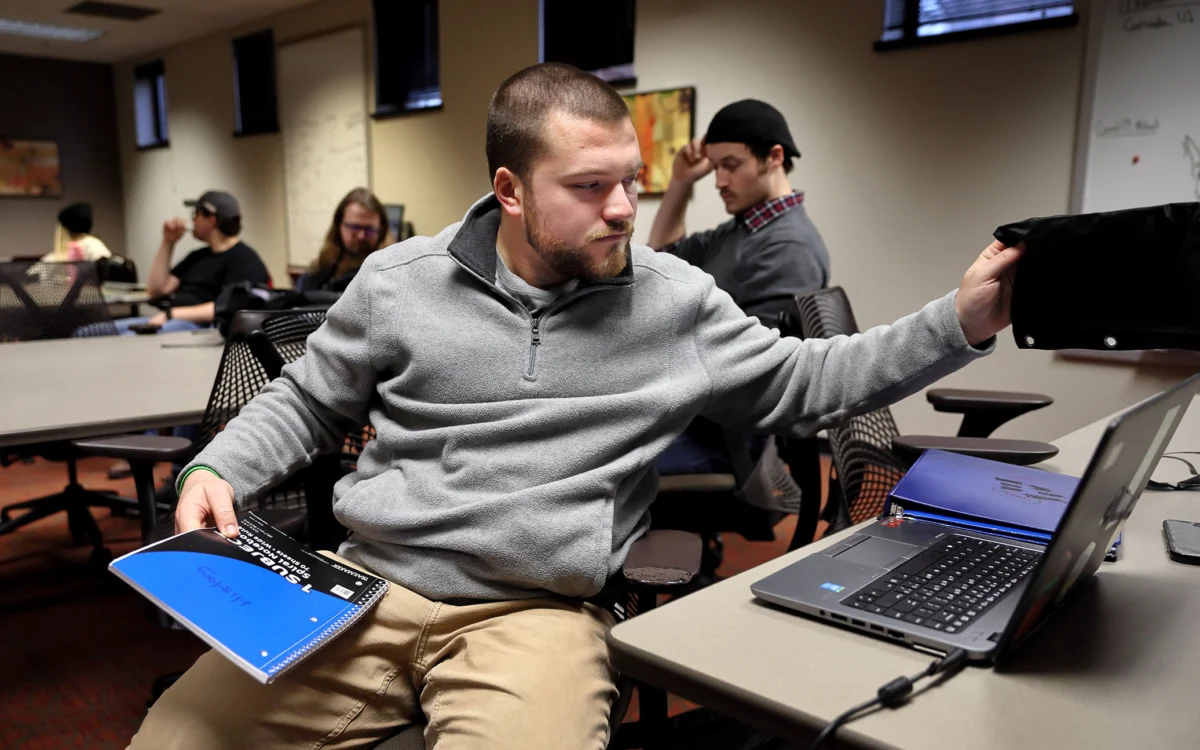
The example of Conner Stewart at the University of Missouri-St. Louis (UMSL) and their "Link" program illustrates the potential impact of dedicated support services. Programs like Link, which focus on educational, life, and career preparation for students on the autism spectrum, are crucial in bridging the gap between academic potential and successful college completion and beyond. Such programs often provide a structured and supportive environment that caters to the specific needs of autistic students, offering a lifeline for those who might otherwise struggle to adapt to the demands of higher education.
The success of such initiatives underscores the fact that with the right support, autistic individuals can not only succeed in college but also contribute significantly to their academic communities and future professional fields. The article’s introductory image of Conner Stewart preparing for his history class, a tangible representation of a student benefiting from tailored support, serves as a powerful reminder of the human element behind these statistics.
Broader Societal Impact and Future Directions
The increasing visibility of autistic individuals in higher education has a ripple effect on societal perceptions and opportunities. As more autistic students graduate and enter the workforce, they challenge stereotypes and demonstrate the diverse talents and capabilities within the autism community. This can lead to greater inclusion in all aspects of society, from employment to social engagement.
The research also has implications for policymakers. Increased awareness of the prevalence of autistic students in higher education may spur greater investment in disability services at both the federal and state levels. This could include funding for research, grants for developing innovative support programs, and initiatives to improve data collection and analysis.
Looking ahead, the focus must shift from mere awareness to concrete action. This involves a collaborative effort between educational institutions, disability advocacy groups, families, and individuals with autism themselves to create truly inclusive and supportive higher education environments. The goal is not simply to admit autistic students, but to ensure they have every opportunity to thrive academically, socially, and personally, ultimately leading to fulfilling and productive lives. The burgeoning presence of ASD on college campuses is not just a demographic shift; it is a call to evolve and a testament to the potential of a more inclusive future for higher education and beyond.