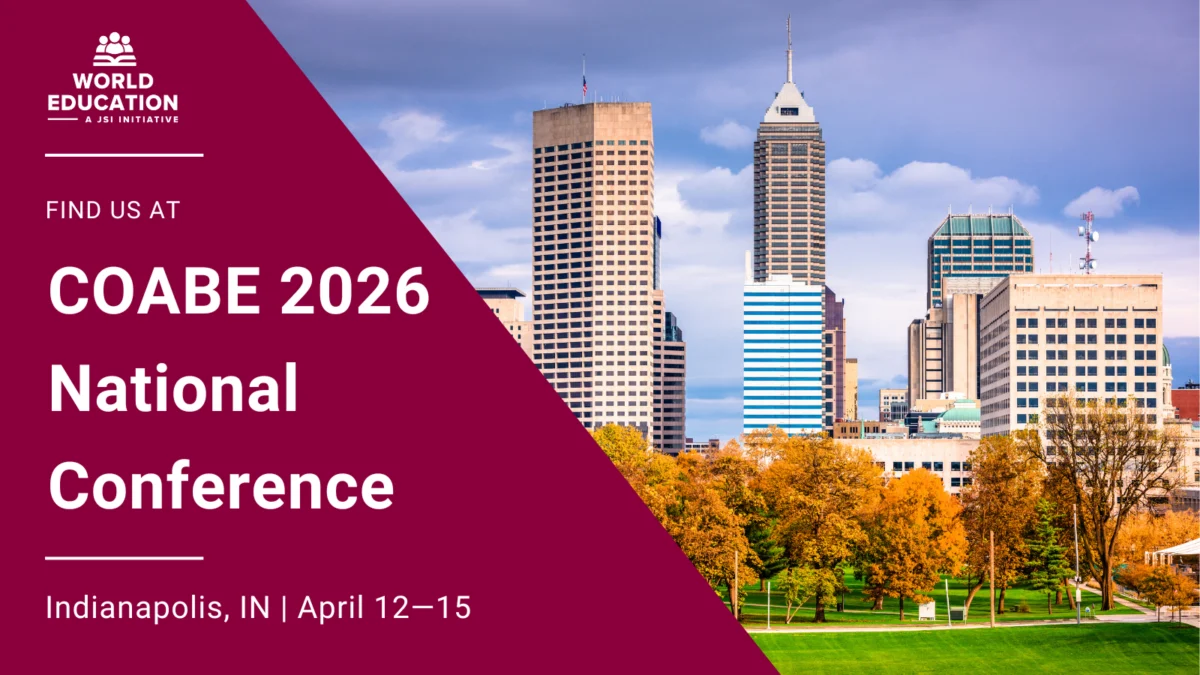
World Education, an initiative of JSI, has announced its comprehensive participation in the Commission on Adult Basic Education (COABE) 2026 National Conference, scheduled to take place from April 12 to April 15 in Indianapolis, Indiana. As a leader in the field of adult learning and digital equity, World Education will present a series of high-impact sessions focusing on the intersection of generative artificial intelligence, digital literacy, and professional development. The conference, which serves as the premier gathering for adult education practitioners, administrators, and policymakers in the United States, provides a critical platform for World Education to share research-backed strategies and practical tools designed to bridge the digital divide for adult learners across the country.
The Strategic Context of COABE 2026
The COABE National Conference arrives at a pivotal moment for the American workforce and educational landscape. As the 2026 labor market continues to evolve under the influence of rapid technological advancement, the demand for digital proficiency has shifted from a peripheral requirement to a core competency. Data from the National Skills Coalition indicates that nearly 92% of jobs now require some level of digital skill, yet a significant portion of the adult population remains underserved by traditional educational frameworks.
Against this backdrop, World Education’s presence at COABE 2026 is centered on "future-proofing" adult education. By leveraging its decades of experience in systems strengthening and applied research, the organization aims to provide educators with the resources necessary to navigate the complexities of AI integration and curriculum accessibility. The conference venue, the JW Marriott in Indianapolis, will host thousands of stakeholders dedicated to improving the lives of the estimated 43 million U.S. adults who possess low literacy skills.
Chronological Overview of World Education Sessions
The four-day event features a robust schedule of presentations led by World Education experts, often in collaboration with institutional partners such as the American Institutes for Research (AIR) and the University of Massachusetts Amherst. These sessions are designed to be accessible to both in-person attendees and virtual participants, reflecting the organization’s commitment to hybrid learning models.
Monday, April 13: Foundations of Digital Development
The first full day of the conference begins with a focus on measurable skill-building. At 8:00 AM, Jeff Goumas will lead a session titled "Using BRIDGES Skills Checklists to Drive Digital Skills Development in Any Context." Held in the JW Grand Ballroom 2, this presentation introduces a framework for tracking and validating digital competencies, a critical need for adult learners who may not follow traditional degree pathways.
In the late morning, Sandy Goodman and Catalina González will present "From Policy to Practice: Implementation Lessons from Boston’s Digital Literacy Initiative." This session, scheduled for 11:50 AM, offers a case study of municipal-level intervention. By examining the successes and challenges of the Boston initiative, the presenters will provide a roadmap for other cities looking to synchronize local government policy with educational delivery.
The afternoon concludes with a research-heavy session at 3:50 PM in Room 205. "Practical Solutions from Research: Digital Tools to Support Teaching and Learning from the CREATE Network" will feature Jen Vanek and Jeff Goumas alongside representatives from AIR. This session highlights the "Research-to-Practice" pipeline, showcasing how data-driven insights from the CREATE Network are being translated into classroom tools that enhance instructor efficacy and student engagement.
Tuesday, April 14: The AI Frontier and Open Resources
Tuesday’s agenda shifts toward the transformative power of artificial intelligence. At 8:00 AM, Rachel Riggs will present "Aligning AI Literacy with Learning and Work Goals in Adult Ed." As Generative AI (GenAI) becomes ubiquitous in the workplace, Riggs will argue that AI literacy is no longer an elective skill but a fundamental requirement for career advancement and economic mobility.
Following this, at 11:50 AM, Jen Vanek and Jeff Goumas will join Stephen Sireci of UMass Amherst to discuss "Free and Open Online Literacy Curriculum: Leveraging SkillBlox and ASAP for Adult Readers." This session addresses the financial barriers to high-quality educational content by promoting Open Educational Resources (OER) that are specifically tailored for adult learners.
The afternoon features two concurrent sessions at 2:00 PM. In Room 206, Vanek and Goumas will join AIR experts Stephanie Cronen and Neha Nanda for "Practitioner-Friendly Findings: How to Leverage Free Research-based Resources to Teach In-Demand Skills." Simultaneously, in the JW Grand Ballroom 3, Rachel Riggs will lead "Generative AI and the EdTech Maker Space: Leveraging GenAI to Fill Learning Resource Gaps." This latter session is expected to draw significant interest, as it demonstrates how educators can use AI to rapidly develop customized learning materials, thereby addressing the chronic shortage of resources for specialized adult education niches.
Wednesday, April 15: Professional Development and Literacy Strategies
The final day of the conference focuses on the sustainability of educational systems. At 11:50 AM, Dani Scherer will present "Maximum Impact Professional Development: A Three-Pronged Approach." This session addresses the need for high-quality, ongoing training for adult educators, who must frequently adapt to new technologies and shifting learner demographics.
In the afternoon, Eliana Stanislawski will lead two consecutive sessions in Room 209 and the JW Grand Ballroom 4. The first, "EdTech in Action: Structuring a Digital Literacy Learning Series for Adult Educators," provides a practical framework for institutionalizing digital literacy. The final session, "Engaging Strategies for Online Instruction of Literacy-Level Adults," addresses the unique challenges of teaching basic literacy skills through a digital medium, a task that requires specialized pedagogical approaches to ensure student retention and success.
Analysis of Implications: AI and the Digital Divide
The heavy emphasis on Generative AI in World Education’s 2026 programming reflects a strategic shift in the adult education sector. Analysts suggest that the "second-tier" digital divide—not just access to the internet, but the ability to use sophisticated tools like AI—is becoming the new frontier of inequality. By providing sessions on AI literacy and the "EdTech Maker Space," World Education is positioning itself as a primary architect of the ethical and practical integration of AI in non-traditional classrooms.
The inclusion of the BRIDGES and SkillBlox frameworks further suggests a move toward competency-based education. In a 2026 economy characterized by "skills-first" hiring, these tools allow adult learners to prove their capabilities to employers through modular, verifiable evidence of learning. This approach is particularly beneficial for immigrants, refugees, and justice-involved individuals, who are among the primary demographics served by COABE member organizations.
Institutional Partnerships and Collaborative Research
World Education’s collaborative approach is evident in its joint sessions with the American Institutes for Research (AIR) and UMass Amherst. These partnerships underscore the importance of cross-sector cooperation in solving systemic educational challenges. By combining World Education’s practical implementation experience with AIR’s rigorous evaluation capabilities, the sessions offered at COABE 2026 represent some of the most thoroughly vetted strategies in the field today.
Industry experts anticipate that the findings shared during these sessions will influence future iterations of the Workforce Innovation and Opportunity Act (WIOA) and other federal funding streams. As policymakers look for evidence-based models to support workforce development, the data presented by World Education regarding digital literacy initiatives and AI-driven curriculum development will likely serve as a benchmark for national standards.
About World Education and JSI
World Education, a JSI initiative, remains dedicated to improving the lives of the poor through education and social and economic development programs. With a global reach and a local focus, the organization works to strengthen education systems, design and implement innovative programs, and conduct applied research. Its participation in the COABE 2026 National Conference reaffirms its role as a catalyst for change in the adult education sector, ensuring that every learner has the opportunity to thrive in a digital-first world.
As the conference concludes on April 15, the insights and tools shared by World Education are expected to ripple through adult education centers nationwide, fostering a more inclusive and technologically proficient educational landscape. For those unable to attend in person, the organization continues to offer resources and partnership opportunities through its ongoing professional development series and research publications.