It has been one year since the official shutdown of the United States Agency for International Development (USAID), a move that signaled a significant shift in American foreign policy and a substantial reduction in U.S. foreign aid spending under the Trump administration. This drastic curtailment of assistance, particularly to middle-income nations, has left many around the world uncertain about its repercussions. A comprehensive new survey conducted by the Pew Research Center across 16 non-U.S. countries reveals a widespread apprehension and a prevailing sentiment that these cuts will likely have a negative impact on their national economies and social structures.
The countries surveyed are primarily middle-income nations, a classification based on World Bank income categories. These nations, which collectively received over $5 billion in U.S. aid in fiscal year 2024, saw their assistance plummet to just over $500 million by fiscal year 2026. This represents a reduction of more than 75% for each country studied, a stark illustration of the administration’s "America First" agenda and its reevaluation of international commitments. The federal fiscal year in the United States runs from October 1st to September 30th.
A Year of Uncertainty: Global Perceptions of Aid Reduction
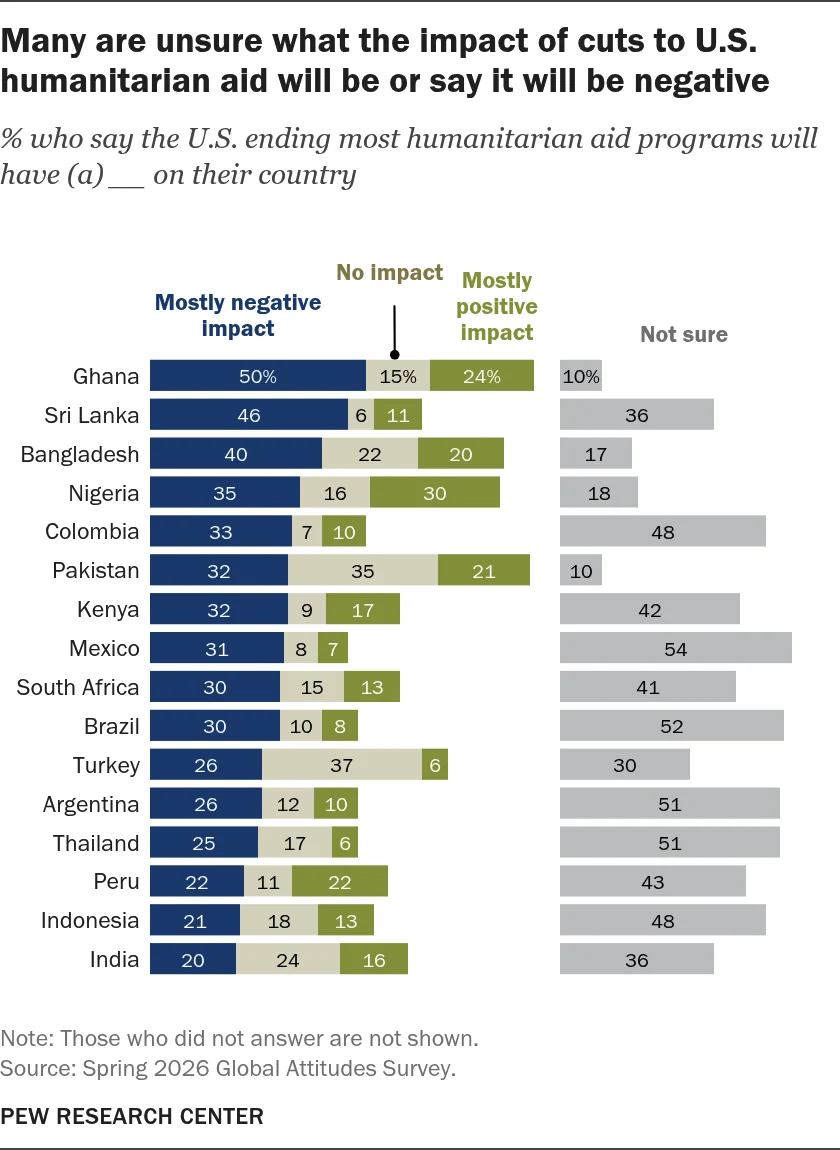
The Pew Research Center’s Spring 2026 Global Attitudes Survey, which polled 20,888 adults across the 16 nations, highlights a complex landscape of public opinion regarding the U.S. withdrawal of humanitarian aid. While a significant portion of respondents expressed uncertainty about the precise impact, those who did offer an opinion largely predicted negative consequences.
The survey data reveals that in countries like Ghana, Sri Lanka, and Bangladesh, four in ten or more respondents believe the reduction in U.S. humanitarian aid will have a "mostly negative impact." This sentiment is at least double the proportion of those who foresee a positive outcome. This indicates a deep-seated concern about the potential for increased poverty, reduced access to essential services, and a destabilization of ongoing development projects.
Regional Differences and Specific Concerns
The impact of these cuts is not uniformly perceived across all regions. Uncertainty about the implications of reduced aid is particularly pronounced in Latin American nations included in the survey, such as Argentina, Brazil, Colombia, Mexico, Peru, and Argentina. The distribution of U.S. aid to this region prior to the cuts varied significantly, with Colombia having been a substantial recipient, while Argentina and Brazil received comparatively less. This uneven distribution might contribute to the varied levels of apprehension and the higher rates of "not sure" responses in these countries.
Similarly, nations in Asia and Africa also expressed significant concern. In India, Indonesia, Kenya, South Africa, and Thailand, a considerable number of respondents were unsure of the exact impact, but a notable portion voiced worries about negative repercussions.
Shifting Aid Landscape: A Timeline of Cuts
The reduction in U.S. foreign aid is not an abrupt event but rather a culmination of policy shifts. The Trump administration’s emphasis on prioritizing domestic needs and renegotiating international agreements led to a systematic reevaluation of foreign assistance programs. The dismantling of USAID and the reallocation of its functions, largely absorbed by the State Department, marked a pivotal moment in this policy recalibration. This strategic pivot aimed to streamline operations and potentially redirect funds towards areas deemed more critical by the administration.

Prior to these significant cuts, U.S. foreign aid played a crucial role in supporting various sectors in these middle-income countries, including healthcare, education, infrastructure development, and disaster relief. The abrupt withdrawal of this financial and programmatic support leaves a void that is difficult to fill, particularly for nations heavily reliant on external assistance for critical social programs.
Detailed Survey Findings: A Country-by-Country Breakdown
The Pew Research Center’s survey provides granular data on public perception in each of the 16 countries:
- Ghana: 50% anticipate a mostly negative impact, 24% a mostly positive impact, 15% no impact, and 10% are not sure.
- Sri Lanka: 46% expect a mostly negative impact, 11% a mostly positive impact, 6% no impact, and a significant 36% are not sure.
- Bangladesh: 40% foresee a mostly negative impact, 20% a mostly positive impact, 22% no impact, and 17% are not sure.
- Nigeria: 35% believe the impact will be mostly negative, 30% mostly positive, 16% no impact, and 18% are not sure. A notable demographic difference exists within Nigeria, with Christians being more likely than Muslims to foresee a negative impact.
- Colombia: 33% anticipate a mostly negative impact, 10% a mostly positive impact, 7% no impact, and a substantial 48% are not sure.
- Pakistan: 32% expect a mostly negative impact, 21% a mostly positive impact, 35% no impact, and 10% are not sure. Pakistan experienced a substantial 96% reduction in U.S. humanitarian aid.
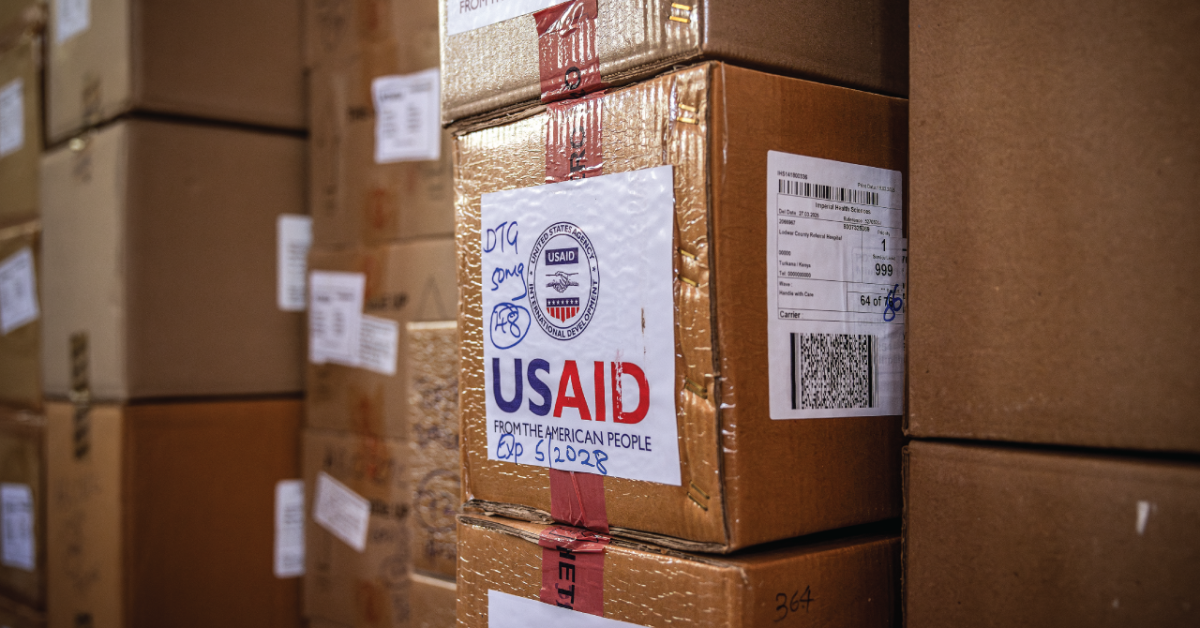
- Kenya: 32% foresee a mostly negative impact, 17% a mostly positive impact, 9% no impact, and a considerable 42% are not sure. The image accompanying this article, showing boxes of drugs from the now-dismantled USAID in a Kenyan pharmacy storeroom, serves as a visual testament to the tangible presence of such aid.
- Mexico: 31% believe the impact will be mostly negative, 7% mostly positive, 8% no impact, and a high 54% are not sure.
- South Africa: 30% anticipate a mostly negative impact, 13% a mostly positive impact, 15% no impact, and 41% are not sure.
- Brazil: 30% expect a mostly negative impact, 8% a mostly positive impact, 10% no impact, and a significant 52% are not sure.
- Turkey: 26% foresee a mostly negative impact, 6% a mostly positive impact, 37% no impact, and 30% are not sure. Turkey saw a 92% reduction in aid.
- Argentina: 26% believe the impact will be mostly negative, 10% mostly positive, 12% no impact, and 51% are not sure.
- Thailand: 25% anticipate a mostly negative impact, 6% a mostly positive impact, 17% no impact, and 51% are not sure.
- Peru: 22% expect a mostly negative impact, 22% a mostly positive impact, 11% no impact, and 43% are not sure. Peru is unique in this survey for having an equal split between those anticipating negative and positive impacts.
- Indonesia: 21% foresee a mostly negative impact, 13% a mostly positive impact, 18% no impact, and 48% are not sure.
- India: 20% believe the impact will be mostly negative, 16% mostly positive, 24% no impact, and 36% are not sure.
The "No Impact" and "Positive Impact" Perspectives
While the majority sentiment leans towards negative impacts, a notable minority in several countries see potential benefits or no significant change. In Pakistan and Turkey, a substantial proportion of respondents indicated that the cuts would have "no impact." This perception might be influenced by the fact that, despite the percentage reduction, the total dollar amount of aid received by these nations was among the lower figures before the cuts were implemented.
In Nigeria, a significant 30% of respondents believe the cuts will have a "mostly positive impact." This could reflect a complex interplay of factors, including a desire for national self-reliance or a perception that foreign aid can sometimes create dependency. Similarly, in Ghana, 24% believe the impact will be positive, and in Peru, the split between negative and positive impacts is even at 22%. These perspectives, though less common than concerns about negative consequences, highlight the diverse views on the role and efficacy of foreign aid.

Broader Implications for Global Development and U.S. Standing
The reduction in U.S. foreign aid has far-reaching implications that extend beyond the immediate economic impact on recipient nations. It raises questions about the United States’ role as a global partner and its commitment to addressing international humanitarian crises. The survey results suggest that while the specific impact is uncertain for many, the perception of U.S. disengagement from global development efforts could shape international attitudes towards America.
The data on American public opinion regarding foreign aid offers a contrast. A 2025 Pew Research Center survey indicated strong support for U.S. aid in providing medical supplies to developing countries (83%), while support for aid for art and cultural activities was significantly lower (34%). Another 2023 survey found that one-third of Americans believed U.S. foreign aid primarily benefits developing countries, with another 37% seeing it as having both beneficial and harmful effects. This suggests that within the U.S., there is a nuanced understanding of foreign aid’s purpose and impact, which may not always align with the realities faced by recipient nations.
The decision to drastically cut foreign aid, particularly humanitarian assistance, reflects a broader shift in U.S. foreign policy under the Trump administration, one that prioritized national interests and questioned the efficacy and scope of extensive international commitments. This shift has been met with mixed reactions globally, and the long-term consequences for both U.S. global standing and the stability of recipient nations remain a subject of ongoing observation and analysis. As countries grapple with the reduced flow of aid, their ability to sustain essential services and pursue development goals will be significantly tested, potentially leading to increased internal challenges and a greater reliance on alternative international partnerships.
The findings from this Pew Research Center survey underscore the complex and often uncertain terrain of international aid, highlighting the profound impact of policy decisions made in one nation on the lives and livelihoods of millions across the globe. The year since USAID’s shutdown has been marked by a growing awareness of these consequences, and the long-term reverberations of this significant policy change are likely to be felt for years to come.