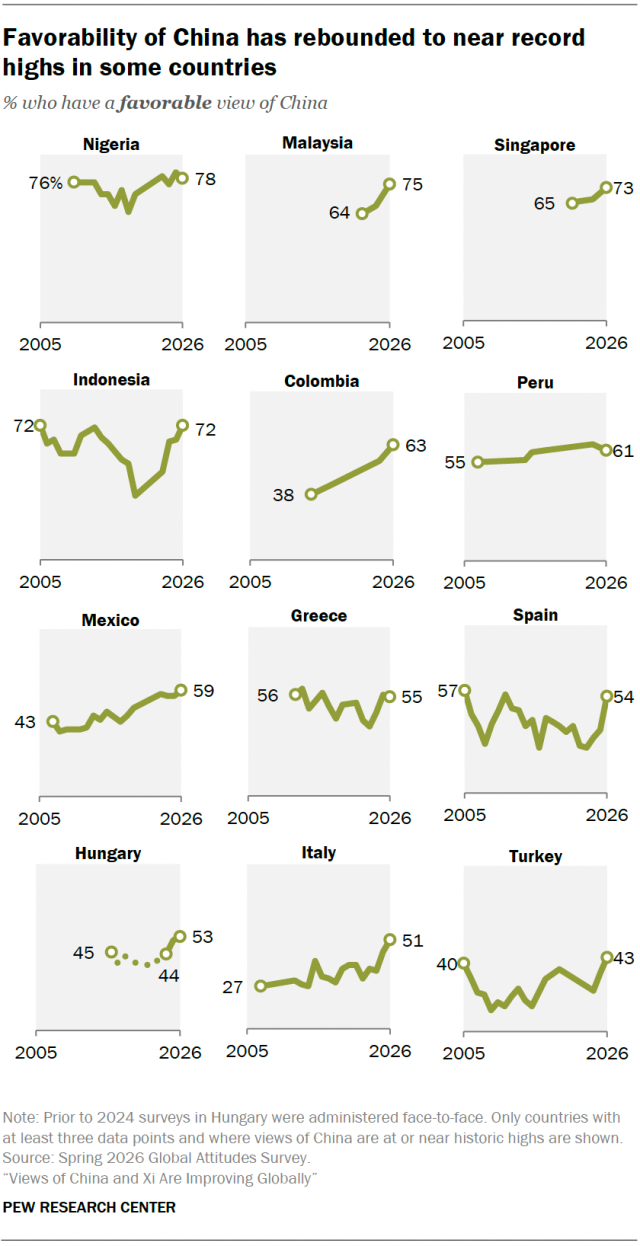
A comprehensive new survey by the Pew Research Center reveals a significant shift in global public opinion towards China, indicating a rebound in favorable views in many countries, even reaching new highs in some regions. The research, conducted between February 8 and May 13, 2026, among 45,658 individuals across 37 nations, suggests that China’s international image has substantially improved since the low points observed during the COVID-19 pandemic. This positive momentum is occurring even as perceptions of the United States appear to be waning in several key global powers.
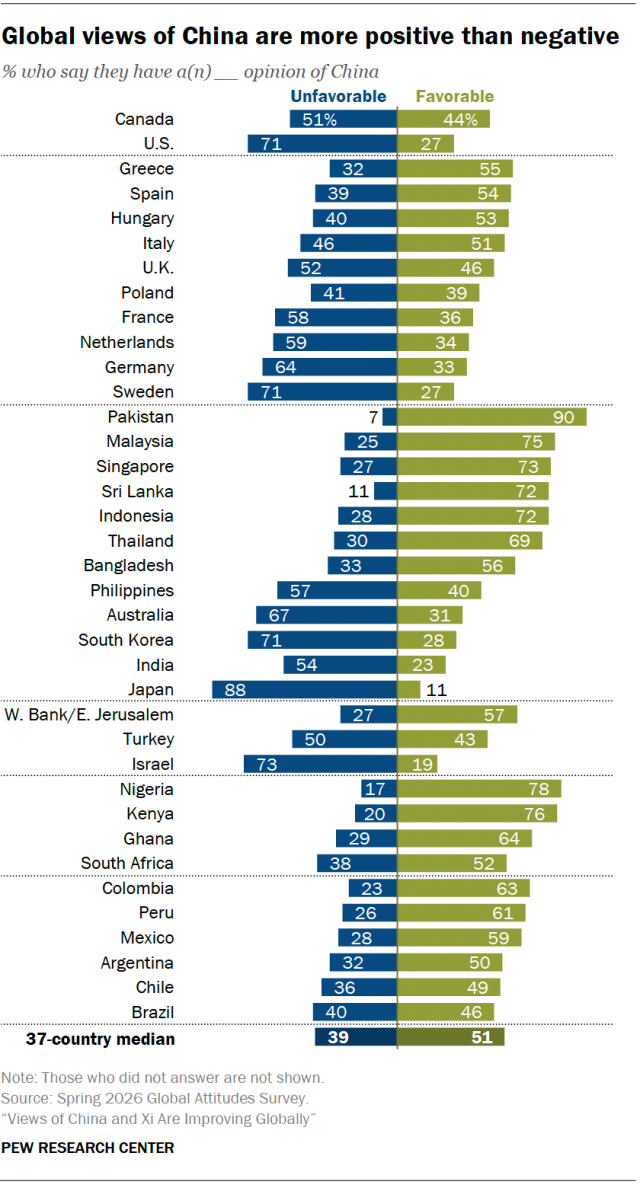
The report highlights that a median of 51% of respondents across the surveyed countries now hold a favorable view of China, with 39% expressing an unfavorable opinion. This marks a notable recovery from earlier periods, particularly following the initial global health crisis, which had led to historically low favorability ratings for China in numerous nations. The data indicates that positive sentiment is particularly strong in sub-Saharan Africa and Latin America, while remaining more tempered in Europe and North America.

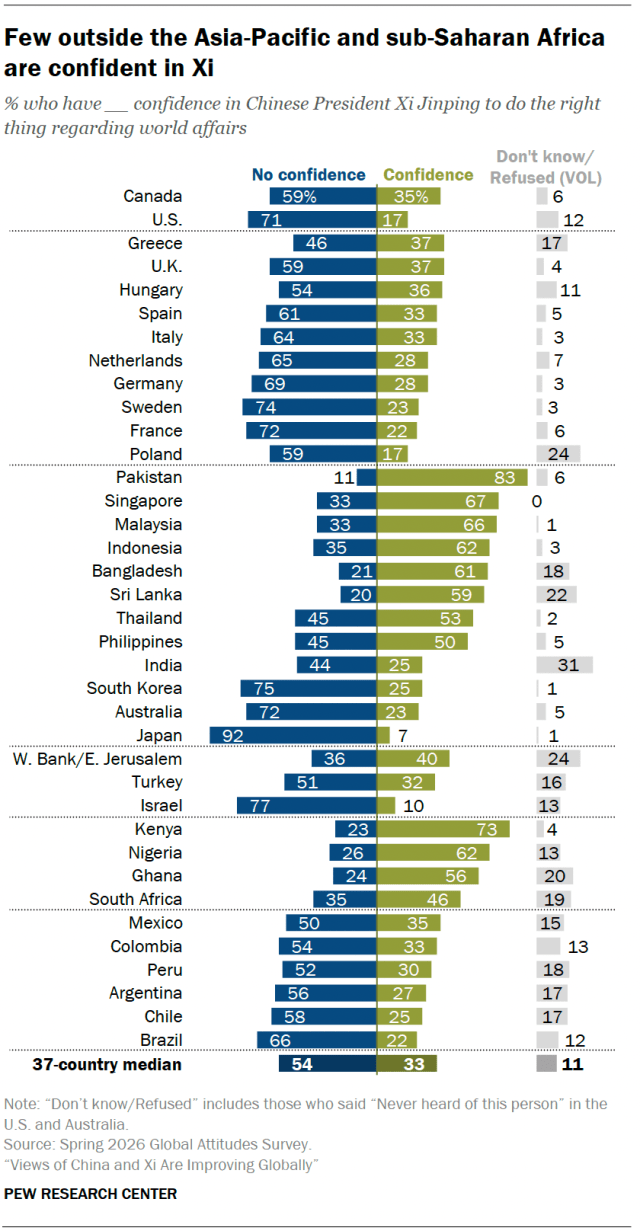
A critical finding of the study is the growing confidence in Chinese President Xi Jinping’s ability to handle global affairs. While still not universally high, confidence in Xi has seen an increase, mirroring the broader positive trend in views of China. This uptick in trust is particularly pronounced in the Asia-Pacific and sub-Saharan African regions. However, the survey also underscores that in many of the wealthier nations, particularly in Europe and North America, public opinion towards Xi remains predominantly negative.
The complex tapestry of global perceptions is further illuminated by the comparative standing of China and the United States. The Pew Research Center’s findings indicate that China is now viewed more positively than the U.S. in 25 of the surveyed countries. Correspondingly, more people express confidence in President Xi Jinping’s handling of world affairs than in U.S. President Donald Trump in 22 nations. This juxtaposition suggests a significant recalibration of global power perceptions and a potential shift in international influence.
Shifting Tides: A Chronicle of Global Perceptions
The period leading up to 2026 has been marked by dynamic geopolitical shifts and evolving national narratives. At the dawn of the decade, the COVID-19 pandemic cast a long shadow over China’s international standing, with many countries expressing significant disapproval of its handling of the crisis and its broader foreign policy approach. This sentiment was reflected in a series of Pew Research Center reports published in the early to mid-2020s, which detailed a largely negative reception to China’s global initiatives.
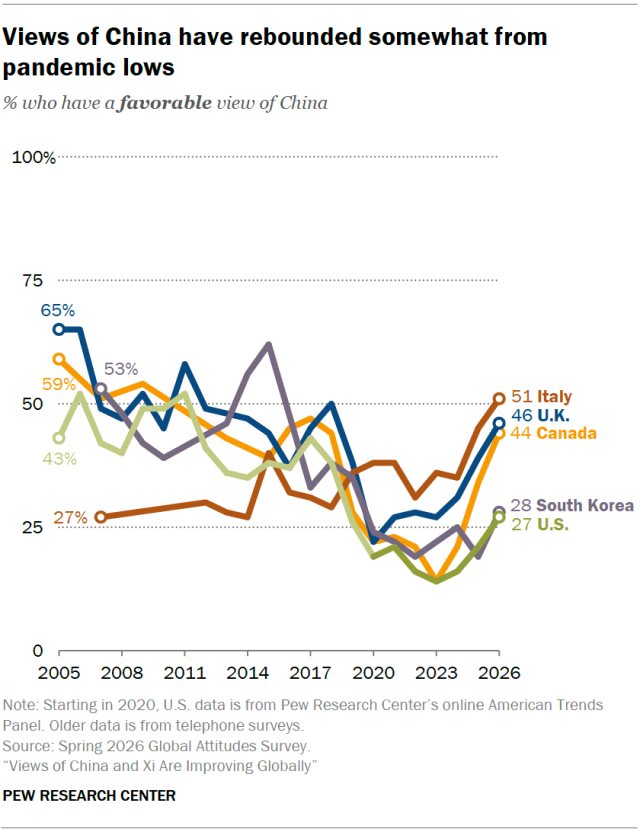
However, the landscape began to transform in the subsequent years. By 2026, the survey data suggests a discernible recovery in China’s image. This resurgence can be partly attributed to China’s ongoing economic engagement and its increasing role in international development initiatives, particularly in middle-income countries. The report notes that China has actively cultivated economic and security ties with nations in Latin America and has been a significant financier in regions like Asia and Africa.
The survey’s methodology, involving interviews with over 45,000 adults from February 8 to May 13, 2026, provides a robust snapshot of these evolving perspectives. The diverse sample, encompassing countries from Argentina to the United States and including nations across Asia, Africa, Europe, and the Americas, allows for a nuanced understanding of regional and economic disparities in opinion.
Regional Disparities and Economic Divides
The research highlights stark regional differences in how China is perceived. The Asia-Pacific region, while home to both the most positive and most negative views, showcases this diversity. Pakistan stands out with a remarkable 90% favorability rating for China, while Japan registers a low of 11%. This contrast underscores the varied geopolitical alliances and historical relationships that shape perceptions within this crucial region.
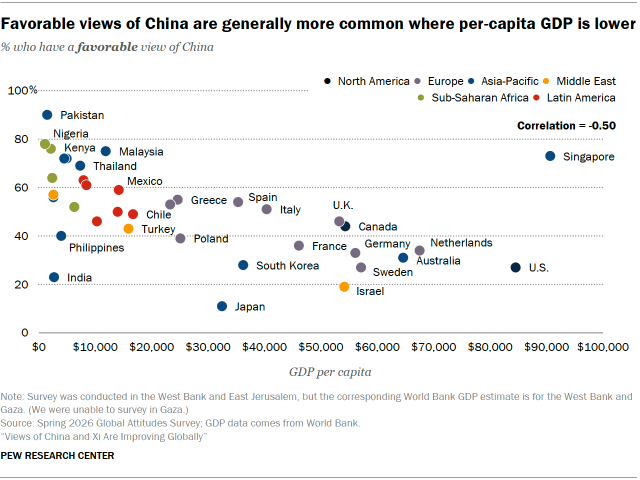
A significant trend identified is the correlation between a country’s economic status and its view of China. Generally, wealthier nations, such as Australia, Japan, and South Korea, tend to express more negative opinions of China. Conversely, favorable views are more prevalent in middle-income countries. An intriguing exception to this pattern is Singapore, a high-income nation with a high GDP that nevertheless exhibits a favorability toward China well above the cross-national median. This suggests that economic prosperity alone does not dictate national sentiment towards Beijing.
The report delves deeper into these economic divides, noting that China’s foreign policy has increasingly targeted middle-income countries. Initiatives such as building economic and security ties, providing significant financial backing, and implementing favorable trade policies, like a zero-tariff policy in Africa, are likely contributing to improved perceptions in these nations. In 17 surveyed middle-income countries, China’s global role is viewed positively by a majority, with many respondents seeing China as a reliable partner that considers the interests of other nations.
Confidence in Xi Jinping: A Mirror to National Sentiment
The level of confidence in Chinese President Xi Jinping to act appropriately on the world stage serves as a significant barometer for China’s broader international standing. The survey reveals that confidence in Xi generally mirrors the favorability ratings of China itself. In regions where China is viewed positively, such as sub-Saharan Africa and parts of Asia, confidence in Xi tends to be higher.
For instance, in Pakistan, where China enjoys overwhelming favorability, confidence in Xi is also exceptionally high. Conversely, in countries like the United States and many European nations, where China’s favorability is lower, so too is the confidence in President Xi. This parallel trend suggests that public trust in leadership is closely intertwined with overall national perception.
However, the report also notes that even in countries with higher confidence in Xi, the overall levels remain moderate. Around half or more of the public express positive views of Xi in only 11 of the 37 surveyed nations. Despite this, the comparison with U.S. President Donald Trump reveals that Xi is viewed more favorably in a substantial number of countries, indicating a shifting balance of leadership perception.
Respect for Freedoms: A Persistent Concern
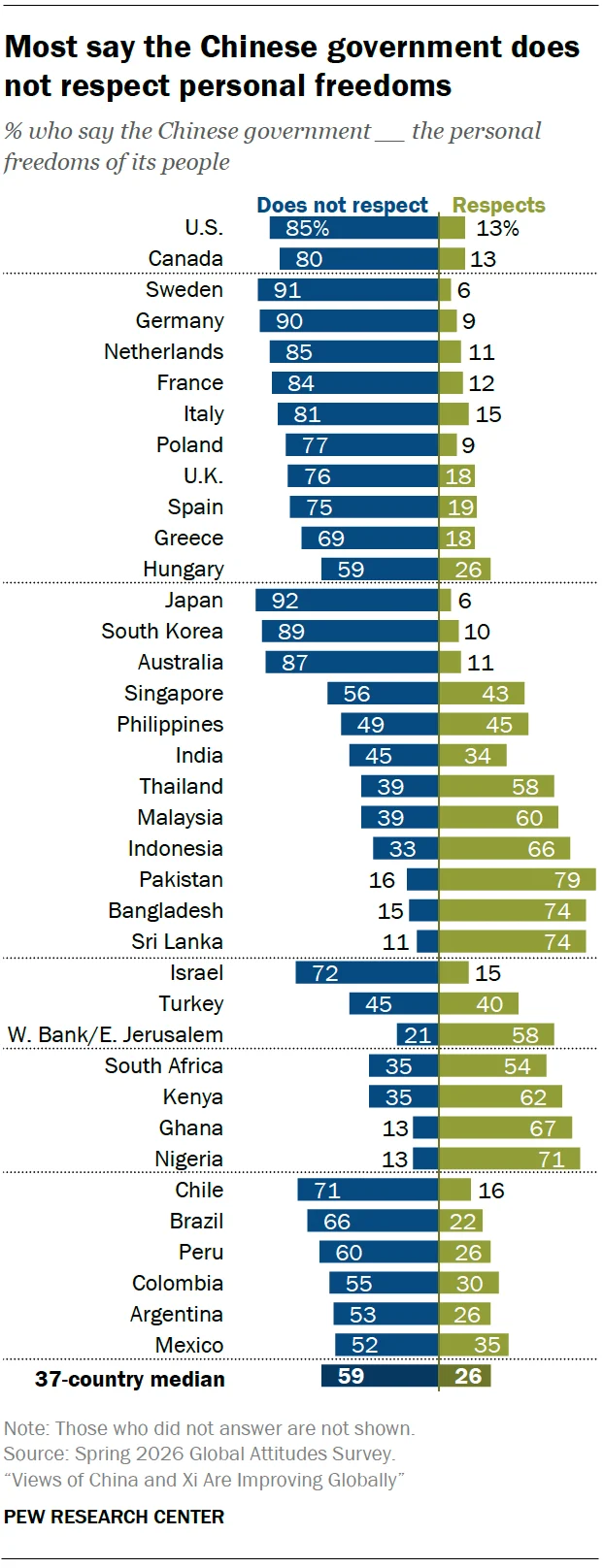
Despite the overall improvement in China’s image, one area where significant skepticism persists is the perception of the Chinese government’s respect for the personal freedoms of its people. The Pew Research Center’s long-standing question on this topic reveals a predominantly negative assessment globally. In only 11 of the 37 surveyed countries do a majority of respondents believe that the Chinese government respects personal freedoms.
This concern is particularly acute in North America, most European nations, Japan, South Korea, and Australia, where a substantial majority, often three-quarters or more, believe that China does not uphold these freedoms. While younger adults in some countries, such as the UK, show slightly more willingness to believe China respects personal freedoms compared to older generations, the overall sentiment remains critical. This persistent concern suggests that while economic engagement and geopolitical influence may be on the rise, fundamental questions about governance and human rights continue to shape international opinion.
China’s Foreign Policy Role: A Mixed but Improving Picture in Middle-Income Countries
The survey also probed perceptions of China’s role in global affairs, particularly within 17 middle-income countries where China has significantly increased its foreign policy engagement. The findings indicate a generally positive reception to China’s global influence in these nations. A median of 55% across these countries view China’s role in the world as a positive force, while 32% hold a negative view.
Moreover, a majority in these middle-income countries believe that China considers the interests of nations like their own when formulating international policy. This perception is particularly strong in parts of the Asia-Pacific and sub-Saharan Africa. For example, in Pakistan, Sri Lanka, and Kenya, a large proportion believe China accounts for their national interests, contrasting with lower figures in countries like Colombia and Turkey.
The question of interference in the domestic affairs of other countries elicits more mixed responses. While the majority in some nations, such as Sri Lanka, believe China interferes, a significant minority in others, like Turkey, hold this view. Notably, the report emphasizes that across all 17 middle-income countries surveyed, people are more likely to perceive the United States as interfering in other countries’ affairs than they are to say the same about China. This finding, coupled with the general positive sentiment towards China’s foreign policy in these regions, suggests that China’s diplomatic and economic outreach is yielding tangible results in shaping perceptions of its global role.
The research from the Pew Research Center provides a comprehensive and nuanced view of how China is perceived across the globe in 2026. While economic and geopolitical factors contribute to a generally improving image, particularly in middle-income countries, persistent concerns regarding personal freedoms suggest that the path to universal favorability remains complex and multifaceted. The ongoing comparison with the United States further highlights a dynamic geopolitical landscape where perceptions of power and influence are in constant flux.