As Sweden approaches its national elections on September 13, 2026, a fierce political and cultural battle is unfolding over the future of the nation’s Arctic territories, Indigenous rights, and the rapid expansion of the green transition economy. Despite mounting criticism from international bodies, including the United Nations, a formidable bipartisan consensus has emerged within the Swedish Riksdag. Six out of the eight political parties currently represented in the national parliament are actively advancing legislative frameworks designed to streamline and accelerate the establishment of new industrial mining operations on traditional Sami reindeer herding lands.
This legislative push has ignited intense controversy, drawing sharp lines between the central government’s economic ambitions and the survival of Europe’s only recognized Indigenous people. At the heart of the storm is the proposed Per Geijer iron ore and rare earth mining project in Kiruna, championed by state-owned mining giant LKAB, the Swedish government, and the European Union. While proponents argue that domestic mineral extraction is vital for Europe’s technological autonomy, renewable energy transition, and post-fossil fuel economy, affected Indigenous communities warn of an existential catastrophe. The Gabna Sami reindeer herding community has formally accused the Swedish state of perpetrating a cultural genocide, asserting that the unrelenting industrialization of their ancestral lands is systematically dismantling their language, traditions, social structures, and ancient livelihood.
The political friction reached a boiling point during a recent national broadcast on SVT, Sweden’s public service broadcaster. When an SVT reporter confronted Deputy Prime Minister Ebba Busch regarding repeated, severe warnings from United Nations human rights committees concerning Sweden’s persistent failure to secure free, prior, and informed consent from the Sami people, Busch offered a blunt dismissal. Refusing to acknowledge any state accountability, the Deputy Prime Minister declared, “Then the UN is wrong.” This outright rejection of international oversight has sent shockwaves through human rights organizations, legal scholars, and Indigenous advocacy groups across the Nordic region, signaling a potentially regressive shift in Sweden’s long-standing global reputation as a progressive champion of human rights and environmental stewardship.
Background Context and the Historical Grievances of the Sami People
To fully understand the gravity of the current crisis in northern Sweden, one must examine the centuries-long trajectory of state-sponsored colonialism and resource extraction in Sepmi, the traditional homeland of the Sami. Historically spanning the northern regions of Norway, Sweden, Finland, and the Kola Peninsula of Russia, Sepmi has long been treated by southern capitals as an extractive periphery. For generations, Sami communities have faced successive waves of state encroachment, beginning with forced taxation and religious assimilation, followed by the systematic carving up of migratory routes for forestry, hydroelectric dam construction, and large-scale mining.
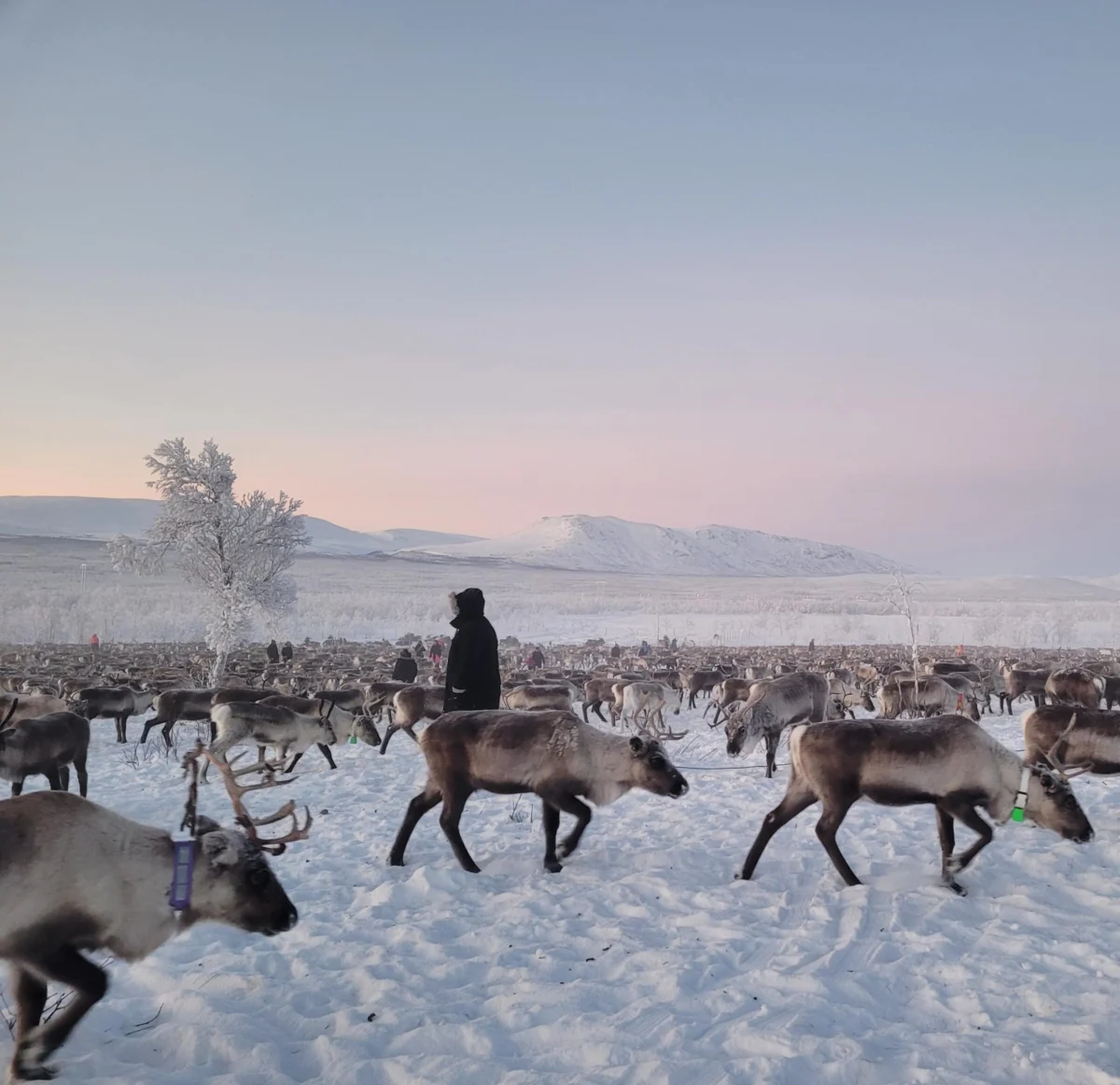
Reindeer herding is far more than an economic sector for the Sami; it is the foundational pillar of their culture, worldview, and social cohesion. The reindeer’s annual migration dictates the rhythm of community life, binding generations together through traditional ecological knowledge, oral histories, and the preservation of the Sami language. However, over the past century, this delicate ecological balance has been steadily eroded. Industrial footprints have expanded northward, fragmenting seasonal pastures, destroying ancient lichen-rich grazing lands, and polluting vital fishing waters.
The Gabna reindeer herding community, operating in the northern municipality of Kiruna, represents one of the frontline defenders against this modern industrial onslaught. For Gabna, the proposed Per Geijer deposit—believed to be Europe’s largest known deposit of rare earth elements—is not merely another economic development project; it is a fatal blow. The mine’s infrastructure would effectively sever Gabna’s final remaining migratory corridor, cutting off the vital passage where herds must travel between their summer and winter grazing grounds. Without these traditional routes, reindeer herding becomes biologically and economically untenable, threatening the complete collapse of a distinct cultural heritage that has endured for millennia.
Chronology of Escalating Tensions Leading to the 2026 Elections
The escalation of tensions leading up to the September 2026 general election did not occur overnight. It represents the culmination of years of intensifying policy debates, legislative maneuvers, and mounting friction between Stockholm and the Arctic north.
In the early 2020s, as the European Union intensified its push for strategic autonomy in critical raw materials—particularly rare earth elements essential for electric vehicle batteries and wind turbines—the Swedish government positioned itself as a premier supplier of green minerals. State-owned LKAB intensified exploration efforts in Norrbotten County, identifying massive mineral wealth beneath lands historically utilized by Sami reindeer herding communities.
By 2023 and 2024, international human rights monitors began registering formal complaints from Sami councils. The UN Committee on the Elimination of Racial Discrimination (CERD) and the UN Special Rapporteur on the Rights of Indigenous Peoples repeatedly cautioned Stockholm that Swedish mining legislation failed to meet international legal standards, specifically regarding the requirement to obtain genuine Indigenous consent before granting industrial concessions. Despite these warnings, the Swedish government accelerated its legislative agenda.
In late 2024 and throughout 2025, the coalition government—comprising the Moderate Party, the Christian Democrats, and the Liberals, with parliamentary backing from the Sweden Democrats—began formulating proposals to reform the Swedish Minerals Act and environmental permitting processes. Deputy Prime Minister Ebba Busch, leader of the Christian Democrats and holding a prominent portfolio overseeing energy and enterprise, emerged as the chief architect of these pro-mining policies. Busch publicly argued that Sweden’s complex environmental and heritage review processes were needlessly delaying national security and economic growth, famously calling for "fewer reindeer" and asserting the state’s right to "reclaim" land for national industrial interests.
As the political campaign trail heated up in mid-2026, the governing parties proposed removing the minimal legal protections currently afforded to reindeer herding as a designated national interest (riksintresse) under Swedish planning law. This proposal triggered widespread outrage among Sami villages (samebyar), culminating in the high-profile media confrontations in September 2026, including the explosive SVT interview where Busch dismissed UN criticism, and the subsequent direct accusations of cultural genocide leveled by Gabna representatives.
Data, Policy Proposals, and the Legislative Shift
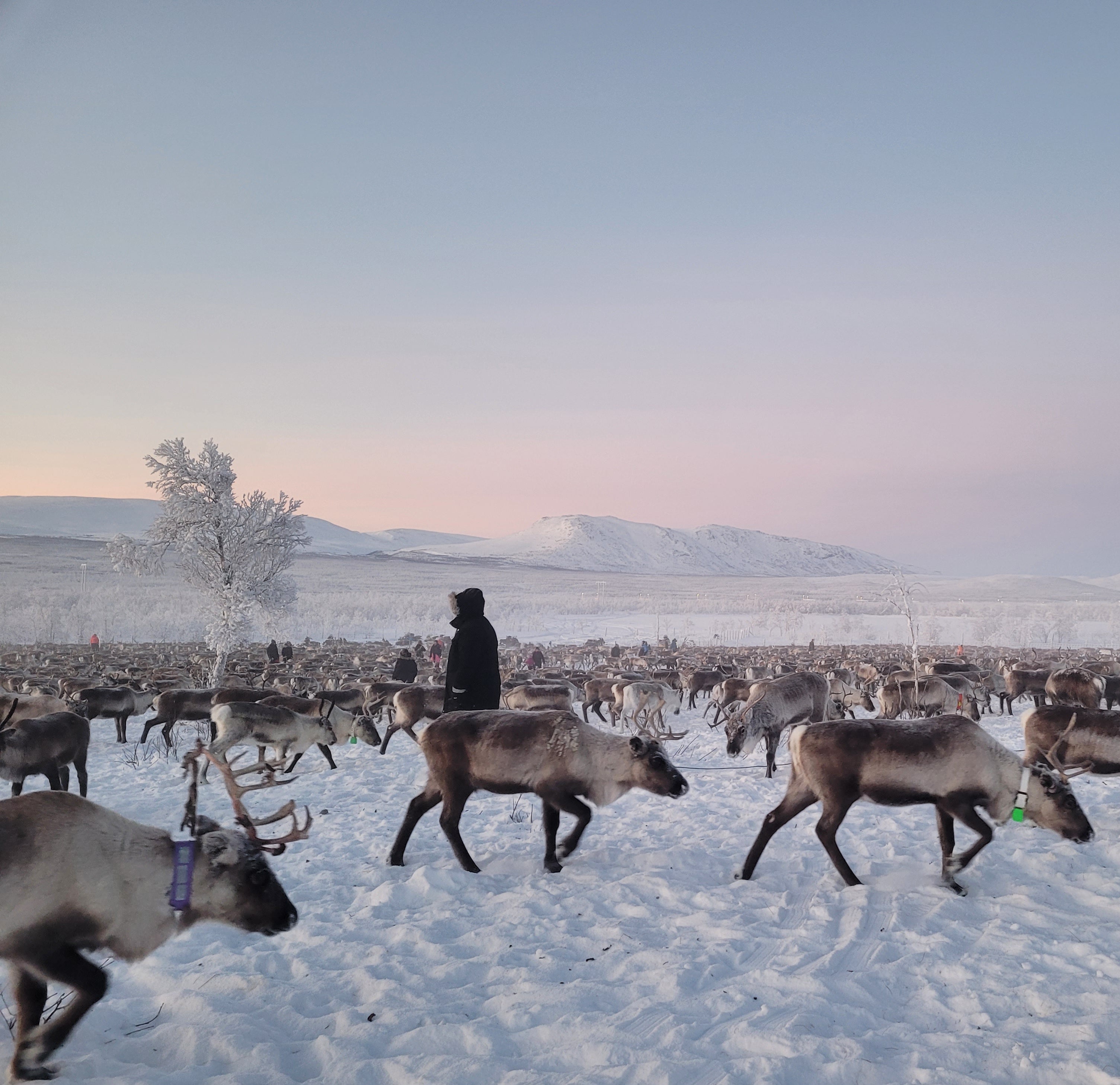
The legislative changes currently being championed by the six-party parliamentary bloc represent a profound departure from traditional Swedish consensus politics. At the core of the proposed reforms is a weakening of the legal status of reindeer herding as a national interest. Under current Swedish environmental and planning legislation, a designated "riksintresse" provides a degree of legal defense against conflicting land uses, forcing developers to weigh cultural and ecological preservation heavily against industrial projects.
By seeking to downgrade or dilute these protections, the ruling coalition aims to eliminate what industry lobbyists describe as "permitting bottlenecks." Proponents of the mining expansion cite compelling macroeconomic data: Sweden is already a major exporter of iron ore, and the discovery of rare earth elements at Per Geijer positions the Nordic nation as a cornerstone of the EU’s Critical Raw Materials Act. Brussels aims to reduce its reliance on external suppliers like China, which currently dominates the global processing and supply chain of rare earth elements.
However, independent environmental and economic analysts point to a stark asymmetry in the risk-benefit distribution. While the macroeconomic gains—measured in billions of euros in export revenues and regional employment in urban centers like Kiruna—accrue to the Swedish state and the broader European Union, the permanent environmental degradation and cultural extinction risks are concentrated entirely within a small group of Indigenous families and communities. According to reports from cultural heritage monitors, over 50% of traditional Sami grazing lands in certain northern districts have already been compromised, degraded, or entirely swallowed by a century of mining, forestry, and infrastructure development.
Official Responses, Indigenous Arguments, and Human Rights Implications
The ideological divide between Stockholm and Sepmi exposes deep-seated philosophical disagreements regarding land ownership, human rights, and the definition of a sustainable future.
Lars-Marcus Kuhmunen, chair of the Gabna reindeer herding community, has articulated the existential stakes with uncompromising clarity. “The reindeer are central to identity, language, traditions, social structures, and way of life,” Kuhmunen stated in recent public addresses. “They are a cornerstone upholding our culture and livelihood. Lose it, and Sami culture and way of life face extinction. Unless we stop LKAB, their mining will wipe out our way of life. The state is committing a cultural genocide in Kiruna.”
Defining cultural genocide in this context involves understanding that the systematic eradication of a minority group does not require armed military force or physical displacement by violence. Instead, it occurs through the calculated destruction of the cultural bearing aspects—language, traditional economic practices, sacred sites, and social structures—that allow an Indigenous people to reproduce their society across generations. Karin K. Niia, spokesperson for the Gabna community, elaborated on this colonial continuity in the recent SVT documentary Renar i vägen ("Reindeer in the Way"):
“Sweden and LKAB are maintaining a colonial order where Indigenous lands in the north are treated as a colony to provide Europe with minerals,” Niia noted. “We have lost hectare after hectare, and watched the fishing lakes and settlements be swallowed up by mining industrial areas to build Sweden’s welfare, but also to build the EU and Europe. How much must we sacrifice to build prosperity for others?”
Conversely, government officials and mining advocates maintain that national sovereignty and the collective economic security of the European continent must take precedence in an increasingly unstable geopolitical climate. Deputy Prime Minister Ebba Busch and her allies argue that modern green technologies—such as wind turbines, electric vehicles, and advanced electronics—cannot be manufactured without the raw materials locked beneath Swedish soil. From this perspective, refusing to mine the Arctic would make Europe complicit in foreign resource dependency and undermine the global transition away from fossil fuels.
The broader international human rights community, however, views Sweden’s hardening stance with mounting alarm. Human rights activist Olivia Linander has drawn pointed parallels between the political communication styles of modern populist movements and the dismissive rhetoric employed by senior Swedish officials when confronted with documented Indigenous grievances.
“Instead of responding to this serious allegation from Gabna, Busch brushes it off,” Linander observed. “Not unlike political figures such as Donald Trump in the United States, she has a track record of dismissing reporters’ facts in the moment she first hears them, and questioning the legitimacy of institutions behind the criticism, whether it’s the UN or public service media. It is a very troubling development for a nation that historically prides itself on institutional integrity and human rights advocacy.”
Broader Impact and Future Outlook
As voters across Sweden prepare to cast their ballots on September 13, 2026, the outcome of the election carries profound implications that extend far beyond national borders. The political consensus favoring expedited mining in the Arctic sets a dangerous precedent for Indigenous rights across the circumpolar north, where similar conflicts between green industrialization and native land rights are playing out in Norway, Finland, and North America.
The refusal of senior government ministers to engage constructively with United Nations human rights mechanisms threatens to isolate Sweden within international legal forums. More immediately, it deepens domestic polarization, alienating Indigenous populations who feel increasingly cornered by a state apparatus that views their ancestral homelands primarily as an industrial sacrifice zone.
Whether through imminent legal challenges in European courts, direct-action protests on the tundra, or shifting political coalitions in the wake of the upcoming election, the battle over the Per Geijer mine and the rights of the Gabna community has become a defining litmus test. It forces policymakers, industry leaders, and citizens alike to confront an uncomfortable and urgent question: Can a society achieve a sustainable green transition by overriding the fundamental rights and cultural survival of its original inhabitants? As the snows begin to gather over the northern peaks of Kiruna, the answer remains hanging in the balance.