
The landscape of American healthcare is undergoing a profound and contentious transformation following the release of a comprehensive 33-page federal directive from the Centers for Medicare and Medicaid Services (CMS). This latest guidance details the operational mechanics for implementing stringent Medicaid eligibility rules, specifically focusing on how states must evaluate exemptions to forthcoming work requirements based on the statutory concept of "medical frailty."
Despite federal efforts to clarify these administrative procedures, the document has done little to assuage deep-seated concerns among disability rights advocates, healthcare providers, and state leaders. Critics argue that the new federal framework narrows statutory protections enacted by Congress, placing vulnerable populations at risk of losing essential health coverage and community-based support services.
Background Context and Legislative Origins
The current controversy stems from sweeping legislative changes enacted under the One Big Beautiful Bill Act, a major federal law passed in July 2025. The legislation instituted nearly $1 trillion in systemic cuts to the Medicaid program alongside the introduction of mandatory "community engagement" rules. Under these provisions, the vast majority of non-elderly, non-disabled adult Medicaid beneficiaries across participating states will be required to prove that they are actively working, volunteering, or enrolled in an educational program for a minimum of 80 hours per month to maintain their health insurance coverage. These rules are scheduled to take full effect by the beginning of next year.
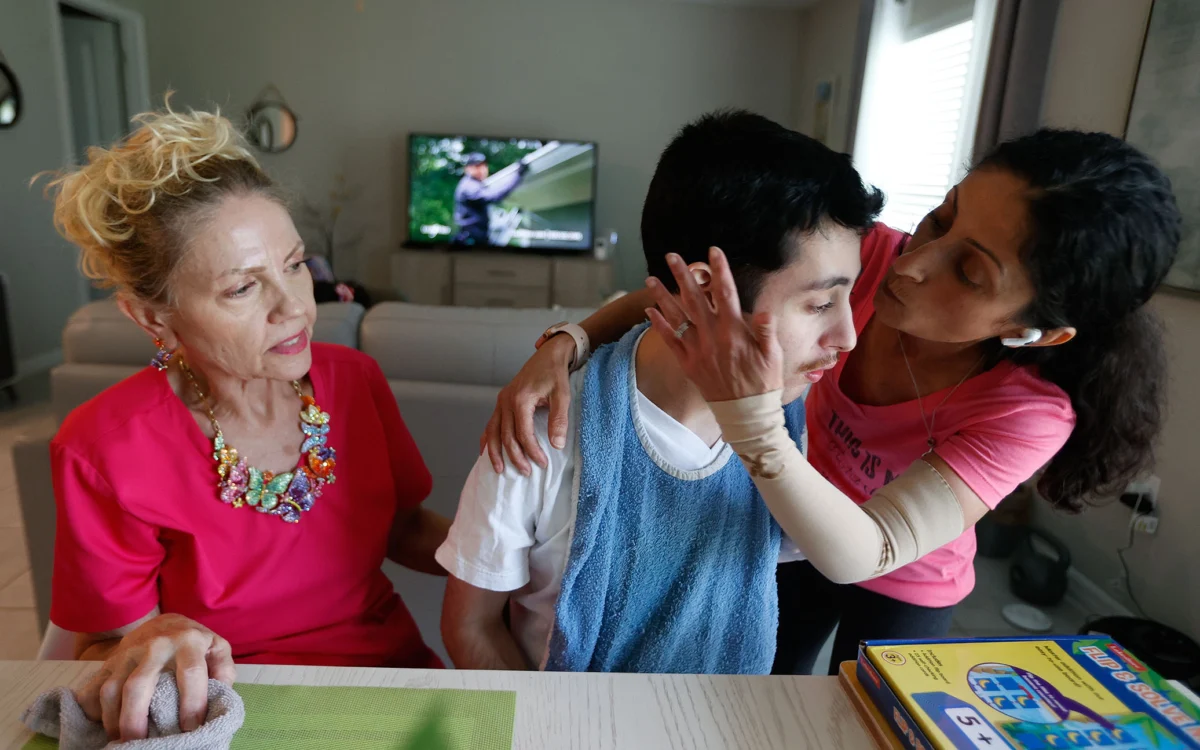
Recognizing the potential harm to vulnerable demographics, the 2025 legislation explicitly included statutory exemptions for individuals categorized as "medically frail" or possessing "special medical needs." This protective class encompasses individuals living with severe physical, intellectual, or developmental disabilities. Furthermore, the law extended these exemptions to parents, guardians, caretaker relatives, and family caregivers who shoulder the daily responsibility of supporting loved ones with disabilities.
However, the regulatory friction began in June of the following year, when CMS published initial rules that introduced significantly stricter criteria for qualifying under the medical frailty exemption than many policy experts and lawmakers had anticipated. Under the June CMS rule, individuals with physical, intellectual, or developmental disabilities are recognized as medically frail only if their specific medical condition "significantly impairs" their ability to independently perform at least one Activity of Daily Living (ADL).
The federal agency defines ADLs to include fundamental daily tasks such as bathing, dressing, walking, toileting, eating, or transitioning into and out of a bed or chair.
The New Federal Guidance: Implementation Frameworks and State Flexibility
The newly released 33-page directive doubles down on this restrictive standard, explicitly tying the medical frailty exclusion to a functional inability to meet work requirements. The guidance states: "An individual in one of the five categories is considered medically frail only if the individual’s physical, mental, or other behavioral health condition significantly impairs the individual’s ability to comply with the community engagement requirement."
To assist states in navigating this complex verification landscape, the CMS guidance outlines several methodological approaches for determining exemption status:
- Automated Verification: CMS encourages states to leverage existing administrative data, utilizing medical claims from the preceding 12 months to automatically verify a beneficiary’s medical frailty status.
- Self-Declaration: In instances where automated data is insufficient or unavailable, states are permitted to grant temporary exemptions based on a one-time self-declaration from the beneficiary. However, states must subsequently re-verify this status every 12 months using reliable documentation.
- Tiered Evaluation Approach: The guidance proposes an optional tiered framework. Under this model, states would first cross-reference a standardized list of conditions that inherently qualify for an exemption. Next, they would evaluate a secondary list of conditions that indicate potential medical frailty pending supplementary information. Finally, unresolved cases would trigger an individualized manual review.
While these operational recommendations provide a roadmap for state agencies, the decision to make key frameworks—such as the tiered approach—entirely optional has drawn sharp criticism from policy analysts who fear a fragmented implementation process nationwide.
Stakeholder Reactions and Advocacy Concerns
The intersection of federal narrowing and state-level discretion has ignited fierce pushback from advocacy organizations, who contend that administrative guidance is subverting the original intent of federal lawmakers.
Nicole Jorwic, chief program officer at Caring Across Generations, expressed deep frustration with the administration’s regulatory approach. "This updated guidance from CMS does attempt to provide more clarity, but doesn’t undo the overreach of the initial proposed final rule that is causing confusion for states, families and people with disabilities," Jorwic said. "Congress wrote a broad, clinically grounded definition of medical frailty into law specifically to protect people with serious conditions and disabilities. What we’re seeing now is the administration narrowing that definition through sub-regulatory guidance, without the transparency or accountability of formal rulemaking."
Similar apprehensions were raised regarding the reliance on historical claims data to verify lifelong or chronic conditions. Kim Musheno, senior director of Medicaid policy at The Arc of the United States, noted that a reliance on the previous year’s medical claims fails to capture the true lived experience of individuals with intellectual and developmental disabilities.
"A claims record doesn’t always show how a disability affects someone’s daily life. That’s especially concerning for people with intellectual and developmental disabilities whose disabilities may be lifelong but aren’t reflected in recent medical claims," Musheno explained. "If the state’s data aren’t enough, the burden can shift back to the person to track down medical records or provider documentation."
Furthermore, Musheno highlighted the equity issues inherent in giving states broad latitude to design their own exemption criteria. "Two people with the same disability could face very different processes and potentially different outcomes, simply because they live in different states," she warned.
Broader Legal Challenges and Systemic Implications
The ongoing dispute over Medicaid work requirements and medical frailty exemptions has expanded beyond administrative advocacy into the judicial arena. The deep-seated fears regarding coverage losses prompted a coalition of more than 70 national organizations to file an amicus brief in September. This legal filing supports a broader lawsuit brought by a coalition of officials representing 25 states and the District of Columbia, challenging the legality of the CMS rules.
Jane Perkins, litigation director at the National Health Law Program—which helped file the amicus brief alongside groups such as the American Association of People with Disabilities, the Autistic Self Advocacy Network, and Easterseals—emphasized the unnecessary administrative burdens being placed on vulnerable citizens. "Congress excluded medically frail people from the work requirements," Perkins stated. "They should not have to repeatedly prove that they are unable to meet the work requirements."
Beyond the immediate threat to individual health insurance, healthcare industry leaders warn of cascading consequences for the broader delivery system. Barbara Merrill, CEO of the American Network of Community Options and Resources (ANCOR), pointed out that the operational changes threaten the financial stability of community-based providers.
"The new Medicaid work requirements will interrupt access to community-based services for people with disabilities and threaten the fragile network of community providers," Merrill said. "The increased Medicaid coverage losses that will result from narrowing the medical frailty exemption will ultimately reduce access to services for people who truly need them and harm community providers who will continue to deliver support without receiving payment for their services."
Fact-Based Analysis of Future Implications
As states race to establish their compliance mechanisms ahead of the upcoming implementation deadline, the practical realities of the new guidance suggest several significant challenges:
- Administrative Strain on State Agencies: State Medicaid departments face immense logistical hurdles in building automated verification systems, conducting annual reviews, and managing manual appeals within tight budgetary constraints.
- Risk of Coverage Churn: Due to the complexities of proving functional impairments under the ADL standard, eligible individuals with hidden or non-physical disabilities may experience interruptions in coverage simply due to bureaucratic hurdles rather than a true loss of eligibility.
- Fragmented National Standards: Because CMS has permitted states considerable flexibility in defining qualifying conditions and verification tiers, the accessibility of exemptions will vary wildly depending on geography, creating a disjointed national Medicaid safety net.
As litigation proceeds through the federal courts and states finalize their operational plans, the ultimate impact of the CMS guidance will depend on how aggressively state agencies interpret the medical frailty standards and whether federal oversight mechanisms can prevent widespread coverage losses among America’s most vulnerable populations. CMS officials did not immediately respond to requests for comment regarding the ongoing legal challenges and implementation concerns.




