
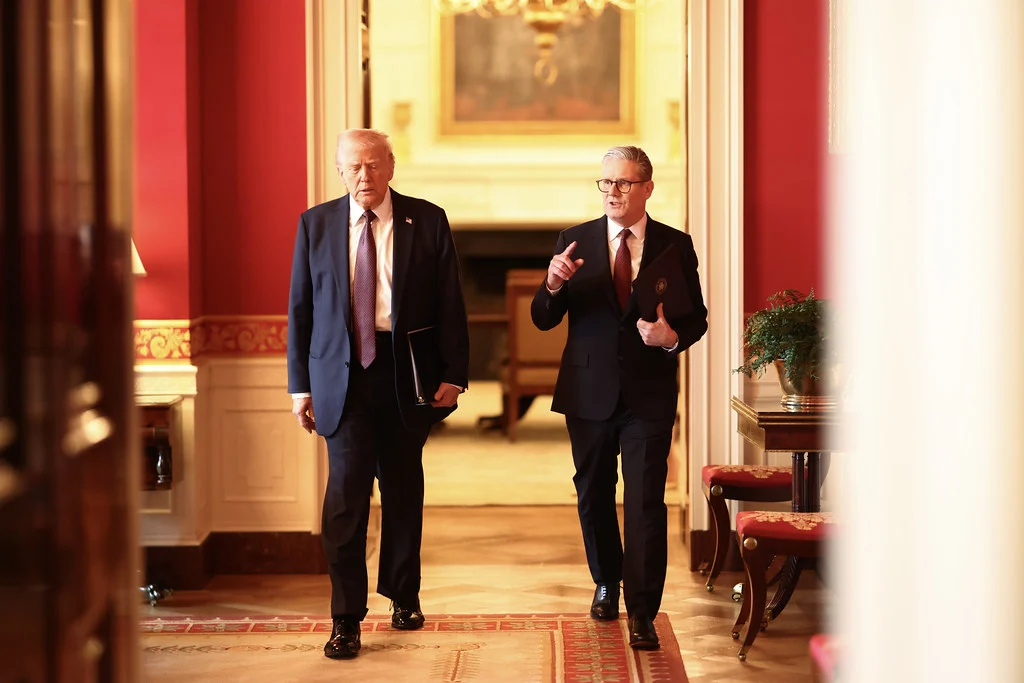
The war in Iran has rapidly escalated into a profound human catastrophe, marked by tragic civilian casualties, displaced families, and systemic destruction across the region. While the immediate and overriding priority must remain the preservation of human life and humanitarian relief, geopolitical shocks of this magnitude inevitably expose deeper structural vulnerabilities. For the United Kingdom, this conflict acts as a powerful catalyst, accelerating a long-deferred reckoning regarding its national economic model and its heavy reliance on the strategic posture of the United States.
Background and Historical Context: The American Economic Drift
For the past four decades, British economic policy has drifted steadily toward the Anglo-American model of capitalism. This framework has historically prioritized deregulated financial markets, the privatization of core public services, flexible labor markets accompanied by weakened trade unions, and an innovation sector heavily reliant on Silicon Valley platforms. Furthermore, the UK’s defense infrastructure has grown deeply integrated with American hardware, intelligence networks, and strategic priorities.
These outcomes were not accidental. They were the deliberate result of ideological shifts in the 1980s, the gravitational pull of the world’s largest economy, and the subsequent logic of a post-Brexit trade strategy aimed at cementing closer ties with the Anglosphere. However, this foundational bet is now showing acute signs of strain. The United States has undergone a significant internal transformation, characterized by increasingly erratic international alliances, a retreat from multilateral institutions, and a turn toward aggressive economic nationalism.
As Washington pivots toward policies that prioritize domestic industrial protectionism over traditional transatlantic partnerships, British policymakers face mounting pressure from markets, industry, and the public to reassess the nation’s long-term alignment.
Chronology of a Crisis: The 2026 Escalation
The friction within the transatlantic alliance did not emerge overnight, but the outbreak of hostilities involving Iran has compressed years of strategic debate into months.
- Early 2026: Diplomatic breakdowns and localized maritime skirmishes in the Middle East escalate into a full-scale regional conflict involving Iranian forces, American military assets, and regional allies.
- Weeks 1–4 of the Conflict: Global energy markets experience extreme volatility. Supply chain disruptions highlight the vulnerability of Western economies dependent on foreign energy corridors and imported technological infrastructure.
- Mid-March 2026: Washington enacts emergency trade measures and prioritizes domestic resource allocation, leaving European allies to navigate severe economic ripples with minimal direct coordination from the White House.
- Late March 2026: UK government officials, economic analysts, and civil society groups begin publicly questioning the sustainability of maintaining a junior partnership within an American-dominated economic and security architecture.
Comparative Economic Models: The Northern European Alternative
As the UK confronts the limits of its current trajectory, the debate naturally extends beyond mere foreign policy realignment to the foundational design of the domestic economy. Strategic autonomy from Washington requires a parallel examination of which economic model Britain wishes to emulate.
In examining potential alternative partnerships, economic analysts frequently point to northern European democracies—such as Germany, the Netherlands, and the Scandinavian states. A defining feature of these nations is that they maintain significantly lower levels of economic inequality compared to the UK and the US.
This is not a historical coincidence. Northern European economies rely on structured frameworks that include robust labor rights, codetermination laws that grant workers a voice in corporate governance, heavily regulated financial sectors, and broad-based worker ownership models. These mechanisms are intentionally designed to counteract the runaway concentration of income, wealth, and corporate power.
By contrast, the UK’s four-decade alignment with the American model has fostered an economic and political culture increasingly dominated by extreme wealth concentration. According to recent research highlighted in policy briefings such as "Money, Media and the Lords: How the Ultra-wealthy are Shaping Britain," this concentration has birthed powerful oligopolies. These entities routinely reduce market competition, extract value from consumers, and utilize sophisticated lobbying networks to bend regulatory frameworks in favor of entrenched corporate interests. This creates a persistent feedback loop between extreme wealth and political influence, stalling systemic reform.
Data and Economic Implications
The structural imbalances within the UK economy are well-documented by economic think tanks and statistical agencies.
- Wealth Disparities: The richest one percent of the UK population continues to hold a disproportionate share of total national wealth, matching levels not consistently seen since the early twentieth century.
- Regional Imbalances: Productivity disparities between London and the South East compared to post-industrial regions in the Midlands and the North remain among the widest in the developed world.
- Market Concentration: A small number of dominant firms control key sectors ranging from digital technology and retail to energy distribution, limiting competitive pricing and suppressing wage growth for median earners.
Official Responses and Stakeholder Reactions
The convergence of geopolitical instability and domestic economic strain has drawn sharp commentary from business leaders, labor organizers, and civil society organizations.
Priya Sahni-Nicholas, Co-Executive Director of the Equality Trust, emphasized the dual nature of the current crisis. "The war in Iran is a human catastrophe," Sahni-Nicholas stated. "It may also be the moment Britain finally asks which economic future it wants. The choices we make now matter profoundly. We can reorient our alliances while leaving our economic model untouched, which simply leaves a different set of elites benefiting while ordinary people see little change. Or we can treat this moment as an opportunity to build a more independent economy that works for everyone."
Industry associations have similarly expressed concern over supply chain resilience. Representatives from manufacturing and technology sectors have called for a recalibration of national industrial policy to secure domestic supply lines, reduce reliance on single-nation tech monopolies, and protect critical infrastructure from external supply shocks. Meanwhile, labor unions have renewed calls for strengthened collective bargaining rights to shield workers from the inflationary pressures driven by global conflicts.
The Path Forward: Strategic Autonomy and Domestic Renewal
If Britain is to successfully break its systemic dependence on the American economic model, policymakers will need to enact structural reforms that move beyond superficial adjustments. Experts argue that a coherent transition strategy must encompass several core pillars:
- Comprehensive Community Wealth Building: Implementing economic strategies nationwide that empower local authorities, prioritize local supply chains, and retain capital within communities rather than leaking it to external contractors.
- Domestic Industrial Investment: Directing state-backed capital toward high-capacity manufacturing, green energy transitions, and technological innovation in historically underfunded regions.
- Technological Sovereignty: Cultivating domestic and European digital infrastructure to prevent the wholesale extraction of national data and economic value by Silicon Valley platforms.
- Productive Financial Regulation: Reorienting financial regulatory bodies to support productive domestic investments—such as housing, green tech, and small businesses—rather than speculative financial instruments.
- Robust Competition Policy: Empowering regulatory watchdogs with the legal mandate and enforcement teeth necessary to dismantle anti-competitive oligopolies and curb the undue political influence of ultra-wealthy corporate actors.
These proposals are far from radical; they reflect the standard operating models of the most resilient, equitable, and strategically autonomous economies in northern Europe. As the fallout from the conflict in Iran continues to reverberate through global markets, Britain stands at a definitive crossroads. The decisions made in Westminster over the coming months will determine whether the nation merely swaps one set of external dependencies for another, or finally constructs a robust, equitable, and self-sustaining economic future.




