
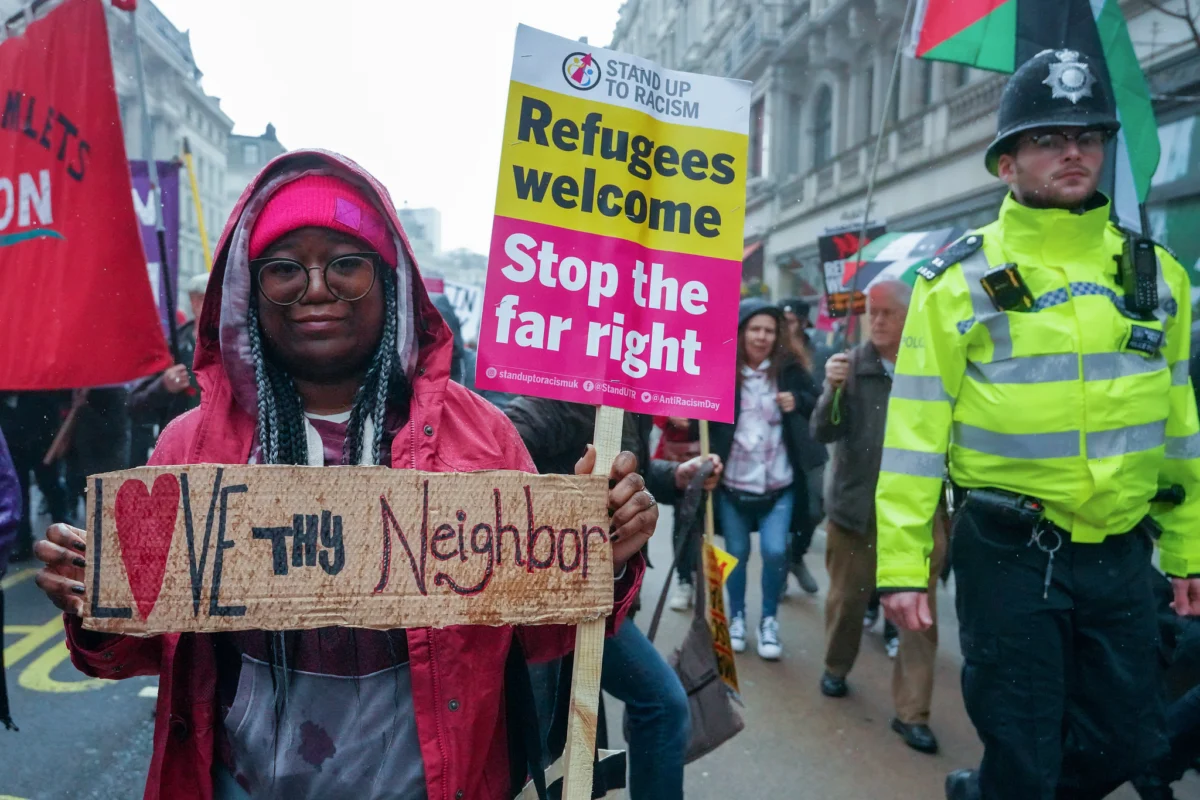
Fundamental rights and legal protections across the United Kingdom face an unprecedented period of legislative vulnerability, driven by shifting political agendas, hostile rhetoric, and decades of targeted media distortion. Legal safeguards such as the Equality Act 2010 and the Human Rights Act 1998, once considered bedrock pillars of a fair and equitable society, are increasingly targeted for dilution, structural reform, or outright repeal. Civil rights organizations, legal experts, and advocacy groups have raised urgent alarms, warning that the systematic erosion of these frameworks threatens not only marginalized communities, but the foundational democratic protections of every citizen.
The Legislative Landscape and Political Pressure
The contemporary threat to British rights is rooted in a sustained political push by various factions across the spectrum to alter, weaken, or replace core anti-discrimination and human rights legislation. Over the past decade, successive governments have systematically chipped away at the mechanisms designed to ensure public accountability and social fairness.
Conservative administrations previously oversaw the weakening and removal of specific provisions within the Equality Act while leaving critical statutory duties uncommenced. Furthermore, prior legislative sessions saw prolonged efforts to replace the Human Rights Act 1998 with a contentious Bill of Rights—a move critics argued would substantially lower the bar for state accountability and restrict individual access to justice.
The political pressure extends across the spectrum. Reform UK has publicly committed to scrapping the Equality Act entirely, framing it as bureaucratic overreach rather than a vital shield against systemic bias. Meanwhile, the Labour administration has signaled potential reforms and initiated reviews regarding how rulings from the European Court of Human Rights (ECtHR) are interpreted and applied within domestic courts. Civil liberties organizations, drawing concerning parallels with parallel legal rollbacks observed in the United States and elsewhere, warn that any substantive regression could permanently damage the UK’s human rights record.
Media Concentration and the Politics of Division
Compounding the legislative threat is a deeply skewed domestic media landscape that exerts profound influence over public perception. Currently, approximately 90 percent of national newspaper circulation in the United Kingdom is controlled by just three billionaire proprietors. For decades, major publications have engaged in systematic campaigns aimed at rolling back human rights protections, frequently employing misleading, hyperbolic, or outright invented headlines to manufacture public outrage against marginalized groups.
According to civil rights advocates, the objective of this sustained misinformation campaign is to reframe human rights and equality laws not as universal protections, but as forms of "special treatment" exploited by undeserving sections of society. This classic divide-and-rule tactic seeks to erode public solidarity. In reality, the legal frameworks governing equality and human rights do not grant privileges; they establish baseline protections that shield all citizens from arbitrary state power, workplace discrimination, and unlawful harassment.
Historical Context and the Origins of Modern Protections
To understand what is at stake, it is necessary to examine the historical genesis of the UK’s core rights legislation. The Human Rights Act 1998 successfully incorporated the European Convention on Human Rights (ECHR) into domestic UK law. The ECHR itself was drafted in the immediate aftermath of World War II, largely influenced by British legal minds, under the guiding philosophy of "never again." It was designed to ensure that governments could never again perpetrate unchecked persecution, torture, or abuse of power against their own populations.
The Act protects citizens from overreach by the state and public bodies, guaranteeing fundamental freedoms: the right to life, freedom from torture and degrading treatment, the right to a fair trial, the right to respect for private and family life, and freedom of expression, alongside protection from discrimination.
Decades later, the Equality Act 2010 consolidated and streamlined numerous fragmented pieces of anti-discrimination legislation into a single, comprehensive legal framework. It made it explicitly unlawful to discriminate against individuals based on protected characteristics, which include race, sex, disability, sexual orientation, religion or belief, age, gender reassignment, pregnancy and maternity, and marriage and civil partnership.
Before the implementation of these robust statutory protections, systemic exclusion was legally permissible and culturally commonplace. Employers could freely refuse to hire women who were pregnant or planning to start families, landlords could bar prospective tenants based on race or sexuality, businesses could turn away disabled individuals accompanied by assistance dogs, and public service providers faced few consequences for arbitrary discrimination.
The Dormant Socio-Economic Duty
Beyond interpersonal discrimination, the Equality Act 2010 also houses a powerful, yet largely unrealized, mechanism known as the socio-economic duty (Section 1). This provision requires public authorities, when making strategic decisions about how to exercise their functions, to give due regard to the desirability of reducing inequalities of outcome resulting from socio-economic disadvantage.
While successive Westminster governments have left this section dormant, devolved administrations have demonstrated its practical utility. The governments of Scotland and Wales have successfully brought the socio-economic duty into force, using it to guide public policy-making and resource allocation with a lens toward economic fairness. Advocacy groups continue to lobby Westminster to activate the provision, arguing that tackling systemic economic disparity is intrinsically linked to racial, gender, and disability justice.
Chronology of Legislative Shifts and Threats
- 1950: The United Kingdom helps draft and subsequently becomes one of the first signatories to the European Convention on Human Rights, establishing post-war international human rights standards.
- 1998: Parliament passes the Human Rights Act, bringing ECHR rights directly into UK domestic courts and allowing citizens to seek legal remedies against public bodies locally.
- 2010: The Equality Act is passed into law, consolidating multiple anti-discrimination statutes (such as the Sex Discrimination Act 1975 and the Race Relations Act 1976) into a unified legal code.
- Late 2010s – Early 2020s: Conservative administrations propose various reforms to water down the Human Rights Act, ultimately introducing the stalled Bill of Rights Bill, while various regulatory enforcement duties under the Equality Act are reduced or left uncommenced.
- 2024–2026: Political platforms increasingly target equality frameworks, with parties like Reform UK pledging outright repeal, while civil liberties groups mobilize against ongoing efforts to restrict protest rights and dilute judicial oversight.
Expert Analysis and Broader Implications
Legal analysts and human rights scholars emphasize that rights are rarely extinguished overnight through dramatic, sweeping legislative repeals. More frequently, foundational protections are eroded quietly and incrementally through weakened statutory duties, narrow judicial interpretations, underfunded enforcement bodies, and relaxed regulatory guidance.
When enforcement agencies—such as the Equality and Human Rights Commission (EHRC)—face budgetary constraints or shifting political oversight, the practical enforcement of rights diminishes even if the text of the law remains nominally intact. Furthermore, well-resourced corporate and political interests frequently back legal challenges designed to test the boundaries of existing protections, gradually narrowing the scope of accountability.
The implications of this erosion extend far beyond the specific groups directly protected by anti-discrimination statutes. A legal environment where fundamental rights can be easily overridden by shifting political majorities is one where civil liberties become precarious for the entire populace. The right to peaceful protest, freedom of expression, and protection from arbitrary state interference rely entirely on the integrity of these foundational statutes.
The Path Forward: Advocacy and Defense
Faced with mounting political pressure and a hostile media narrative, civil society organizations are mobilizing to defend the legislative architecture of modern Britain. The Equality Trust, alongside a coalition of legal experts, trade unions, and grassroots advocacy groups, is spearheading research-led policy initiatives designed to reinforce existing safeguards and push for the implementation of dormant provisions like the socio-economic duty.
Protecting these hard-won rights requires active civic engagement, robust public education to counter misinformation, and sustained financial and political support for legal defense organizations. As debates over the future of the Human Rights Act and Equality Act continue to dominate political discourse, the overarching message from legal scholars remains clear: rights that are taken for granted are rights easily lost. Safeguarding these protections is essential not only for the realization of a fair society today, but for the preservation of democratic accountability for generations to come.




