
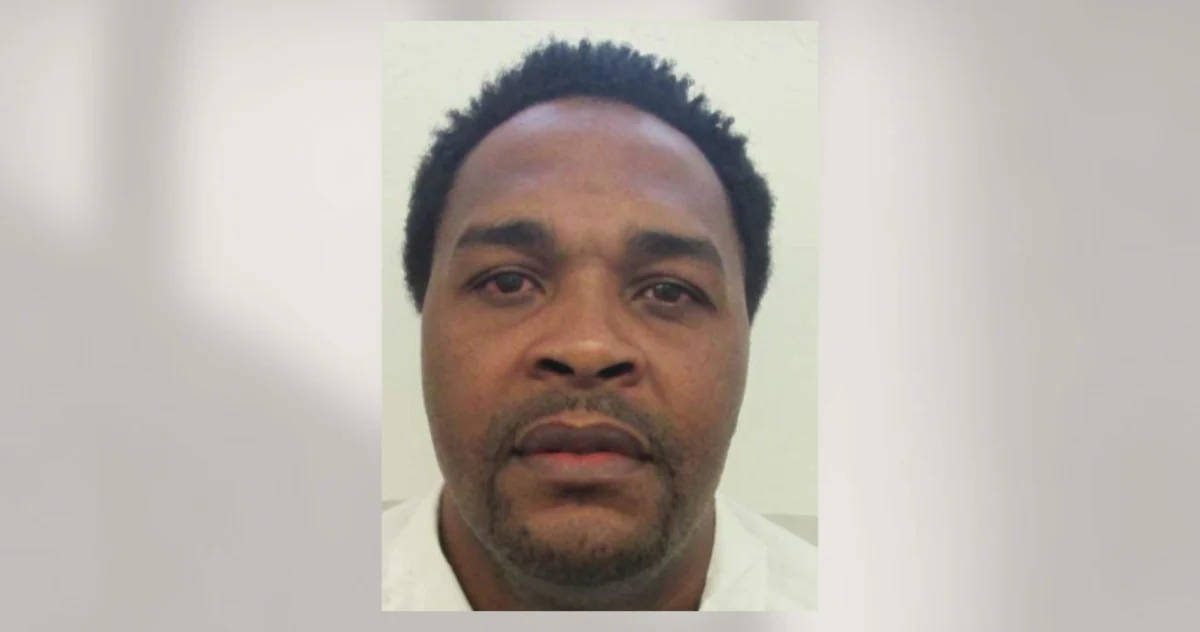
The state of Alabama carried out the execution of Jeffery Lee by lethal injection today, finalizing a capital case that has served as a flashpoint for debates surrounding judicial discretion, racial equity, and the sanctity of the jury system. Despite a 2000 jury vote of 7-5 in favor of life imprisonment without the possibility of parole, Mr. Lee was sentenced to death by a trial judge—a practice known as "judicial override" that was once a hallmark of Alabama’s legal system but has since been abolished. The execution underscores the lingering consequences of a system that allowed elected officials to bypass the collective judgment of citizens, even in the most severe of criminal proceedings.
A Chronology of a Contested Prosecution
The legal trajectory of Mr. Lee’s case began in 1998, following the shooting deaths of Jimmy Ellis and Elaine Thompson, as well as the attempted murder of Helen King, during a robbery in Dallas County. The case was brought to trial in 2000, a period when Alabama law permitted judges to impose a death sentence even when a jury recommended life imprisonment.
During the 2000 trial, the prosecution utilized all 21 of its peremptory strikes to remove Black potential jurors, a move that critics and civil rights advocates argued effectively stripped the defendant of a fair trial by a jury of his peers. Mr. Lee, who lived in chronic poverty, was appointed counsel who had reportedly never previously handled a capital murder case. The trial concluded in less than 48 hours, ending with the jury’s decision for life without parole. However, the presiding judge exercised the statutory authority to override that decision, imposing the death penalty.
For the next two decades, Mr. Lee’s case moved through various state and federal appellate channels. In 2016, he mounted a constitutional challenge against Alabama’s lethal injection protocol. Two years later, as the state sought to modernize its execution methods, the legislature authorized the use of nitrogen hypoxia. Mr. Lee opted for this method, reserving his right to challenge the specifics of the protocol. However, after federal courts permanently enjoined the state from using nitrogen suffocation in his case in June 2026, the state shifted its approach back to lethal injection. After the U.S. Supreme Court denied his final petition for a stay of execution on September 17, the state proceeded with the lethal injection, finalizing a sentence that a jury had explicitly rejected twenty-six years prior.
The Rise and Fall of Judicial Override in Alabama
Alabama’s practice of judicial override was long an outlier in American jurisprudence. Between 1976 and 2017, Alabama judges overrode jury verdicts of life to impose the death penalty in more than 100 cases. This power effectively made the state a unique laboratory for capital punishment, where the finality of a death sentence often rested on the discretion of an elected judge rather than the deliberation of a jury.
Data from the Equal Justice Initiative indicates that nearly 20% of the individuals on Alabama’s death row at the time of the law’s repeal had been placed there via judicial override. It was not until April 11, 2017, that the Alabama Legislature, under Governor Kay Ivey, finally abolished the practice. However, the legislative change was not applied retroactively. Consequently, individuals like Mr. Lee remained subject to their original sentences, creating a scenario where, had the trial occurred only a few years later, the jury’s vote for life would have been legally binding.
The arbitrariness of this implementation has drawn sharp criticism from former legal officials. Drayton Nabers Jr., the former Chief Justice of the Alabama Supreme Court, has been a vocal proponent of commuting sentences for those impacted by the now-defunct override practice. In recent public commentary, Nabers argued that failing to honor a jury’s recommendation undermines the core conservative principles of limited government and respect for the rule of law. By ignoring the jury’s verdict, the state essentially invalidated the democratic function of the trial by jury.
Sociopolitical Context and Racial Disparities
The setting of the trial in Dallas County adds a significant layer of historical context to the case. Located in Alabama’s "Black Belt," the region has a documented history of racial struggle and systemic inequality. The composition of the jury and the prosecutor’s decision to strike Black jurors were central issues that legal advocates argued prejudiced the proceedings from the outset.
Furthermore, the lack of robust defense representation—characterized by reports of counsel’s limited experience in capital cases and a failure to present mitigating evidence—is a recurring theme in criticisms of Alabama’s death penalty administration. Legal scholars point out that the intersection of poverty, lack of access to high-quality counsel, and the historical use of judicial override creates an environment where the quality of a defendant’s life and the severity of their punishment are often determined by factors external to the facts of the crime itself.
The Transformation of the Condemned
Throughout his more than 25 years on death row, Mr. Lee’s behavior and personal development were cited by advocates as evidence against the necessity of his execution. According to reports from the Catholic Mobilizing Network, Mr. Lee served as a Kairos ministry leader and an assistant chaplain, acting as a mentor to other inmates. During his quarter-century of incarceration, he maintained a record free of violent infractions, a detail that supporters argued demonstrated a potential for continued contribution to the prison community, even while serving a sentence of life without parole.
Retired Brig. Gen. Carlton Fisher, writing in defense of clemency, highlighted the psychological toll that carrying out these executions places on prison staff. Fisher, drawing on his experience as a military and correctional chaplain, argued that the act of executing a prisoner against the explicit wishes of a jury creates a "heavy weight" for correctional officers who are tasked with performing the procedure.
Broader Implications for Capital Punishment
The execution of Jeffery Lee serves as a definitive case study in the debate over the finality of capital sentences and the retrospective application of legal reforms. As the state moves forward, the case will likely remain a point of reference for legal analysts examining the "arbitrariness" of capital sentencing.
The federal court’s intervention regarding the nitrogen hypoxia protocol, followed by the rapid return to lethal injection, also highlights the ongoing legal volatility surrounding execution methods. Alabama’s history of "botched" executions and the subsequent challenges to lethal injection continue to keep the state at the center of national discourse on the Eighth Amendment’s protection against cruel and unusual punishment.
The refusal to grant clemency in light of the jury’s original recommendation reflects the state’s rigid adherence to established sentences, regardless of the subsequent evolution of its own legal standards. While the legislative shift in 2017 signaled an acknowledgment that judicial override was an flawed mechanism, the failure to provide relief to those already sentenced under that mechanism leaves a distinct class of inmates in a state of legal limbo.
As the state of Alabama continues to navigate the complexities of capital punishment, the case of Jeffery Lee will persist as an illustration of the tension between the rule of law, the power of the judiciary, and the evolving moral standards of the society that administers the ultimate penalty. For now, the execution marks the end of a long-standing legal struggle, leaving in its wake questions about justice, the efficacy of the jury system, and the state’s obligation to rectify past legal anomalies.




