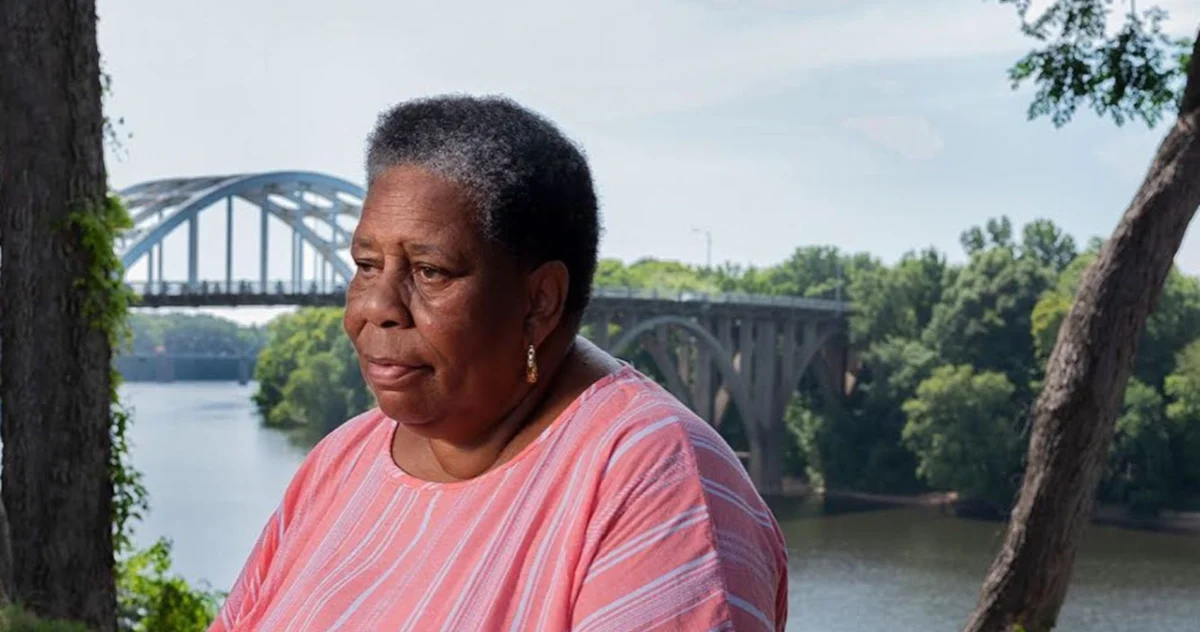
Jo Ann Bland, a courageous civil rights activist who at the tender age of 11 became one of the youngest participants in the historic Selma to Montgomery voting rights marches, passed away yesterday at the age of 72. Her family announced her peaceful departure, stating she "departed this life surrounded by love," and lauded her "legacy of strength, grace, and unwavering dedication to her family and community." Bland’s life was a testament to the power of ordinary individuals to ignite extraordinary change, a narrative etched into the annals of American history and an enduring inspiration for generations fighting for justice.
Born and raised in Selma, Alabama, a crucible of the Civil Rights Movement, Jo Ann Bland was immersed in the struggle for racial equality from her earliest years. Selma, a city with a predominantly Black population, was infamous for its aggressive tactics of voter suppression. In Dallas County, where Selma is located, only 156 of the 15,000 eligible Black voters were registered in 1964, a stark contrast to the vast majority of white residents who were registered. This systemic disenfranchisement fueled the urgency of the movement led by figures such as Dr. Martin Luther King Jr., the Southern Christian Leadership Conference (SCLC), and the Student Nonviolent Coordinating Committee (SNCC). Bland grew up witnessing firsthand the indignities and injustices of Jim Crow laws, which mandated racial segregation and upheld white supremacy. By 1965, at the remarkable age of 11, she was already a seasoned activist, having been arrested at least 13 documented times for her participation in protests against segregation and for voting rights. Her childhood, unlike that of most American children, was defined by picket lines, protest marches, and the constant threat of violence, forging in her an unbreakable spirit of resistance.
The Selma Campaign of 1965 was a pivotal moment in the Civil Rights Movement, designed to draw national attention to the plight of Black Americans denied the right to vote and to pressure Congress to pass comprehensive voting rights legislation. Following the murder of Jimmie Lee Jackson, a young Black demonstrator, by a state trooper in nearby Marion, civil rights leaders planned a march from Selma to the state capital in Montgomery to demand justice and voting rights. Jo Ann Bland, alongside her older sister Linda, was among the more than 600 peaceful marchers who gathered on March 7, 1965, to embark on this fateful journey.
Bloody Sunday: A Defining Moment of Courage
As the marchers, led by Hosea Williams of SCLC and John Lewis of SNCC, crossed the Edmund Pettus Bridge, they were met by a phalanx of Alabama state troopers and local lawmen, armed with billy clubs and tear gas, acting under the orders of Governor George Wallace. What followed was a brutal assault that shocked the nation and became known as "Bloody Sunday." Ms. Bland vividly recalled the terror and chaos of that day on the website of an organization she later founded: "I walked across the Edmund Pettus Bridge on Bloody Sunday, marching alongside more than 600 peaceful activists who ended up being brutally beaten, tear-gassed, and hit or trampled by policemen on horses with billy clubs."
Her personal account underscores the horrific violence: "At one point, I saw a horse near me, and then a woman fell. I can still hear the sound of her head hitting the pavement. I must have fainted after that, because the next thing I knew I was in a car with my head in my sister’s lap, and her blood was dripping from wounds on her head. Later, she needed 26 stitches." The images of unarmed marchers, including women and children, being viciously attacked by state authorities were broadcast across the country, galvanizing public opinion and turning the tide in favor of federal intervention. The raw footage, interrupting popular Sunday evening television programming, brought the brutality of segregation directly into American living rooms, making it impossible for many to ignore the moral imperative of the civil rights cause.
Despite the trauma of Bloody Sunday, the young foot soldier’s resolve remained unbroken. A second attempt to march, known as "Turnaround Tuesday," occurred on March 9, but Dr. King, facing a federal injunction and unwilling to risk further violence without court protection, led the marchers back to Selma after crossing the bridge. It was on March 21, under federal protection and with President Lyndon B. Johnson’s full endorsement, that thousands of marchers, now numbering in the thousands, began the successful five-day, 54-mile journey to Montgomery. Jo Ann Bland was there on March 25, 1965, when Dr. Martin Luther King Jr. delivered his powerful "How Long, Not Long" speech on the steps of the Alabama State Capitol, a moment that culminated in a demand for federal legislation to protect voting rights. The events in Selma, particularly the national outrage sparked by Bloody Sunday, were instrumental in the swift passage of the Voting Rights Act of 1965.
The Voting Rights Act of 1965 and its Transformative Impact
Signed into law by President Johnson on August 6, 1965, the Voting Rights Act (VRA) outlawed discriminatory voting practices adopted in many Southern states, including literacy tests, poll taxes, and grandfather clauses, which had historically disenfranchised African Americans. The act immediately transformed the political landscape of the South. Within months of its passage, hundreds of thousands of African Americans were registered to vote for the first time. For instance, in Alabama, Black voter registration jumped from 19.3% in 1964 to 51.6% in 1968. Across the South, Black voter registration more than doubled in many areas, leading to a significant increase in Black elected officials at local, state, and federal levels. The VRA fundamentally reshaped American democracy, bringing millions of previously marginalized citizens into the political process and laying the groundwork for greater representation and political power.
A Lifelong Commitment: Education, Preservation, and Service
Jo Ann Bland’s commitment to justice did not wane after the Voting Rights Act. She continued to challenge racial barriers in her hometown, becoming one of seven students to integrate Selma’s A.G. Parish High School. This act of courage further demonstrated her unwavering belief in equality and her willingness to confront injustice in all its forms. After leaving Selma to pursue higher education at Staten Island College in New York, she served her country in the U.S. Army, a testament to her diverse contributions and patriotism.
Upon her return to Selma in 1989, Ms. Bland dedicated the remainder of her life to preserving the history of the Civil Rights Movement and educating future generations. She co-founded the National Voting Rights Museum and Institute, a vital institution situated at the foot of the Edmund Pettus Bridge. This museum serves as a powerful testament to the sacrifices made during the Selma marches and continues to document the ongoing struggle for voting rights. It has become a pilgrimage site for countless visitors seeking to understand this pivotal chapter in American history.
In 2017, Ms. Bland expanded her educational outreach by starting Journeys for the Soul, a tour company that brought visitors from across the country and around the world to Selma. Through her tours, she personally guided individuals through the hallowed grounds where history was made, sharing firsthand accounts of the foot soldiers’ endured hardships and immense sacrifices in the struggle for racial justice. Her tours were not merely historical recounts but immersive experiences designed to foster empathy and inspire action.
Further cementing her legacy, in 2021, Ms. Bland, together with co-founder Kimberly Smitherman, created Foot Soldiers Park and Education Center. This initiative aimed to preserve the sacred ground where the Bloody Sunday march began, ensuring that Selma’s civil rights history would be meticulously documented and accessible for future generations. "My vision for preserving the hallowed ground where the Bloody Sunday march began and creating Foot Soldiers Park," Ms. Bland wrote, "is to show every visitor, and especially every child, that they have the power to make great change in their community." Her words encapsulate her profound belief in the agency of individuals, regardless of age or background, to effect meaningful societal transformation.
Voice for the Voiceless: Bland’s Philosophy and Teachings
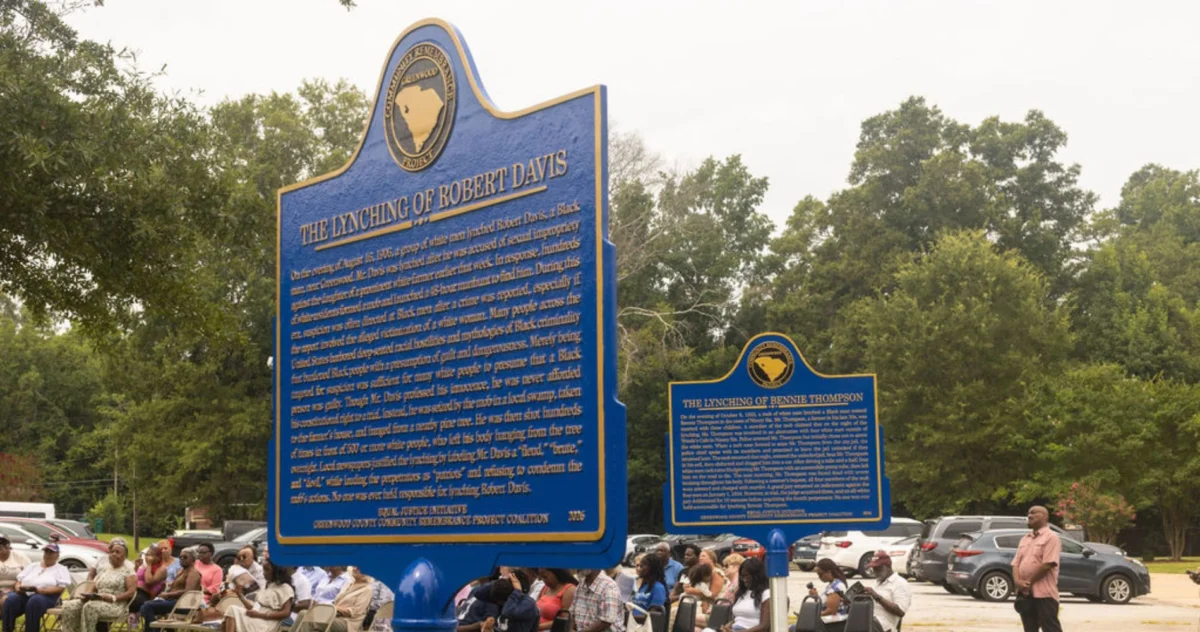
Jo Ann Bland was renowned as an unflinching and unstoppable teacher, her voice a powerful instrument for truth and justice. She frequently addressed student groups at various Legacy Sites, including those maintained by the Equal Justice Initiative (EJI), and attended the dedication of the National Monument to Freedom. Her message was consistent and clear: "We have to talk about the truth of what happened and what was evil and wrong—so that we don’t let the same things happen again." This conviction underscores the critical importance she placed on historical accuracy and critical reflection as safeguards against the resurgence of injustice.
Bryan Stevenson, EJI Director, reflected on her profound impact: "Jo Ann Bland raised her powerful voice for equality and racial justice, and she refused to be silenced. She inspired countless young people with her courage and championed the power of ordinary people to do extraordinary things to advance justice." Her life itself was a living embodiment of this philosophy, demonstrating how courage, perseverance, and a steadfast commitment to moral principles can indeed move mountains. She often articulated her core belief: "My experience has taught me that the power of ordinary people cannot be overstated."
Tributes and Enduring Impact
The news of Jo Ann Bland’s passing elicited widespread tributes from leaders and advocates across the nation. Representative Terri Sewell, a daughter of Selma herself, expressed profound sorrow: "I am heartbroken to learn of the passing of Ms. Jo Ann Bland — a freedom fighter and daughter of Selma, Alabama. It was Foot Soldiers like Jo Ann who put their lives and freedom on the line for the right of all Americans to vote." Such statements highlight her monumental contribution to the democratic fabric of the United States and acknowledge the immense personal risks she undertook.
Bland’s legacy extends far beyond the historical events in which she participated. Her tireless work in establishing and running educational institutions ensured that the lessons of the Civil Rights Movement would not fade into obscurity. She understood that memory is a powerful tool for social change, and that by preserving the stories of the foot soldiers, she could inspire new generations to confront contemporary challenges to justice and equality. Her work at the National Voting Rights Museum and Institute, Journeys for the Soul, and Foot Soldiers Park stands as a permanent testament to her vision and dedication.
The Unfinished Work: Bland’s Legacy in a Modern Context
Jo Ann Bland’s life and work remain profoundly relevant in contemporary America. Despite the transformative impact of the Voting Rights Act, challenges to voting rights persist, with debates over voter ID laws, gerrymandering, and the accessibility of polling places continuing to shape the political landscape. Her tireless advocacy for truth-telling and historical preservation serves as a vital reminder that the fight for justice is an ongoing endeavor, requiring constant vigilance and renewed commitment from each generation.
On the Foot Soldiers Park website, Jo Ann Bland expressed a poignant hope that these sacred spaces in Selma would be "treasured and honored long after all of us, the original foot soldiers, have passed." Her passing marks the departure of another heroic figure from the generation that directly confronted systemic injustice, yet her spirit and her teachings will undoubtedly continue to resonate. She leaves behind a legacy of activism, education, and an unshakeable belief in the power of ordinary people to create a more just and equitable world. Her life is a powerful narrative of courage in the face of brutality, resilience in the aftermath of trauma, and an enduring dedication to the highest ideals of American democracy. Jo Ann Bland’s indelible mark on history ensures that the sacrifices made on the Edmund Pettus Bridge and beyond will never be forgotten, and that the struggle for fundamental human rights will continue to draw strength from her inspiring example.