The Equality Trust, a prominent advocacy organization dedicated to reducing social and economic inequality in the United Kingdom, has announced the departure of long-standing Trustee Gerry Boyle following the completion of his maximum constitutional term. Mr. Boyle, whose tenure spanned six years from 2020 to 2026, stepped down this week after serving two consecutive three-year terms. His departure marks the end of a pivotal era for the organization, during which the Trust navigated a volatile economic landscape characterized by post-pandemic recovery, a persistent cost-of-living crisis, and significant shifts in the philanthropic funding environment.
As a professional with a background in international development and business management, Mr. Boyle’s contribution to the Trust’s board was noted for its focus on financial sustainability and organizational governance. His tenure coincided with a period of intensified advocacy as the Trust sought to address the widening wealth gap in the UK and promote the implementation of the Socio-Economic Duty under the Equality Act 2010.
The Intellectual Foundation: The Spirit Level and the Mission of the Equality Trust
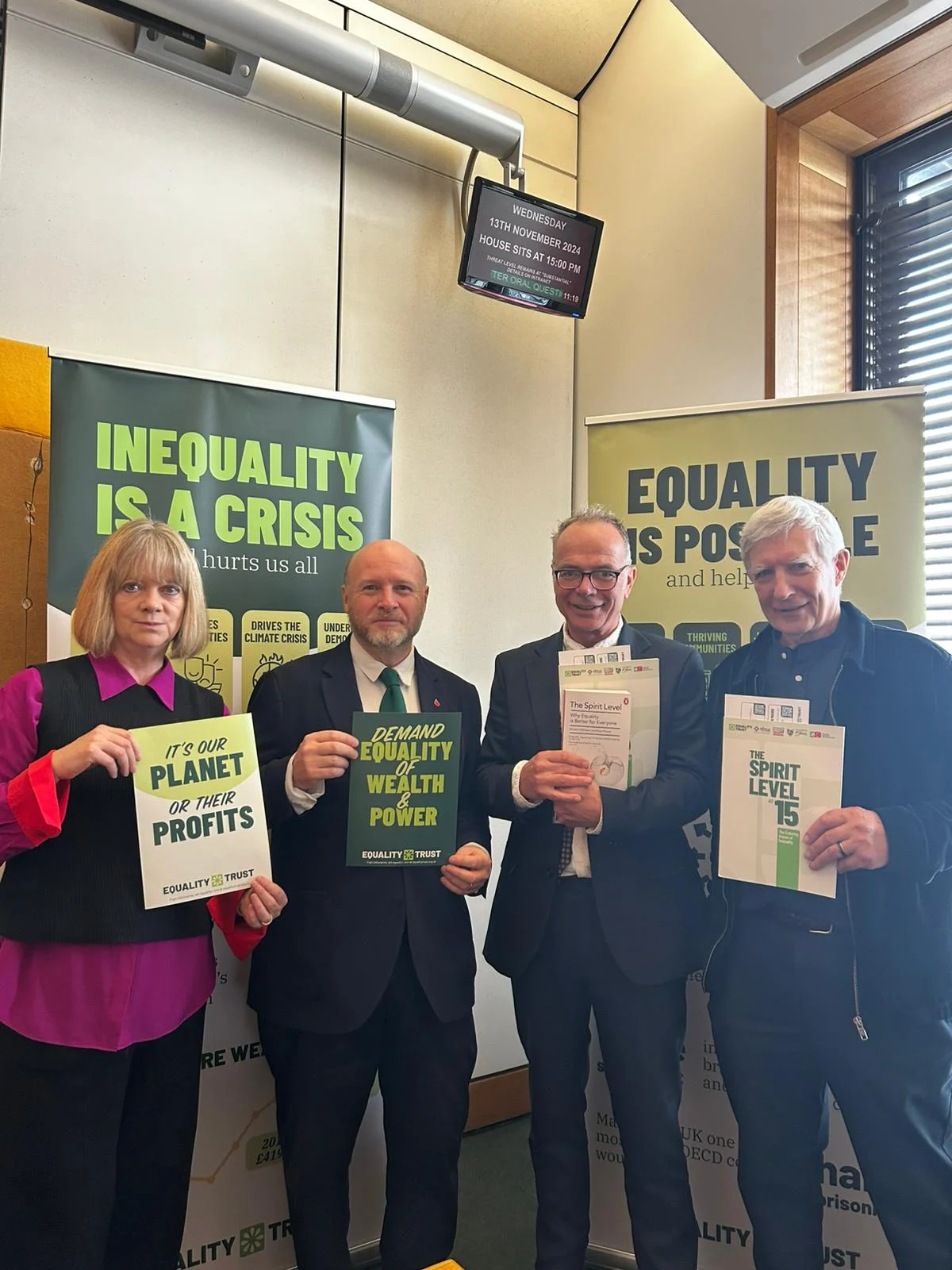
The Equality Trust was founded on the empirical evidence presented in "The Spirit Level: Why More Equal Societies Almost Always Do Better," a seminal work by Professors Richard Wilkinson and Kate Pickett. The book provides a comprehensive analysis of how large gaps between the rich and the poor in developed nations correlate with a wide range of social problems, including lower life expectancy, higher rates of incarceration, decreased social mobility, and diminished levels of communal trust.
During his six years of service, Mr. Boyle emphasized that these intellectual foundations remained the primary driver of the Trust’s mission. The organization operates on the premise that inequality is not an inevitable byproduct of economic growth but a result of policy choices that can be reversed through concerted campaigning and public education. The Trust’s work focuses on highlighting how inequality harms the entire social fabric, not just those at the bottom of the economic spectrum. This systemic approach has allowed the organization to bridge the gap between academic research and grassroots activism.
A Chronology of Advocacy: 2020–2026
The period between 2020 and 2026 represents one of the most turbulent chapters in modern British economic history. Mr. Boyle’s arrival on the board occurred just as the COVID-19 pandemic began to expose and exacerbate existing disparities in health, housing, and income.
In 2021 and 2022, the Trust focused heavily on the "Socio-Economic Duty," campaigning for the full implementation of Section 1 of the Equality Act 2010. This provision requires public authorities to have due regard for the need to reduce the inequalities of outcome which result from socio-economic disadvantage. While the duty has been adopted in Scotland and Wales, the Trust has been a leading voice in pressuring the UK government to make it mandatory for all English public bodies.
By 2023, the focus shifted toward the cost-of-living crisis. Record-high inflation and surging energy prices placed an unprecedented strain on low-income households. The Trust utilized this period to highlight the "CEO-to-worker" pay gap, publishing data that showed executive pay in the FTSE 100 continued to rise while real wages for the average worker stagnated.
In the final years of Mr. Boyle’s tenure, 2024 through early 2026, the Trust expanded its focus to include youth engagement. Recognizing that younger generations face unique hurdles in terms of housing affordability and precarious employment, the organization launched initiatives to amplify the voices of young people at the "sharp end of inequality." These programs aimed to provide a platform for those statistically most likely to be impacted by long-term economic stagnation.
The Funding Crisis and the Third Sector Landscape
One of the most significant challenges addressed during Mr. Boyle’s tenure was the increasingly precarious nature of charity finance in the United Kingdom. Serving on the board’s finance committee, Mr. Boyle witnessed firsthand the impact of "lumpy funding"—a reliance on a small number of large, time-limited grants from major foundations.
The broader economic context has contributed to this instability. UK austerity measures, which have been a feature of the fiscal landscape for over a decade, have simultaneously increased the demand for charitable services while reducing the availability of public grants. Furthermore, shifts in international policy have had a domestic ripple effect. The reduction in international aid budgets by the UK government—moving from the statutory 0.7% of Gross National Income to 0.5%—coupled with significant cuts to global development funding by the United States, has forced many large NGOs to compete for the same domestic philanthropic pots previously utilized by smaller advocacy groups like the Equality Trust.
According to sector analysts, this "crowding out" effect has made the pursuit of institutional funding a high-stakes endeavor. The Equality Trust has responded by attempting to diversify its income streams, moving toward a model supported by a larger base of individual donors. This shift is intended to provide "maximum freedom to campaign effectively," as individual contributions are generally less restricted than institutional grants, allowing the Trust to pivot quickly to emerging social issues.
Supporting Data: The State of Inequality in the UK
The urgency of the Trust’s mission is underscored by recent data regarding wealth and income distribution in the UK. According to the Office for National Statistics (ONS) and the Joseph Rowntree Foundation, the gap between the wealthiest and the poorest households has remained stubbornly wide over the last six years.
- Wealth Concentration: As of 2024, the richest 1% of households in the UK held more wealth than the bottom 70% of the population combined. This concentration of assets in housing and financial investments has created a barrier to social mobility that the Trust argues is detrimental to national economic stability.
- Income Stagnation: While the national minimum wage has seen incremental increases, the "Real Living Wage" gap persists. Analysis from the Equality Trust suggests that in many sectors, the top-to-bottom pay ratio remains as high as 100:1.
- Public Health Outcomes: Consistent with the findings in "The Spirit Level," regions with higher levels of income inequality in the UK continue to report lower life expectancy and higher rates of mental health issues. In some of the most deprived areas, life expectancy has actually stalled or declined for the first time in decades.
Official Responses and Organizational Legacy
In a statement reflecting on his departure, Mr. Boyle noted that while the political and economic environment has not always been conducive to egalitarian outcomes, the internal culture of the Trust remained a source of strength. He characterized the board and staff as a "diverse, highly motivated, and smart bunch of people" who have successfully integrated business acumen with academic rigor and lived experience.
While the Trust has not yet named a permanent successor for Mr. Boyle’s specific committee roles, the organization confirmed that it will continue to prioritize financial diversification. A spokesperson for the Equality Trust remarked, "Gerry’s contribution over the last six years has been invaluable, particularly in helping us navigate the financial complexities of a post-austerity economy. His focus on governance ensures that we are in a strong position to continue our fight for a fairer society."
Other board members have echoed this sentiment, noting that the "hands-off" nature of board membership—focused on strategic oversight rather than day-to-day management—requires a specific type of discipline that Mr. Boyle exemplified. His tenure is seen as a blueprint for how professionals from the private and international development sectors can effectively transition into domestic charity governance.
Broader Impact and Future Implications
The departure of a long-term trustee like Mr. Boyle comes at a time when the role of the "Third Sector" is being redefined. With public services under strain, advocacy groups are increasingly filling the gap in policy development and social support. The Equality Trust’s success in moving the needle on the Socio-Economic Duty suggests that despite funding challenges, strategic campaigning can result in tangible legislative shifts.
However, the "rising cost of living" mentioned in Mr. Boyle’s reflections remains a significant hurdle for the organization’s new funding model. As the Trust asks supporters for "a large number of small contributions," it must compete with the immediate financial pressures facing those very supporters. The success of this transition will likely determine the Trust’s ability to remain an independent and vocal critic of government policy in the years to come.
Analysis of the UK’s current trajectory suggests that the issues of inequality the Trust champions will remain at the forefront of the national discourse. As the UK approaches future election cycles, the data provided by the Trust regarding pay ratios and wealth distribution is expected to play a critical role in shaping party platforms. For now, the Equality Trust continues its work with a refreshed board, tasked with carrying forward the momentum generated during a period of unprecedented economic upheaval.
The organization remains committed to the principle that a more equal society is not only a moral imperative but a functional necessity for a stable and prosperous nation. As Mr. Boyle concluded his final address to the board, he reinforced the idea that while the struggle against systemic inequality is difficult, it is a "really important struggle" that requires the sustained engagement of both professional governors and the general public.