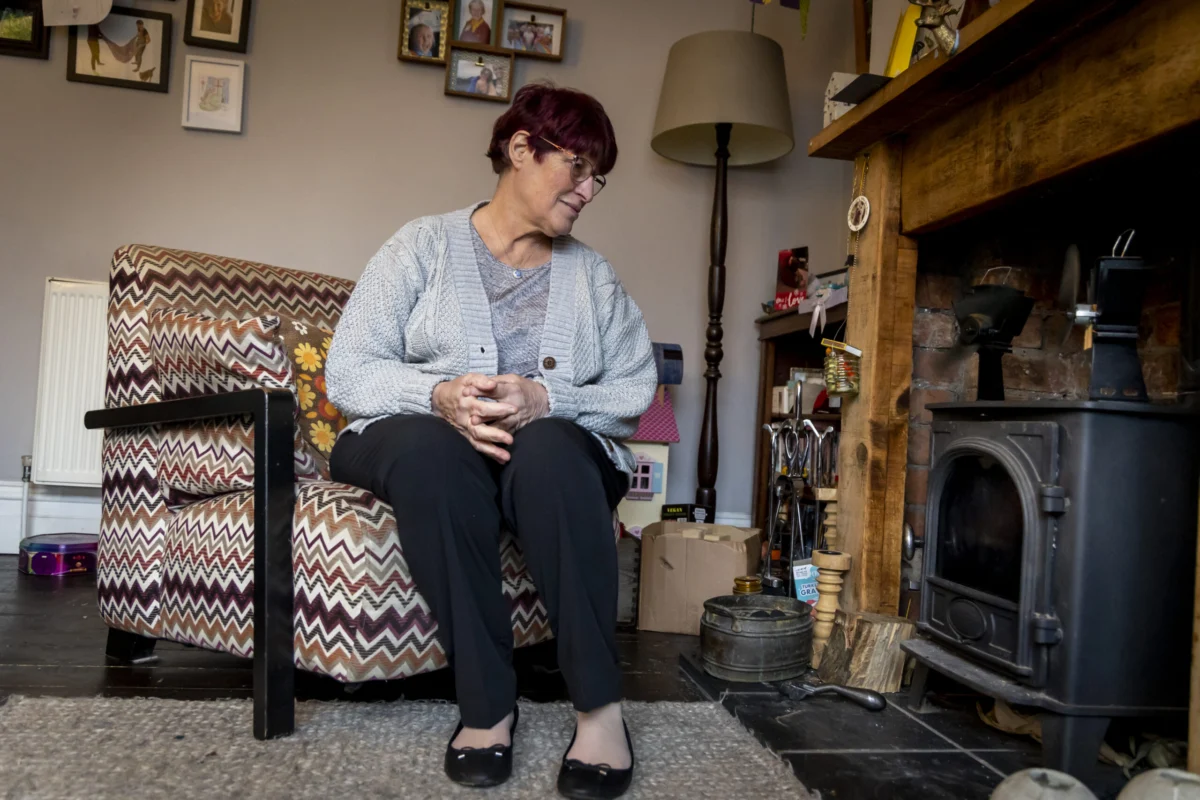
The national advocacy organization for older people, Age Action, has issued a stern critique of the Irish Government following the unveiling of Budget 2026, characterizing the fiscal plan as a "missed opportunity" that fails to address the fundamental economic and social needs of the nation’s aging population. In a detailed response to the budgetary measures announced by Minister for Finance Jack Chambers and Minister for Public Expenditure Paschal Donohoe, the organization highlighted a significant disconnect between government rhetoric regarding "targeted supports" and the reality of the financial pressures facing over 860,000 individuals aged 65 and older. The advocacy group argues that the modest increases in the State Pension and Fuel Allowance are insufficient to offset the compounding effects of years of high inflation, leaving many older citizens in a precarious financial position.
The Core Grievance: A Failure of Permanent Structural Support
At the heart of Age Action’s disappointment is the government’s decision to move away from the "one-off" cost-of-living payments that characterized previous budgets without replacing them with adequate permanent measures. Throughout the inflationary crisis of 2023 and 2024, the Irish government utilized a series of lump-sum payments to help vulnerable households manage soaring energy and grocery bills. While the government signaled that Budget 2026 would transition toward more sustainable, long-term fiscal structures, Age Action contends that for older people, this transition has resulted in a net loss of real-world purchasing power.
Camille Loftus, Age Action’s Head of Advocacy and Public Affairs, emphasized that the removal of these temporary supports has left a vacuum that the new measures fail to fill. "While Government was clear that this year’s Budget would not include ‘one-off’ supports, these were to be replaced with targeted and permanent measures," Loftus stated. "But this did not happen for older people in Budget 2026. In our pre-budget meeting with Ministers Jack Chambers and Paschal Donohoe, Age Action stressed that older people, particularly those relying on the State Pension, were deeply concerned about how they would meet their costs in the absence of these ‘one-off’ supports."
A Chronology of Advocacy: From Submission to Budget Day
The friction between the advocacy group and the government did not emerge in a vacuum but followed months of formal engagement. The timeline of this policy debate began in August 2025, when Age Action published its comprehensive pre-budget submission. This document outlined a series of data-driven recommendations designed to insulate older people from the "sticky" nature of high prices.
Following the submission, Age Action representatives met directly with senior cabinet members to voice the concerns of their constituents. During these consultations, the organization presented evidence that while the headline rate of inflation has slowed, the actual price levels for essential goods—heating, electricity, and basic nutrition—remain significantly higher than pre-pandemic levels. The advocacy group warned that a failure to significantly boost the core State Pension would lead to an increase in relative poverty among the elderly.
Despite these warnings, the government’s final announcement on Budget Day included a €10 weekly increase to the State Pension. For Age Action, this figure represents a failure to adhere to established benchmarks and a lack of ambition in protecting the most vulnerable members of society.
The State Pension and the 34% Benchmark
One of the most significant points of contention is the adequacy of the State Pension. Age Action has long campaigned for the government to adopt the recommendations of the Pensions Commission, which suggested that the State Pension should be benchmarked at 34% of average weekly earnings to ensure a basic standard of living.
Currently, the €10 increase provided in Budget 2026 does not move the needle toward this target. Economists and advocacy groups point out that as wages in the broader economy rise, a fixed-rate increase of €10 actually allows the pension to slip further behind the 34% benchmark in relative terms. For an older person living alone, the gap between their income and the cost of a "Minimum Essential Standard of Living" (MESL) continues to widen.
"The €10 increase in the State Pension will not bring the rate any closer to the benchmark level recommended by the Pensions Commission," Loftus remarked. This failure to index the pension to wages or a specific basket of goods means that retirees are effectively seeing their standard of living eroded year after year, regardless of the nominal increases announced in the Dáil.
Energy Poverty and the Inadequacy of the Fuel Allowance
Beyond the core pension, the government’s approach to energy costs has drawn sharp criticism. Budget 2026 included a €5 increase in the Fuel Allowance, a measure intended to help low-income households heat their homes during the winter months. However, Age Action argues that this measure is both poorly targeted and quantitatively insufficient.
The organization had proposed a more sophisticated "Energy Guarantee" for older people. This proposed mechanism would have taken into account two critical variables: the current market price of energy and the energy efficiency (BER rating) of the individual’s home. Because many older people in Ireland live in older, "leaky" houses that are difficult to heat, they often face energy bills that are disproportionately high compared to younger cohorts living in modern, high-efficiency apartments.
"The €5 increase in Fuel Allowance is an inadequate substitute for an Energy Guarantee for older people," Loftus explained. "It’s not enough to cover costs, fewer than 3 in 10 State Pension recipients qualify for it, and it doesn’t take account of the higher energy costs many older people face."
Data from the Central Statistics Office (CSO) supports this concern, showing that older households spend a higher percentage of their disposable income on home energy than any other demographic. By failing to implement a more nuanced Energy Guarantee, the government has, in the eyes of advocates, left hundreds of thousands of people at risk of living in cold, damp conditions that exacerbate chronic health issues.
The "Forgotten" Pillars: Health and Housing
While income and energy dominated the immediate headlines, Age Action also expressed deep concern over the lack of progress in healthcare and housing for the older population. As Ireland’s demographic profile shifts—with more than 860,000 people now aged 65 and older—the demand for specialized housing and integrated health services is reaching a critical point.
In the realm of housing, the organization highlighted the absence of incentives for "rightsizing"—a process where older people move from large, family-sized homes into smaller, more accessible, and energy-efficient units. Without a state-led strategy to facilitate this transition, many older people remain "trapped" in homes that are no longer suitable for their physical needs or financial situation.
Furthermore, the budget’s failure to significantly expand home care hours or reform the Fair Deal scheme (the Nursing Home Support Scheme) to better support community-based living was noted as a major oversight. Age Action argues that by failing to invest in preventative care and home-based supports, the government is inadvertently placing more pressure on the acute hospital system, which is already struggling with capacity issues.
Broader Economic Implications and Demographic Realities
The disappointment voiced by Age Action reflects a broader concern about Ireland’s preparedness for its aging population. According to the CSO, the number of people aged 65 and over is projected to hit 1 million by 2030. This demographic shift has profound implications for the national exchequer, the labor market, and the social contract.
Critics of Budget 2026 argue that the government’s fiscal strategy is too focused on short-term political gains rather than the long-term structural changes required to sustain an aging society. By providing small, across-the-board increases rather than targeted, benchmarked supports, the government risks a scenario where a significant portion of the population enters their later years in a state of financial insecurity.
From a macroeconomic perspective, the "inflation may have fallen, but prices have not" argument is particularly relevant. While the Consumer Price Index (CPI) may show a return to 2% inflation, the cumulative inflation of the past three years means that the price of bread, milk, and home heating oil is roughly 20-30% higher than it was in 2021. For those on a fixed income like the State Pension, a €10 increase represents a mere 3-4% boost, which does not recover the lost ground of the previous three years.
Official Responses and Political Justifications
In defense of Budget 2026, government representatives have pointed to the need for fiscal prudence and the danger of fueling further inflation through excessive public spending. Minister Jack Chambers emphasized that the budget aimed to strike a balance between providing immediate relief and maintaining the long-term health of the public finances. The government also highlighted other measures, such as tax bracket adjustments, which they claim will benefit some older people who have additional sources of income beyond the State Pension.
However, opposition parties and other NGOs have echoed Age Action’s sentiments. Spokespeople from Sinn Féin and the Labor Party argued that the budget favored "gimmicks" over substance, particularly regarding the lack of a statutory link between the pension and the cost of living. ALONE, another prominent organization supporting older people, also expressed concern that the budget did not go far enough to address the "loneliness epidemic" and the rising costs of private home care services.
Conclusion: A Demographic at Risk
The conclusion drawn by Age Action is one of systemic neglect. With over 860,000 people aged 65 and older in Ireland, the organization believes that the government has failed to recognize the unique vulnerabilities and contributions of this group. The rhetoric of Budget 2026 may have promised a new era of permanent, targeted support, but the reality, according to Camille Loftus, is that the older generation has been "forgotten."
As the dust settles on the Budget 2026 announcements, the focus of advocacy groups will likely shift toward the implementation of these measures and the upcoming general election. Age Action has indicated that it will continue to push for an Energy Guarantee and the full benchmarking of the State Pension, arguing that until these structural changes are made, Ireland’s older population will remain at the mercy of annual political whims rather than having the security of a guaranteed standard of living.
The disappointment expressed today serves as a reminder that for many, a national budget is not just a collection of numbers, but a reflection of a society’s values. In the eyes of Age Action, Budget 2026 suggests that the value placed on the dignity and security of older people is currently insufficient.