In a significant milestone for the global movement toward social and economic reform, Professor Kate Pickett officially launched her highly anticipated new book, The Good Society, during a high-profile virtual event on February 4, 2026. Hosted in collaboration with the progressive advocacy group Compass, the launch featured an influential panel of public intellectuals and policymakers, including Baroness Ruth Lister, environmental journalist George Monbiot, and former Green Party leader Caroline Lucas. The event, which drew an audience of over 500 attendees from across the globe, marks a pivotal moment in the ongoing discourse surrounding structural inequality and the practical pathways toward a more sustainable and just social order.
Professor Pickett, a world-renowned epidemiologist and co-author of the seminal work The Spirit Level (2009), has spent nearly two decades documenting the corrosive effects of income inequality on public health, social trust, and democratic stability. The Good Society serves as a cumulative synthesis of this research, shifting the focus from a diagnosis of societal ills to a proactive blueprint for systemic transformation. The launch event served as both a celebration of this intellectual contribution and a call to action for activists and policymakers grappling with the multifaceted crises of the mid-2020s.
A Legacy of Evidence-Based Advocacy
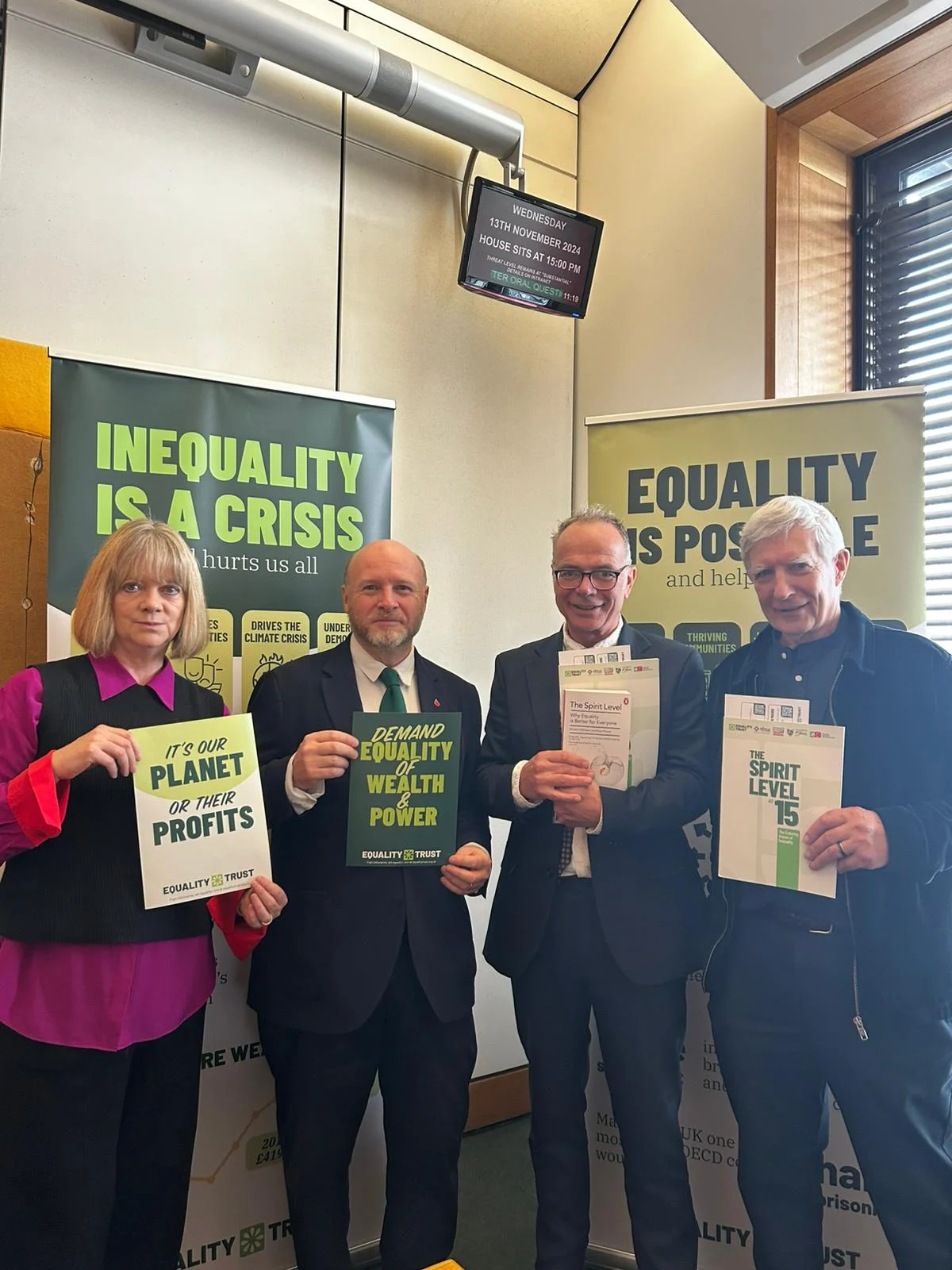
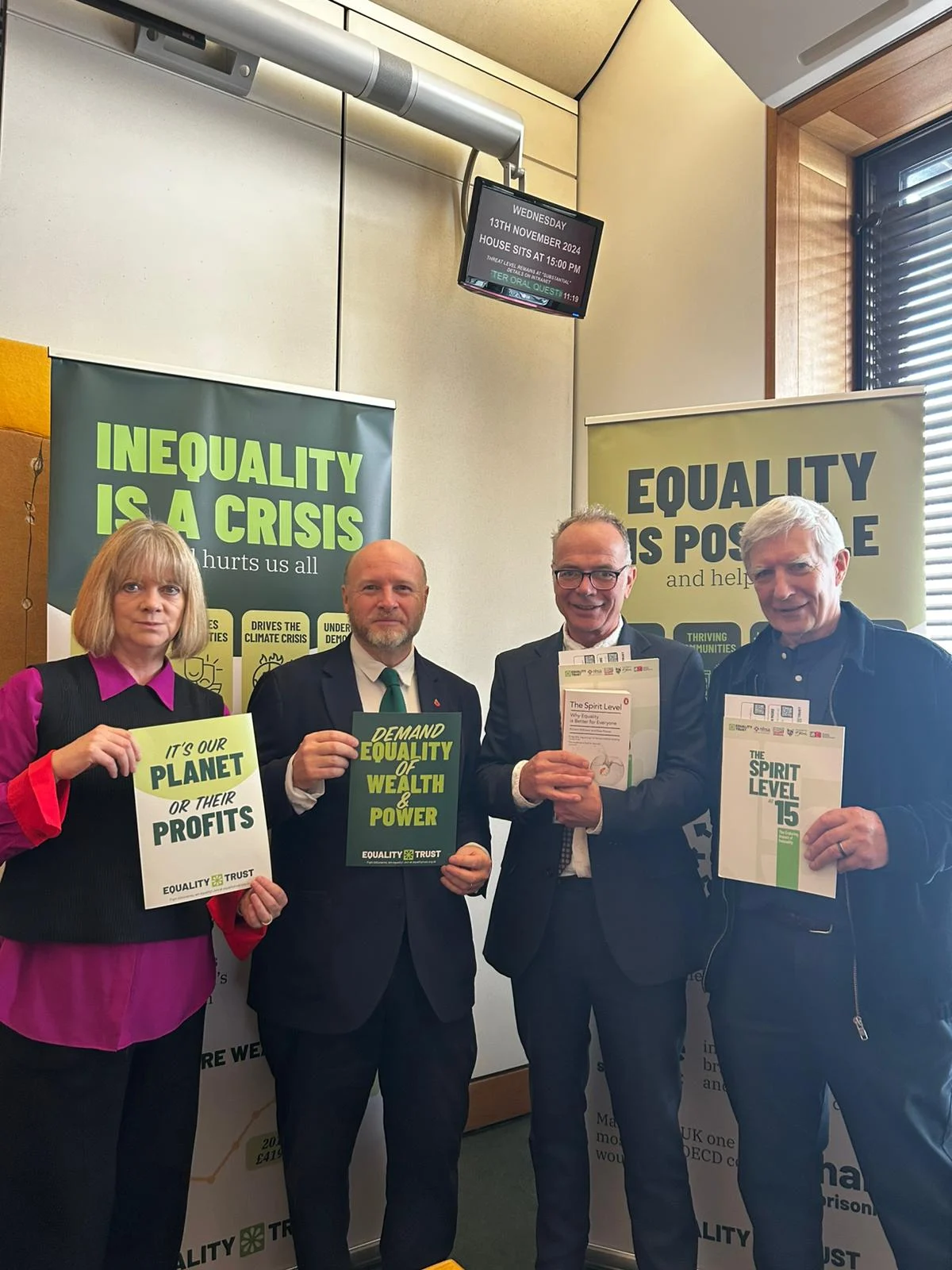
The launch of The Good Society is deeply rooted in a trajectory of advocacy that began in 2009, when Professor Pickett and her long-term collaborator, Professor Richard Wilkinson, founded The Equality Trust. This organization was established following the massive international success of The Spirit Level, which provided empirical evidence that societies with narrower gaps between rich and poor perform better across almost every metric of human well-being, including life expectancy, literacy, infant mortality, and social mobility.
Since the founding of The Equality Trust, the global landscape has seen significant shifts. While the 2010s were characterized by the fallout of the global financial crisis and the implementation of austerity measures in many Western nations, the early 2020s introduced new complexities, including the economic disruptions of the COVID-19 pandemic and an intensifying climate emergency. Professor Pickett’s new work addresses these contemporary challenges, arguing that the pursuit of equality is not merely a moral preference but a functional necessity for a planet facing ecological limits and social fragmentation.
The Launch Event: Insights from the Panel
The online forum provided a platform for a rigorous discussion on the themes of the book. Baroness Ruth Lister, a leading scholar on poverty and social justice, emphasized the importance of "dignity" and "agency" in the construction of a good society. She noted that Pickett’s work transcends traditional economic metrics by focusing on the lived experience of citizens and the psychological toll of status competition in highly unequal environments.
George Monbiot, a prominent voice in environmental activism, connected the book’s themes to the concept of "private sufficiency and public luxury." Monbiot argued that the hyper-consumption driven by inequality is a primary driver of ecological collapse. He praised Pickett for demonstrating that a more equal society is also a more sustainable one, as reduced status competition leads to lower levels of resource-intensive consumption.
Caroline Lucas, representing the political dimension of the struggle for equality, highlighted the need for legislative frameworks that prioritize social well-being over GDP growth. Lucas pointed to the book’s recommendations on democratic ownership and wealth redistribution as essential tools for any government serious about addressing the "triple crisis" of inequality, climate change, and democratic erosion.
Supporting Data: The Global State of Inequality in 2026
The urgency of the arguments presented in The Good Society is underscored by contemporary economic data. As of early 2026, global wealth concentration remains at historic highs. According to recent reports from international monitoring bodies, the richest 1% of the global population continues to hold more wealth than the bottom 95% combined. In the United Kingdom and the United States, the Gini coefficient—a standard measure of statistical dispersion intended to represent the income or wealth inequality within a nation—has remained stubbornly high despite various policy interventions.
Supporting research cited during the launch event indicates that the "inequality gap" has direct correlations with the following sectors:
- Public Health: Data from the last three years suggests that in highly unequal regions, the "health gradient" is steeper, with those in the lower deciles of income experiencing chronic stress-related illnesses at rates 40% higher than those in more egalitarian regions.
- Social Mobility: In countries with high income inequality, the correlation between parental income and child income remains high, effectively stifling the "American Dream" or its international equivalents.
- Political Stability: Comparative studies show that societies with high levels of wealth concentration are 3.5 times more likely to experience significant civil unrest or the rise of populist authoritarian movements.
Professor Pickett’s book utilizes this data to argue that the "Good Society" is not a utopian fantasy but a measurable, achievable state that can be reached through specific policy levers, such as progressive taxation, universal basic services, and the strengthening of labor unions.
Strategic Collaboration with Compass
The partnership with Compass for the book launch reflects a strategic alignment within the British progressive movement. Compass, which advocates for a "Good Society" based on equality, democracy, and sustainability, has been a long-term ally of The Equality Trust. The organization’s focus on "the 45-degree economy"—the intersection of bottom-up social movements and top-down state action—mirrors the policy prescriptions found in Pickett’s new work.
The attendance of over 500 participants signifies a growing appetite for systemic alternatives. Attendees included local government officials, representatives from non-governmental organizations (NGOs), and grassroots activists, suggesting that the book’s message is resonating beyond academic circles and into the realm of practical governance.
Chronology of the Equality Movement (2009–2026)
To understand the significance of this launch, it is necessary to view it within the timeline of the broader movement for economic justice:
- 2009: Publication of The Spirit Level and the founding of The Equality Trust. The book becomes a bestseller and shifts the global conversation on inequality.
- 2012: The Occupy Movement brings the concept of "The 99%" into the mainstream, utilizing data popularized by Pickett and Wilkinson.
- 2015: The United Nations adopts the Sustainable Development Goals (SDGs), with Goal 10 specifically focused on reducing inequality within and among countries.
- 2018: Publication of The Inner Level, which explores the impact of inequality on mental health and individual psychology.
- 2020–2022: The COVID-19 pandemic exposes and exacerbates existing inequalities, leading to a renewed interest in social safety nets and wealth taxes.
- 2024: The "Wealth Tax Commission" in several European nations begins to gain political traction, citing Pickett’s research as foundational evidence.
- February 4, 2026: Launch of The Good Society, shifting the focus toward a holistic, actionable vision for the future.
Broader Impact and Policy Implications
The release of The Good Society is expected to influence upcoming policy debates as several nations approach major election cycles in 2026 and 2027. Analysts suggest that the book provides a coherent intellectual framework for "Well-being Economics," a movement that seeks to replace traditional economic growth targets with metrics based on human and planetary health.
One of the most significant implications of Pickett’s work is the emphasis on "pre-distribution"—altering the way the market works to produce more equal outcomes before taxes and benefits are considered. This includes proposals for mandatory employee representation on corporate boards and the expansion of cooperative ownership models.
Furthermore, the book’s reception by figures like George Monbiot and Caroline Lucas suggests that the "Green-Social" alliance will continue to strengthen. This alliance posits that social justice and environmental sustainability are inseparable, arguing that a society cannot be "green" if it is not also "fair."
Conclusion and Future Outlook
As the recording of the launch event circulates through digital networks and The Good Society reaches bookstores globally, the conversation initiated by Professor Kate Pickett is set to expand. The Equality Trust has announced a series of follow-up workshops and regional events designed to translate the book’s principles into local action plans.
The high level of engagement seen at the launch event indicates that the public is increasingly looking for evidence-based solutions to the systemic crises of the modern era. By providing a rigorous, data-driven roadmap, Professor Pickett has moved the needle from acknowledging that "something is wrong" to defining exactly what "right" looks like. For the 500-plus people in attendance and the thousands more who will engage with the book in the coming months, The Good Society represents more than just a publication; it is a manifesto for a decade of transformation.