
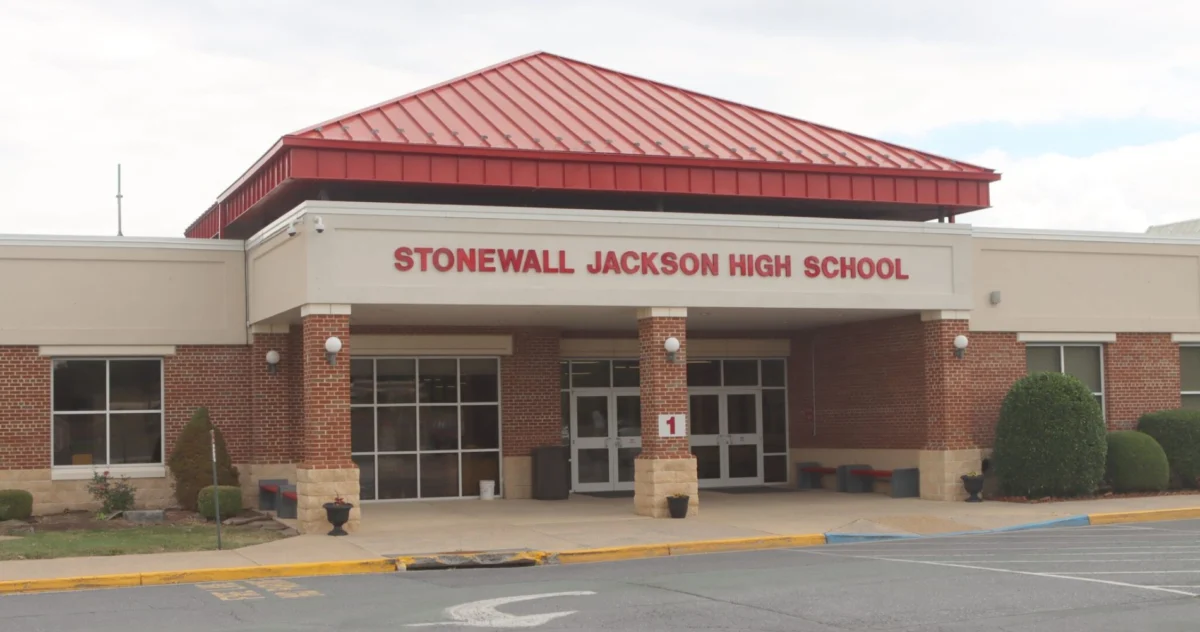
In a landmark ruling that reverberates through the ongoing national debate over historical iconography and public institutions, the U.S. District Court for the Western District of Virginia has issued a definitive order requiring the Shenandoah County School Board to strip its schools of names honoring Confederate figures. The court’s August 6, 2026, opinion serves as a rebuke of the board’s 2024 decision to reinstate the names of Stonewall Jackson, Robert E. Lee, and Turner Ashby, finding that the board’s actions were inextricably linked to racial discrimination and violated both the Fourteenth Amendment and federal civil rights legislation.
The 141-page memorandum opinion, authored by the court, articulates that the restoration of these names was not a neutral administrative act but a targeted decision that embraced an ideology antithetical to the principles of equal protection. By reviving monikers associated with the defense of slavery and the era of "Massive Resistance"—a mid-20th-century legislative effort to forestall school desegregation—the board effectively created a hostile environment for Black students, the court concluded.
A Chronology of Contention: From Removal to Reinstatement
The conflict over school naming conventions in Shenandoah County is a multi-year saga that reflects deeper societal fissures. To understand the legal weight of the court’s recent decision, it is necessary to examine the timeline of these developments:
- 1957–1959: During the height of Massive Resistance, the county constructed Stonewall Jackson High School. The selection of the name, occurring while a Confederate battle flag flew over the site, was identified by the court as a purposeful act to discourage Black student integration.
- 2020: In the wake of national racial justice protests, the Shenandoah County School Board voted 5-1 to remove the Confederate names, acknowledging that they symbolized systemic inequality. The schools were rebranded as Mountain View High School and Honey Run Elementary.
- 2021: The political landscape shifted with the election of three new board members who campaigned on a platform of restoring the original names.
- 2022: A motion to revert to the Confederate names was brought to the board but failed in a 3-3 tie after significant public pushback.
- 2023: A further shift in board composition saw the election of three additional members who prioritized the restoration of Confederate branding.
- 2024: Despite hours of public testimony from community members opposed to the move, the board voted 5-1 to reinstate the names of Jackson, Lee, and Ashby.
- 2026: Following a five-day evidentiary hearing and extensive litigation initiated by student plaintiffs, the U.S. District Court issued its final order mandating the permanent removal of the names.
Historical Context and the Mechanism of Massive Resistance
The court’s ruling relies heavily on the historical reality of the 1950s and 1960s, a period when the Supreme Court’s 1954 Brown v. Board of Education decision mandate to integrate schools was met with aggressive obstructionism across the American South. The strategy of "Massive Resistance" involved more than just school closures; it included the symbolic labeling of public spaces.
Expert testimony provided during the federal proceedings highlighted that Shenandoah County, a region that is approximately 90% white, operated under a system of egregious racial inequality for nearly a century. Until 1963, the county maintained no high school for Black students, forcing them to commute to other districts to receive an education. The court’s findings emphasize that the naming of schools after Confederate figures was not a matter of benign historical commemoration, but a tool used to communicate a hierarchy of status, explicitly designed to signal to Black families that they were unwelcome in the county’s educational institutions.
Data and Legal Implications
The legal arguments presented by the plaintiffs—a group of four Black students—centered on the Fourteenth Amendment’s Equal Protection Clause and Title VI of the Civil Rights Act of 1964. Title VI prohibits discrimination on the basis of race, color, or national origin in any program or activity that receives federal financial assistance.
The district court found that the 2024 board’s justification for the change—claiming the 2020 process was flawed—was a pretextual argument. The court noted that because a legitimate, transparent process had occurred in 2022 where the community expressed their views and the motion failed, the board’s sudden reversal in 2024 could only be interpreted as a deliberate effort to bypass the established preference for inclusivity.
By re-imposing these names, the school board effectively created a "disproportionate burden" on Black students. The court noted that these students are now forced to navigate an educational environment that honors those who fought for their ancestors’ enslavement, a psychological and dignitary harm that is not shared by their white counterparts. Under the Equal Education Opportunities Act, the school district holds an affirmative duty to remove the vestiges of past segregation. Instead of complying with this mandate, the court ruled, the board actively moved to restore a symbol of that very segregation.
Official Responses and Community Impact
Kaitlin Banner, deputy legal director at the Washington Lawyers’ Committee for Civil Rights and Urban Affairs, hailed the ruling as a victory for the students who provided "heartfelt and unwavering" testimony throughout the proceedings. The plaintiffs argued that the names served as "mobile billboards" of exclusion, particularly when displayed on athletic uniforms and school properties.
On the other side of the legal aisle, defense counsel Jim Guynn has indicated that the school board intends to appeal the decision. Proponents of keeping the names have historically argued that such actions are an attempt to "erase history" or "cancel" Southern heritage. However, the federal court’s opinion specifically dismantled this argument, noting that the removal of these names from public buildings does not alter the historical record, but rather shifts the focus of taxpayer-funded institutions away from honoring individuals who fought to uphold a system of race-based chattel slavery.
Broader Societal Significance
The case of Shenandoah County is emblematic of a broader, nationwide effort to reconcile public school identities with modern egalitarian values. Data from the Southern Poverty Law Center has shown that hundreds of schools across the United States have engaged in similar renaming processes since 2020. The federal court’s decision in this case creates a significant legal precedent: it establishes that school board decisions regarding institutional names are not insulated from judicial review when those decisions have a clear, discriminatory impact on a protected class of students.
The ruling is particularly notable for its rejection of the "procedural justification" often used by local government bodies to hide discriminatory intent. By scrutinizing the "extraordinary sequence of events" leading up to the 2024 vote, the court established a roadmap for how future litigation might challenge similar actions in other jurisdictions.
As the school board prepares for a potential appeal, the immediate directive from the court remains in place: the district must move with "all deliberate speed" to adopt new, non-discriminatory names for the affected schools. For the students of Shenandoah County, the court’s order represents a definitive acknowledgment that the educational environment must be a space of equal opportunity, free from the institutionalized reminders of a past defined by racial hierarchy. The ruling underscores a fundamental tenet of American constitutional law: while a community may have a history, it does not have a constitutional right to force that history upon students in a way that stigmatizes their identity or undermines their right to an equal education.




