
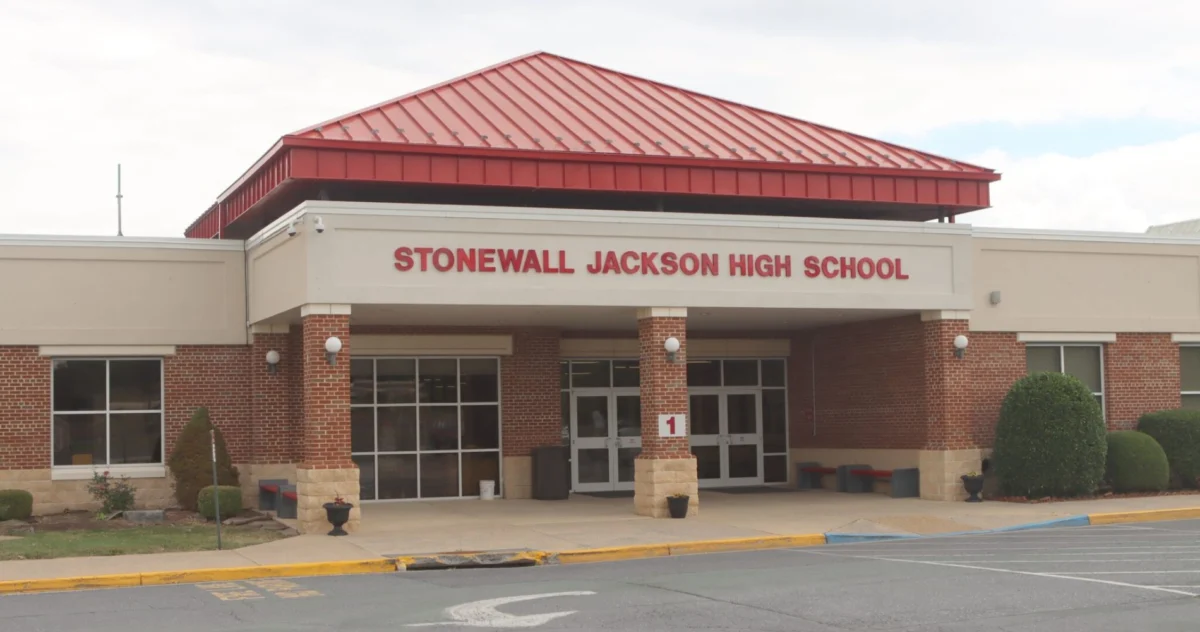
In a landmark decision handed down on August 6, 2026, the U.S. District Court for the Western District of Virginia issued a permanent injunction requiring the Shenandoah County School Board to abandon the use of Confederate-linked names for its public schools. The ruling marks the culmination of a protracted legal battle that pitted student plaintiffs against a school board majority that had sought to reinstate the names of Robert E. Lee, Stonewall Jackson, and Turner Ashby, figures who served as military leaders for the Confederacy. Presiding Judge Elizabeth Dillon’s 141-page memorandum opinion determined that the school board’s 2024 decision to restore these names was inextricably linked to racial animus, violating both the Fourteenth Amendment’s Equal Protection Clause and federal civil rights statutes, including Title VI of the Civil Rights Act of 1964 and the Equal Educational Opportunities Act (EEOA).
The court’s ruling serves as a profound rejection of the board’s justification for the reinstatement, which had centered on procedural complaints regarding the 2020 name-change process. Instead, the court concluded that the board acted with full awareness of the historical legacy of these figures and the exclusionary, discriminatory message their names project toward Black students. The court characterized the board’s actions as an affirmative step to revive the vestiges of a dual, segregated school system, an ideology it deemed "patently inconsistent" with federal law.
A Chronology of Contention: From Massive Resistance to Modern Litigation
The roots of the controversy in Shenandoah County extend deep into the 20th century. During the era of "Massive Resistance," a state-sponsored campaign designed to thwart the integration mandates of the 1954 Brown v. Board of Education Supreme Court decision, Southern school boards frequently utilized the naming of new facilities as a tool to signal defiance against desegregation.
The historical record provided in the trial revealed that Stonewall Jackson High School was constructed and named between 1957 and 1959. At the time of its development, a Confederate battle flag was reportedly flown over the construction site, a detail the court noted as emblematic of the racial hostility intended to discourage Black families from seeking admission. For decades, Shenandoah County maintained a segregated educational structure. While white students were provided with multiple local high schools, Black students were systematically denied equivalent facilities, often forced to commute for hours to attend underfunded, segregated institutions in neighboring jurisdictions.
The modern phase of this conflict began in 2020. Amidst a national reckoning regarding racial justice, the Shenandoah County School Board voted unanimously on June 25, 2020, to adopt a resolution condemning racism and pledging to foster an inclusive environment. On July 9, 2020, the board voted 5-1 to remove the Confederate names, subsequently renaming the institutions Mountain View High School and Honey Run Elementary School.
However, the political climate shifted in the following years. In 2021, and again in 2023, school board elections saw the rise of candidates who campaigned specifically on the promise of restoring the Confederate names. Despite significant community opposition—which included hours of public testimony and formal protests from organizations like the Virginia State Conference of the NAACP—the newly constituted board voted 5-1 on May 9, 2024, to revert to the original Confederate nomenclature. This decision triggered the federal lawsuit filed by student plaintiffs who argued that the action subjected them to a hostile, discriminatory environment.
The Legal Framework: Equal Protection and the EEOA
The legal challenge relied heavily on the precedent set by Brown v. Board of Education, which emphasized the psychological impact of state-sponsored segregation on the "hearts and minds" of children. The plaintiffs argued that forcing Black students to attend schools named after individuals who fought to maintain the enslavement of their ancestors constitutes a form of state-sanctioned racial stigmatization.
In its ruling, the district court leaned into the requirements of the Equal Educational Opportunities Act. The EEOA imposes a duty on school districts to take affirmative steps to remove the vestiges of past discrimination. The court found that by reinstating the Confederate names, the school board did not merely fail in its duty to desegregate; it actively worked to perpetuate a "symbolic message of exclusion." The judge noted that the board’s justification—that the 2020 process was flawed—was "not credible" given that an opportunity to reconsider the names in 2022 had already been debated and rejected by a previous iteration of the board.
The court’s opinion highlights that the 2024 vote was not about administrative procedure but about the "ideals for which Lee, Jackson, and Ashby fought." By explicitly choosing to honor these figures, the board effectively adopted their ideology, which the court stated is inherently contradictory to the spirit of the Fourteenth Amendment.
Data and Expert Testimony: The Reality of Racial Inequality
The litigation included five days of evidentiary hearings, during which the court heard from experts on the history of Southern education and from the student plaintiffs themselves. The testimony painted a stark picture of the difference between the school board’s stated procedural concerns and the lived reality of Black students in the district.
Expert testimony established that the county’s original refusal to integrate until 1963—nearly a decade after Brown—was a deliberate effort to protect white supremacy. When the board voted to restore the names in 2024, they did so in a district that is approximately 90% white. The court noted that the disproportionate burden placed on Black students—who are a small minority within the student population—by the reinstatement of these names was "palpable" and "documented."
Furthermore, the court referenced an earlier ruling from 2025 regarding the same district, which found that forcing student athletes to wear uniforms labeled "Generals"—a reference to the Confederate leaders—violated the First Amendment rights of those students. By treating these students as "mobile billboards" for an ideology they found abhorrent, the district had already crossed a constitutional line, a fact the court found highly relevant to the broader 2024 decision to rename the schools.
Official Responses and Future Implications
The reaction to the court’s ruling has been sharply divided. Kaitlin Banner, deputy legal director at the Washington Lawyers’ Committee for Civil Rights and Urban Affairs, hailed the decision as a vindication for the students. "One after another, students presented heartfelt and unwavering testimony, describing how Confederate school names make them feel unwelcome, devalued and ultimately inferior to their white peers," Banner said in a post-trial statement. The plaintiffs’ legal team emphasized that the court’s order to rename the schools "on a racially nondiscriminatory basis with all deliberate speed" is a critical step toward healing the district’s fractured educational climate.
Conversely, the school board has signaled its intention to challenge the verdict. Defense attorney Jim Guynn confirmed to the media that the board plans to appeal the decision to the Fourth Circuit Court of Appeals. The potential appeal raises questions about the scope of judicial intervention in local school board governance. Supporters of the appeal argue that the board possesses the democratic mandate to name its facilities as it sees fit, while critics maintain that the Constitution sets clear boundaries that prevent local government bodies from using their authority to promote symbols of racial subjugation.
The Broader Impact on American Education
The Shenandoah County case is expected to have significant implications for school districts across the United States currently grappling with the legacy of the Confederacy. As school boards nationwide face pressure to modernize naming conventions, this ruling establishes a rigorous federal standard for what constitutes "discriminatory intent" in the context of institutional naming.
Legal scholars suggest that the decision clarifies that "procedural" justifications will not suffice as a shield for actions that carry a clear, discriminatory impact on marginalized student populations. By linking the act of naming a school to the "vestiges of segregation," the Western District of Virginia has provided a blueprint for future litigation.
As the district prepares to enter a new academic year under the shadow of a looming appeal, the focus remains on the students. For the families who brought the suit, the ruling is less about politics and more about the fundamental promise of the Fourteenth Amendment: that the state cannot, through its own institutions, label a segment of its citizenry as inferior. Whether the ruling stands or is modified on appeal, the case of Shenandoah County serves as a definitive case study in the ongoing American struggle to reconcile public institutions with the nation’s commitment to equality. The final resolution of this case will likely remain a bellwether for how federal courts interpret the intersection of local autonomy and the protection of civil rights in the public school system for years to come.




