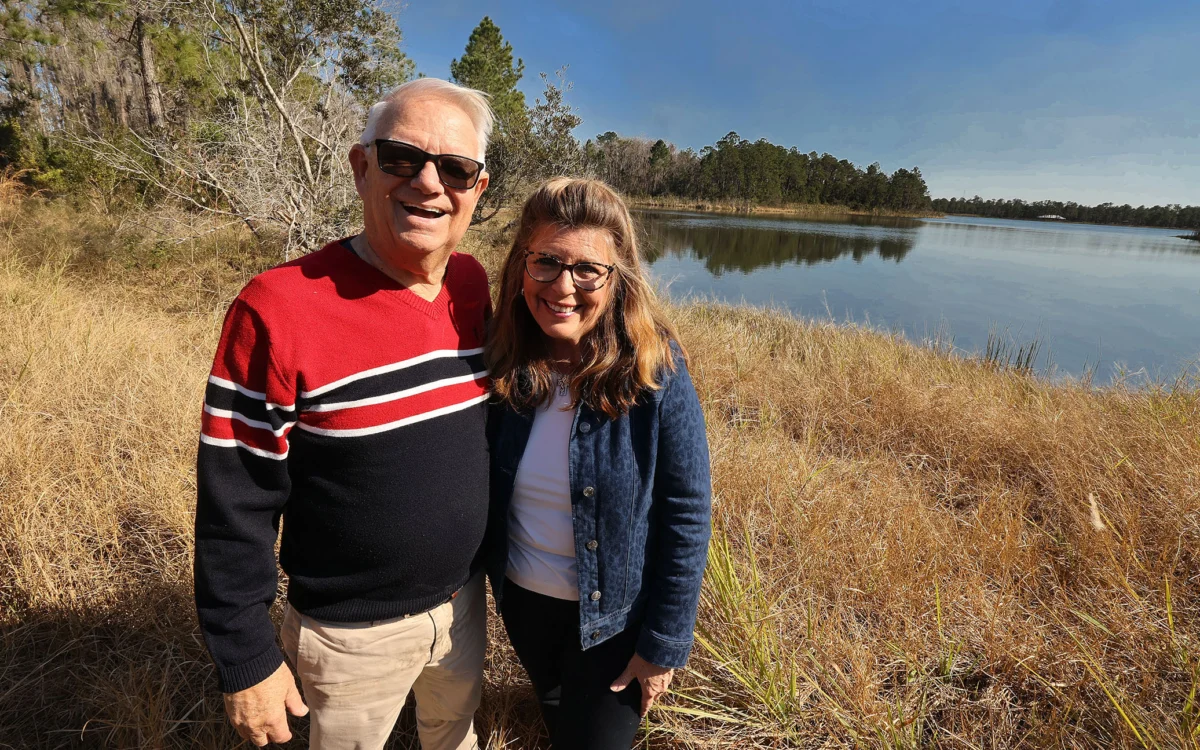
ORLANDO, Fla. – Chip and Kasinee Tolman begin each day with a profound act of love and physical exertion: lifting their two adult children, aged 24 and 28, from their beds into their wheelchairs. This intimate, demanding routine, which includes assisting them with personal care and feeding, is a testament to the unwavering commitment of parents navigating the complexities of lifelong caregiving for individuals with severe disabilities. Their children, both affected by cerebral palsy and significant cognitive delays, require constant assistance, a reality that weighs heavily on the Tolmans, particularly on Chip, whose own physical well-being is strained by the demands of this 24/7 responsibility. As they age, the paramount concern for the Tolmans, like many families in similar situations, is ensuring a secure and compassionate future for their children after they are no longer able to provide care.
This deeply personal struggle is at the heart of a groundbreaking initiative by Tim and Marie Kuck, founders of the Orlando-based nonprofit Nathaniel’s Hope. Recognizing the urgent need for sustainable solutions that offer not just respite but a permanent home and supportive community for adults with disabilities, the Kucks are embarking on the ambitious development of "Hopetown," a sprawling community designed to provide a holistic living, working, and recreational environment for approximately 200 adults with disabilities. This visionary project aims to alleviate the immense burden on families and provide individuals with disabilities a dignified and fulfilling life.
The Genesis of Hopetown: A Response to Unmet Needs
The concept of Hopetown is rooted in the Kucks’ personal journey and their extensive experience with Nathaniel’s Hope, a nonprofit established over two decades ago following the death of their son, Nathaniel, at the age of four. Nathaniel lived with an undiagnosed condition that resulted in significant disabilities, thrusting his parents into a world of caregiving and advocacy they were initially unprepared for. "We were thrown into a community that we weren’t prepared to be a part of," Marie Kuck shared, reflecting on their early experiences. "But once we were there, we learned so much." This profound learning experience fueled their passion to support other families facing similar challenges.
Nathaniel’s Hope has since grown into a significant national and international organization, providing crucial respite care services. By partnering with local churches and employing skilled caregivers, the nonprofit offers parents a much-needed break, allowing them to temporarily entrust their children to competent hands. Chip Tolman attested to the quality of care, recalling how his children benefited from the program at Calvary Orlando every Saturday for three hours when they were younger. "When you went there, you always knew that the people taking care of your kids were top notch, top notch all the way," he stated. However, respite care, while invaluable, does not address the long-term existential question of where individuals with lifelong disabilities will live and be cared for once their primary caregivers are no longer able to provide support.
A Vision for a Thriving Community: The Scope of Hopetown
The Kucks’ response to this critical gap in services is Hopetown, a project born from a deep understanding of the profound emotional, physical, and financial toll that lifelong caregiving can exact on families. They have acquired nearly 400 acres of land in east Orlando, a significant investment aimed at creating a vibrant and inclusive community. The vision for Hopetown is not merely a residential facility but a comprehensive ecosystem designed for independent living, supported group housing, and specialized care.
The master plan for Hopetown includes a variety of housing options, ranging from independent living residences to group homes, catering to diverse needs and levels of support. A skilled nursing facility will be integrated to provide specialized medical care, ensuring that residents receive comprehensive healthcare services on-site. Beyond residential and medical facilities, Hopetown is envisioned as a true community with a central town center that will house a cafeteria, event space, and various businesses. These businesses are intended to provide meaningful employment opportunities for residents, fostering a sense of purpose and contribution. Recreational land, including a handicap-accessible trail around a lake and potentially an athletics complex with a gymnasium, splash pad, and pool, will offer residents opportunities for physical activity and social engagement.
Tim Kuck emphasized the community-centric nature of the project, stating, "It’s a community like Baldwin Park and not anything remotely close to an institution. It’s a place that will have residents but also be for the Orlando community. We hope to make it very inviting." This distinction is crucial; Hopetown aims to be an integrated part of the wider Orlando community, fostering interaction and understanding between residents and the general public, rather than an isolated facility. The inclusion of conservation land, designated for hiking, fishing, and birdwatching, further underscores this commitment to integrating nature and community engagement.
Financial Foundations and Funding Models
The realization of Hopetown represents a substantial financial undertaking. The Kucks have invested $7 million in acquiring the land, with an additional 200 acres added earlier this year to the 171 acres secured in 2022. The estimated development cost for Hopetown is a staggering $100 million. This significant investment underscores the Kucks’ dedication and the scale of their ambition.
The Kucks, who also own Regal Boats, an internationally recognized luxury boat manufacturer, will own all the properties within Hopetown and lease them to businesses and residents. This ownership model is intended to provide a stable financial foundation for the community. Furthermore, the Kucks aim to keep rental costs accessible. "We don’t want this to be a community just for the wealthy. Everybody should be welcome here," Marie Kuck asserted.
To achieve this accessibility, Hopetown plans to rely on a robust fundraising strategy. Donations from the community are intended to help build the development and subsidize residents’ rents, ensuring that financial constraints do not prevent individuals from accessing this vital resource. This approach mirrors the model of Marbridge, a similar development near Austin, Texas, which serves as an inspiration for Hopetown. Marbridge, founded in 1953, provides a residential community for adults with cognitive disabilities. Currently, Marbridge charges a monthly fee of $4,475, which covers rent, utilities, food, access to caregivers, and job training. Crucially, Marbridge’s fundraising efforts provide financial support to approximately half of its 265 residents, reducing their rent. Steven McAvoy, CEO of Marbridge, stated, "Our goal, though, is to make our endowment much larger, to be able to get anyone a scholarship, so that anyone can live here." The Kucks aspire to achieve a similar level of financial inclusivity for Hopetown.
A Model for Future Development: Lessons from Marbridge
The inspiration for Hopetown draws heavily from the success of Marbridge in Austin, Texas. Marbridge was established with the explicit goal of creating a "dramatically different course compared to the institutions of the day," offering a place where adults with cognitive disabilities could live, work, and learn in a supportive environment. Since its founding in 1953, Marbridge has evolved into a well-respected residential community that prioritizes resident well-being, independence, and social integration.
The principles guiding Marbridge—providing a continuum of care, fostering opportunities for meaningful engagement, and ensuring financial accessibility—are directly informing the development of Hopetown. The Kucks have visited Marbridge and studied its operational model, adapting its successful strategies to the unique context of Central Florida. The emphasis on creating a campus-like atmosphere with integrated services and recreational facilities is a direct reflection of the Marbridge experience. The commitment to offering vocational training and employment opportunities within the community is also a cornerstone of both developments, recognizing the profound impact that work and purpose have on an individual’s quality of life.
Community Impact and Broader Implications
The development of Hopetown has significant implications for Central Florida and beyond. For families like the Tolmans, it represents a tangible solution to a deeply entrenched societal challenge. The prospect of their children having a safe, supportive, and engaging place to live after their passing offers immense peace of mind. "My kids have a good time looking around and seeing stuff. They don’t want to sit at home and look at the big screen TV, watch Disney videos. I can tell they get real bored with that," Chip Tolman remarked, highlighting the need for stimulating environments that cater to the interests and capabilities of individuals with disabilities.
Beyond the immediate beneficiaries, Hopetown is poised to become a valuable resource for the wider Orlando community. The Kucks intend to open approximately 200 acres of conservation land for public use, offering opportunities for hiking, fishing, and birdwatching. The proposed athletics complex, with its gymnasium, splash pad, and pool, is also envisioned as a shared facility, accessible to the broader Central Florida community. This inclusive approach aims to foster greater understanding and interaction between individuals with and without disabilities, breaking down societal barriers and promoting a more inclusive culture.
Furthermore, the Kucks plan to collaborate with local hospitals and other agencies to bring essential services directly to Hopetown. This includes the potential for medical facilities to be established on-site, serving both residents and the wider community. Such partnerships could streamline access to healthcare for individuals with disabilities, addressing a common challenge in accessing specialized medical support. The inclusion of shops and restaurants, such as an ice cream parlor, aims to create vibrant social hubs that attract both residents and visitors, further integrating Hopetown into the fabric of the local economy and social scene.
A Future Filled with Promise
The vision for Hopetown is ambitious and deeply personal, driven by the Kucks’ own experiences and a profound commitment to serving a vulnerable population. The project is not just about bricks and mortar; it is about building a community that fosters dignity, independence, and a sense of belonging for adults with disabilities. As Chip and Kasinee Tolman face the uncertainties of the future, Hopetown offers a glimmer of hope, a "candle that lights up," as Kasinee described it, illuminating a path toward a more secure and fulfilling future for their children. The success of this endeavor could serve as a powerful model for addressing the growing need for comprehensive, community-based support systems for individuals with disabilities across the nation. The scale of the project, the innovative funding model, and the commitment to community integration position Hopetown as a potentially transformative development in the landscape of disability services.