On July 8, 2026, a series of critical reports and an in-depth investigation were jointly released by NGO Arctida, the Batani Foundation, and the Indigenous Institute, shedding stark light on the methods Russia employs to represent Indigenous issues on the international stage. These publications reveal a disturbing pattern where an agency with significant security apparatus involvement, the Federal Agency for Ethnic Affairs, dictates the narrative, while genuine Indigenous voices are systematically marginalized. The investigation further highlights how the only recognized "independent" experts are often individuals closely affiliated with powerful extractive corporations. This coordinated effort exposes the suppression of authentic Indigenous activists, whose advocacy is met with persecution, intimidation, and exclusion, while representatives of the state and its corporate allies dominate the discourse. The primary organization at the center of this alleged manipulation is RAIPON (Russian Association of Indigenous Peoples of the North).
The comprehensive research, launched with a significant presentation, comprises three key publications: an extensive investigation titled "Indigenous Peoples of Russia: Between War, Intelligence Services, and the Struggle for Rights," and two detailed reports, "Manufacturing Indigenous Legitimacy" and "Indigenous Rights Under Development." These documents collectively aim to expose the systemic erosion of Indigenous self-determination and representation within Russia and its international engagements.
Investigation: Indigenous Peoples of Russia: Between War, Intelligence Services, and the Struggle for Rights
The core of the released material is a deep-dive investigation focusing on the Federal Agency for Ethnic Affairs. This research meticulously documents how Russia’s official representation of Indigenous peoples at international forums, including United Nations mechanisms, has become increasingly influenced by state security structures and the vested interests of extractive industries. The investigation provides evidence of leadership and staff within the Federal Agency for Ethnic Affairs having direct ties to the FSB (Federal Security Service), the Ministry of Defense, and other security bodies. These individuals, according to the report, are then tasked with presenting Russia’s stance on Indigenous rights globally.
Furthermore, the investigation scrutinizes the purported independence of certain civil society representatives. It points to significant financial and institutional links between some of these figures and Nornickel, a major metals and mining company operating in the Arctic region. This alleged co-option of voices stands in stark contrast to the documented experiences of independent Indigenous activists. The report details how these genuine advocates face escalating challenges, including criminal prosecution, pervasive intimidation tactics, and deliberate exclusion from vital international platforms for advocacy.
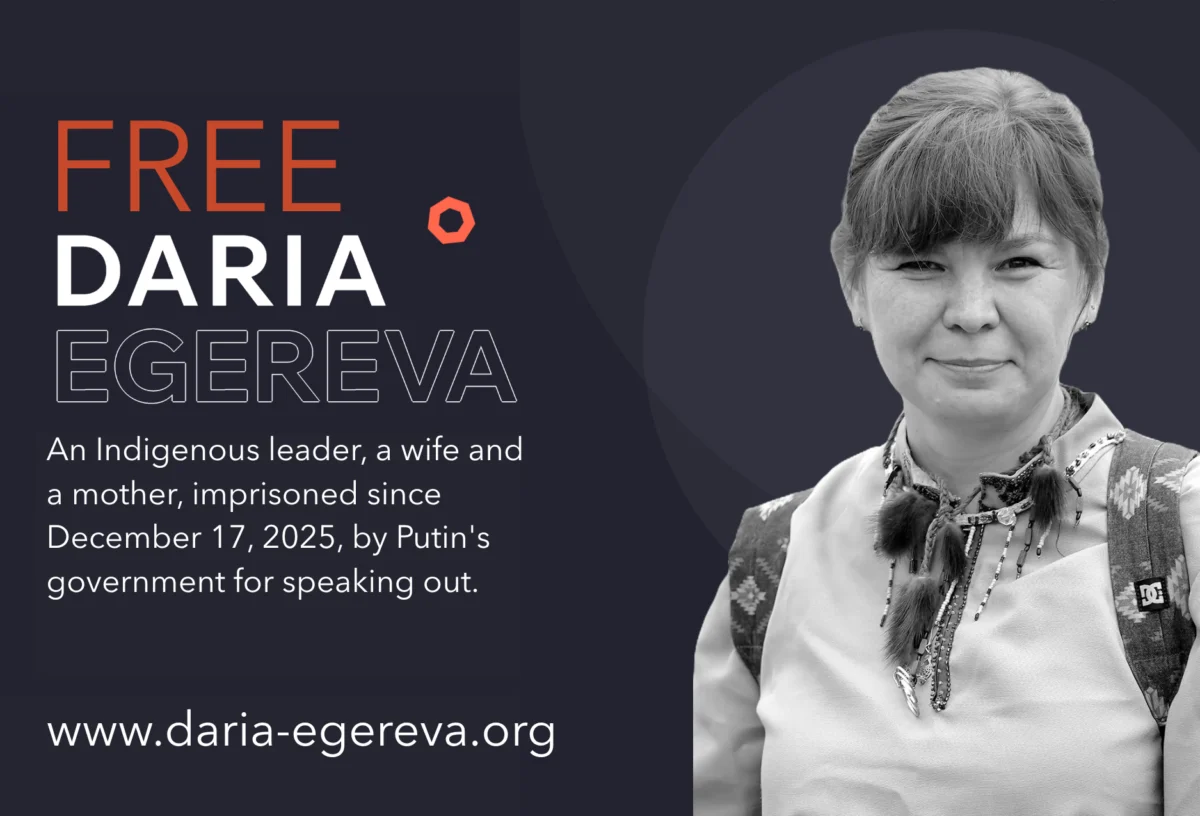
The investigation uses the cases of Daria Egereva, a prominent Selkup representative and climate activist, and Natalia Leongardt, among others, to illustrate this troubling trend. Egereva, who had for many years represented Russia’s Indigenous peoples at UN forums and played a key role in their participation in the COP30 UN climate conference, was arrested in December 2025. She is accused of involvement in the "Aborigen Forum," a peaceful expert network that has been designated as a "terrorist" organization. This legal action, described by her lawyer as "legal absurdity," is seen by many as a deliberate tactic to silence independent voices and pave the way for state-controlled structures. The report argues that Russia is actively replacing authentic Indigenous perspectives with representatives aligned with the state and its corporate partners, effectively ensuring that the true concerns and aspirations of Indigenous peoples remain unheard both domestically and on the international stage.
Report: Manufacturing Indigenous Legitimacy
This report critically examines RAIPON (Russian Association of Indigenous Peoples of the North), arguing that it has transformed from a potential advocate for Indigenous communities into a de facto arm of the Kremlin. The publication asserts that RAIPON increasingly functions as a mouthpiece for state interests rather than a genuine champion for the rights and well-being of Indigenous peoples. This shift is particularly evident on the global stage, where Russia allegedly leverages RAIPON to project an image of a benevolent state actively defending Indigenous rights. Simultaneously, the report contends, RAIPON is co-opted to reinforce state narratives and advance economic agendas, often at the expense of the communities it claims to represent.
The report traces the evolution of RAIPON, suggesting that a platform once intended to be independent has been systematically integrated into the state apparatus. It delves into the urgent implications of this transformation, particularly concerning how international bodies and governments perceive and engage with Indigenous issues emanating from Russia. The findings suggest a deliberate strategy to create a facade of Indigenous representation that serves state interests, thereby undermining genuine Indigenous agency and self-determination.
Report: Indigenous Rights Under Development
The third publication focuses on the profound impact of large-scale infrastructure and resource extraction projects in the Russian Arctic on the rights of Indigenous peoples. This report provides detailed case studies, including the Baimskaya Mining and Processing Plant, Yamal LNG, Port Lavna, Vostok Oil, industrial activities around Iyengra Nasleg, and the development of the Northern Sea Route. These projects, while often framed as crucial for economic development and national interests, disproportionately burden Indigenous communities with social, environmental, and territorial costs.
A systemic pattern emerges from these case studies: weak consultation and participation standards for Indigenous communities, the absence of effective mechanisms for obtaining free, prior, and informed consent (FPIC), limited recognition of Indigenous actors as legitimate stakeholders, and the fragmented protection of traditional lands and territories. The report argues that these domestic practices starkly contradict Russia’s international positioning as a supporter of Indigenous peoples. It calls for Arctic development projects to be rigorously assessed not only through the lenses of climate, energy, logistics, raw material potential, or sanctions policy but, crucially, through their impact on Indigenous rights, land access, traditional livelihoods, representation, and the fundamental right to self-determination. The findings suggest a consistent failure to uphold international standards and a prioritization of state and corporate interests over the rights and well-being of Indigenous populations.
Broader Context and Intensified Pressure on Activists
The release of these reports occurs against a backdrop of significantly intensified pressure on Indigenous Peoples and activists within Russia since the commencement of its full-scale war against Ukraine. The Solidarity Campaign, a signatory to the press release, has documented a disturbing surge in intimidation, criminal and administrative prosecutions, stigmatization, pressure exerted on relatives of activists, obstruction of international advocacy efforts, and the dismantling of independent Indigenous self-organizations.
The arrest of Daria Egereva in December 2025 serves as a chilling example of this heightened repression. Her detention, alongside accusations related to the "Aborigen Forum," is viewed by many human rights organizations and Indigenous rights advocates as a clear signal that the Russian government is actively seeking to eliminate any form of dissent or independent advocacy from Indigenous communities. The fact that at least 17 other activists in various regions faced similar "violent pressure" on the same day as Egereva’s arrest underscores the coordinated nature of this crackdown.
Implications and Potential International Reactions
The detailed revelations within these reports carry significant implications for Russia’s standing in international forums and its relationships with global Indigenous organizations and human rights bodies. The systematic exclusion of independent voices and the alleged co-option of state- and corporate-aligned representatives could lead to increased scrutiny from the UN Permanent Forum on Indigenous Issues, the Expert Mechanism on the Rights of Indigenous Peoples, and other international human rights mechanisms.
The documented links between state security apparatus and the representation of Indigenous issues raise serious concerns about transparency and accountability. Furthermore, the alleged financial ties between certain "independent" experts and major extractive corporations like Nornickel could prompt investigations into conflicts of interest and the potential manipulation of international discourse to serve corporate interests.
For Indigenous communities within Russia, the findings reinforce long-standing fears about their ability to advocate for their rights and protect their traditional lands and livelihoods. The reports suggest a deliberate strategy to undermine their collective agency and self-determination, leaving them vulnerable to the impacts of large-scale development projects and state policies.
The international community, including governments and NGOs committed to Indigenous rights, will likely face increased pressure to respond to these findings. The evidence presented may necessitate a re-evaluation of engagement strategies with Russian Indigenous organizations and a more robust demand for genuine representation and adherence to international human rights standards. The legal designation of the "Aborigen Forum" as a "terrorist" organization, while Egereva was a key participant, highlights the complex and often politically charged environment in which Indigenous rights advocacy now operates within Russia.
Call for Media Inquiries
For media inquiries regarding these critical publications and the ongoing situation of Indigenous peoples in Russia, interested parties are directed to contact the Solidarity Campaign and NGO Arctida. Contact information includes Signal: @solidarity.88 for the Solidarity Campaign Media Coordinator, and [email protected] for NGO Arctida. The press release emphasizes that the intent behind these publications is to bring forth factual evidence and foster a deeper understanding of the challenges faced by Indigenous peoples in Russia and the mechanisms that seek to control their narrative.