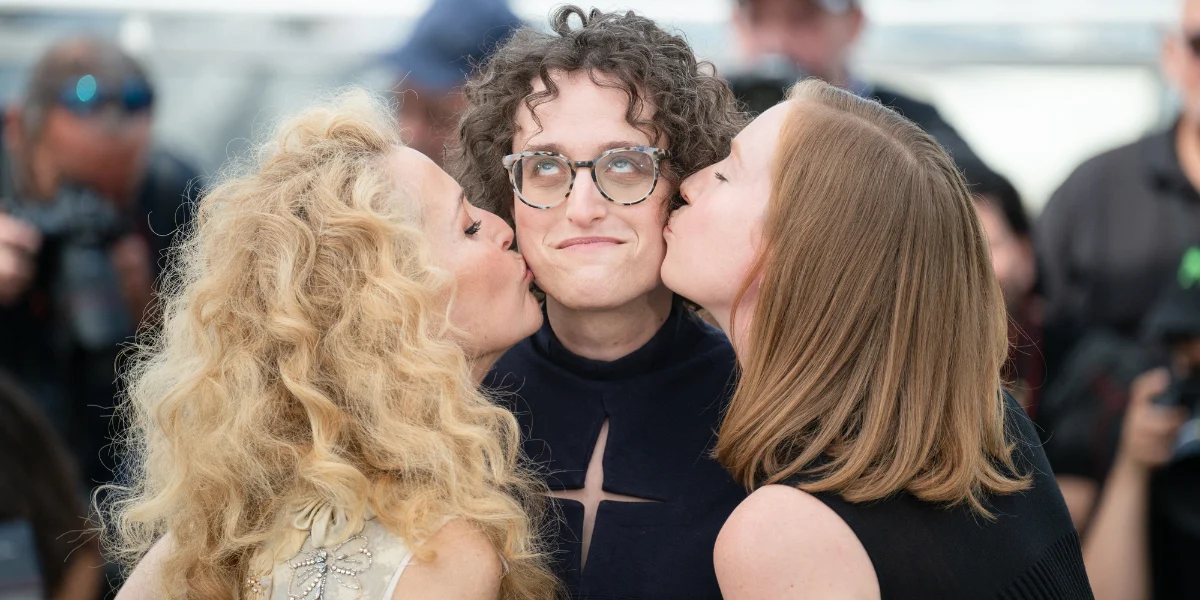
The 79th Cannes Film Festival has served as the backdrop for the highly anticipated debut of Jane Schoenbrun’s third feature film, Teenage Sex and Death at Camp Miasma. Following the critical success of their previous works, We’re All Going to the World’s Fair and I Saw the TV Glow, Schoenbrun’s latest project has arrived to significant acclaim, securing a rare 100% approval rating on Rotten Tomatoes following its initial screenings. The film, described as a "trans sapphic ode to marginalized communities," represents a pivotal moment in the evolution of queer horror, blending the tropes of 1980s slasher cinema with contemporary explorations of gender identity and sexual transition.
The Evolution of the Meta-Slasher: Narrative and Themes
Teenage Sex and Death at Camp Miasma centers on a meta-narrative involving a film director who attempts to remake a fictional 1980s slasher franchise titled "Camp Miasma." The plot follows the director’s efforts to reunite with the original "final girl" of the franchise to create a modern iteration that deliberately strips away the transphobic and exclusionary undertones prevalent in the original era of horror.
Schoenbrun, who wrote and directed the film, has publicly stated that the script is deeply personal, drawing inspiration from their own lived experiences with sexuality and self-discovery following their gender transition. This thematic depth has been a hallmark of Schoenbrun’s filmography, which often utilizes "screen-based" horror and surrealist imagery to navigate the complexities of digital identity and queer isolation. By moving into the "slasher" subgenre, Schoenbrun is engaging with a cinematic tradition that has historically been criticized for its treatment of marginalized bodies, reimagining the "Final Girl" trope through a lens of trans empowerment.
A High-Profile Cast and Production Excellence
The production of Teenage Sex and Death at Camp Miasma marks a significant step forward in scale for Schoenbrun. The ensemble cast features a mix of veteran industry icons and rising stars within the LGBTQ+ community. Gillian Anderson, widely recognized for her role in The X-Files, joins the project alongside Hannah Einbinder, the Emmy-nominated star of Hacks.
The inclusion of Anderson is particularly notable given Schoenbrun’s vocal admiration for 1990s genre television. The director has previously cited The X-Files and Buffy the Vampire Slayer as foundational influences on their aesthetic. The cast also includes Jasmin Savoy Brown, a mainstay of the modern Scream franchise, Quintessa Swindell, and Jack Haven. This "queer-studded" lineup has been praised by critics for its authentic representation, moving away from tokenism toward a narrative where queer identity is central to the plot’s architecture.
During press panels at Cannes, the actors characterized the filming process as "intense" and "visceral." Anderson described the project as a "wild ride," while Einbinder emphasized the film’s role as a corrective to the historical marginalization of trans and sapphic voices in the horror genre.
Analytical Context: The Rise of Trans Horror
The reception of Teenage Sex and Death at Camp Miasma aligns with a broader trend in the film industry often referred to as the "New Queer Horror" movement. While horror has long been a space for subtextual queer coding, directors like Schoenbrun are bringing these themes to the forefront. Data from independent film distributors suggests a growing market for genre films that prioritize diverse perspectives, as these projects often see higher engagement in both festival circuits and streaming platforms.
Schoenbrun’s career trajectory illustrates this shift. Their debut, We’re All Going to the World’s Fair, was a micro-budget success that utilized the "creepypasta" internet subculture to explore dysphoria. Their second film, I Saw the TV Glow, received substantial backing from A24, further solidifying their position as a leading voice in independent cinema. The five-star reviews for Camp Miasma at Cannes suggest that Schoenbrun has successfully transitioned into larger-budget filmmaking without sacrificing the niche, avant-garde sensibilities that defined their early work.
Broader Entertainment Developments: Television and Music
As the film world focuses on Cannes, several other major developments are shaping the landscape of the entertainment industry in mid-2026. These events reflect a continued emphasis on diversity and the evolving nature of celebrity influence across different media.
Reality Television and Star Power
In a significant move for network television, NBC has confirmed that Queen Latifah will join the coaching panel for the 30th season of The Voice. Latifah’s inclusion is expected to bolster ratings for the long-running competition series, bringing her decades of experience in music, film, and television to the mentorship role. This casting follows a trend of "prestige" coaching hires intended to maintain the show’s relevance in an increasingly fragmented viewing market.
Supernatural Horror and Folklore
Outside of the Cannes spotlight, first-look images have been released for The Punishing, a new supernatural horror film starring John Boyega and Cara Delevingne. The film is rooted in Scandinavian folklore, a subgenre that has seen a resurgence in popularity following the success of films like Midsommar and The Ritual. The Punishing is expected to explore themes of guilt and retribution, further diversifying the horror landscape with international mythological influences.
Political and Social Commentary in Media
Valorie Curry, known for her role in the Amazon Prime series The Boys, recently spoke out about the challenges of portraying a character that fundamentally clashes with her personal beliefs. Curry, an outspoken lesbian actress, played a character associated with extremist ideologies in the show’s later seasons. Her reflections highlight the psychological demands placed on actors within highly political narratives and the ongoing dialogue regarding the responsibility of media in reflecting—and critiquing—real-world societal divisions.
Music and Performance Milestones
The music industry is also seeing a period of notable activity, ranging from live performance "redemption arcs" to potential awards milestones.
- Lola Young’s Return: British singer-songwriter Lola Young has announced her return to the All Things Go festival in New York City. The appearance is being framed as a "redemption performance" after Young collapsed on stage during her set at the previous year’s event. Her return underscores the physical and mental health pressures faced by touring artists.
- Lady Gaga’s EGOT Path: In the television music sector, Lady Gaga is positioned as a frontrunner for an Emmy Award for her original song "The Dead Dance," featured in the second season of Netflix’s Wednesday. If successful in the Outstanding Music and Lyrics category, Gaga would move one step closer to the prestigious EGOT status (Emmy, Grammy, Oscar, Tony), a feat achieved by only a handful of performers in history.
- Stand-Up Comedy Breakthroughs: Heather Shaw, a comedian who gained viral fame for her physical resemblance to Jim Carrey, has released her first stand-up special, Alright, See Ya! The special is being marketed as a milestone for queer representation in mainstream stand-up, a field historically dominated by heteronormative perspectives.
Casting Controversies and Representation in Classics
The industry continues to grapple with backlash regarding inclusive casting in adaptations of classical literature. The upcoming production of The Odyssey, featuring Elliot Page and Lupita Nyong’o, has become a flashpoint for right-wing criticism. Detractors have voiced opposition to the casting choices, citing a desire for "historical accuracy" in the Homeric epic. However, industry analysts point out that such backlash often ignores the long history of colorblind casting in theater and the thematic universality of the source material. The production team has remained steadfast, emphasizing that the project aims to bring a contemporary perspective to the ancient Greek narrative.
In a similar vein of representation, the Italian film Agon has made headlines for its casting of Alice Bellandi, a real-life Olympic gold medalist and queer athlete. Directed by Giulio Bertelli, Agon is an experimental sports film that utilizes professional athletes rather than traditional actors to explore the intersection of physical excellence and personal identity. The film’s debut marks a growing interest in "hyper-realistic" cinema that blurs the line between documentary and fiction.
Implications for the Future of Independent Cinema
The success of Teenage Sex and Death at Camp Miasma and the surrounding industry news suggest a significant shift in how "prestige" content is defined. The traditional barriers between genre fiction (horror, sci-fi) and serious artistic inquiry are dissolving, largely driven by a new generation of creators who view genre as a tool for social and personal exploration.
Schoenbrun’s ability to command a 100% Rotten Tomatoes score at a major festival like Cannes indicates that there is a substantial critical and commercial appetite for uncompromisingly queer narratives. As the film prepares for its wider theatrical release, it will likely serve as a benchmark for how independent directors can navigate the transition to larger budgets while maintaining their artistic integrity.
The convergence of these various news items—from the casting of Elliot Page to Lady Gaga’s awards trajectory—points toward an industry that is increasingly comfortable with diverse leadership and unconventional storytelling. While challenges remain, particularly regarding online backlash and the pressures of live performance, the current trajectory suggests a more inclusive and varied landscape for global entertainment in the years to come.