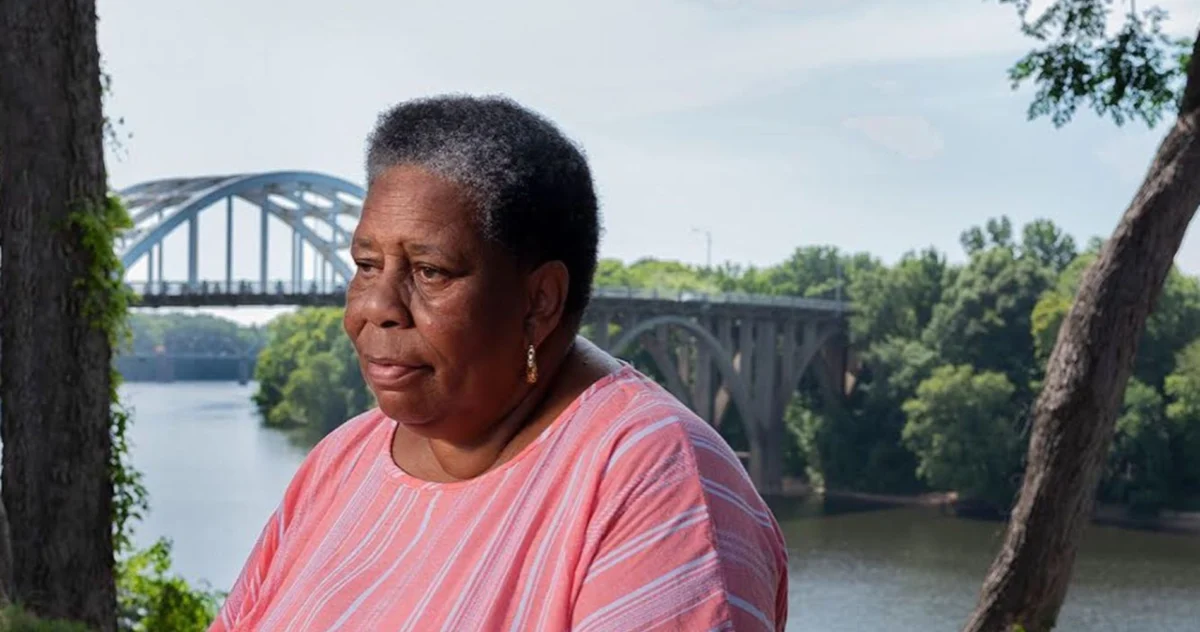
Courageous civil rights activist Jo Ann Bland passed yesterday at 72, her family announcing that she “departed this life surrounded by love, leaving behind a legacy of strength, grace, and unwavering dedication to her family and community.” Bland, a towering figure whose life embodied the struggle for racial justice and the enduring power of ordinary people, was not merely a witness to history but a vital architect and preserver of it, particularly in her beloved hometown of Selma, Alabama. Her passing marks the end of an era for many who knew her as a living link to the pivotal moments of the Civil Rights Movement, but her work ensures her legacy will continue to inspire.
Born and raised in Selma, Alabama, Jo Ann Bland’s formative years were steeped in the pervasive injustices of Jim Crow. Selma, a city in the heart of Alabama’s Black Belt, was a stark microcosm of the racial segregation and disenfranchisement that gripped the American South. African Americans, despite constituting a majority of the local population, faced systemic barriers to voting, including poll taxes, literacy tests, and outright intimidation, which severely restricted their political power. By the mid-1960s, less than two percent of eligible Black citizens were registered to vote in Dallas County, where Selma is located, a stark contrast to the nearly 80 percent of white citizens. This oppressive environment ignited a fierce determination in young Jo Ann, who, by the tender age of 11, was already a seasoned activist, having been arrested at least 13 documented times for her participation in peaceful protests against segregation and voter suppression. Her early entry into activism was not unique among Black children in the South, many of whom were brought into the movement by their parents and community leaders, learning early lessons in courage and defiance.
The Crucible of Selma: A Defining Chapter
The year 1965 would etch Selma into the annals of American history, and Jo Ann Bland, at just 11 years old, stood at its epicenter. The city had become a strategic focal point for the voting rights movement, targeted by civil rights organizations like the Student Nonviolent Coordinating Committee (SNCC) and later the Southern Christian Leadership Conference (SCLC) under the leadership of Dr. Martin Luther King Jr. Their goal was to draw national attention to the systematic disenfranchisement of Black Americans and pressure the federal government to enact comprehensive voting rights legislation.
On March 7, 1965, the movement organized a march from Selma to the state capital in Montgomery to protest the murder of Jimmie Lee Jackson, a young Black man shot by a state trooper during a nighttime demonstration in Marion, Alabama. Jo Ann Bland and her older sister, Linda, were among the approximately 600 peaceful marchers who set out that Sunday. As they crossed the iconic Edmund Pettus Bridge, named after a Confederate general and Ku Klux Klan grand dragon, they were met by a brutal display of state-sanctioned violence. Alabama state troopers and local possemen, acting on orders from Governor George Wallace, violently assaulted the unarmed demonstrators with billy clubs, tear gas, and bullwhips. The horrific images, captured by television cameras and news photographers, were broadcast nationwide, exposing the brutality of segregation to an astonished world.
Ms. Bland’s firsthand account of "Bloody Sunday" remains one of the most poignant and visceral testimonies of the era. She recalled the chaos and terror: "I walked across the Edmund Pettus Bridge on Bloody Sunday, marching alongside more than 600 peaceful activists who ended up being brutally beaten, tear-gassed, and hit or trampled by policemen on horses with billy clubs. At one point, I saw a horse near me, and then a woman fell. I can still hear the sound of her head hitting the pavement. I must have fainted after that, because the next thing I knew I was in a car with my head in my sister’s lap, and her blood was dripping from wounds on her head. Later, she needed 26 stitches." This vivid memory underscores the profound personal cost of the struggle and the indelible marks it left on the participants, especially the young. The incident resulted in over 50 people being hospitalized and galvanized public opinion across the nation, becoming a crucial catalyst for federal intervention.
Despite the trauma of Bloody Sunday, the young foot soldier was not deterred. Two days later, on March 9, Dr. King led a symbolic "Turnaround Tuesday" march to the bridge, adhering to a federal injunction, before turning back. This act of strategic de-escalation, while controversial among some activists, allowed time for national sentiment to solidify and for President Lyndon B. Johnson to take action. Johnson, responding to the moral outrage and political pressure, addressed a joint session of Congress on March 15, introducing a comprehensive voting rights bill and declaring, "We shall overcome."
On March 21, 1965, with the protection of federalized Alabama National Guard troops and federal marshals, thousands of marchers, now numbering in the thousands, set out again from Selma. Jo Ann Bland was among them. Over five days, they trekked the 54 miles to Montgomery, their numbers swelling with supporters from across the country. On March 25, when they finally reached the steps of the Alabama State Capitol, an estimated 25,000 people gathered to hear Dr. King deliver his impassioned "How Long, Not Long" speech. Bland’s presence at this historic culmination underscored her unwavering commitment, even as a child, to the cause of justice. The powerful images and moral imperative generated by the Selma campaign led directly to the passage of the Voting Rights Act of 1965.
The Voting Rights Act of 1965: A Legislative Triumph
Signed into law by President Johnson on August 6, 1965, the Voting Rights Act was a landmark piece of federal legislation that outlawed discriminatory voting practices adopted in many Southern states, including literacy tests and poll taxes. It authorized federal oversight of voter registration and elections in areas with a history of discrimination. The immediate impact was profound: within months, hundreds of thousands of African Americans in the South were registered to vote for the first time. In Selma’s Dallas County, Black voter registration skyrocketed from 2.2% in 1964 to 57% by 1968, fundamentally transforming the political landscape and empowering a previously disenfranchised population. The act is widely considered one of the most successful pieces of civil rights legislation in American history, directly attributable to the sacrifices made by activists like Jo Ann Bland on the streets of Selma.
A Life Dedicated to Progress and Service
Following the passage of the Voting Rights Act, Jo Ann Bland continued her courageous work, contributing to the integration of Selma’s A.G. Parish High School alongside six other pioneering students. This act, while less dramatic than the marches, was equally significant, dismantling segregated institutions that had defined the American South for generations. Her pursuit of education led her away from Selma for a time, as she attended Staten Island College in New York. Demonstrating a broader commitment to service, she also honorably served in the U.S. Army, a testament to her dedication to her country even as she fought for its ideals to be fully realized for all its citizens.
In 1989, Jo Ann Bland returned to Selma, bringing with her a renewed sense of purpose and a deep understanding of the city’s unique historical significance. She recognized that while the Voting Rights Act had been passed, the memory of the struggle and the lessons learned needed to be actively preserved and disseminated. This conviction led her to co-found the National Voting Rights Museum and Institute, an essential institution dedicated to documenting, interpreting, and celebrating the sacrifices made by the foot soldiers of the Civil Rights Movement. The museum, located at the foot of the Edmund Pettus Bridge, quickly became a pilgrimage site for civil rights enthusiasts, scholars, and ordinary citizens seeking to understand the movement’s history.
Ms. Bland’s commitment to education and historical preservation only deepened with time. In 2017, she established Journeys for the Soul, a tour company that brought visitors from across the country and around the world to Selma. Through her guided tours, she offered deeply personal and authentic accounts of the events, ensuring that visitors not only saw the historic sites but also heard the voices and felt the spirit of those who endured and sacrificed in the struggle for racial justice. Her tours were known for their raw honesty and profound emotional impact, connecting past struggles to contemporary issues of equality and justice.
The Foot Soldiers Park: A Lasting Vision
In 2021, driven by an unwavering vision, Ms. Bland, along with co-founder Kimberly Smitherman, created the Foot Soldiers Park and Education Center. This initiative aimed to preserve the hallowed ground where the Bloody Sunday march began, transforming it into a living memorial and educational resource for future generations. Her vision for the park was clear: "to show every visitor, and especially every child, that they have the power to make great change in their community." The park serves as a tangible reminder of the power of collective action and the critical role played by ordinary individuals in shaping history. It is a space where visitors can reflect on the sacrifices made and draw inspiration for ongoing struggles for justice.
Jo Ann Bland was not merely a historical figure; she was an unflinching and unstoppable teacher, a vibrant and dynamic force who connected past and present. She frequently spoke to student groups at various Legacy Sites and attended significant events such as the dedication of the National Monument to Freedom. Her dedication to truth-telling was encapsulated in her powerful words: "We have to talk about the truth of what happened and what was evil and wrong—so that we don’t let the same things happen again." This sentiment underscores her belief in the prophylactic power of historical memory against future injustices.
Tributes and Enduring Legacy
Tributes poured in following her passing, reflecting the profound impact she had on countless lives. Bryan Stevenson, the renowned EJI Director, lauded her unwavering commitment: "Jo Ann Bland raised her powerful voice for equality and racial justice, and she refused to be silenced. She inspired countless young people with her courage and championed the power of ordinary people to do extraordinary things to advance justice." This statement perfectly captures Bland’s essence: her courage, her voice, and her belief in the transformative potential of everyday individuals.
U.S. Representative Terri Sewell, who represents Selma and its surrounding areas, expressed deep sorrow, stating, "I am heartbroken to learn of the passing of Ms. Jo Ann Bland — a freedom fighter and daughter of Selma, Alabama. It was Foot Soldiers like Jo Ann who put their lives and freedom on the line for the right of all Americans to vote." Her words highlight the immense debt owed to individuals like Bland, whose sacrifices paved the way for fundamental rights now enjoyed by millions.
Community leaders in Selma and across the nation mourned her loss, acknowledging her role not only as a civil rights icon but also as a beloved community member, mentor, and advocate. Historians and educators widely agree that her work in establishing and maintaining the National Voting Rights Museum and Institute, Journeys for the Soul, and Foot Soldiers Park has been instrumental in preserving the authentic narrative of the Civil Rights Movement, combating historical revisionism, and ensuring that future generations have access to the raw, unvarnished truth of the struggle. Her efforts have also contributed significantly to Selma’s identity as a beacon of civil rights history, attracting tourism and fostering a deeper understanding of its pivotal role in American democracy.
Jo Ann Bland’s life served as a powerful testament to her philosophy: "My experience has taught me that the power of ordinary people cannot be overstated." She exemplified this power, turning personal trauma into public service, and dedicating her life to ensuring that the sacrifices of the Civil Rights Movement were never forgotten. Her vision for Selma’s sacred spaces was that they would be "treasured and honored long after all of us, the original foot soldiers, have passed." As the nation grapples with ongoing challenges to voting rights and racial justice, Bland’s legacy serves as a potent reminder that the fight for equality is an enduring one, and that ordinary individuals, armed with courage and conviction, remain the most powerful agents of change. Her voice may be silenced, but the echoes of her bravery and dedication will resonate for generations to come, ensuring that the spirit of Selma continues to inspire the pursuit of a more just and equitable society.