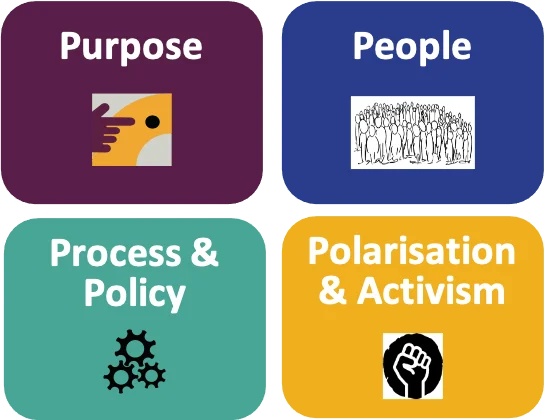
The past two years have marked a period of unprecedented global upheaval, with the COVID-19 pandemic serving as a catalyst for a rapid, large-scale experiment in new ways of working. This era has fundamentally reshaped our understanding of work, its purpose, and the future trajectory of Diversity, Equity, and Inclusion (DEI). While many questions remain open and data continues to evolve, a clear pattern of profound shifts has emerged, categorized here as impacting Purpose, People, Process & Policy, and Polarisation & Activism. These interconnected transformations demand immediate and thoughtful engagement from organizational leaders and policymakers, particularly in their implications for fostering truly inclusive workplaces.
The Genesis of Transformation: A Chronology of Disruption
Beginning in early 2020, the rapid spread of COVID-19 forced governments and businesses worldwide to implement stringent lockdown measures, fundamentally altering daily life and economic activity. Companies swiftly pivoted to remote work models, supply chains fractured, and essential services faced unprecedented demand. This initial, reactive phase quickly gave way to a prolonged period of adaptation, where temporary measures evolved into semi-permanent fixtures. The immediate challenge of business continuity soon exposed deeper systemic issues within traditional work structures, prompting a collective reevaluation of priorities and practices.
As the pandemic wore on, impacting mental health, financial stability, and social connections, individuals began to introspect about their careers and lifestyles. This widespread reflection, coupled with shifting economic landscapes, laid the groundwork for the significant trends now observed across the global workforce. The urgency of the crisis also brought existing societal inequalities into sharper focus, catalyzing new demands for social justice and corporate accountability, which directly impacted DEI initiatives.
Purpose: The Great Reevaluation of Work’s Meaning
One of the most striking shifts has been a widespread reevaluation of personal purpose and its alignment with professional life. The existential nature of the pandemic prompted many to question the "worth" of their jobs and how they allocate their energy and time. A U.S. survey by McKinsey revealed that nearly two-thirds of respondents reflected on their purpose due to the pandemic experience, highlighting a profound shift away from the implicit model of making significant personal sacrifices solely for career advancement.
This shift is not merely philosophical; it’s driving tangible career changes. A global Edelman survey from August 2021 indicated that nearly 60% of employees have left or are planning to leave their jobs to find roles that better align with their personal values, while 50% seek improved lifestyles. These motivations now often outweigh traditional drivers like higher compensation or career growth. This purpose-driven movement spans generations: U.S. millennial workers were three times more likely to re-evaluate their work, and in the U.K., the number of employees over 50 taking early retirement more than doubled since the pandemic’s onset. While not exclusively purpose-driven, these trends underscore a growing desire for meaningful work that integrates holistically with life.
The pandemic also starkly illuminated how traditional work models often hinder the fulfillment of personal purpose, particularly for historically marginalized groups. The long-documented "dual burden" experienced by many women, balancing professional and domestic responsibilities, became undeniably apparent during lockdowns. With schools closed and caregiving demands escalating, women globally faced significantly higher rates of burnout and resignations. Women’s employment declined by 4.2% (54 million) in the first year of the pandemic, compared to 3% for men. This disproportionate impact has underscored the urgent need for healthier, more integrated work models that support all employees, ensuring personal purpose can coexist with professional engagement.
Despite 79% of business leaders acknowledging the importance of purpose pre-pandemic, only 34% actually integrated it into decision-making, according to PwC research. The pandemic has drastically closed this "intention-action gap," forcing organizations to recognize that fostering a sense of purpose is no longer a luxury but a strategic imperative for employee engagement, retention, and overall organizational success.
People: The Reshaping of Talent Dynamics
The pandemic era has irrevocably altered the power dynamics between employees and employers, with talent emerging as a critical commodity. This shift is most vividly encapsulated by "The Great Resignation," a global phenomenon characterized by unprecedented numbers of employees voluntarily leaving their jobs. A March 2021 Microsoft survey found over 40% of employees considering leaving their employers, a trend that pre-dated the pandemic but was dramatically accelerated by it.
Job market data underscores this challenge: In August 2021, 4.3 million Americans voluntarily quit their jobs, while 10.4 million job openings remained unfilled. Similarly, the U.K. recorded over 1 million open jobs during the same period. This talent gap is projected to persist, with Willis Towers Watson reporting that 70% of U.S. employers expect hiring difficulties into 2022, and 61% struggle with employee retention. Even in Germany, the EU’s largest economy, concerns about skilled labor shortages jumped 11% in three months to 34.6% by July 2021.
Analysis by Harvard Business Review indicates that resignation rates are particularly high among mid-career professionals (up 20% from pre-pandemic levels) in sectors like technology and healthcare, which experienced intense demand. While high turnover in service and hospitality sectors continued, the pandemic brought increased public awareness and empathy for the often-poor working conditions in these industries. Moreover, a rise in "rage quitting"—spontaneous resignations due to intolerable work environments—highlights a new level of employee assertiveness.
These trends emphasize a sharpened focus on valuing employees and ensuring inclusive workplaces with fair labor practices. In an era of pervasive uncertainty, employees are increasingly choosing to leave environments that do not meet their evolving expectations for well-being, respect, and growth. This empowerment means that organizations can no longer ignore the critical link between workplace culture, employee experience, and their ability to attract and retain talent. A "people-centered" work culture is not just desirable but essential for organizational success and broader economic recovery, aligning with "The Great Reset" and "build back better" initiatives.
However, the narrative of voluntary resignations coexists with "The Great Divergence," highlighting stark inequalities in economic recovery. Not all pandemic-era employment changes were voluntary. OECD countries saw 20 million fewer people in work since the pandemic began, and globally, the ILO calculated that hours worked in 2021 would be 4.3% below pre-pandemic levels, equivalent to 125 million full-time jobs. Low-paid jobs were disproportionately affected, and while unemployment rates are gradually dropping, they remain higher than pre-pandemic levels. An inclusive approach to talent and employment is therefore paramount, demanding a systemic reset that ensures fairness and equitable opportunities for all.
Process & Policy: Redefining the Rules of Engagement
Periods of significant change often expose the inadequacies of the status quo, offering a unique opportunity to reassess and redesign fundamental processes and policies. The pandemic brought intense scrutiny to where and how work is performed, triggering a major re-negotiation of the social contract between employees and employers. Outdated norms such as "presenteeism," long commutes, rigid dress codes, and low control over work are now widely questioned. Employees are increasingly rejecting poor working conditions, unfair compensation, discrimination, and the expectation of constant availability. The pandemic revealed the pervasive presence of unhealthy workplaces based on norms no longer fitting contemporary realities.
The most prominent policy shift revolves around work location. While data on remote work preferences can be conflicting, a consistent theme is the strong desire for continued flexibility among various demographic groups. In the U.S., remote work is projected to continue at least one day a week, with a notable desire for flexible work strongest among women, working parents, and employees of color. These groups reported gains in employee experience scores while working remotely, suggesting broader social ramifications including increased employee diversity, improved work-life balance, and expanded talent pools as geographical constraints diminish.
However, many employees expect far more than one day of remote work, with estimates suggesting two-thirds of workers are prepared to quit if remote work is not the norm. Pre-pandemic, remote work policies were often ad hoc, leading to biases where more senior males disproportionately accessed flexibility, while working mothers faced stigma and junior staff feared requesting it. The collective global experience with remote work during the pandemic presents a critical opportunity to formalize fair, transparent, and equitable flexible work policies.
Crucially, how these policies are created is as important as their existence. A top-down, isolated approach risks developing policies that are unfit for purpose, suffer from low acceptance, and exacerbate existing inequalities. A multi-country survey of knowledge workers found that a staggering 66% of executives were designing post-pandemic workforce policies with little to no direct input from their employees. This disconnect leads to executive overconfidence in "transparency" (66% believe they are "very transparent"), while only 42% of workers agree. Such a lack of inclusive design is a significant impediment to successful implementation.
The pandemic-era call to action is clear: organizations must assess if current policies align with future directions, leverage data and diverse employee input to co-create solutions integrating behavioral insights, and implement these with agile experimentation. This iterative approach is essential to building resilient, inclusive, and effective work models for the future.
Polarisation & Activism: The Demand for Corporate Accountability
Emerging from lockdowns, societies worldwide have grappled with a complex mix of emotions—sadness, loss, fear, and anger—which have contributed to increased societal divisions. Research across 17 countries showed that 60% of people felt more divided post-pandemic than before, a 30% increase from pre-pandemic rates. These divisions inevitably spill into the workplace, presenting new challenges for leaders.
Policies such as "no jab, no job" have ignited debates over individual freedoms versus public health, generating significant frustration and fatigue. Globally, over 50,000 pandemic-related protests have been recorded. "COVID rage" has manifested in increasing accounts of customer abuse towards workers, particularly in hospitality and service sectors, where up to 80% of workers have witnessed or experienced such incidents. These tensions are amplified by widening inequalities, particularly regarding vaccine access, which exacerbates the gap between the "haves" and "have-nots" and impedes equitable economic recovery.
Beyond pandemic-specific issues, a long-standing erosion of trust in public officials and civic institutions has reached a critical point. A global study in August 2021 revealed that Millennials and Generation Z exhibit such deep distrust that they express greater faith in governance by artificial intelligence than by human beings. This profound cynicism stems from concerns over corruption, stagnant political leadership, and threats to physical safety posed by surveillance and militarized policing, particularly against activists and people of color. The tragic murder of George Floyd in May 2020 ignited a global wave of Black Lives Matter and anti-racism activism in over 60 countries, bringing issues of inequality and discrimination into active discussion within society and the workplace.
In this charged environment, employees are increasingly expecting and demanding that their workplace leaders take clear stances on critical social issues. A global Edelman survey in August 2021 found that up to 76% of employees expect this, and they are empowered to take action themselves. Sixty percent of employees globally feel empowered to be change-makers in their workplace, with 75% willing to act to advance needed changes, and 40% prepared to go public through whistleblowing, protesting, or social media posts. This period has also seen a resurgence of interest in labor unions, particularly in the U.S., as employees seek to safeguard human rights at work and influence organizational culture. In October 2021, over 25,000 workers were on strike in the U.S., significantly higher than the previous three-month average.
Despite these clear signals, organizational leaders may not be fully attuned. The Edelman survey found that only 48% of employers were perceived as acting on their values. This inaction risks eroding trust, undermining leadership credibility, and decreasing employee engagement. A striking 33% of employees quit their jobs when their employer "didn’t speak out about a societal or political issue the employee felt it had an obligation to address." The era of the silent executive on DEI issues is over; mere public statements are insufficient. The new standard demands inclusive leaders who are allies through concrete actions.
Broader Impact and Implications for DEI
The interconnected shifts across Purpose, People, Process & Policy, and Polarisation & Activism present both formidable challenges and unparalleled opportunities for Diversity, Equity, and Inclusion. The pandemic has served as an accelerant, exposing fragilities in existing systems while simultaneously empowering employees to demand more equitable and inclusive environments.
For DEI practitioners and leaders, this moment calls for a strategic reorientation. The emphasis on individual purpose necessitates a deeper understanding of diverse employee values and aspirations, moving beyond one-size-fits-all engagement strategies. Organizations must actively help employees connect their personal purpose with their work, designing roles and cultures that foster meaning and fulfillment for all, especially those historically marginalized by rigid structures.
The redefined talent landscape, marked by The Great Resignation and The Great Divergence, underscores the economic imperative of DEI. Inclusive hiring, retention, and development practices are no longer merely ethical considerations but critical business drivers. Addressing the disproportionate impact of job losses and burnout on certain demographics requires targeted interventions, equitable compensation practices, and robust well-being programs. Employers must cultivate cultures where psychological safety is paramount, enabling all employees to thrive and contribute their full selves.
The evolution of work processes and policies, particularly around flexibility, is a cornerstone of future DEI efforts. Designing hybrid and remote work models inclusively, with direct input from diverse employee groups, is crucial to avoid creating new forms of exclusion (e.g., proximity bias favoring those in the office). Policies must be transparent, consistently applied, and consciously designed to support work-life integration for everyone, not just a privileged few. This includes reevaluating performance metrics, meeting norms, and access to development opportunities in a distributed environment.
Finally, the heightened societal polarization and employee activism demand that leaders embrace their role as active advocates for social justice within and beyond their organizations. Silence on critical DEI issues is no longer an option; it is a direct driver of distrust and turnover. Leaders must demonstrate authentic commitment to their values through concrete actions, fostering open dialogue, and addressing systemic inequities. This includes supporting employee-led initiatives, engaging with communities, and holding themselves accountable for creating workplaces where discrimination is actively challenged and human rights are upheld.
Conclusion: Charting an Inclusive Future of Work
The pandemic has undeniably been a transformative period, irrevocably altering the landscape of work and accelerating critical conversations around DEI. It has moved the dialogue from aspiration to imperative, revealing the urgent need for workplaces that prioritize purpose, empower people, are governed by equitable processes and policies, and actively address societal polarization. The profound changes witnessed in the past two years are not merely temporary adjustments but foundational shifts that will define the future of work. For organizations to thrive in this new normal, a commitment to inclusive leadership and systemic DEI integration is not just beneficial—it is essential for resilience, innovation, and long-term success. The opportunity to build back better, fairer, and more inclusively is now.