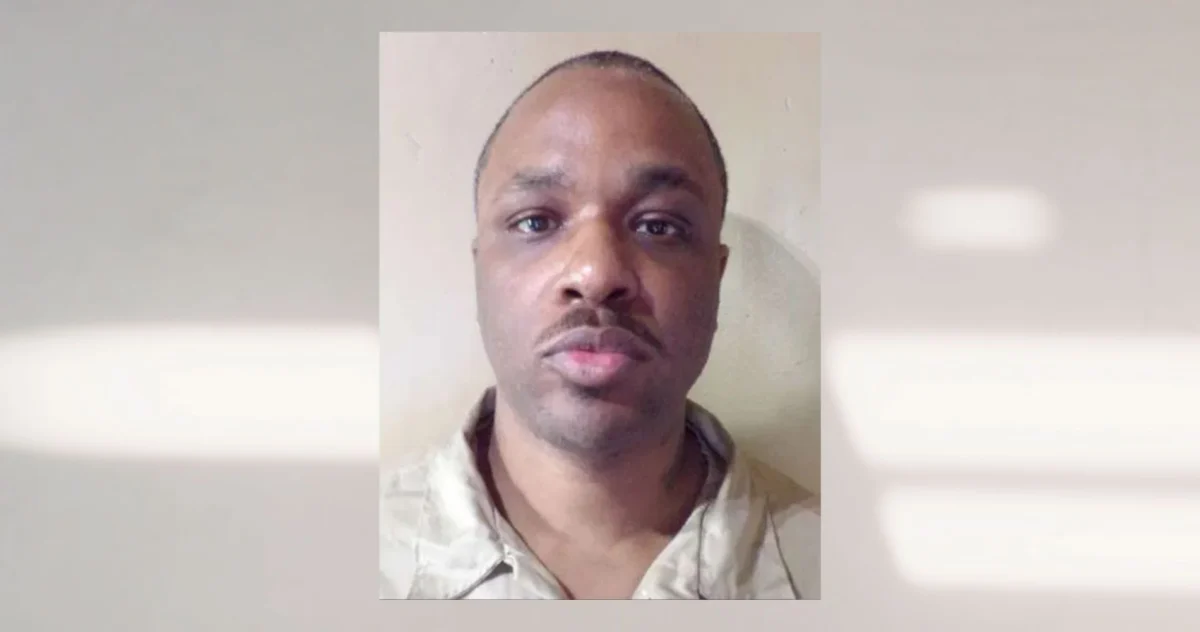
New details have emerged about the horrifying death of Kenneth Gilchrist, a man incarcerated at Alabama’s notorious Donaldson Correctional Facility, where damning camera footage captured a group of prison staff, including a sergeant and a nurse, failing to offer assistance to Gilchrist after he had been stabbed. The 31-year-old man died after correctional officers and medical personnel ignored him for more than 30 minutes, despite clear signs of severe distress and a medical emergency. These revelations, meticulously detailed in a recent federal court opinion, paint a grim picture of systemic neglect and a pervasive culture of indifference towards the lives of incarcerated individuals within the Alabama Department of Corrections (ADOC).
A Disturbing Chronology of Neglect
The U.S. District Court for the Northern District of Alabama, in an opinion dated April 28, 2026, found that Kenneth Gilchrist was stabbed during an altercation within his housing unit at Donaldson on July 24, 2021. However, the court explicitly stated that his death occurred "only after he was not given medical care for an extended period of time." The chilling video footage, a critical piece of evidence in the court’s finding, provides a minute-by-minute account of how prison staff repeatedly bypassed a dying man without intervention.
The sequence of events, as described by the court, began when an unnamed incarcerated man brought Gilchrist, visibly injured, to the health care unit in a wheelchair. Upon arrival, Gilchrist slumped out of the wheelchair and onto the floor at the infirmary entrance. Despite showing "signs of life" and being in "evident distress," the initial response from staff was shocking in its absence. A nurse and at least three correctional officers were captured walking by Gilchrist without offering any assistance. Two officers were observed standing nearby, watching, yet taking "no action to assist."
For over two minutes, Gilchrist lay on the ground at the infirmary entrance. Eventually, an officer directed the unnamed incarcerated man to drag Gilchrist away from the health care unit and down the hallway to a windowed barbershop. There, Gilchrist again fell from the wheelchair, beginning to writhe on the floor in obvious pain. This was the start of a protracted period of agonizing neglect.
Over the next half-hour, the footage documented a staggering pattern of dereliction of duty. Officers repeatedly passed by the barbershop, observing Gilchrist in what was clearly a medical crisis, yet consistently failed to intervene or provide any form of aid. The court’s opinion details this horrifying period:
"Inmate Gilchrist continues to writhe on the floor, flailing his arms. [An officer] passes the barbershop again at approximately 00:29:22, at which point the three inmates and another correctional officer are observed watching Inmate Gilchrist on the floor. At approximately 00:29:54, Plaintiff again passes the barbershop, and at approximately 00:30:45, Plaintiff returns to the hallway and opens the barbershop door. Inmate Gilchrist continues to writhe on the floor as Plaintiff stands holding the door open and the three inmates are looking on. At approximately 00:31:29, Plaintiff closes the door and begins watching Inmate Gilchrist through the window. At approximately 00:32:10, Plaintiff opens the door again, and one of the inmates in the hallway enters the barbershop to get Inmate Gilchrist back into his wheelchair while Plaintiff stands holding the door open, making no effort to assist. At approximately 00:32:46, having been unable to get Inmate Gilchrist back into the wheelchair, the inmate exits the barbershop and Plaintiff closes the door. Inmate Gilchrist continues to writhe on the floor (and he is now almost fully visible in the frame) while two of the three hallway inmates leave and one remains seated in the hallway, watching."
The account continues, emphasizing the prolonged inaction: "At approximately 00:33:46, Plaintiff reenters the frame and speaks with the remaining inmate in the hallway while observing Inmate Gilchrist through the barbershop windows. At approximately 00:34:22, Plaintiff leaves the hallway again, returning briefly at approximately 00:34:58 to glance at Inmate Gilchrist before leaving once more. Inmate Gilchrist continues to writhe on the floor, flailing his arms and legs, as various correctional officers, including Sergeant Shaun Mechalske, pass by the barbershop windows without intervening."
Finally, at approximately 00:45:03, after lying on the barbershop floor without meaningful assistance for nearly twenty minutes (nineteen minutes and twenty-three seconds), Inmate Gilchrist stopped moving. No one entered the barbershop until approximately 00:58:43, when Sergeant Mechalske entered and attempted to rouse him. By that point, Gilchrist had been on the barbershop floor for over thirty-three minutes, without medical intervention, until his life ebbed away.
A Pattern of Fatal Neglect and Systemic Failures
The tragic circumstances surrounding Kenneth Gilchrist’s death are not an isolated incident but rather symptomatic of a deeply entrenched "culture of cruelty" and indifference that has plagued the Alabama Department of Corrections for years. The Justice Department, in a 2019 report, explicitly found that conditions in Alabama’s men’s prisons violated the Eighth Amendment of the U.S. Constitution, which prohibits cruel and unusual punishment. The report cited excessive force, sexual abuse, and a failure to protect prisoners from violence and provide adequate medical and mental health care.
Indeed, Donaldson Correctional Facility, where Gilchrist died, has been a focal point of these issues. Months before Gilchrist’s death in July 2021, another incarcerated man, Jason Kirkland, died in the same facility in December 2020. Kirkland died of "mechanical asphyxia" after his head became wedged in a broken tray slot in his cell door. A federal judge found that the officer assigned to monitor the unit went on a break and then joined another officer in a central control room "while Kirkland was in medical distress." It took several minutes for an incarcerated man who discovered Kirkland to get the attention of prison staff, highlighting a systemic failure in monitoring and emergency response.
Furthermore, in December 2020, Tommy Rutledge died of hyperthermia at Donaldson with a body temperature of 109 degrees. A lawsuit filed in that case revealed that Rutledge died after officers falsified temperature log readings, allowing his cell to reach dangerous temperatures of 101 to 104 degrees. Ruth Naglich, then-Commissioner of Health Services for ADOC, testified that a similar incident had occurred at the prison previously, underscoring a pattern of unaddressed hazards and medical neglect.
The issues extend beyond Donaldson. Families of people imprisoned in Alabama have reported a litany of horrors: loved ones dying after being denied medical attention for injuries inflicted during beatings, ADOC removing life support without their knowledge or consent, and bodies being returned with missing organs, leading to profound trauma and distrust. Many families were not even notified of their loved ones’ deaths in a timely or compassionate manner. One parent recounted how a warden informed her of her child’s death "like she was telling me to pick up my dry clean[ing]," illustrating the dehumanizing approach to communication with grieving families.
Legal Battles and the Cost of Inaction
The Equal Justice Initiative (EJI), a non-profit organization dedicated to criminal justice reform, has extensively researched and documented these systemic failures. Their findings reveal that in the seven years since the Justice Department notified Alabama that its prison conditions were unconstitutional, at least 100 people have been killed inside state prisons. Hundreds more have lost their lives to suicide and fatal drug overdoses, indicating a crisis far broader than individual incidents of neglect.
The fact that Kenneth Gilchrist’s mistreatment was captured on camera was a critical factor in identifying and disciplining the officers involved. However, many areas inside Alabama’s prisons remain without camera coverage, making accountability difficult to achieve. Consequently, numerous other officers involved in prisoner deaths have never been criminally charged and continue to work within the facilities, perpetuating a cycle of impunity.
The ADOC’s response to these pervasive issues has largely been characterized by legal defense rather than fundamental reform. Former Commissioner John Hamm acknowledged to the Alabama Legislature that ADOC has a culture that enables and encourages excessive force and civil rights abuses. Yet, despite these admissions and the overwhelming evidence of systemic problems, ADOC continues to spend millions of dollars on lawyers to defend against unconstitutional practices in court, rather than allocating resources towards improving conditions, increasing staffing, and implementing comprehensive training programs. This prioritization of litigation over reform has drawn significant criticism from civil rights advocates and families of victims.
Implications for Justice and Reform
The revelations surrounding Kenneth Gilchrist’s death carry profound implications for the state of Alabama’s correctional system and the broader discourse on human rights within prisons. Firstly, the explicit findings of the federal court underscore the urgent need for robust accountability mechanisms. The detailed video evidence serves as a stark reminder of the critical role surveillance can play in exposing abuse, but also highlights the limitations when such coverage is not universal or when staff actively choose to ignore evident distress.
Secondly, this case reinforces the argument that the problems within ADOC are not merely isolated incidents of misconduct but rather a deeply ingrained cultural issue. The "indifference to the value of the lives of incarcerated people" that the court opinion cites is a systemic pathology that requires comprehensive structural and cultural change, not just disciplinary actions against a few individuals. This necessitates a complete overhaul of training, supervision, and ethical standards for all correctional staff, from frontline officers to administrative leadership.
Thirdly, the ongoing legal battles and the ADOC’s substantial expenditure on defense lawyers illustrate a significant diversion of public funds that could otherwise be used to address the root causes of violence, neglect, and poor conditions. Advocates argue that these resources should be invested in improving healthcare services, increasing staffing levels, mental health support, and implementing effective oversight mechanisms, rather than perpetuating a cycle of litigation.
Finally, the persistent pattern of deaths, coupled with issues like missing organs and lack of family notification, erodes public trust and raises serious ethical and human rights concerns. It underscores the vital role of organizations like EJI and vigilant reporting in bringing these issues to light and advocating for justice for incarcerated individuals and their families. The death of Kenneth Gilchrist, so clearly preventable and so starkly documented, serves as a tragic emblem of a correctional system in dire need of reform, demanding a re-evaluation of how society treats its most vulnerable populations. Without significant systemic changes, the cycle of neglect, abuse, and preventable deaths within Alabama’s prisons is likely to continue.