BOSTON — In a historic step toward acknowledging and integrating Indigenous heritage into the civic landscape of Massachusetts, the Wampanoag Consulting Alliance, alongside key project partners, is preparing to publicly unveil the final design for the White Pine Gathering Circle. This proposed monument and living public space, slated for Scarboro Hill within Boston’s historic Franklin Park, represents more than a static work of art; it is designed to be a functional, sacred gathering space rooted in the living culture, history, and stewardship responsibilities of the Wampanoag people.
The public unveiling ceremony, scheduled for Sunday, October 18, 2026, at 2:00 PM, will feature a traditional performance by the Wampanoag Singers and Dancers. The event will also include formal remarks from Tribal leaders, community members, project advisors, and representatives from SmokeSygnals, the Native American production company that spearheaded the monument’s design. Attendees will gain comprehensive insights into the multi-year community-driven process that shaped the project, the profound teachings of the Wampanoag Creation Story, the historical significance of the selected Franklin Park location, and the forthcoming fundraising and construction phases required to bring the vision to life.
Background and Context of the Monument Initiative
For centuries, the public monuments and historical markers distributed throughout Boston have overwhelmingly reflected European-American narratives, often marginalizing or entirely erasing the deep-rooted presence of the Indigenous nations who originally inhabited and cared for the land. The Wampanoag—whose ancestral homelands encompass southeastern Massachusetts, Cape Cod, Martha’s Vineyard, Nantucket, and parts of Rhode Island—have maintained a continuous cultural and physical connection to this region despite centuries of displacement, cultural suppression, and systemic erasure.
The White Pine Gathering Circle initiative directly challenges this historical omission. Conceived through an extensive, community-driven consultative process involving state and federally recognized Wampanoag Tribes, the project seeks to restore Indigenous visibility to the Boston metropolitan area. By anchoring the monument in the teachings of the Wampanoag Creation Story, the creators ensure that the space will serve as an educational and cultural beacon. The narrative framework centers on timeless Indigenous principles: reciprocity with the natural world, maintaining ecological and spiritual balance, and fulfilling the ongoing responsibility of land and water stewardship.
Rather than erecting a traditional, untouchable bronze statue or granite obelisk behind protective ropes, the project team envisioned a dynamic landscape intervention. The White Pine Gathering Circle is intentionally designed to function as an active community space—a place for storytelling, teaching, intertribal connection, and quiet reflection.
Chronology and Timeline of the Project
The realization of the White Pine Gathering Circle is the culmination of years of relationship-building, artistic ideation, and iterative community engagement. While the public unveiling on October 18, 2026, marks a major milestone, the trajectory of the project extends across a deliberate timeline:
- Initial Concept Phase and Consultations (2022–2023): Early discussions commenced among Wampanoag cultural leaders, artists, and urban planners regarding the need for a dedicated Indigenous space within Boston’s historic park systems. Recognizing the historical significance of Franklin Park—designed by Frederick Law Olmsted and historically utilized by various communities—stakeholders identified Scarboro Hill as an ideal location due to its topography and prominence.
- Design Development by SmokeSygnals (2024–2025): SmokeSygnals, a specialized Native American production and design company led by figures such as Lead Designer Steven Peters, engaged in deep consultations with tribal elders, historians, and educators. This phase focused on translating the Wampanoag Creation Story into physical, architectural, and landscape elements without compromising cultural authenticity.
- Design Finalization and Community Review (Late 2025–Mid 2026): The finalized design concept underwent rigorous review by the Wampanoag Consulting Alliance and project advisors, ensuring alignment with cultural protocols and urban planning standards set by municipal partners in Boston.
- Public Unveiling Ceremony (October 18, 2026): The formal presentation of the design to the broader public, accompanied by cultural performances, expert commentary, and logistical outlines for the next stages of development.
- Fundraising, Fabrication, and Installation (2027 and Beyond): Subject to the successful realization of capital funding campaigns, SmokeSygnals will oversee the physical fabrication and site installation of the monument elements at Scarboro Hill.
Detailed Architectural and Landscape Overview
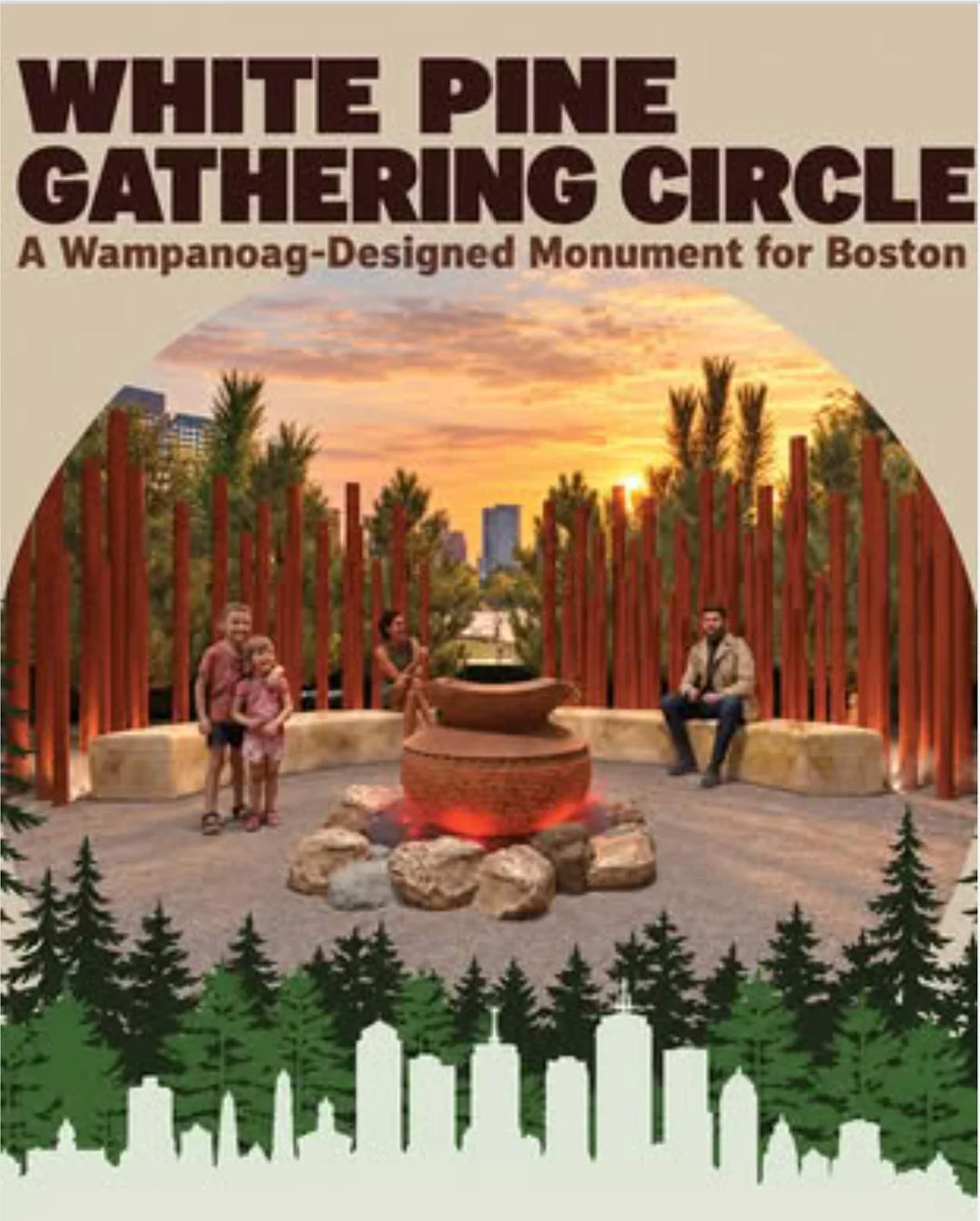
The approved design for the White Pine Gathering Circle is a masterclass in symbolic storytelling intertwined with functional landscape architecture. Every material, placement, and visual feature carries deep allegorical weight connected to Wampanoag cosmology and environmental philosophy:
- The Living Outer Ring: The boundary of the gathering circle is defined by an outer ring of live White Pine trees. In many Northeastern Indigenous traditions, the white pine is deeply revered—most notably as the Tree of Peace among neighboring Haudenosaunee nations, and similarly symbolizing endurance, longevity, and peace across Wampanoag territory. As these trees mature, they will provide natural shade, seasonal beauty, and a living wall that separates the sacred interior space from the surrounding park environment.
- Corten Steel Columns and Circular Seating: Stepping down from the outer perimeter toward the center are a series of weathered Corten steel columns. The earthy, rust-orange patina of the steel blends harmoniously with the natural tones of the forest floor and stone. These columns interspersed throughout the space frame the environment and lead the eye and foot toward circular stone seating arrangements designed to comfortably host community gatherings, educational workshops, and ceremonial circles.
- The Central Water Element and Maushop Representation: At the absolute heart of the circle lies a sophisticated central water element. Surrounding this flowing water is a large, coil-built clay cooking pot sculpture. This artistic centerpiece honors Maushop, the giant benevolent entity in Wampanoag lore renowned for shaping the landscape of southeastern Massachusetts, creating islands, and providing for the people.
- Lighting and Hidden Details: To enhance the atmospheric and symbolic resonance of the site, specialized red lighting is installed beneath the central clay pot, casting a warm glow that evokes the eternal presence of sacred fire. Furthermore, paying homage to traditional folklore, small stone carvings representing puckwudgies—mythical, diminutive spirit beings from Wampanoag oral history—are subtly placed among the steel columns and landscape elements, inviting visitors to closely observe and discover hidden details within the natural environment.
Official Perspectives and Stakeholder Insights
The collaborative nature of the project has drawn praise from municipal leaders, cultural advocates, and Indigenous representatives alike.
Project coordinators emphasize that the White Pine Gathering Circle corrects a long-standing geographic imbalance in public representation. For generations, urban parks in major American cities have functioned as Eurocentric spaces that overlooked the deep historical roots of the original inhabitants. By establishing a permanent, culturally resonant gathering space in Franklin Park, the Wampanoag Consulting Alliance asserts that Indigenous history in Massachusetts is not merely a matter of the past, but a vibrant, ongoing reality.
Lead Designer Steven Peters of SmokeSygnals has consistently highlighted the importance of community agency throughout the design process. Rather than imposing an external artistic vision onto the landscape, the team ensured that the voice, consent, and traditional knowledge of Wampanoag community members guided every structural and aesthetic decision. This methodology guarantees that the monument maintains strict cultural integrity while offering an inviting, educational space for the general public.
City of Boston partners and urban planners have also welcomed the initiative, noting that modern urban design increasingly benefits from diverse co-management strategies and culturally inclusive public art installations. Franklin Park, often referred to as the "crown jewel" of Olmsted’s Emerald Necklace, gains an added layer of historical depth and cultural richness through the integration of the gathering circle.
Broader Impact and Civic Implications
The implementation of the White Pine Gathering Circle carries significant implications for the future of public art, urban planning, and historical reconciliation in Boston and across the United States.
First, the project serves as a practical model for how municipalities can collaborate directly with sovereign tribal nations to reclaim public spaces. Rather than relying on symbolic acknowledgements—such as land recognition statements printed in programs—initiatives like the White Pine Gathering Circle create permanent, physical anchors that foster tangible community engagement and educational programming.
Second, the monument addresses a critical gap in educational infrastructure. Schools, universities, and community organizations in the greater Boston area frequently struggle to find authentic, local resources for teaching about New England Indigenous history prior to and following European contact. The gathering circle is explicitly designed to function as an outdoor classroom where tribal educators can share oral histories, ecological wisdom, and cultural practices directly with students and the public.
Finally, the project underscores the evolving role of public monuments in the 21st century. As communities nationwide re-evaluate the utility and message of historical statuary, the shift toward functional, ecologically integrated, and community-centric spaces—such as the White Pine Gathering Circle—demonstrates that public art can honor the past while actively serving the present needs of the community.
Event Logistics and Information for Attendees
Members of the public, media personnel, artists, educators, historians, and supporters are invited to attend the historic design unveiling on Sunday, October 18, 2026.
- Date: Sunday, October 18, 2026
- Time: 2:00 PM EST
- Location: Scarboro Hill, Franklin Park, Boston, Massachusetts
- GPS and Parking Guidance: Attendees are advised to navigate to the Franklin Park Tennis Courts located on Circuit Drive, Boston, MA 02124. Clear event signage will be posted from the parking area to guide visitors along the walking path leading up to Scarboro Hill.
- Additional Resources: For those unable to attend in person, or for individuals seeking further details regarding the design specifications, fundraising initiatives, and the ongoing work of SmokeSygnals and the Wampanoag Consulting Alliance, official project documentation can be accessed online at https://smokesygnals.com/white-pine-gathering-monument.
As Boston looks toward an increasingly inclusive future, the unveiling of the White Pine Gathering Circle stands as a testament to the resilience, creativity, and enduring presence of the Wampanoag Nation, ensuring their stories, teachings, and stewardship will be visibly honored on their ancestral lands for generations to come.