The scheduled execution of Jeffery Lee, set for September 17 by lethal injection, has ignited a profound legal and ethical debate regarding the sanctity of jury verdicts and the historical application of capital punishment in Alabama. Despite the fact that a jury of Mr. Lee’s peers formally voted 7-5 in 2000 to sentence him to life imprisonment without the possibility of parole, his life remains in the balance due to a now-abolished judicial practice known as "judge override." This case highlights the tension between historical sentencing mandates and evolving standards of justice within the Alabama legal system.
A Legacy of Judicial Override
The genesis of Mr. Lee’s death sentence lies in a legal mechanism that once made Alabama an outlier in the American justice system. Until 2017, Alabama law permitted trial judges to unilaterally override a jury’s recommendation for a life sentence and impose a death sentence instead. This practice, which saw over 100 individuals sentenced to death against the wishes of their juries since 1976, has been heavily criticized by legal scholars and former judiciary officials alike for undermining the constitutional role of the jury.
The practice was definitively ended on April 11, 2017, when the Alabama Legislature passed a bill abolishing judicial override. However, the legislation was not applied retroactively, leaving those previously sentenced under the old regime, such as Mr. Lee, in a state of legal limbo. Statistics from the Equal Justice Initiative indicate that nearly 20% of Alabama’s current death row population consists of individuals whose juries originally opted for life imprisonment—a figure that underscores the systemic reliance on judicial discretion over jury consensus during the late 20th and early 21st centuries.
The Trial: Context and Controversy
Jeffery Lee, now 49, was convicted in 2000 for his role in the 1998 shooting deaths of Jimmy Ellis and Elaine Thompson, as well as the attempted murder of Helen King, during a robbery at a pawn shop in Dallas County. The proceedings, conducted in a region of the Alabama Black Belt with a documented history of racial tension, were marred by allegations of procedural unfairness.
Legal filings from the time suggest that the prosecution exercised its peremptory strikes to exclude all 21 potential Black jurors, a move that critics argue effectively denied Mr. Lee a jury of his peers. Furthermore, Mr. Lee, who faced extreme poverty, was represented by court-appointed counsel who had no prior experience in capital litigation. The trial itself was notably brief, concluding in less than two days. Following the jury’s decision for life, the trial judge disregarded the verdict, citing the authority granted by state law at the time. This contrast—between a jury that heard the evidence and deemed life imprisonment appropriate and a judge who opted for the state’s most severe penalty—remains the focal point of current clemency appeals.
Chronology of a Legal Struggle
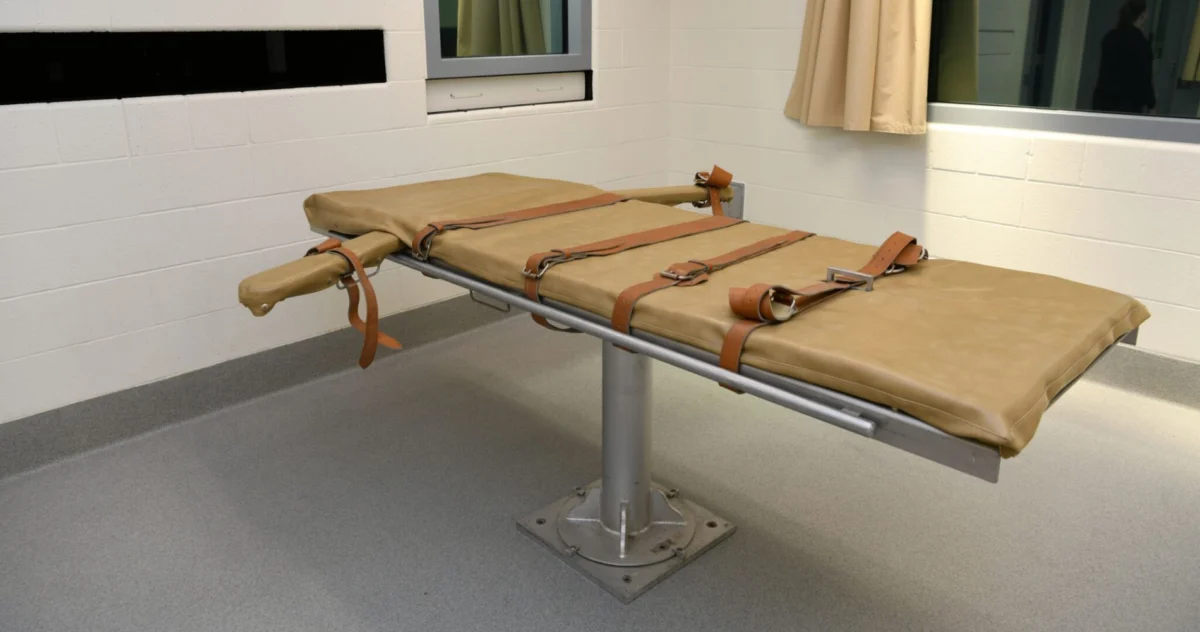
The path to the current execution date has been marked by extensive litigation, particularly concerning the methods of execution:
- 2000: Jeffery Lee is convicted of capital murder. A jury recommends life imprisonment without parole; the presiding judge overrides the verdict and sentences him to death.
- 2016: Mr. Lee initiates a challenge against Alabama’s lethal injection protocol, citing constitutional concerns regarding cruel and unusual punishment.
- 2017: The Alabama Legislature abolishes judicial override, though the change is not applied retroactively to Mr. Lee’s case. Alabama later authorizes nitrogen hypoxia as an alternative execution method.
- 2024 (June 4): A federal court permanently enjoins Alabama from executing Mr. Lee via nitrogen suffocation.
- 2024 (September 11): Following the denial of a stay of execution by the Eleventh Circuit Court of Appeals, Mr. Lee files an emergency petition with the U.S. Supreme Court, challenging the state’s move to use lethal injection in place of the prohibited nitrogen method.
Expert Perspectives and Calls for Clemency
The movement to commute Mr. Lee’s sentence has gained momentum from unlikely corners, including former members of the judiciary and the military. Drayton Nabers Jr., the former Chief Justice of the Alabama Supreme Court, has been a vocal proponent of clemency. In a recent op-ed, Nabers argued that the state has a moral obligation to respect the jury’s original decision, noting that failing to do so contradicts the principles of limited government and the rule of law that conservatives traditionally uphold.
Retired Brigadier General Carlton Fisher has also weighed in, emphasizing the psychological toll that state-sanctioned executions take on correctional staff. "Even for officers who never speak publicly," Fisher wrote, "carrying out death sentences a jury did not support is a heavy weight to bear." These perspectives reflect a growing national sentiment that the state’s insistence on carrying out a sentence that the jury rejected is an affront to the integrity of the judicial process.
The Transformation of the Condemned
During his 25-year tenure on death row, Mr. Lee has undergone a documented transformation. Supporters, including the Catholic Mobilizing Network, highlight his role as a mentor to other inmates, an assistant chaplain, and a leader in the Kairos prison ministry. Throughout more than a quarter-century of incarceration, prison records show no violent infractions, supporting the argument that Mr. Lee has been successfully rehabilitated—a factor often cited in clemency petitions as evidence that a person is no longer a threat to society.
Broader Implications of the Case
The case of Jeffery Lee serves as a microcosm for the broader debate over the death penalty in the United States. It raises critical questions about whether justice is served when the state relies on outdated, discredited legal mechanisms to finalize a sentence. If the Alabama Legislature and Governor Ivey collectively agreed that judicial override was "wrong"—a sentiment reflected in the 2017 repeal—the question remains why the state continues to enforce that same "wrong" in individual cases.
Legal analysts note that if the Supreme Court were to intervene, it would likely focus on the procedural fairness of the transition between execution methods and the implications of the state’s reliance on lethal injection after having previously touted nitrogen hypoxia as a more "humane" alternative. However, the core of the public debate remains the jury’s voice. As the state prepares for the September 17 execution, the case remains a test of whether a state government can or should prioritize the finality of a death sentence over the original, collective judgment of the citizens tasked with evaluating the evidence.
Ultimately, the resolution of this case will likely influence how future death penalty appeals are framed, particularly in jurisdictions that have historically utilized judge override. For now, the legal system faces a stark choice: proceed with an execution that was never authorized by a jury, or commute the sentence to reflect the verdict of the individuals who heard the case in 2000. The outcome will set a definitive tone for the ongoing legacy of the Alabama judicial system’s past practices.