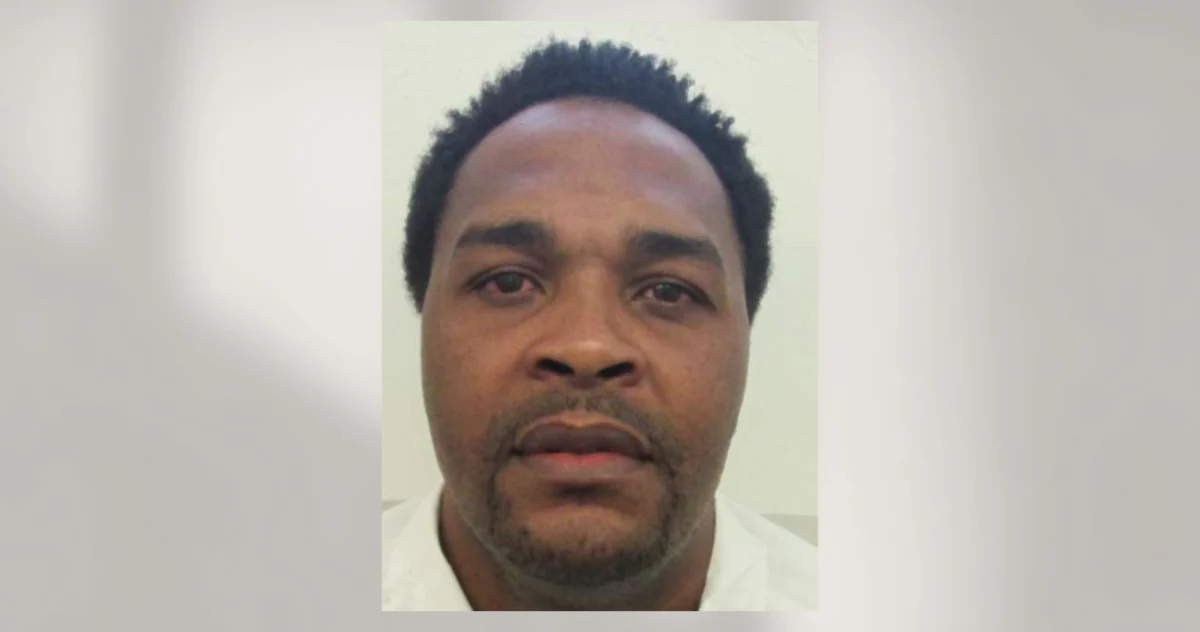
The United States Supreme Court recently declined to hear the appeal of Steven Mulkey, an Alabama man sentenced to death for the 2018 double homicide of two hotel owners in Irondale. While the denial of certiorari allows the conviction and sentence to stand, the case has garnered significant national attention due to a pointed statement issued by Justice Sonia Sotomayor. Her critique centers on the conduct of the presiding Jefferson County trial judge, whose decision to arrest a potential juror for tardiness in the presence of the entire jury pool created an atmosphere of intimidation that, according to legal observers, may have fundamentally compromised the constitutional guarantee of a fair trial.
The 2018 Irondale Tragedy and Subsequent Legal Proceedings
In 2018, Steven Mulkey was apprehended and charged with capital murder following the deaths of two individuals at a hotel in Irondale, Alabama. The case proceeded through the Jefferson County court system, eventually reaching the trial phase where the selection of a jury—a process known as voir dire—began. Under the Sixth Amendment of the U.S. Constitution, defendants are entitled to an impartial jury, a safeguard intended to ensure that the verdict is reached by individuals who are not unduly influenced by external pressures or state actors.
The trial, however, became the subject of intense scrutiny during jury selection. When a potential juror arrived 30 minutes late, the presiding judge ordered his immediate arrest, holding him in contempt of court. This action was not conducted behind closed doors; it was performed in front of the entire assembly of prospective jurors. The judge subsequently informed the court that the individual, a young Black man, would be detained overnight. This public display of judicial authority set a tone of volatility that permeated the remainder of the selection process.
Chronology of a Tainted Selection Process
The impact of the judge’s actions was nearly instantaneous. As potential jurors were cycled through the courtroom for individual questioning, the atmosphere was described in court records as visibly anxious. Prospective jurors entered the courtroom appearing "nervous," with some observers noting that individuals behaved as if they were approaching a "trouble seat."
The psychological weight of the judge’s earlier actions manifested during the questioning phase. When asked about their willingness to consider the death penalty or evaluate mitigating factors—a mandatory component of capital trial jury selection—jurors expressed overt fear. One prospective juror explicitly asked, "Will I be charged or thrown in jail?" if they answered honestly. Another juror admitted that their responses regarding the death penalty were being tempered not by their personal conscience, but by the fear of judicial retribution: "Well, I kind of based [my opinion] on what the Judge told me, because I don’t want to get in trouble for my beliefs."
While the judge eventually attempted to offer reassurances during individual questioning, these efforts were sequestered from the broader jury pool. The Equal Justice Initiative (EJI), which represented Mulkey in his petition to the Supreme Court, argued that this intimidation likely suppressed honest dialogue among those who were never granted the opportunity for individual interaction with the judge.
The Constitutional Requirement of Impartiality
The Supreme Court has long maintained that voir dire is a critical mechanism for protecting the rights of the accused. In Rosales-Lopez v. United States, the Court affirmed that the process of questioning potential jurors is essential for identifying biases and ensuring that the Sixth Amendment right to an impartial jury is honored. For voir dire to function as intended, jurors must feel authorized to express unpopular, unconventional, or even legally conflicting beliefs.
When a judge creates an environment where jurors fear that their answers might lead to incarceration or legal penalties, the "critical function" of voir dire is effectively dismantled. The fundamental purpose of this phase is to expose prejudices; however, if jurors are incentivized to mirror the perceived desires of the court to avoid punishment, the resulting jury is not a reflection of the community, but a reflection of the judge’s own authority.
Justice Sotomayor’s Judicial Statement
In her statement accompanying the Supreme Court’s refusal to review the Mulkey case, Justice Sotomayor did not mince words regarding the trial court’s conduct. She emphasized that while the Court often declines to intervene in specific trial management decisions, this case presented a clear, cautionary example of the necessity for judicial restraint.
"The right to an impartial jury, embedded both in the Sixth Amendment and the Fourteenth Amendment’s Due Process Clause, is fundamental to our system of justice," Sotomayor wrote. "It is the role of a judge to protect, not endanger, that impartiality."
She further highlighted the "profoundly negative impact" of the judge’s actions, noting that the intimidation could influence not only the specific testimony given during voir dire but also the way jurors approach the entirety of the trial. By exposing the jury to collateral proceedings—the summary arrest of a peer—the judge transformed the courtroom from a place of impartial deliberation into a site of potential coercion.
Broader Implications for Capital Litigation
The implications of this case extend far beyond the specific facts of the Mulkey trial. Capital cases, by their nature, require a heightened degree of sensitivity regarding jury composition. Because the jury is responsible for determining whether a defendant lives or dies, any factor that restricts the jury’s ability to act as a truly independent body is a matter of constitutional gravity.
Legal scholars point out that the "chilling effect" described by Justice Sotomayor can be particularly damaging in jurisdictions where judicial elections or political pressures are prevalent. When a judge’s demeanor signals that the court is not a neutral arbiter but a punitive authority, jurors may default to "safe" positions. In a capital case, this often means favoring the prosecution’s sentencing recommendations to avoid the perception of being "difficult" or "rebellious" in the eyes of the court.
Furthermore, the demographic context of the incident—involving the arrest of a young Black man—raises questions about the optics of the court and the potential for racial bias to be exacerbated in the eyes of the remaining jury pool. When the judicial system is perceived as targeting a specific group through summary arrest, the confidence of the public in the fairness of the trial process is inevitably diminished.
Conclusion: The Necessity of Judicial Restraint
The EJI’s petition for certiorari sought to establish a standard that would prevent trial judges from conducting collateral, punitive proceedings in the presence of a jury pool. While the Supreme Court declined to set this precedent at this time, Justice Sotomayor’s statement serves as a potent reminder of the standards expected of the judiciary.
The case of Mulkey v. Alabama remains a significant reference point for future appellate litigation regarding trial management. It underscores a fundamental tenet of American jurisprudence: that the judge’s duty is not merely to enforce the law, but to curate an environment in which the law can be applied fairly and without fear. When that environment is corrupted by the judge’s own actions, the integrity of the entire judicial process is called into question. As the legal community reflects on these events, the focus remains on ensuring that the courtroom—the stage for the most significant decisions in a citizen’s life—remains a sanctuary for the impartial administration of justice.