The Republic of Brazil arrives at the United Nations Framework Convention on Climate Change Conference of the Parties (UNFCCC COP31) in Antalya, Turkey, under a profound political shadow. Barely a year after projecting itself onto the global stage at COP30 in Belém as an emerging superpower in forest preservation, the Tropical Forest Forever Facility (TFFF), and climate diplomacy, the South American giant has experienced a dramatic domestic political realignment. The October 2026 general elections have produced a legislative branch significantly more hostile to Indigenous territorial rights and environmental safeguards than at any point since the re-establishment of Brazilian democracy in the late 1980s. While the presidential contest remains fiercely contested heading into a high-stakes runoff, the composition of the National Congress has shifted decisively toward political factions historically aligned with former President Jair Bolsonaro.
This sweeping legislative reconfiguration threatens to upend Brazil’s international climate commitments. For Indigenous nations, traditional Quilombola communities, and environmental defenders, the danger does not lie solely in the identity of the future executive leader. Instead, the most enduring and consequential threat originates in the halls of Congress, where newly elected lawmakers and senators have captured unprecedented leverage. Local advocacy groups, including the Indigenous organization Wara Xavante and the Indigenist Missionary Council (CIMI), have issued urgent warnings that the legislative shift normalizes authoritarianism and supercharges an anti-Indigenous political agenda. As Brazilian diplomats prepare to address the global community at COP31, a yawning chasm has opened between the nation’s international rhetoric of climate leadership and its domestic reality of legislative rollback.
A Hostile Congress: The Most Conservative Legislature Since 1988
To understand the current vulnerability of Brazil’s biomes, one must examine the profound structural transformation of the National Congress following the October 2026 elections. The legislative body tasked with governing the nation over the next several years is dominated by political forces that have systematically orchestrated attacks on constitutional protections for native lands. The institutional damage is particularly acute in the Federal Senate, which underwent a two-thirds turnover, welcoming 40 new senators. Within this revised legislative body, far-right parties associated with the most regressive environmental and indigenist policies of the Bolsonaro administration secured an impressive 34 percent of the seats—representing just over one-third of the total 81-member chamber.
This consolidation of legislative power grants conservative and agribusiness-aligned blocs the numbers required to advance constitutional amendments and fast-track controversial bills that bypass traditional socio-environmental safeguards. Historically, the 1988 Federal Constitution established a watershed moment for human rights and environmental stewardship in Brazil, recognizing the original rights of Indigenous Peoples to their traditional lands. The newly empowered congressional majority, however, has made the dismantling of these constitutional protections a central pillar of its platform, setting the stage for institutional conflict between the judiciary, the executive branch, and the legislature.
Chronology of Legislative Threat: The Marco Temporal and Bill No. 191/2020
The legislative threats facing Brazil’s Indigenous communities are anchored in two primary legislative vehicles that have dominated national politics over the past eight years: the Marco Temporal legal thesis and Bill No. 191/2020, frequently labeled by civil society as the "Death Bill."
The Marco Temporal (Time Frame) is a restrictive legal theory asserting that Indigenous Peoples can only claim rights to their ancestral lands if they were physically occupying them or actively disputing them in court on October 5, 1988—the exact date the Federal Constitution was promulgated. Critics, legal scholars, and human rights organizations point out that this doctrine intentionally ignores the historical realities of colonial displacement, forced expulsions, and systematic, state-sanctioned violence inflicted upon Indigenous communities, particularly during Brazil’s military dictatorship from 1964 to 1985. By imposing an arbitrary historical cutoff, the theory effectively legalizes historical land theft and strips dislocated communities of their constitutional rights of return.
Simultaneously, Bill No. 191/2020 represents an existential threat to the integrity of protected biomes and isolated native groups. Originally submitted by the federal executive branch during the Bolsonaro administration, the bill was systematically fast-tracked by right-wing congressional allies. The legislation seeks to open previously inviolable Indigenous lands and natural reserves to large-scale and small-scale commercial mining, the construction of massive hydroelectric dams, and intensive agricultural and livestock operations.
Civil society organizations emphasize that the bill creates at least six distinct vectors of catastrophic harm for Indigenous Peoples, local populations, and particularly Indigenous communities living in voluntary isolation or initial contact. By dismantling the legal barriers protecting these biodiverse regions, the legislation invites a new wave of illegal land grabbing, deforestation, and resource exploitation.
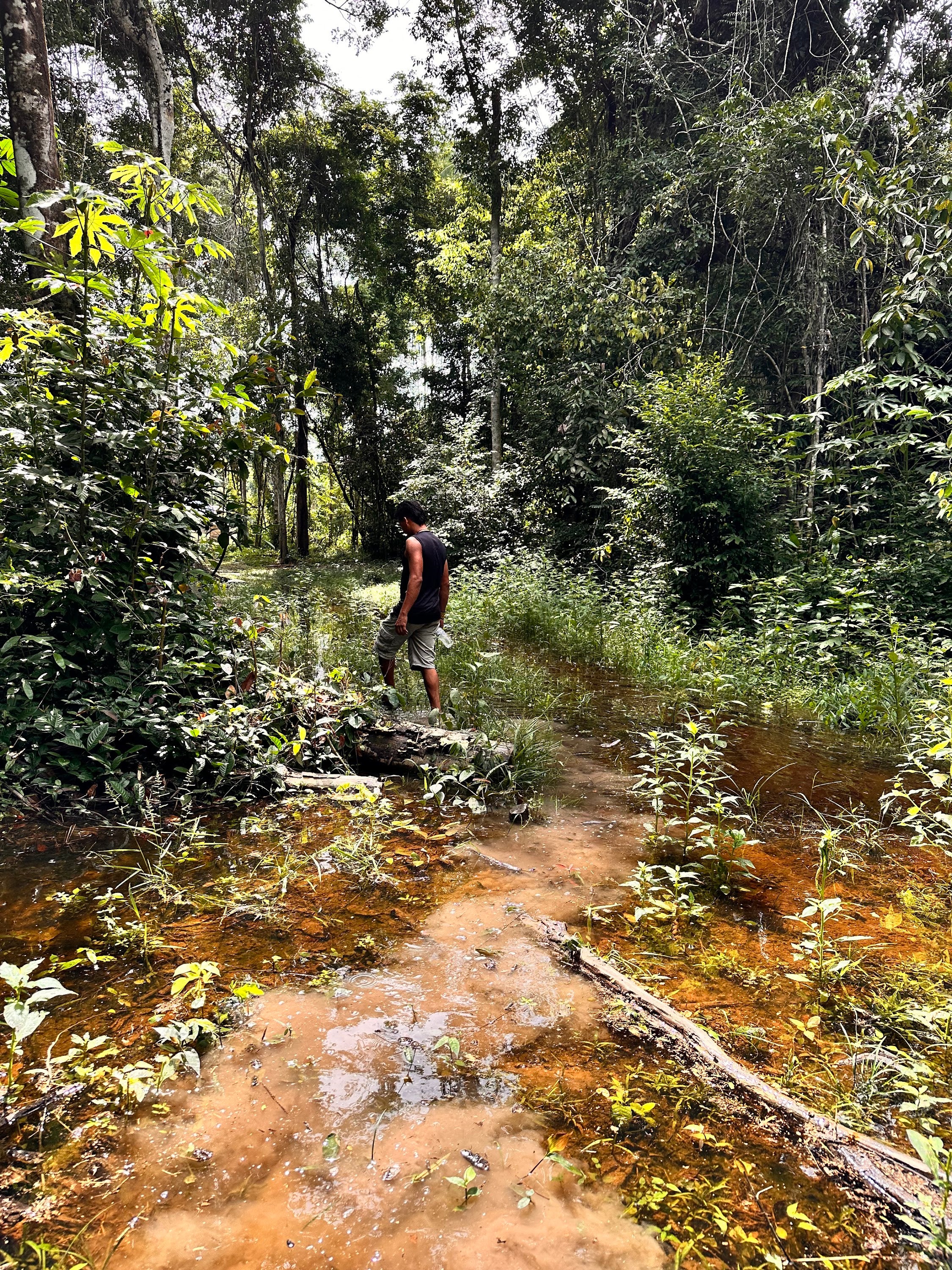
Infrastructure, Green Industrialization, and the Paradox of Climate Transport
The legislative push to open protected territories is intimately tied to Brazil’s broader economic strategy for export-led growth, often marketed under the guise of modernization and "climate infrastructure." Federal planning prioritizes major transportation corridors designed to expedite the export of agricultural commodities and mineral wealth to international markets. Projects such as the FICO mega-railway initiative are frequently cited by government planners as instruments of green industrialization, engineered to lower carbon emissions per metric ton of freight compared to traditional diesel-powered truck transport.
However, environmental scientists and grassroots movements argue that this framing obscures severe ecological trade-offs. While the railway may reduce shipping emissions on paper, its construction and the subsequent economic expansion it facilitates accelerate regional deforestation, severe water shortages, predatory mining, and aggressive agricultural frontier expansion. This dynamic creates a dangerous paradox: infrastructure projects branded as sustainable are actively fragmenting critical biomes, disrupting hydrological cycles, and threatening the ecological foundation of the Amazon and the Cerrado.
Furthermore, these developments unfold against the backdrop of national trauma stemming from industrial environmental disasters, such as the catastrophic tailings dam collapses in Mariana and Brumadinho. The prospect of expanding mining operations into sensitive Indigenous territories without robust regulatory oversight has alarmed domestic watchdog groups and international observers alike.
Bypassing Free, Prior, and Informed Consent
A central mechanism of the legislative assault on Indigenous sovereignty involves the systematic erosion of Free, Prior, and Informed Consent (FPIC). Under international human rights frameworks, including International Labour Organization (ILO) Convention 169, Indigenous Peoples possess the fundamental right to give or withhold their consent regarding any development projects that affect their ancestral territories.
Bill No. 191/2020 seeks to subvert this international standard by replacing community veto power with financial compensation or state-mandated royalties. Under this framework, the state and corporate entities could legally override a community’s explicit refusal to permit mining or industrial extraction on their lands. The implications of this policy have caused divisions even within traditional corporate sectors. Strikingly, reports from mainstream financial and journalistic outlets, such as Correio Braziliense, have highlighted that certain domestic and international mining corporations have expressed reservations regarding Bill No. 191/2020. These corporate voices have cautioned that conducting extraction operations on Indigenous lands requires broader societal debate, strict respect for community consent, and explicit protections for sacred sites to mitigate reputational and legal risks.
Implications for Brazil’s Global Climate Leadership at COP31
As Brazilian civil society representatives, Indigenous leaders, and government delegates converge on Antalya, Turkey, for UNFCCC COP31, the country faces a severe credibility test. The stark contrast between Brazil’s outward-facing climate diplomacy—highlighted by ambitious international pledges, forest protection frameworks, and participation initiatives—and its regressive domestic legislative agenda cannot be easily reconciled.
The biomes and forests safeguarded by Indigenous Peoples within Brazil are not merely localized ecosystems; they are indispensable components of the global climate stability engine, regulating regional rainfall patterns, food security, and carbon sequestration. The outcomes of the 2026 elections and the conservative entrenchment within the National Congress carry planetary consequences.
For Indigenous delegates at COP31, the path forward requires an uncompromising demand for true climate leadership. This leadership, they argue, must begin at home by defending democratic institutions, upholding the inviolability of Indigenous territorial rights, enforcing the principle of Free, Prior, and Informed Consent, and shielding vital tropical biomes from predatory industrial extraction. Ultimately, the international community is being reminded that any credible global transition to a sustainable future must place Indigenous self-determination at its very core.