On February 4, 2026, Professor Kate Pickett, a renowned epidemiologist and social campaigner, officially launched her latest book, The Good Society, during a high-profile virtual event hosted in collaboration with the political and social advocacy group Compass. The launch, which drew an audience of over 500 participants from across the globe, featured a distinguished panel of experts and activists, including Baroness Ruth Lister, environmental journalist George Monbiot, and former Green Party leader Caroline Lucas. This publication marks a pivotal moment in the ongoing discourse regarding wealth disparity, social cohesion, and the structural reforms necessary to transition toward a more equitable global economy.
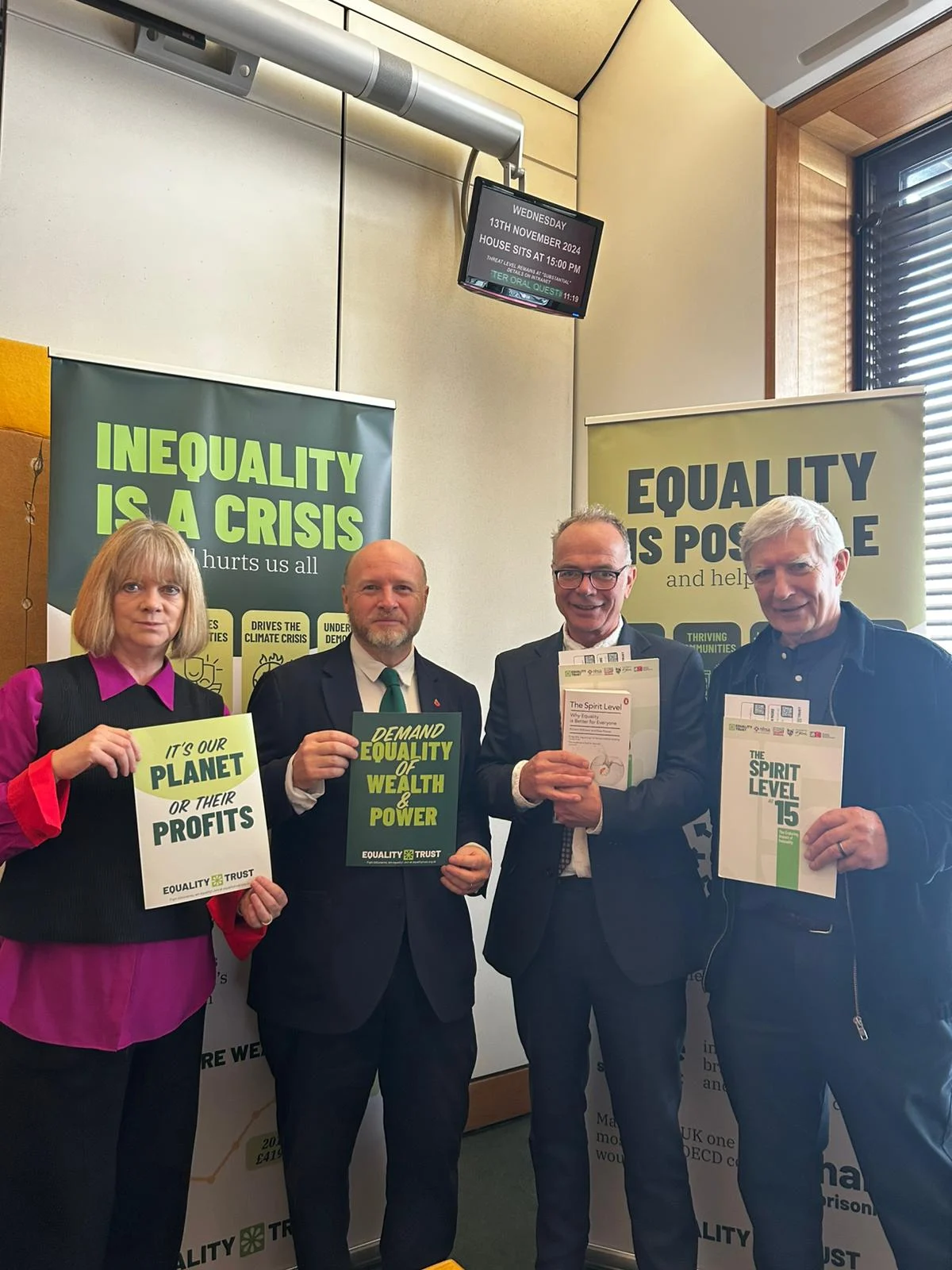
The event served as both a celebration of Pickett’s extensive body of work and a rigorous academic forum for discussing the practicalities of building a society rooted in fairness rather than unbridled economic growth. As a co-founder of The Equality Trust in 2009, Pickett has spent nearly two decades documenting the corrosive effects of inequality on public health, social trust, and democratic stability. The Good Society is presented as the culmination of this research, offering a blueprint for systemic change that addresses the intersection of social justice and environmental sustainability.
A Legacy of Research: From The Spirit Level to The Good Society
Professor Kate Pickett’s influence on modern sociology and economics began in earnest with the 2009 publication of The Spirit Level: Why More Equal Societies Almost Always Do Better, co-authored with Richard Wilkinson. That work provided a massive data-driven foundation for the argument that high levels of income inequality are linked to a wide array of social ills, including higher rates of incarceration, lower life expectancy, and increased mental health issues. Since then, Pickett has remained at the forefront of the movement to reposition equality as the primary metric for national success.
The Good Society represents an evolution of these themes. While her previous works focused heavily on diagnosing the problems inherent in unequal systems, this new volume shifts the focus toward solutions. The book argues that the "good society" is not a utopian fantasy but a measurable, achievable state reached through specific policy interventions such as progressive taxation, the strengthening of labor unions, and the implementation of wellbeing-based economic indicators.
The Launch Event and Panelist Contributions
The virtual launch was moderated by representatives from Compass, an organization dedicated to "good society" politics—a framework that emphasizes cooperation, democracy, and sustainability. The presence of Baroness Ruth Lister, George Monbiot, and Caroline Lucas provided a multi-disciplinary perspective on Pickett’s findings.
Baroness Ruth Lister, a peer in the House of Lords and a veteran researcher in social policy, highlighted the necessity of viewing poverty and inequality through the lens of human rights and dignity. She noted that Pickett’s work provides the empirical evidence required to challenge the "culture of shame" often imposed on those at the lower end of the socioeconomic spectrum.
George Monbiot addressed the environmental dimensions of the book. He argued that the pursuit of infinite economic growth is fundamentally incompatible with a finite planet. Monbiot praised Pickett for illustrating how a more equal society is also a more sustainable one, as reduced status competition leads to lower levels of conspicuous consumption and environmental degradation.
Caroline Lucas focused on the political implementation of these ideas. Drawing on her experience in the UK Parliament, Lucas emphasized that the transition to a "good society" requires a radical departure from the status quo. She called for a cross-party consensus on prioritizing social outcomes over Gross Domestic Product (GDP), a sentiment that resonated with the hundreds of attendees participating via the online platform.
A Chronology of the Movement for Equality (2009–2026)
The launch of The Good Society is the latest milestone in a timeline characterized by increasing academic and public scrutiny of wealth concentration.
- 2009: Publication of The Spirit Level. The book becomes a global bestseller and leads to the founding of The Equality Trust by Pickett, Wilkinson, and Bill Kerry.
- 2011: The Occupy Wall Street movement brings the concept of "the 1%" into the mainstream consciousness, frequently citing Pickett’s research.
- 2015: The United Nations adopts the Sustainable Development Goals (SDGs), with Goal 10 specifically targeting the reduction of inequality within and among countries.
- 2018: Pickett and Wilkinson publish The Inner Level, exploring how inequality affects individual psychology, increasing anxiety and status insecurity.
- 2020–2022: The global pandemic exposes and exacerbates existing inequalities, leading to renewed calls for a "Great Reset" or a "Green New Deal."
- 2024: National governments begin more aggressively adopting "Wellbeing Budgets," modeled after the initiatives seen in New Zealand and Iceland.
- 2026: Launch of The Good Society, providing a comprehensive framework for post-growth governance.
Supporting Data: The Cost of Inequality
The arguments presented in Pickett’s new book are supported by a wealth of contemporary data. According to the World Inequality Report, the gap between the richest 10% and the bottom 50% of the population has remained stubbornly wide over the last decade, despite various international efforts. In many developed nations, the top 1% continues to hold more wealth than the bottom 70% combined.
Pickett’s research utilizes the Gini coefficient—a statistical measure of distribution—to demonstrate that countries with lower coefficients (indicating greater equality) consistently outperform their more unequal counterparts in several key areas:
- Public Health: Life expectancy is on average 3.5 years higher in more equal developed nations.
- Social Mobility: The "Great Gatsby Curve" shows that higher inequality correlates with lower social mobility, effectively stifling the "American Dream" or its international equivalents.
- Trust: Survey data indicates that in more equal societies, over 60% of people believe "most people can be trusted," compared to less than 20% in highly unequal societies.
The Good Society posits that by reducing the income gap to levels seen in the 1960s and 70s, modern nations could see a 40% reduction in mental health diagnoses and a significant decrease in violent crime rates.
Institutional and Academic Responses
The release of Pickett’s work has prompted reactions from various sectors of society. Academic circles have largely lauded the book for its rigorous methodology and its ability to synthesize complex sociological data into actionable policy. Dr. Aris Komporozos-Athanasiou, a leading sociologist, remarked that Pickett "has successfully bridged the gap between academic theory and grassroots activism."
Conversely, some market-oriented think tanks have raised concerns regarding the feasibility of the book’s economic proposals. Critics argue that the move away from GDP-centric growth could lead to stagnation and a reduction in the capital available for technological innovation. However, Pickett countered these arguments during the launch, stating that innovation is more robust in societies where the population is healthy, educated, and secure, rather than in those characterized by precarious employment and high stress.
Broader Implications for Policy and Governance
The launch of The Good Society arrives at a time when the global political landscape is increasingly polarized. Pickett’s work suggests that inequality is a root cause of this polarization, as the erosion of social cohesion leads to the rise of populist and extremist movements. By proposing a path toward a "good society," Pickett offers a centripetal force—a way to bring communities back together through shared prosperity.
The implications for future governance are significant. If the principles outlined in the book are adopted, we may see:
- Universal Basic Services: A shift from providing cash transfers to ensuring universal access to essential services like transport, internet, and healthcare.
- Economic Democracy: Greater support for worker-owned cooperatives and employee representation on corporate boards.
- Pre-distribution Policies: Reforms aimed at changing the way markets work so that income is distributed more fairly before taxes and benefits are even considered.
Conclusion: A Vision for the Future
The event concluded with a call to action for the 500-plus attendees. Professor Pickett emphasized that while the data provides the "why," the collective will of the people provides the "how." The recording of the launch, which has since been shared widely across social media and educational platforms, serves as a resource for those looking to understand the mechanics of social change.
As Penguin Books prepares for the wide release of The Good Society, the conversation it has ignited shows no signs of slowing down. With endorsements from influential figures like Monbiot and Lucas, and the backing of organizations like Compass and The Equality Trust, Pickett’s vision for a more equal world is no longer just an academic proposition; it is a burgeoning political reality. The book stands as a testament to the idea that a better society is not only possible but, given the current environmental and social crises, absolutely necessary.