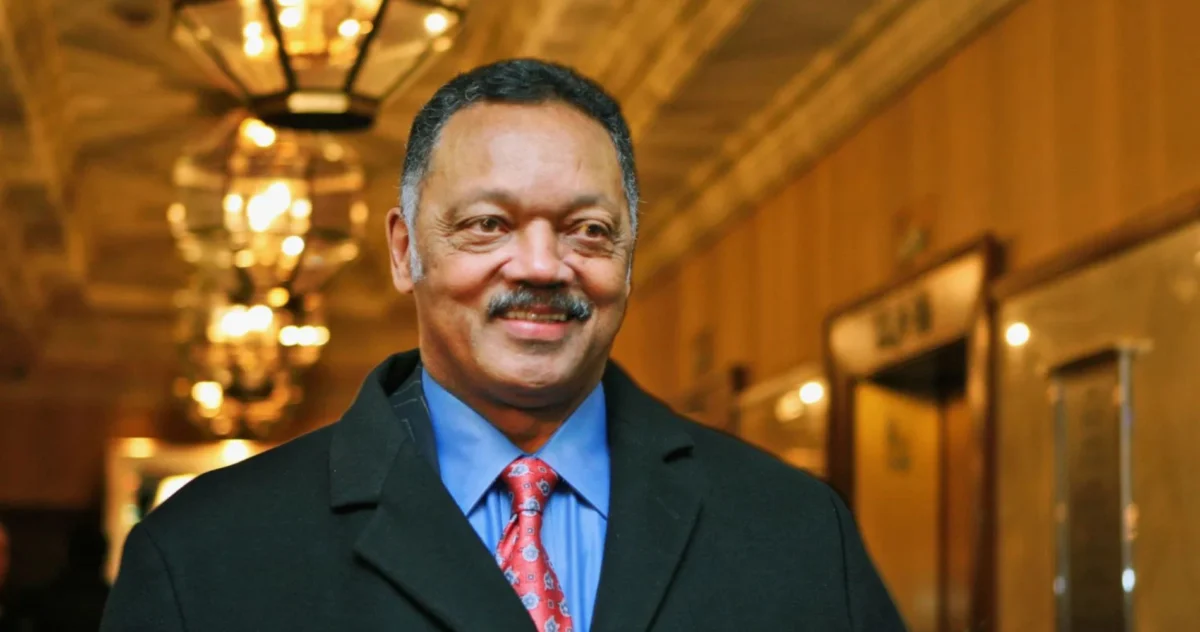
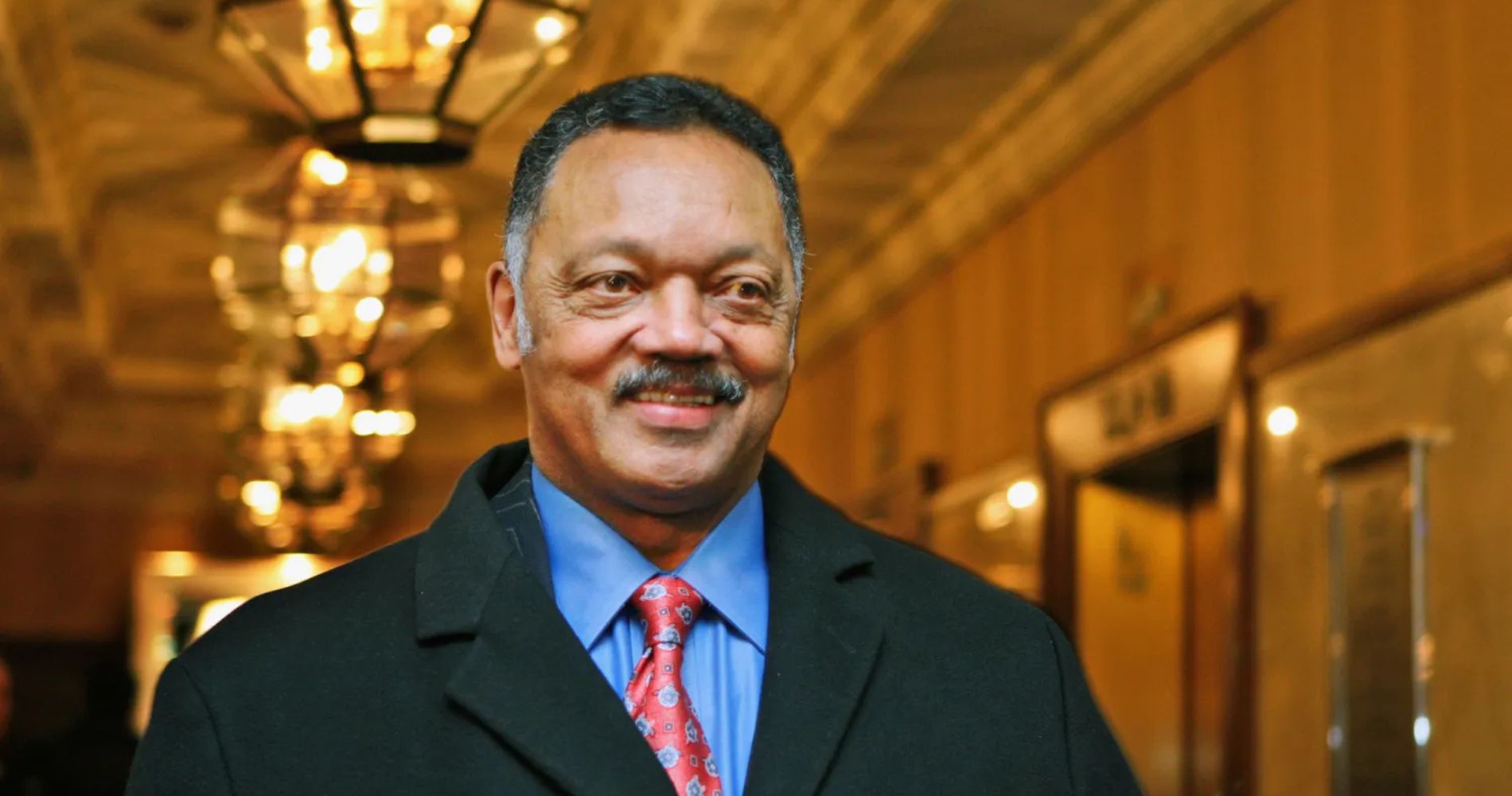
Jesse Jackson, a towering figure in American civil rights and a two-time presidential candidate who dedicated his life to fighting for the oppressed and voiceless, died peacefully this morning at the age of 84. His oldest daughter, Santita Jackson, informed The New York Times that he passed away surrounded by his family, who prayed and listened to hymns. The Jackson family released a statement honoring their patriarch, saying, "Our father was a servant leader—not only to our family, but to the oppressed, the voiceless, and the overlooked around the world." They added, "We shared him with the world, and in return, the world became part of our extended family. His unwavering belief in justice, equality, and love uplifted millions, and we ask you to honor his memory by continuing the fight for the values he lived by." His passing marks the end of an era for a generation of activists and leaves an indelible void in the ongoing struggle for social justice and equality in the United States and globally.
Early Life and the Awakening of an Activist
Born Jesse Louis Burns on October 8, 1941, in Greenville, South Carolina, a city then deeply entrenched in the segregationist policies of the Jim Crow South, Jackson’s early life was marked by the stark realities of racial inequality. Despite these systemic barriers, he excelled academically and athletically. He attended Sterling High School, an all-Black institution, where his innate leadership qualities shone through, earning him the position of honor student and class president. His athletic prowess also earned him a football scholarship to the University of Illinois in 1959, a significant achievement for a Black student from the South at that time, though even in integrated institutions, Black athletes often faced subtle and overt forms of discrimination.
However, it was during a winter break trip home in 1960 that Jackson directly confronted the racial injustice that would define his life’s mission. Needing a book for a college paper, he attempted to enter the Greenville County Public Library, a facility explicitly designated "white-only" under the pervasive Jim Crow laws that enforced racial segregation across the South. He was summarily turned away, a stark reminder that even his academic achievements could not override the color line. This personal experience fueled his resolve to challenge the status quo. On July 16, 1960, Jackson, then just 18, along with seven other Black students, initiated a peaceful "read-in" at the segregated library. They quietly entered the reading room and sat down, their silent presence a powerful challenge to discriminatory policies that denied Black citizens access to public resources. Despite requests from the librarian to leave, they remained, leading to their arrest for disorderly conduct. This courageous group, later known as the "Greenville Eight," faced legal repercussions, with each student released on a $30 bond. Their arrest, however, ignited a federal lawsuit challenging the library’s segregation. In a move that underscored the depth of resistance to integration, the Greenville library system controversially chose to close all its branches rather than comply. Public outrage and sustained pressure, however, ultimately forced the reopening of the libraries in September 1960, now declared by the mayor to operate "for the benefit of any citizen having a legitimate need for the libraries and their facilities," marking a quiet but significant victory against institutionalized segregation.
This pivotal experience solidified Jackson’s commitment to activism. He did not return to the University of Illinois for his sophomore year, instead transferring to North Carolina Agricultural and Technical State University (North Carolina A&T) in Greensboro, a historically Black college that was a vibrant hub of civil rights activity. There, he continued to hone his leadership skills, becoming a prominent figure in his fraternity and ultimately serving as president of the student body. In Greensboro, Jackson deepened his involvement in the burgeoning Civil Rights Movement, joining the local chapter of the Congress of Racial Equality (CORE). His burgeoning activism led him to organize and lead a march of hundreds of students downtown in June 1963, a powerful demonstration against segregation that resulted in his arrest the following day. These early experiences in Greenville and Greensboro were profoundly formative, shaping him into the dynamic and fearless advocate he would become, preparing him for a larger role on the national stage.
Joining the Movement: The King Era and Operation Breadbasket
After graduating from North Carolina A&T in 1964, Jackson moved to Chicago to pursue studies at the Chicago Theological Seminary. While his academic pursuits continued, his primary focus remained on the burgeoning civil rights struggle. The brutal events of "Bloody Sunday" in Selma, Alabama, on March 7, 1965, served as a profound turning point. Images of peaceful marchers being violently attacked by state troopers as they attempted to cross the Edmund Pettus Bridge galvanized the nation and deeply moved Jackson. Responding to Dr. Martin Luther King Jr.’s urgent call for faith leaders and civil rights supporters to come to Selma to advocate for voting rights, Jackson famously climbed atop a cafeteria table, challenging his fellow students to join him. Approximately 20 students and a third of the seminary faculty answered his call, traveling south to participate in the historic Selma to Montgomery marches, which ultimately led to the passage of the Voting Rights Act of 1965.
The experience in Selma solidified Jackson’s determination to join Dr. King’s Southern Christian Leadership Conference (SCLC). Six months later, at just 24 years old, he became the youngest staff member of the SCLC, marking the beginning of a crucial mentorship under King. Recognizing Jackson’s organizational acumen and persuasive abilities, Dr. King tapped him to head the Chicago chapter of Operation Breadbasket. This groundbreaking national economic development campaign was designed to leverage the collective power of Black churches and consumers. Its core strategy involved negotiating with businesses that profited significantly from Black patronage but failed to offer equitable employment opportunities or fair treatment to Black workers. If negotiations failed, the program would organize boycotts, using economic pressure to achieve social justice and address systemic economic disenfranchisement.
Dr. King eloquently articulated the premise of Operation Breadbasket in 1967: "The fundamental premise of Breadbasket is a simple one. Negroes need not patronize a business which denies them jobs, or advancement [or] plain courtesy." He further explained that "Many retail businesses and consumer-goods industries deplete the ghetto by selling to Negroes without returning to the community any of the profits through fair hiring practices." Under Jackson’s dynamic leadership, Operation Breadbasket in Chicago became the SCLC’s "most spectacularly successful program," as described by Dr. King himself. It secured an estimated 2,000 new jobs and generated approximately $15 million in annual income for the Black community, significantly impacting economic empowerment in urban centers and demonstrating a potent new avenue for civil rights advocacy. Jackson’s remarkable success led to his appointment as the national director of Operation Breadbasket in 1967, expanding his influence and the program’s reach across the country.
Dr. King became more than a mentor; he was a profound father figure to Jesse Jackson. In 1968, King summoned Jackson to Memphis, Tennessee, where sanitation workers were on strike, seeking better wages and working conditions. It was there, on April 4, 1968, that Jackson found himself below the balcony of the Lorraine Motel, talking with Dr. King moments before the civil rights icon was assassinated. The traumatic event left an indelible mark on Jackson, deeply affecting him for the rest of his life. Decades later, he recounted the profound pain to The Guardian in 2018, stating, "Every time I think about it, it’s like pulling a scab off a sore. It’s a hurtful, painful thought: that a man of love is killed by hate; that a man of peace should be killed by violence; a man who cared is killed by the careless." This tragic loss, while devastating, propelled Jackson into an even more prominent leadership role within the movement, solidifying his resolve to carry on King’s dream of justice and equality.
Post-King Leadership: PUSH and Global Advocacy
In the immediate aftermath of Dr. King’s murder, Jesse Jackson, following in his mentor’s footsteps and seeking to provide continued spiritual leadership to the movement, became an ordained Baptist minister in 1968, reinforcing