
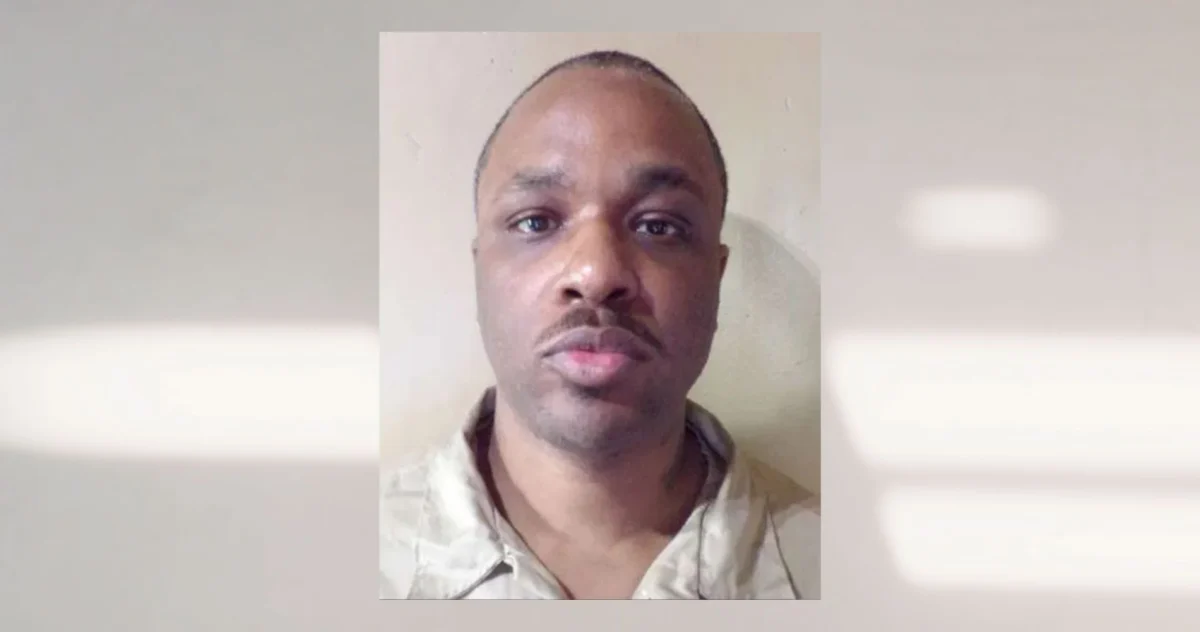
The State of Alabama executed 41-year-old Jeremy Williams by lethal injection today, marking the conclusion of a case that has reignited national debate regarding the intersection of mental health, the right to appeal, and the constitutionality of "volunteer" executions. Mr. Williams’s death followed a series of legal proceedings in which he actively sought his own execution, effectively waiving his rights to challenge both his conviction and the sentence imposed upon him.
The case of Jeremy Williams began in 2022 when he was charged with four counts of capital murder in the death of five-year-old Kamarie Holland. Following his confession to the crime, the legal process moved with relative speed. On March 13, 2024, Williams entered a formal plea of guilty to all four capital counts. In a move that surprised legal observers and court officials, he explicitly requested that the trial court impose the death penalty.
A Chronology of Legal Proceedings
The path to the execution chamber was characterized by a lack of traditional defense-side advocacy, a result of Williams’s explicit instructions to his legal counsel.
- 2022: Jeremy Williams is charged with four counts of capital murder in the killing of Kamarie Holland.
- March 13, 2024: Williams pleads guilty to all charges and requests the death penalty.
- April 12, 2024: Following a trial phase required by Alabama law—where the state presented evidence, including graphic imagery, to which the defense was instructed not to object—Williams is officially convicted.
- Sentencing Phase: Williams waives the right to a jury-led sentencing hearing and declines to present mitigating evidence, such as testimony regarding his mental health or childhood background. Consequently, the trial court sentences him to death.
- March 27, 2026: The Alabama Court of Criminal Appeals affirms the conviction and sentence. Williams represents himself on appeal and declines to file a formal brief.
- June 16, 2026: The Alabama Supreme Court orders the state to proceed with the execution.
- June 18, 2026: Governor Kay Ivey signs the execution warrant, setting the date for August 13.
- August 13, 2026: The state carries out the execution of Jeremy Williams.
The Procedural Mechanics of a Volunteer Execution
Under Alabama law, the state is required to conduct a trial even when a defendant pleads guilty in a capital case. Prosecutors are obligated to present evidence to ensure the record supports the gravity of the charges. Because Williams instructed his defense team not to raise objections, the prosecution was permitted to present a vast array of evidence—including distressing photographs and videos—without the adversarial testing usually required to ensure evidence is not overly prejudicial or inflammatory.
Furthermore, the absence of mitigating evidence during the sentencing phase created a vacuum that left the trial court with little choice but to lean toward the maximum penalty. Mitigating evidence, which typically includes psychological evaluations, histories of trauma, or evidence of intellectual disability, is designed to provide a humanizing context for a defendant’s actions. By waiving this, Williams effectively bypassed the standard safeguards intended to prevent the arbitrary application of the death penalty.
The Phenomenon of Capital Volunteerism
The term "volunteer" in the context of capital punishment refers to death-row inmates who drop their appeals to accelerate their own executions. Critics of this practice argue that such "volunteering" is often a manifestation of underlying mental illness or suicidal ideation rather than a rational, competent choice.
Research conducted by Professor John Blume of Cornell Law School provides a sobering perspective on this trend. Analyzing 106 cases of inmates who volunteered for execution, Blume found that at least 93—or 88%—had documented evidence of severe mental illness or substance-abuse disorders. The prevalence of serious conditions is significant: 14 cases involved schizophrenia, while dozens of others involved clinical depression, bipolar disorder, or post-traumatic stress disorder. Perhaps most telling is the statistic that at least 30 of these individuals had previously attempted suicide.
More recent data from the Death Penalty Information Center (DPIC) reinforces these findings. Analysts estimate that approximately one in ten modern executions are facilitated by the prisoner’s own decision to waive their appeals. This trend suggests that the state is often acting upon the impulses of individuals suffering from severe psychological distress, raising profound questions about the validity of "consent" in the face of imminent state-sanctioned death.
Constitutional Concerns and the Role of the Courts
The legal system’s reliance on "volunteerism" has long been a subject of judicial criticism. In the 1979 case Lenhard v. Wolff, Justice Thurgood Marshall famously dissented, arguing that a defendant’s desire to end their life should not override the state’s obligation to adhere to the Eighth Amendment’s prohibition against cruel and unusual punishment. Marshall posited that society holds an independent stake in the enforcement of constitutional rights, a stake that cannot be forfeited by a defendant’s suicidal impulses.
Legal scholars point out that the bar for determining whether a defendant is "competent" to waive their appeals is exceptionally low. Courts generally assess whether a defendant understands the nature of their decision, rather than investigating the complex mental health factors that might be driving the desire to die. As a result, many volunteers are executed while significant, unresolved constitutional questions remain—such as whether the prisoner possesses an intellectual disability, or if evidence of innocence or mitigation was suppressed or overlooked.
Broader Implications for the Justice System
The execution of Jeremy Williams highlights the vulnerability of the capital punishment system to the psychological state of the defendant. When the state allows an individual to choose their own execution, it effectively removes the adversarial process that the U.S. justice system relies upon to ensure fairness.
The implications of this are twofold. First, there is the risk of "state-administered suicide," where the government facilitates the self-destruction of vulnerable, mentally ill individuals. Second, the reliance on volunteerism masks structural issues within the legal system, including the influence of poverty and race on sentencing outcomes. In some jurisdictions, the only individuals who have faced execution in recent years are those who have "volunteered," suggesting that without these waivers, the death penalty might not have been applied at all.
For legal advocates and civil rights organizations, the case of Williams serves as a grim reminder that the finality of the death penalty leaves no room for error. When the state executes a volunteer, it essentially forecloses any future opportunity to uncover constitutional errors, prosecutorial misconduct, or hidden mental health struggles.
As the legal community continues to grapple with the ethics of capital punishment, the case of Jeremy Williams stands as a focal point for those arguing that the current framework is fundamentally flawed. Whether or not society views the death penalty as an appropriate punishment for heinous crimes, the specific mechanism of "volunteerism" continues to challenge the moral and legal foundations of the American criminal justice system. With no further appeals possible and the execution now carried out, the questions regarding the adequacy of the state’s protections for mentally unstable defendants remain unresolved, potentially setting a precedent for future cases where the line between criminal accountability and state-assisted suicide remains precariously thin.




