
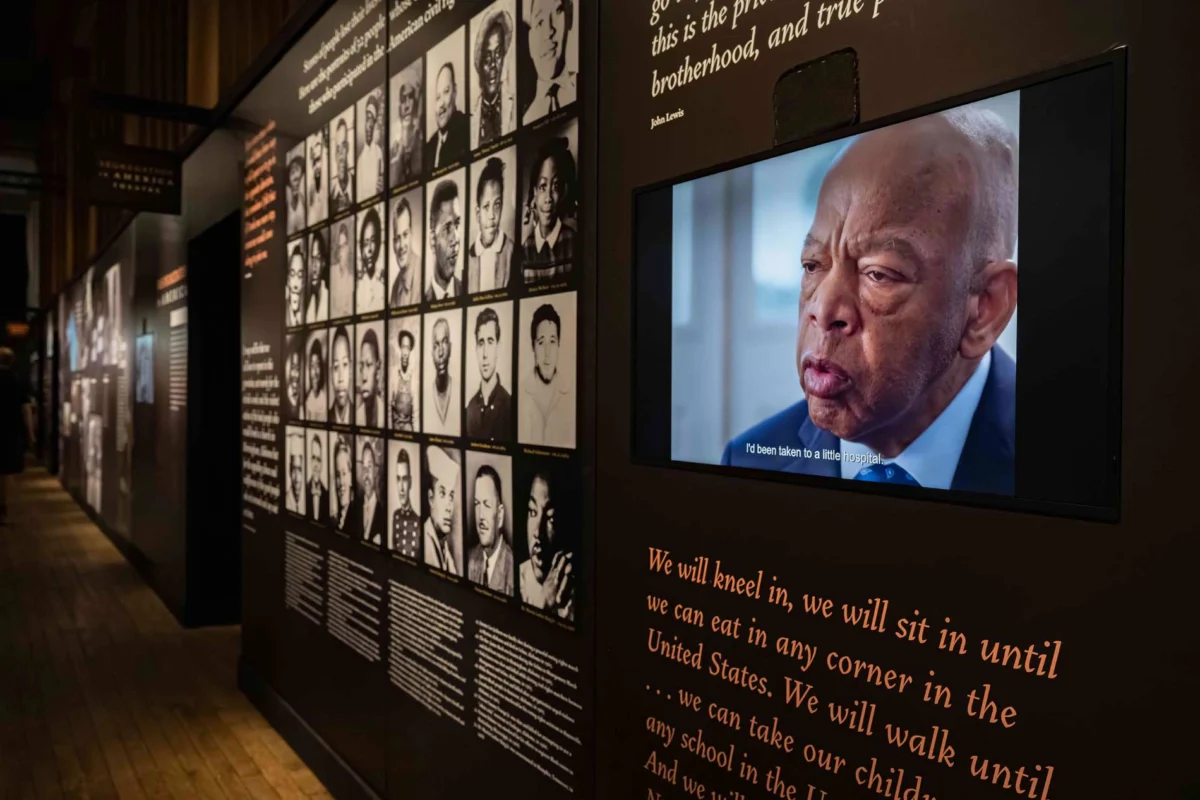
For the first time in its storied history, the Equal Justice Initiative (EJI) has taken its mission beyond the borders of the United States, bringing an abridged, immersive version of its acclaimed Legacy Museum to the Edinburgh International Festival. Titled The Legacy of Slavery in America, the exhibition opened its doors this weekend at the University of Edinburgh’s Playfair Library, marking a significant milestone in the global conversation regarding human rights, historical memory, and the persistent shadows of the Transatlantic slave trade.
This international expansion represents a strategic shift for EJI, as the organization seeks to contextualize the American experience of racial hierarchy within a broader global framework. The exhibition serves as a companion to the Festival’s 2026 theme, All Rise, which emphasizes the capacity for artistic endeavor to foster truth and tolerance. By anchoring the Festival’s artistic programming in the stark realities of American history, EJI provides a sobering, essential counterpoint to the celebratory atmosphere of the world-renowned arts event.
A Chronology of Injustice: From Enslavement to Incarceration
The Legacy of Slavery in America is not merely a collection of artifacts; it is a meticulously researched narrative journey that traces the evolution of racial inequality in the United States. The exhibition guides visitors through a chronological examination of how the dehumanizing myth of racial hierarchy, originally manufactured to justify the enslavement of millions of kidnapped Africans, survived the formal abolition of slavery in 1865.
The historical trajectory presented in the exhibition is divided into distinct, interconnected eras:
- The Era of Enslavement: This section details the Transatlantic Trade of Enslaved People and the Domestic Slave Trade, illustrating the economic and social structures built upon the labor of enslaved people.
- The Era of Racial Terror: Following the Civil War and the collapse of Reconstruction, the narrative shifts to the period of lynchings and state-sanctioned violence that sought to re-establish white supremacy through fear.
- The Era of Codified Segregation: The exhibit explores the Jim Crow period, where laws and social customs were utilized to enforce racial separation and disenfranchisement.
- The Contemporary Era of Over-Incarceration: The final segment addresses the current crisis of mass incarceration, arguing that the modern prison-industrial complex is a direct, evolved iteration of the racial hierarchy that characterized the antebellum South.
By utilizing first-person accounts, archival film footage, and primary source documents, the exhibition forces an encounter with the reality that these historical periods are not disconnected chapters, but rather a continuous lineage of systemic bias.
The Power of Art as a Historical Catalyst
EJI’s presence in Edinburgh is a testament to the organization’s long-held belief that art is a critical tool for animating history. This philosophy is manifested in the four Legacy Sites currently managed by EJI in Alabama: the Legacy Museum, the National Memorial for Peace and Justice, the Freedom Monument Sculpture Park, and the newly established Montgomery Square.
"The relationship between art, music, and justice is deep, profound, and ancient," EJI Executive Director Bryan Stevenson noted during the exhibition’s opening. "So much of the world’s most extraordinary creative works have been shaped by eras of inequality, bigotry, and injustice."
This intersection of art and justice was highlighted during the Festival’s opening concert on August 8. The event featured the Jazz at Lincoln Center Orchestra, led by Wynton Marsalis, performing his 12-movement symphony, All Rise. The performance served as a thematic bridge, linking the musical heritage of the United States with the historical realities presented in the EJI exhibition. The symphony, originally commissioned at the turn of the millennium, underscores the Festival’s goal of using art to confront the complexities of the human experience.
Contextualizing the Edinburgh International Festival
Established in 1947, the Edinburgh International Festival was founded in the immediate aftermath of World War II to provide a platform for reconciliation through the arts. Its mandate was to heal a fractured world by fostering connections between artists and communities across national borders. Given this history, the inclusion of an exhibition on the legacy of American slavery is particularly poignant.
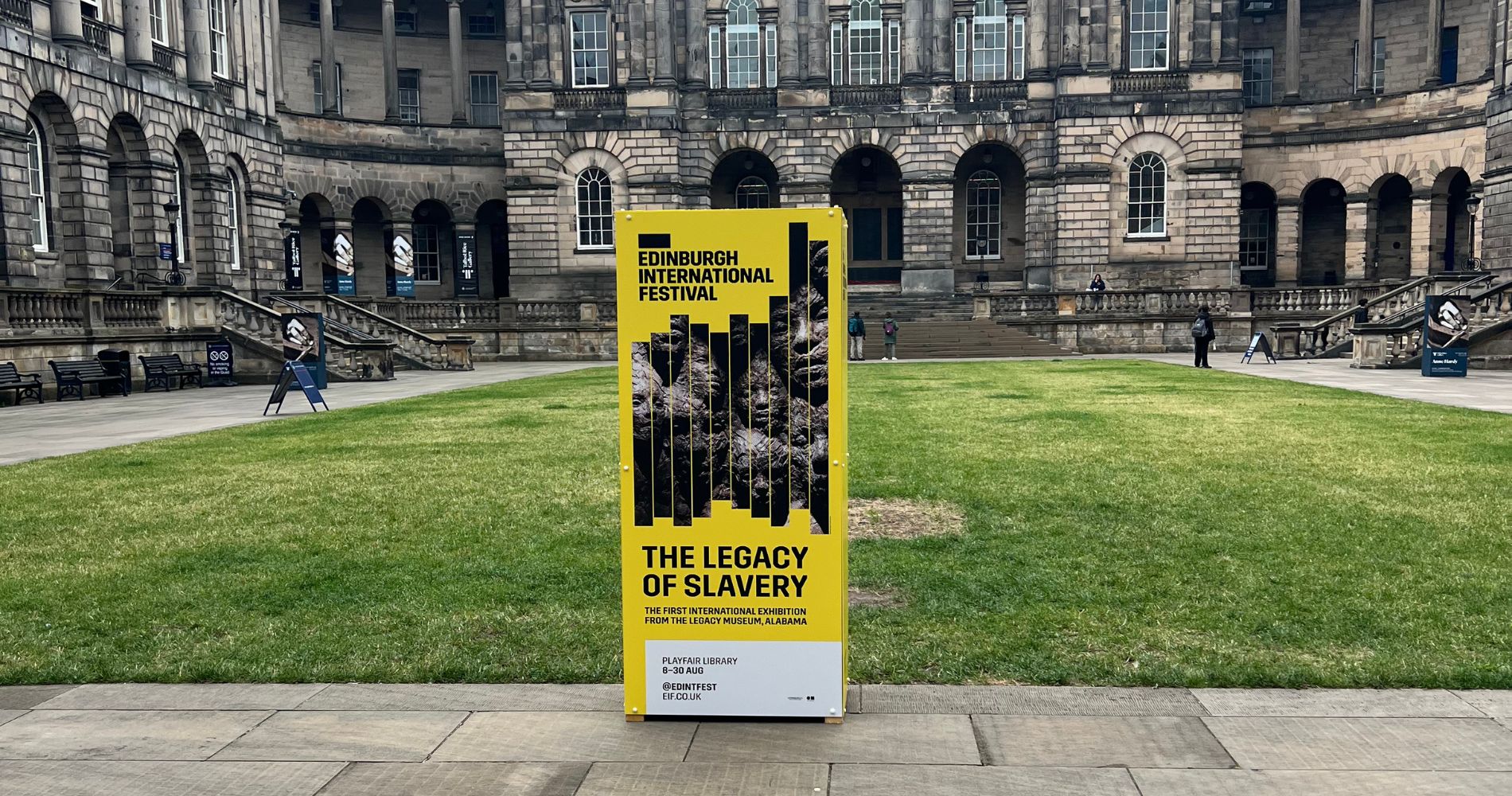
The Festival, which brings thousands of international performers to Scotland every August, has historically prioritized classical music, theater, and opera. Presenting a museum-style narrative experience is a departure from tradition, signifying a growing recognition within the global arts community that historical education is a prerequisite for meaningful cultural exchange. The exhibition at the Playfair Library, which runs through August 30, is free to the public, though ticketed reservations are required to manage the high volume of expected visitors.
Data and Implications: The Global Scope of Racial Injustice
The exhibition serves to highlight that the impact of American racial injustice is not limited to the borders of the United States. According to researchers at EJI, the "false narrative of racial difference" that fueled the American slave trade was a global phenomenon, one that influenced colonial policies and social structures in Europe and beyond.
Statistical data presented within the exhibition underscores the scale of this history. While the Transatlantic Trade of Enslaved People involved the forced migration of an estimated 12.5 million Africans, the exhibition emphasizes that the trauma inflicted by this trade did not dissipate in the 19th century. Instead, the exhibition argues that the economic and legal foundations of modern American inequality are rooted in these historical practices.
The implications for international visitors are significant. By presenting this history in the heart of Scotland—a nation with its own complex history regarding the British Empire and its involvement in the slave trade—the exhibition invites a broader, global reckoning. Observers note that this exhibition challenges visitors to consider their own national legacies, fostering a dialogue that extends beyond the American experience.
Official Responses and Public Reception
The collaboration between EJI and the Edinburgh International Festival has been met with significant attention from academics, historians, and policy experts. Amy Goodman, host of Democracy Now!, sat down with Bryan Stevenson in Edinburgh to discuss the exhibition, highlighting the urgency of the dialogue it promotes.
"Our exhibition provides an overview of American history that can act as a backbone for visitors experiencing this year’s Festival program," a spokesperson for the EJI stated. Many of the works featured throughout the month-long festival are presented by artists grappling with the global reach of American influence, and the EJI exhibit provides the essential context required to fully engage with those performances.
Early feedback from attendees indicates that the exhibit is having a profound emotional impact. By moving away from purely academic or detached historical analysis and toward a narrative-driven, sensory experience, the exhibit succeeds in making abstract historical concepts tangible.
Looking Toward the Future
As the 2026 Festival continues to celebrate the 250th anniversary of the United States, the presence of The Legacy of Slavery in America serves as a vital reminder of the duality of that history. While the Festival celebrates artistic achievement and cultural progress, the exhibition ensures that the foundational costs of that progress—human suffering, systemic inequality, and the enduring struggle for justice—remain at the forefront of the public consciousness.
For the Equal Justice Initiative, this exhibition is more than just a pop-up display; it is an assertion that the work of addressing racial injustice is a universal obligation. As the exhibition concludes its run on August 30, it will leave behind a legacy of its own: a heightened awareness of the necessity of truth-telling in the pursuit of a more equitable global society.
The success of this international debut suggests that EJI may continue to seek partnerships that place their narrative experiences on the global stage. As the conversation around historical accountability continues to evolve, the Playfair Library has become a temporary, but crucial, site of encounter where history, justice, and art converge.




