The Evolution of Queer Palestinian Discourse Post-October 2023
The publication of this anthology is inextricably linked to the events following October 7, 2023, which catalyzed a shift in international activism and communal solidarity. George Abraham, a Palestinian American poet and one of the volume’s editors, observes that the current "genocidal moment" has fundamentally altered the understanding of queerness within the Palestinian diaspora. Historically, queer and trans identities were often viewed with skepticism or relegated to the periphery in conservative sectors of the community. However, the visible presence of LGBTQ+ individuals on the front lines of anti-Zionist organizing—risking livelihoods and personal safety—has prompted a re-evaluation of these dynamics.
The anthology highlights a burgeoning "queer and trans insurgence" that aligns itself with the broader Palestinian struggle for sovereignty. This solidarity is framed not as a peripheral concern but as a central component of an anti-colonial movement. By positioning the liberation of queer bodies alongside the liberation of the Palestinian state, the contributors argue that the dismantling of imperial and colonial structures is a prerequisite for the safety of all marginalized populations.
Challenging the "Pinkwashing" Narrative in Western Geopolitics
A primary thematic pillar of the anthology is the critique of "pinkwashing." This term refers to the perceived strategy by the Israeli state and its Western allies of highlighting LGBTQ+ rights within Israel to deflect criticism from its military actions and policies in the Palestinian territories. The editors and contributors argue that this narrative is frequently used as a "cudgel" to alienate queer and trans people in the West from the Palestinian cause, under the premise that Palestinian society is inherently and uniquely homophobic.
The anthology seeks to dismantle this binary by giving voice to queer Palestinians who exist both within the territories and in the diaspora. These writers describe a "double-bind": they face the external threat of military occupation and systemic violence while simultaneously navigating internal community struggles for acceptance. By documenting these complexities, the anthology refuses the simplistic "civilizational" narrative that pits Western-style liberal rights against Eastern traditionalism. Instead, it presents a nuanced view of "queering return"—the idea that the eventual return to a liberated Palestine must involve a re-envisioning of social orders that move beyond capitalist and colonial domestications.
A Chronology of Queer Palestinian Organizing
To understand the context of this anthology, one must look at the timeline of queer Palestinian activism, which has deep roots despite recent surges in visibility.
- 2001: The formation of al-Qaws (the Rainbow), a civil society organization that began as a project of the Jerusalem Open House and later became an independent entity advocating for sexual and gender diversity in Palestinian society.
- 2002: The establishment of ASWAT (Voices), a group specifically for Palestinian queer women.
- 2010s: The rise of the "Pinkwatching" movement, which aimed to bring global attention to how LGBTQ+ issues were being utilized in branding efforts by the Israeli Ministry of Foreign Affairs.
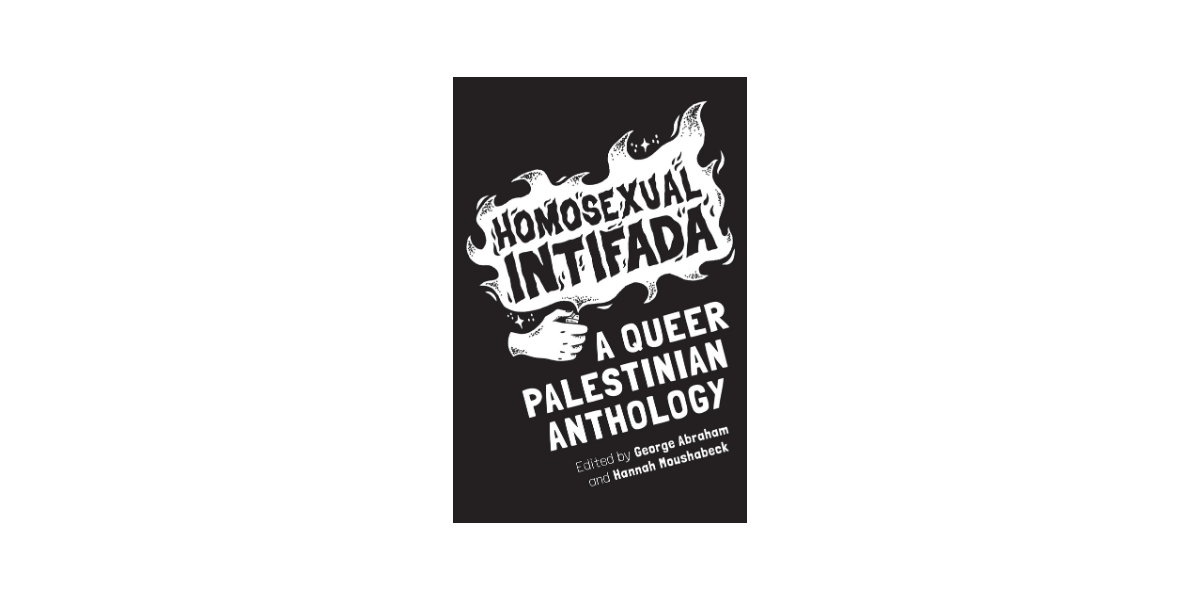
- 2023–2024: The escalation of the conflict in Gaza led to a massive increase in intersectional activism, characterized by the slogan "No Pride in Genocide." This period saw the rapid assembly of the Homosexual Intifada anthology as a response to the urgent need for Palestinian-led queer narratives.
Literary Structure and Key Contributions
The anthology employs a diverse array of literary forms—ranging from speculative fiction and experimental essays to poetry and photojournalism—to illustrate the breadth of the queer Palestinian experience.
Retelling and Reclamation of Folklore
Randa Jarrar’s "The Fisherwoman" serves as a queer reimagining of traditional Palestinian folktales. By subverting these narratives, Jarrar emphasizes the resilience of those deemed "powerless" by the state. The story functions as a metaphor for the survival of Palestinian identity against "monstrous empires," asserting that the community will never be erased or stolen from one another.
The Concept of "Queer Return"
Sarona Abuaker’s essay, "Suture Fragmentations – A Note on Return," explores the psychological and physical implications of the "Right of Return" for displaced Palestinians. Abuaker proposes a "queering" of this return, suggesting that it should not merely be a restoration of the past but a "practice of making an order beyond the state-sanctioned order." This involves re-orienting the concept of home away from nationalist or patriarchal structures toward a "future-thinking" orientation of possibility.
Narratives of the Diaspora
Elias Jahshan’s "Palestinian Dreaming" addresses the grief and hope inherent in the diaspora experience. His work explores how queerness is perceived by family members across borders, ultimately concluding that a free Palestine is a cause that must include the celebration of "queer joy." Similarly, the piece "Queer as Ghareeb" by the author S. examines the Arabic concept of ghourba (strangeness or exile). The author draws parallels between her father’s exile from his homeland and her own sense of being "strange" within her community due to her sexuality, framing her identity as an "embodied demand for decolonization."
Data and Social Implications
The release of Homosexual Intifada occurs against a backdrop of significant humanitarian data. Since October 2023, the United Nations and various NGOs have reported unprecedented levels of displacement and death in the Gaza Strip. For queer Palestinians, these statistics are not just numbers but represent the destruction of safe spaces and the loss of community networks that took decades to build.
Data from organizations like al-Qaws suggests that the "pinkwashing" discourse has tangible effects on the ground, often making it more difficult for queer Palestinians to organize locally, as they are sometimes unfairly characterized as "agents of Western influence." The anthology acts as a counter-measure to this, asserting that Palestinian queerness is indigenous and deeply rooted in the history of the land and its people.
Critical Reception and Broader Impact
While the anthology has been celebrated in progressive literary and activist circles for its bravery and stylistic innovation, it also faces a polarized reception in the broader political landscape. Critics of the anti-Zionist movement argue that the focus on "pinkwashing" ignores the very real dangers faced by LGBTQ+ individuals under the governance of groups like Hamas in Gaza or the Palestinian Authority in the West Bank.
In response, the contributors to the anthology argue that these dangers are exacerbated by the state of siege and occupation. They contend that a society under constant military threat cannot undergo the organic social evolutions necessary for internal progress. The anthology posits that the primary threat to all Palestinian lives—queer or otherwise—is the systemic violence of the occupation, which "disposes of all bodies without hesitation or consequences."
Conclusion: Toward an Anti-Colonial Future
Homosexual Intifada concludes with a call for collective liberation. The editors emphasize that the "strength of queer Palestinian writers is in their fearless embrace of intimate reckonings." These personal narratives are presented as "dangerous, earth-shattering questions" for the global collective, challenging the world to see the Palestinian struggle as a universal fight against imperialism and racial capital.
The anthology serves as a reminder that the liberation of marginalized people is interconnected. As the world witnesses a rise in both queer activism and pro-Palestinian sentiment, this volume provides a crucial bridge, arguing that "we can only win together." It stands as a testament to the endurance of Palestinian culture and the refusal of its queer members to be silenced or instrumentalized by external political agendas. In the words of the contributors, the work is not intended to educate those who believe "pinkwashed lies" but to provide a home for those writing from within the "dying days of western empire," pushing toward a future where sovereignty and joy are accessible to all.