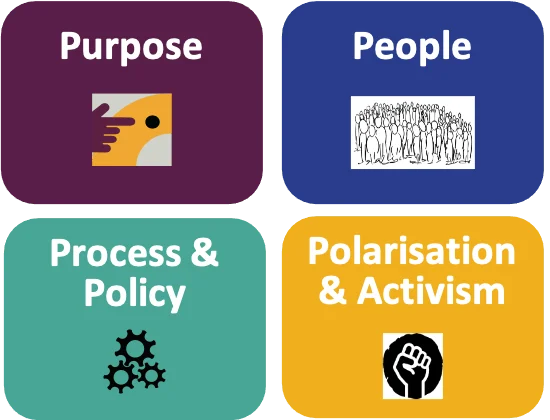
The past two years have marked a tumultuous, rapid-paced period of experimentation, profoundly altering traditional notions of work and its future. This ongoing pandemic era has catalyzed a fundamental re-evaluation of how, why, and where we work, presenting both immense challenges and unparalleled opportunities for transformation, particularly in the realm of Diversity, Equity, and Inclusion (DEI). As societies and economies continue to grapple with evolving data and open questions, a series of interconnected trends have emerged, categorized broadly into Purpose, People, Process & Policy, and Polarisation & Activism. These shifts demand a proactive, inclusive response from leaders and organizations worldwide.
The Great Reevaluation: A Quest for Purpose and Meaning
The onset of the pandemic, with its life-shaking disruptions and widespread uncertainty, prompted a collective introspection among the global workforce. Many individuals began to intensely question their personal purpose and its alignment with their professional lives. A significant U.S. survey, for instance, revealed that nearly two-thirds of respondents were actively reflecting on their purpose as a direct consequence of their pandemic experiences. Fundamental questions arose: "Is this job truly worth my energy and time?" and "Does it align with how I want to spend my life?"
This period has seen a marked departure from the implicit pre-pandemic work model, which often demanded significant personal sacrifices in pursuit of career growth. The new anchor appears to be more purposeful work. Data from a global survey in August 2021 indicated that nearly 60% of employees had either left or were planning to leave their jobs to find roles better aligned with their personal values, while 50% sought positions offering an improved lifestyle. These motivations now frequently supersede traditional exit reasons like higher compensation or accelerated career progression, which were dominant in pre-pandemic times.
This purpose-driven shift is cross-generational. In the U.S., millennial workers were three times more likely to be re-evaluating their careers, signaling a profound shift in younger generations’ expectations of their employers. Concurrently, in the U.K., the number of employees over 50 taking early retirement more than doubled since the pandemic’s start, highlighting a broader societal trend of individuals prioritizing personal well-being and meaning over traditional career paths. While not every job exit can be solely attributed to a lack of purpose, its emergence as a critical consideration is undeniable.
The lockdowns starkly illuminated how pre-existing work models often limited the fulfillment of personal purpose, exacerbating the impact of unequal and biased workplaces. The long-documented dual burden on many women, juggling professional and domestic responsibilities, became acutely visible. This enduring issue, previously failing to drive significant work redesigns, finally garnered unavoidable and widespread recognition during the pandemic. The realization that "the old way of working simply isn’t working to support a healthy, connected, and fulfilled life" became a common sentiment.
For women with caregiving responsibilities, this period led to significantly higher rates of burnout and resignations. Globally, women’s employment declined by 54 million (4.2%) in the first year of the pandemic, compared to a 3% drop for men. While some of these were involuntary job losses, the disproportionate impact underscores an urgent need for healthier, more integrated work models that holistically support all employees, particularly women, in balancing personal purpose with work and life in a sustainable manner.
Pre-pandemic research indicated a significant "intention-action gap" regarding purpose: nearly 79% of business leaders acknowledged its importance, yet only 34% actually integrated organizational purpose into decision-making. The pandemic experience has drastically narrowed this gap, forcing a re-evaluation of the meaning of work for employees, managers, leaders, and organizations, with profound implications for societal well-being.
Navigating the Shifting Sands of Talent: The Great Resignation and Beyond
As economies and organizations strive for recovery, talent has emerged as the paramount asset, with power undeniably shifting towards employees. They are now in a significantly stronger position to articulate what attracts and retains them. This dynamic fueled what has been widely termed "The Great Resignation."
A global survey released in March 2021 revealed that over 40% of employees were contemplating leaving their employers within the year. While researchers note that a rising resignation trend predated the pandemic, its acceleration during this period is a critical talent concern. Illustrative job market data from August 2021 showed 4.3 million voluntary quits in the U.S. alongside 10.4 million open jobs. Similarly, the U.K. reported a record high of over 1 million open jobs during the same month. This points to long-term concerns, with 70% of U.S. employers expecting the talent gap to persist into the following year, and 61% struggling with employee retention. Even in Germany, the EU’s largest economy, company leaders expressed increasing worry about the lack of skilled employees, with an 11% jump in three months to 34.6% by July 2021.
Analysis indicates that resignation rates were particularly prevalent among mid-career professionals, showing a 20% increase from pre-pandemic levels, notably in high-demand sectors like technology and healthcare. While service and hospitality sectors continued to experience high turnover, the pandemic heightened public awareness and empathy regarding often poor working conditions in these industries. A new phenomenon, "Rage Quitting," also gained traction across sectors, where workers abruptly left jobs due to intolerable negative work environments, reflecting a significant erosion of employee tolerance.
The pandemic has unequivocally underscored the imperative to value employees and cultivate inclusive workplaces characterized by fair labor practices and progressive policies. In an era defined by inherent uncertainty, some individuals experienced heightened stress, while others seized the moment to re-evaluate their situations and explore new opportunities. Quitting, in this context, became an active declaration that "we can do better." As employees increasingly recognize the breadth of available work options, no organization can afford to disregard the critical impact of workplace culture and employee experience on talent attraction, retention, and ultimately, organizational success and broader economic growth. A people-centered work culture must be a foundational element of "The Great Reset" and other "build back better" initiatives guiding the post-pandemic recovery.
However, the narrative of "The Great Resignation" does not tell the whole story. "The Great Divergence" highlights the growing inequalities within the economic recovery. Not all pandemic-era employment changes were voluntary resignations; many were unwanted job losses, contributing to a global employment crisis. OECD countries saw 20 million fewer people in work since the pandemic’s start, with over 110 million fewer jobs worldwide. The International Labour Organization (ILO) estimated that global hours worked in 2021 would be 4.3% below pre-pandemic levels, equivalent to 125 million full-time jobs. These reductions disproportionately affected low-paid jobs. While global unemployment saw a slight drop by May 2021, it remained higher than pre-pandemic levels. This demands an inclusive approach to talent and employment, one that comprehensively addresses the full scope of pandemic-era shifts and resets the employment landscape to be fairer for all. This period represents a critical juncture for profound, equitable change.
Redefining Work: Processes, Policies, and the Hybrid Future
Periods of profound change often provide unparalleled clarity regarding the obsolescence of the status quo. The pandemic presented a crucial opportunity to assess, design, and experiment with innovative solutions for the future of work. The focus intensified on where work is performed and how it gets done, leading to major upheavals in the social contract between employees and employers.
Workers’ acceptance of outdated norms has significantly diminished. Concepts like workplace "presenteeism," arduous office commutes, formal dress codes, poor working conditions, unfair compensation, discrimination, the false belief in meritocracy, limited control over one’s work, "always-on" availability expectations, excessive business travel, feelings of isolation, and a lack of well-being and psychological safety are now under intense scrutiny. The pandemic has illuminated that many pre-existing workplaces were unhealthy, based on norms no longer fit for current realities. Organizations are now compelled to reset and clearly communicate policies regarding work location and methodology.
One of the most significant policy shifts revolves around work location. Emerging, though sometimes conflicting, data consistently shows a strong desire among various demographic groups (by generation, gender, or seniority) to continue working remotely. In the U.S., remote work is projected to continue at least one day a week, with the desire for flexible work strongest among women, working parents, and employees of color, who reported improved employee experience scores while working remotely. This shift is expected to have wide-ranging social ramifications, including greater employee diversity, improved work-life balance, and expanded talent pools, as geographical location and physical office presence become less critical.
However, many employees expect far more than one day of remote work weekly, with estimates suggesting up to two-thirds are willing to quit if flexible work isn’t the norm. Pre-pandemic, remote work arrangements were often ad hoc, fostering biases, placing undue decision burdens on managers, and deterring employees from even requesting flexibility due to perceived stigma. Research from 2019, for example, revealed that remote workers were predominantly senior males, while working mothers felt stigmatized asking for flexibility, and junior staff feared appearing "not serious" if they requested it. The collective global experience with remote work during the pandemic provides an unprecedented opportunity to rectify these historical inequities.
Crucially, the process of policy creation is as vital, if not more so, than the policy itself. An isolated, top-down approach risks developing policies that are unfit for purpose, receive low acceptance, and potentially exacerbate existing inequalities. A multi-country survey of knowledge workers alarmingly found that 66% of executives were designing post-pandemic workforce policies with little to no direct input from their employees. This disconnected approach led to overconfidence, with 66% of executives believing they were "very transparent," while only 42% of workers agreed. This evident disconnect highlights a risk of failure from the outset, representing a significant missed opportunity for inclusive co-creation.
The pandemic era serves as a collective call to action: policies must be rigorously assessed for their current and future relevance. Organizations must leverage data and input from all levels to co-create new solutions that integrate behavioral insights and implement them with agile experimentation, ensuring fairness and effectiveness.
Navigating Societal Divides and Workplace Activism
Emerging from lockdowns, societies globally have been characterized by a complex mix of emotions, including sadness, loss, fear, a lack of control, and anger. This emotional landscape has permeated society, contributing to increased division. Research spanning 17 countries indicated that 60% of people felt more divided post-pandemic than before, a 30% increase from pre-pandemic rates.
Within the workplace, new challenges have arisen, such as "no jab, no job" policies. While some view vaccine mandates as essential for public and personal health, others perceive them as an overreach into personal autonomy, leading to significant polarization. Global frustration and fatigue have fueled over 50,000 pandemic-related protests. "COVID rage" has manifested in increasing accounts of customer abuse towards workers, particularly in hospitality and service sectors, where up to 80% of staff reported witnessing or experiencing such incidents. Compounding these issues is the stark reality of widening inequalities in vaccine access, which further contributes to disparities in economic recovery and deepens the divide between the "haves" and "have-nots."
Beyond pandemic-specific polarization, a long-standing erosion of trust in public officials and civic institutions has intensified. A global study in August 2021 revealed a profound lack of trust among Millennials and Generation Z, to the extent that they reported higher "faith in governance by a system of artificial intelligence than by a fellow human being." This sentiment stems from deep-seated frustrations with perceived corruption, stagnant political leadership, and threats to physical safety posed by surveillance and militarized policing against activists and people of color. The tragic murder of George Floyd in May 2020 ignited a global surge in Black Lives Matter and anti-racism activism across over 60 countries, bringing issues of inequality and discrimination to the forefront of societal and workplace discussions.
This evolving landscape has fundamentally altered employee expectations of their workplaces. Employees, with as many as 76% in one global survey, now expect and demand that their workplace leaders take a public stand on critical social issues. Moreover, employees feel empowered to initiate change themselves. A global survey in August 2021 found that 60% of employees felt empowered to be change-makers in their workplace, with 75% globally indicating they would take action to advance urgently needed organizational changes. A significant 40% stated they would go public through whistleblowing, protesting, or social media posts. Concurrently, the U.S. has seen a resurgence of interest in labor unions, as employees seek to safeguard human rights at work and actively participate in redesigning organizational cultures. October 2021 witnessed over 25,000 workers on strike, a substantial increase compared to previous months.
Organizational leaders, however, may not be fully attuned to these shifts. The same global survey indicated that only 48% of employees believed their employers were actively upholding their stated values. This disconnect risks eroding trust, undermining leaders’ credibility, and diminishing employee engagement. Consequently, "The Great Resignation" continues, with 33% of employees quitting when their employer "didn’t speak out about a societal or political issue the employee felt it had an obligation to address." The era of the silent executive on DEI issues is unequivocally over, as is the tolerance for empty public statements without tangible action. The new standard demands inclusive leaders who demonstrate allyship through decisive action.
Holistic Implications for Diversity, Equity, and Inclusion
The profound shifts across Purpose, People, Process & Policy, and Polarisation & Activism collectively present a pivotal moment for Diversity, Equity, and Inclusion initiatives. The pandemic has served as a stress test, exposing systemic inequities and highlighting the urgency of building truly inclusive workplaces.
- Purpose: The quest for purpose directly intersects with DEI by demanding equitable work models. Organizations must move beyond performative statements to create environments where every individual, regardless of background, can find meaning and align their personal purpose with their work. This involves addressing the disproportionate burdens on marginalized groups, particularly women and caregivers, through flexible and supportive structures that acknowledge diverse life experiences.
- People: The dynamics of "The Great Resignation" and "The Great Divergence" necessitate an inclusive recovery strategy. Employers must actively cultivate people-centered cultures that prioritize well-being, fair practices, and a sense of belonging for all. This means not only attracting diverse talent but also retaining it by creating genuinely equitable opportunities and experiences, ensuring that the economic recovery benefits all segments of the workforce, especially those most impacted by job losses.
- Process & Policy: The re-evaluation of work location and methods offers an unprecedented chance to design inherently inclusive policies. Moving away from ad hoc flexibility to default flexible and hybrid models can dismantle historical biases and level the playing field, particularly for working parents and employees of color. Crucially, co-creating these policies with diverse employee input is essential to ensure they are fit for purpose, perceived as fair, and prevent the exacerbation of existing inequalities.
- Polarisation & Activism: The heightened awareness of societal divisions and increased employee activism places a direct imperative on leaders to champion DEI explicitly. Organizations can no longer remain neutral on social justice issues. Authentic leadership requires taking principled stands, acting on stated values, and demonstrating allyship through concrete actions, not just words. This proactive engagement builds trust, enhances credibility, and creates a workplace where employees feel seen, heard, and valued enough to stay and contribute meaningfully.
In conclusion, the pandemic has irrevocably altered the landscape of work, pushing DEI from a peripheral concern to a central strategic imperative. The ongoing experimentation with new work models, the evolving demands of employees for purpose and flexibility, and the heightened awareness of social justice issues require leaders to embrace a fundamentally new approach. Success in this new era hinges on creating workplaces that are not only productive but also profoundly human, equitable, and inclusive, reflecting a deep commitment to the well-being and diverse aspirations of all individuals.