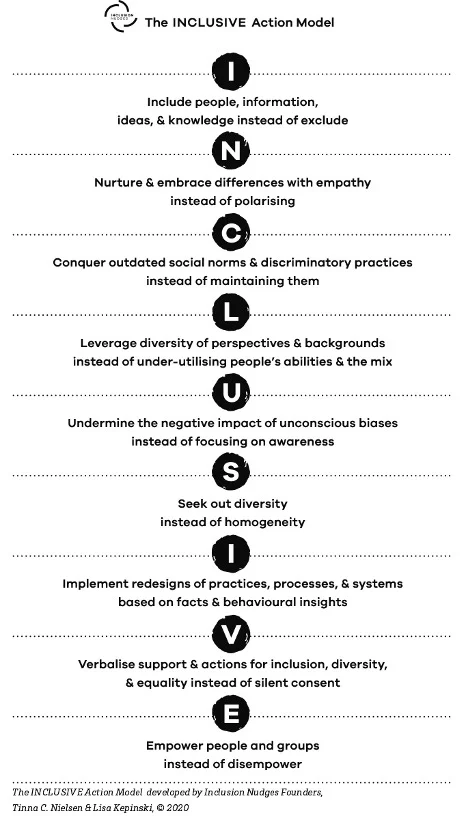
For decades, organizations, communities, and societies worldwide have grappled with the complex challenge of fostering truly inclusive environments. Despite substantial investments in diversity, equity, and inclusion (DEI) initiatives—ranging from unconscious bias training to awareness campaigns and policy reforms—the pace of meaningful, sustainable change has often been frustratingly slow. Many change agents report a cyclical pattern: initial progress followed by a regression to ingrained behaviors and default systems. This phenomenon underscores a critical gap between conscious intentions to create equitable spaces and the often-unconscious actions that perpetuate exclusion. The persistent challenge has been how to catalyze widespread, sustained behavioral shifts towards inclusivity without relying solely on rational arguments, which frequently fail to overcome deeply embedded cognitive patterns.
The inherent difficulty lies in the prevailing assumption that individuals consistently make choices that align with their best interests or the collective good of their groups and society. However, extensive research in the social and behavioral sciences reveals a more nuanced reality. Recognizing this profound disconnect, a new solution emerged from a synthesis of diverse academic disciplines: the Inclusion Nudges approach. This innovative framework applies insights from behavioral economics, nudging theory, psychology, anthropology, linguistics, neuroscience, and complex system and microeconomic theory to redesign environments and processes, making inclusive behavior the default.
The Foundational Shift: Understanding the Unconscious Mind
The journey towards Inclusion Nudges began with a critical examination of why traditional DEI efforts often falter. Change makers in multinational corporations, experiencing firsthand the slow returns on their efforts, recognized a pervasive global pattern. This collective frustration spurred an exploration into human decision-making beyond rational thought. The core insight driving Inclusion Nudges is the understanding that human behavior is predominantly governed by an automatic, unconscious cognitive system, rather than solely by a reflective, conscious one.
Consider a scenario that, on the surface, appears absurd: a group of leaders deliberating on candidates for a senior management position concludes that "the best qualified candidate is definitely the tallest of them." They confidently assert that "tall leaders are the best at executing strategy," possess "the most presence," and are "most resilient in tough times." While no rational individual would consciously articulate such a bias, the reality is that unconscious biases frequently dictate decisions in ways that mirror this example.
Extensive global research consistently demonstrates that physical height, an irrelevant characteristic for leadership competence, disproportionately influences perceptions and decisions about leaders. Data reveals that approximately 60% of top leaders are 185 cm (6 ft 1 in) or taller, a stark contrast to the general population where only about 14% of individuals reach this height. This "height-leadership effect" extends to greater high-status opportunities, more promotions, and higher incomes for taller individuals. This pattern persists across diverse cultures, suggesting a deeply embedded, unconscious association rather than a rational assessment of merit.
This phenomenon is explained by the interplay of the brain’s two primary modes of thinking, as popularized by Nobel laureate Daniel Kahneman’s work on System 1 and System 2. The automatic system (System 1) is fast, instinctive, effortless, associative, and largely unconscious. It operates like an autopilot, dominating 90-99% of our daily thoughts, choices, and behaviors. Conversely, the reflective system (System 2) is conscious, slow, effortful, logical, and self-aware, engaging in deliberate reasoning and rule-following. While we prefer to believe our decisions are driven by System 2, the reality is that System 1 often makes snap judgments based on mental shortcuts, or heuristics, and biases.
In the case of the height-leadership effect, the unconscious mind forms instinctive associations between "tall" and traits like "strong," "presence," "powerful," and "capable." Once this unconscious belief is activated, the rational mind (System 2) often defaults to a confirmatory role, seeking evidence to validate the initial unconscious judgment rather than objectively evaluating all candidates. This cognitive blind spot leads to flawed judgments, where merit can be overlooked in favor of superficial characteristics.
The Intention-Action Gap and the Need for Behavioral Design
This gap between our conscious intentions and our unconscious actions is a fundamental challenge in fostering inclusion. Individuals may genuinely value diversity and fairness, yet their automatic cognitive processes can lead to discriminatory behaviors without their conscious awareness. Traditional approaches, such as simply providing information or appealing to willpower, often prove insufficient because they primarily target the reflective mind, failing to address the powerful influence of the automatic system. Knowledge alone does not reliably translate into sustained behavioral change.
Modern life, characterized by increasing complexity, information overload, the homogenizing effects of social media echo chambers, and heightened stress, further intensifies our reliance on mental shortcuts. This cognitive overload exacerbates the power of the unconscious mind, leading to even greater homogeneity and exclusion, often at the expense of the collective need for diverse perspectives. Therefore, a strategic shift is imperative: moving beyond mere awareness to actively designing environments and processes that nudge the unconscious mind towards inclusive behaviors.
The Power of Inclusion Nudges: Steering Towards Inclusivity
Inclusion Nudges are specific designs rooted in behavioral and social sciences, engineered to steer the unconscious mind towards inclusive behaviors by targeting behavioral drivers, judgment and choice processes, and perceptions. They are "nudges" in the spirit of Richard Thaler and Cass Sunstein’s definition: non-intrusive interventions that alter people’s behavior in a predictable way without forbidding any options or significantly changing their economic incentives. The goal is to make inclusive actions the default, effortless choice.

This approach acknowledges that combating discrimination, reducing bias, altering stereotypes, and fostering belonging requires more than rational persuasion. It demands a systemic redesign that bypasses conscious resistance and effortlessly guides individuals towards inclusive actions. The three core types of Inclusion Nudge designs are:
1. Show the Hidden Issue: Making People Feel the Need for Change
Human behavior is more powerfully influenced by visceral experience than by abstract knowledge. Simply telling people they are biased or that diversity is beneficial rarely leads to profound change. Instead, Inclusion Nudges in this category are designed to make invisible patterns visible, allowing individuals to feel the implications of exclusionary practices and thereby motivate their unconscious mind to engage in change. These are called "Feel the Need" Inclusion Nudges.
An example involves illustrating network imbalances. In a corporate setting, leaders might be presented with data that visually highlights the disparity in formal and informal networks, perhaps by displaying the names of many men but only a few women within senior executive circles. By seeing this stark visual representation, leaders are not merely told about gender inequality; they feel the imbalance, making them more receptive to interventions like sponsorship programs designed to increase the visibility of underrepresented talent. This direct, experiential understanding bypasses intellectual resistance and activates an intrinsic desire for change. The purpose is to move beyond abstract statistics to an emotional understanding that compels action without explicitly "talking about bias."
2. Process Designs: Embedding Inclusion as the Default
Beyond motivating engagement, many situations require enabling inclusion automatically within daily operations. "Process Design" Inclusion Nudges alter the structural elements of collaboration, decision-making, IT systems, or physical environments to make inclusive behaviors the default. This approach ensures that individuals can act inclusively without needing conscious effort or reflection, effectively mitigating bias and promoting diverse perspectives.
Consider the challenge of ensuring all voices are heard in group discussions. In many group settings, conformity pressures, self-silencing, or power dynamics can suppress diverse viewpoints, hindering optimal decision-making. A "Share with a peer" Process Design Nudge addresses this by introducing a structured interaction: before a group discussion, individuals are asked to first share their thoughts and perspectives with a peer. This simple intervention, when trust exists within the group, serves multiple purposes: it ensures every person has an opportunity to articulate their ideas, reduces the likelihood of individuals conforming to majority opinions, and helps identify and correct communication misunderstandings. By building psychological safety into the process, this nudge fosters a culture where diverse perspectives are naturally accessed and valued, making inclusion an automatic outcome of the group’s interaction. Other examples include structured interview processes, blind resume reviews, or anonymous feedback mechanisms, all designed to embed fairness and diversity into the operational fabric.
3. Frame Perceptions: Altering Understanding and Supporting Action
The way an issue is presented, the language used, and the framing of a problem can profoundly influence how people perceive situations, individuals, and data, thereby altering their judgments and behaviors. "Framing Perceptions" Inclusion Nudges leverage insights into cognitive framing effects to challenge ingrained stereotypes, narratives, and discourses that impede inclusion. By subtly shifting the lens through which information is viewed, these designs can transform perceptions and foster greater inclusivity.
An effective "Framing Perceptions" nudge might involve reversing numbers to highlight hidden realities. For instance, instead of focusing on the percentage of women or minorities present in leadership, a nudge could reframe the data to show the percentage of talent missing from leadership due to systemic barriers. By reversing the numbers, the focus shifts from a perceived deficit of certain groups to the hidden potential and lost opportunities for the organization or society. This change in framing can alter the unconscious perception of diversity and inclusion from a burden or a compliance issue to a valuable asset and an imperative for growth and fairness. It prompts the unconscious mind to see the "hidden people" and the consequences of their exclusion, generating support for actions that address these disparities.
A Global Movement for Systemic Change
The Inclusion Nudges approach is more than a set of tools; it represents a global initiative dedicated to empowering change agents across all sectors. The founders, Lisa and Tinna, observed a pervasive reluctance within social change communities to share the "how-to" details of effective interventions. This lack of practical guidance often left individuals inspired but not enabled to implement similar changes. To counter this, the Inclusion Nudges initiative was built on the principles of sharing, reciprocity, and open source.
- Sharing: The initiative actively collects and disseminates detailed, step-by-step descriptions of effective behavioral designs, complete with explanations of the underlying behavioral insights. This collaborative knowledge-sharing, facilitated through guidebooks, action guides, and online platforms, empowers a global network of change makers to replicate and adapt successful interventions.
- Reciprocity: The movement thrives on mutual exchange. Practitioners are encouraged to contribute their own experiences and examples of Inclusion Nudges, fostering a dynamic ecosystem of shared learning. This collective intelligence accelerates progress and scales the impact of inclusive change efforts.
- Open Source: To ensure broad accessibility and impact, the Inclusion Nudges concept and approach are shared under a Creative Commons License. This open-source philosophy ensures that valuable knowledge and practical designs are not proprietary but freely available to all, democratizing the tools for social change.
By integrating behavioral insights into the design of systems, processes, cultures, technologies, policies, and environments, Inclusion Nudges offer a powerful methodology for making inclusion the norm. This approach empowers individuals and organizations to undertake everyday experimentation, transforming the pursuit of inclusion from a daunting burden into an integrated, natural part of daily work and interactions. The ultimate mission of this global initiative is to foster a world where inclusive behaviors are the default, ensuring that every person feels seen, heard, and valued—everywhere, for everyone. The collective effort of applying these principles promises a future where our societies are not only diverse but truly equitable and inclusive by design.