In an era defined by profound uncertainty, ranging from global pandemics to geopolitical shifts and rapid technological disruption, the composition of a team has never been more critical to organizational survival and success. While discussions around diversity, equity, and inclusion (DEI) have rightfully gained significant traction, often focusing on demographic attributes such as gender, race, and ethnicity, a subtler yet equally potent form of diversity is increasingly being recognized as a paramount differentiator: cognitive diversity. This distinct form of diversity, centered on varying thought processes and problem-solving approaches, frequently remains overlooked, despite mounting evidence of its profound impact on innovation, strategic decision-making, and organizational resilience.
The Evolving Landscape of Diversity, Equity, and Inclusion
For decades, the discourse surrounding workplace diversity has primarily revolved around visible demographic characteristics. Early DEI efforts were largely driven by legal compliance and social justice imperatives, aiming to rectify historical inequities and ensure fair representation across various groups. This foundational work remains essential, addressing issues of access, bias, and systemic barriers that prevent individuals from marginalized communities from participating fully and equitably in the workforce. Organizations have invested heavily in initiatives designed to achieve demographic parity, recognizing the ethical imperative and the initial business case for a representative workforce. The initial wave of research underscored how diverse teams, particularly those with demographic breadth, could bring a wider array of experiences and perspectives to the table, challenging homogeneity and fostering a more inclusive environment.
However, as the understanding of diversity matured, a crucial realization began to emerge: while demographic diversity can be a significant precursor to diverse thinking, it does not inherently guarantee it. Two individuals from different demographic backgrounds might still approach problems with similar cognitive frameworks, potentially limiting the true innovative potential of a team. Conversely, a team that appears demographically homogeneous might, upon deeper examination, possess a rich tapestry of cognitive styles. This distinction has prompted a significant shift in DEI strategy, urging organizations to look beyond surface-level demographics and delve into the more complex, yet profoundly impactful, realm of cognitive diversity. The current volatile, uncertain, complex, and ambiguous (VUCA) environment has only amplified the urgency of this shift, as organizations grapple with unprecedented challenges that demand novel solutions and adaptive strategies.
Unpacking Cognitive Diversity: Insights from Decades of Research
At its core, cognitive diversity refers to differences in how individuals perceive, process, and apply information, solve problems, and approach complex situations. It encompasses a spectrum of mental frameworks, including divergent thinking, convergent thinking, creativity, analytical rigor, attention to detail, and tolerance for ambiguity. Pioneering research by academics like Alison Reynolds and David Lewis has significantly advanced our understanding of this critical dimension of team effectiveness. Their extensive studies, spanning decades, have meticulously examined how individuals engage with new, uncertain, and complex scenarios, pinpointing the characteristics that define high-performing teams. Their findings consistently underscore that the most effective and agile teams are those that exhibit high levels of cognitive diversity, coupled with a robust culture of psychological safety.
Reynolds and Lewis’s research, often utilizing assessment tools such as those developed by psychiatrist Peter Robertson, categorizes cognitive diversity into two primary dimensions:
-
Knowledge and Information Processing: This dimension explores an individual’s preference when confronted with novel, uncertain, or complex issues. Some individuals naturally gravitate towards consolidating and implementing existing knowledge, preferring to leverage established frameworks and proven solutions. Others are inclined to generate new knowledge, exhibiting a preference for exploration, experimentation, and challenging conventional wisdom to forge innovative pathways. A healthy balance of these preferences within a team ensures both stability and adaptability.
-
Perspective and Expertise Facilitation: This dimension assesses whether individuals prefer to apply their own specialized expertise or to orchestrate and synthesize the ideas and knowledge of others. Teams benefit immensely from members who can offer deep, specialized insights, but equally from those who can act as connectors and facilitators, drawing out diverse viewpoints and integrating them into a cohesive strategy. This orchestration capability is vital for harnessing the full spectrum of a team’s collective intelligence.
Teams that demonstrate a high degree of diversity across both these parameters consistently outperform their less diverse counterparts in situations characterized by novelty, uncertainty, and complexity. This superior performance stems from their inherent access to a broader reservoir of knowledge and perspectives. When combined with a culture of psychological safety—an environment where team members feel safe to take interpersonal risks, voice dissenting opinions, and admit mistakes without fear of retribution—this cognitive breadth transforms into constructive conflict and exploratory behavior, essential ingredients for breakthrough innovation and robust problem-solving.
Beyond these two core dimensions, cognitive diversity also encompasses a range of personality styles, such as extroversion and introversion, and differing mental frameworks concerning risk appetite, process orientation, and approaches to ambiguity. For instance, a team comprising only individuals who are highly risk-averse might struggle to seize emergent opportunities, while a team lacking methodical thinkers might overlook critical details. The synergy created by complementary team members, each bringing a unique cognitive lens, is what allows a team to navigate multifaceted challenges with greater dexterity and foresight.
The Indispensable Role of Psychological Safety
While cognitive diversity provides the raw material for superior team performance, psychological safety acts as the crucial catalyst that allows these diverse elements to coalesce effectively. Without a sense of safety, even the most cognitively diverse teams can fall prey to groupthink, unproductive conflict, or the silencing of dissenting voices. Amy Edmondson, a pioneer in the field, defines psychological safety as a shared belief that the team is safe for interpersonal risk-taking. In such an environment, team members feel comfortable expressing half-formed ideas, challenging assumptions, and admitting errors, knowing that their contributions will be valued and respected, not ridiculed or punished.
In cognitively diverse teams, psychological safety facilitates:
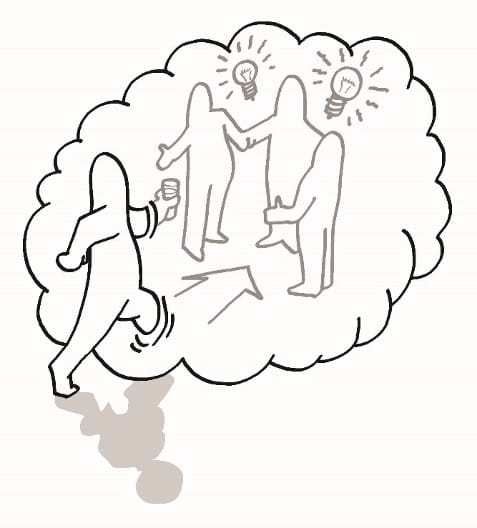
- Open Dialogue: Encouraging members to share unique perspectives, even if they diverge from the majority view, without fear of marginalization.
- Constructive Conflict: Transforming differing viewpoints from potential sources of friction into opportunities for deeper analysis and creative synthesis.
- Experimentation and Learning: Creating an environment where failure is seen as a learning opportunity, fostering a culture of continuous improvement and innovation.
- Vulnerability and Trust: Building stronger bonds among team members, enabling them to rely on each other’s diverse strengths and compensate for individual weaknesses.
Research consistently shows that organizations with high levels of psychological safety report higher employee engagement, lower turnover, and significantly improved learning outcomes. It is the bedrock upon which the true potential of cognitive diversity is unlocked, allowing teams to move beyond mere representation to genuine integration of diverse thought.
Inclusive Leadership: The Bridge to Activating Cognitive Diversity
The effectiveness of cognitive diversity and psychological safety hinges profoundly on the quality of leadership. Inclusive leadership is not merely a desirable trait but an imperative for cultivating environments where diverse thinking can thrive. Inclusive leaders are those who actively foster a sense of fairness, respect, and belonging among all team members. They consciously invite individuals to speak up, actively encourage the sharing of varied perspectives, and empower their teams to take ownership and contribute meaningfully.
However, a significant challenge persists: many leaders, despite recognizing the value of DEI, often feel ill-equipped to translate this awareness into actionable behaviors. They may lack the practical tools or confidence to facilitate difficult conversations about exclusion or discrimination, or to intentionally design interactions that harness cognitive diversity. This gap between intent and action represents a critical barrier to realizing the full potential of diverse teams.
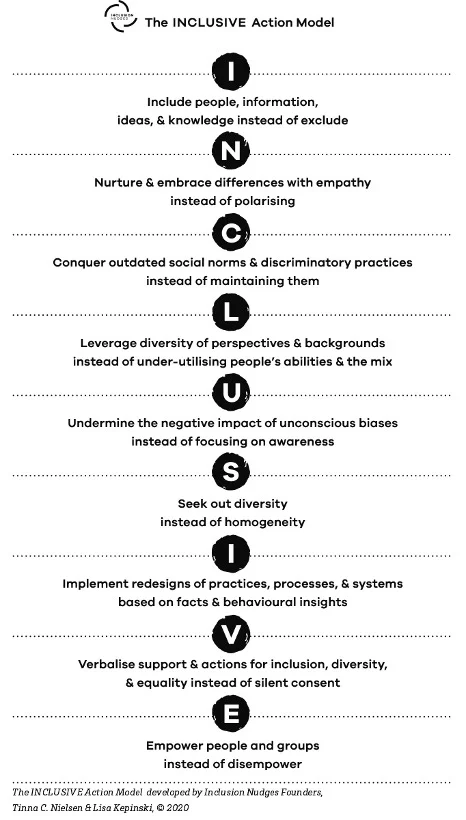
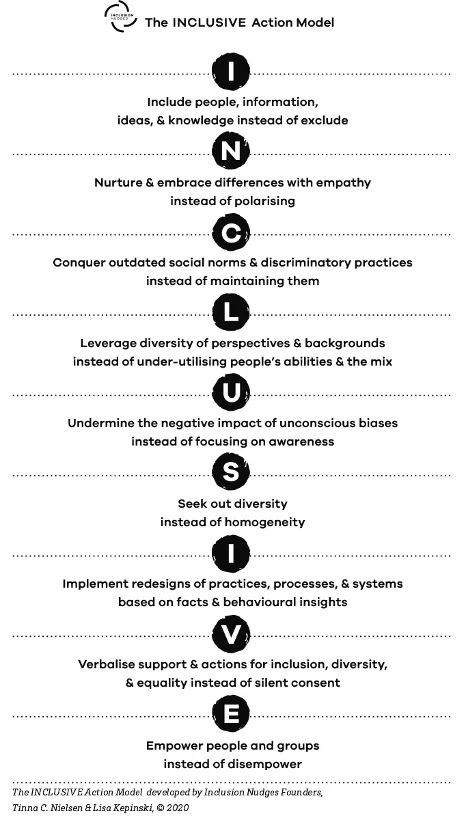
To address this, frameworks like the Inclusion Nudges Inclusive Action Model, developed by experts Tinna C. Nielsen and Lisa H. Rasmussen, offer a holistic approach to building inclusive cultures, structures, and behaviors. This model provides leaders with actionable, behavioral science-based interventions designed to make inclusion the default. By offering step-by-step guidance, such resources empower leaders to overcome inertia and implement proven strategies in their daily work.
The impact of inclusive leadership is quantifiable. Deloitte Australia’s diversity research, for instance, highlights that leadership behaviors can account for up to a 70 percentage-point difference in the proportion of employees who feel highly included versus those who do not. This effect is even more pronounced for members of minority groups, for whom inclusive leadership can be a crucial determinant of their sense of belonging and engagement. When leaders consistently apply inclusive actions, their confidence grows, sparking a ripple effect that contributes to broader organizational culture change. The development of practical guides, such as "Inclusion Nudges for Leaders," directly addresses the common sentiment among leaders of not knowing where to start or what to do, transforming abstract concepts into tangible, implementable steps. This proactive approach helps mitigate the risk of blame or shame that leaders might associate with admitting their lack of expertise in this domain.
Implications and Future Outlook
The intentional cultivation of cognitive diversity has profound implications across various facets of an organization and society at large:
-
Enhanced Innovation and Problem Solving: By bringing together individuals who process information differently and approach challenges from varied angles, organizations can generate more creative solutions, identify novel opportunities, and navigate complex problems with greater agility. This is particularly crucial in industries undergoing rapid transformation.
-
Superior Decision-Making: Diverse cognitive inputs reduce the likelihood of blind spots and groupthink, leading to more robust, well-vetted decisions. Teams with cognitive diversity are better equipped to critically evaluate information, foresee potential risks, and develop comprehensive strategies.
-
Increased Organizational Resilience: In an unpredictable world, organizations need the capacity to adapt quickly. Cognitively diverse teams are inherently more adaptable, capable of re-framing problems, learning from failures, and pivoting strategies effectively.
-
Attraction and Retention of Talent: Progressive organizations that prioritize and actively foster cognitive diversity, alongside demographic diversity, become more attractive to a wider pool of talent. Employees are increasingly seeking workplaces where their unique contributions are valued, and where they can engage in intellectually stimulating work within a psychologically safe environment.
-
Addressing Complex Global Challenges: Beyond corporate benefits, the principles of cognitive diversity are vital for tackling some of humanity’s most pressing issues, from climate change and public health crises to social inequality. These challenges demand multidisciplinary approaches and the synthesis of diverse knowledge systems.
However, integrating cognitive diversity effectively is not without its challenges. It requires a deliberate shift in mindset from simply counting heads to understanding how those heads think. Organizations must invest in tools and methodologies to assess cognitive styles, train leaders in facilitating diverse thought, and design team structures that intentionally balance different perspectives. Moreover, the focus on demographic diversity must continue, as it often lays the groundwork for cognitive diversity and addresses fundamental issues of equity and justice. The goal is not to replace demographic diversity with cognitive diversity, but to integrate both into a comprehensive and powerful DEI strategy.
As the world continues to evolve at an unprecedented pace, the ability of teams to innovate, adapt, and solve complex problems will be the ultimate determinant of success. Recognizing, nurturing, and strategically deploying cognitive diversity, supported by robust inclusive leadership and psychological safety, is no longer an optional add-on but a strategic imperative for any organization aiming to thrive in the turbulent times ahead. The journey towards truly harnessing the full spectrum of human potential requires a deeper understanding of how we think, not just who we are.