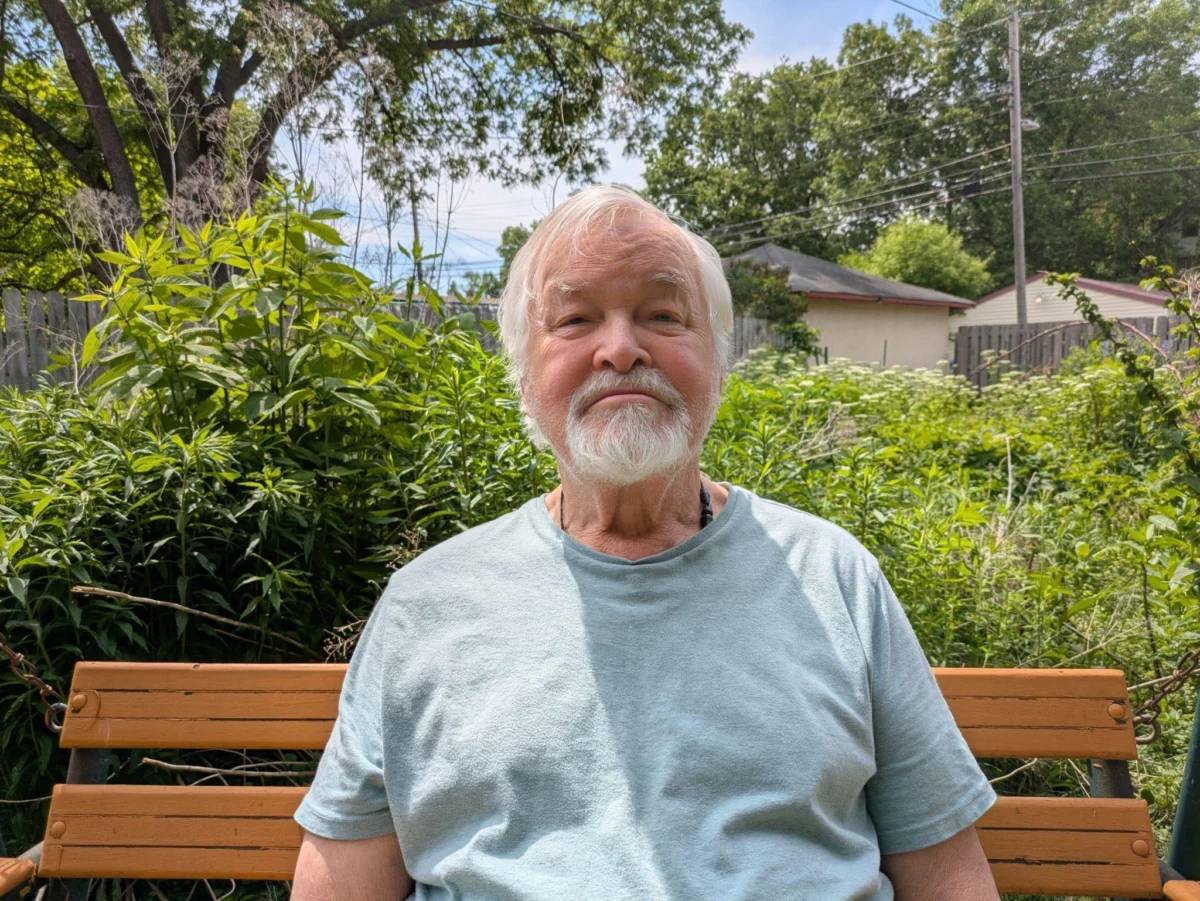
Steve Wiley, a dedicated member of Cultural Survival, embodies the diverse passion driving advocacy for Indigenous Peoples’ rights. His personal journey, marked by global experiences and a deep appreciation for diverse cultures, fuels his commitment to an organization that champions self-determination and the preservation of Indigenous lifeways. This spotlight on Wiley’s perspective offers a window into the motivations of those who stand in solidarity with Indigenous communities worldwide, underscoring the urgent need for their voices to be heard and their rights protected in an increasingly interconnected and challenged world.
A Global Tapestry: Steve Wiley’s Life and Early Influences
Born in Minneapolis, Steve Wiley’s formative years were shaped by a rich tapestry of international experiences. His family’s relocation to Zurich, Switzerland, for nearly three years exposed him to multilingual environments, where he honed his German language skills in academic settings and embraced the local Swiss German dialect on the playground. This early immersion in a different culture, coupled with subsequent high school French studies, laid a foundation for a lifelong appreciation of linguistic and cultural diversity.
His educational trajectory led him through college in the greater New York City area, followed by a significant period of service in the Peace Corps in Fiji. For two years, Wiley lived and worked in a remote village on Viti Levu, an experience that profoundly shaped his understanding of community, connection, and resilience. In this interior village, Laselevu, access to the outside world was limited to the crackle of a transistor radio, the gentle glide of a bamboo raft, or the slow journey of a shallow-draft riverboat. Communication beyond the village’s immediate embrace came through the narratives of those who had ventured out for secondary education or employment, and who occasionally returned to share their experiences. This intimate exposure to a distinct way of life, where tradition and community bonds were paramount, contrasted sharply with the burgeoning forces of modernity. The third year of his Fijian sojourn saw him transitioning to a role teaching English at a prestigious high school in the capital, Suva, offering a different vantage point on Fijian society.
Following his time in Fiji, Wiley embarked on an extensive eight-month period of travel through the South Pacific and across Asia, further broadening his global perspective. Upon his return, he dedicated a year to teaching English as a Second Language (ESL) at New York University before returning to Minneapolis to pursue graduate studies. His abiding interests extend beyond his global travels; Wiley is also an avid singer, a devoted listener of blues music from the 1930s and 1940s, and a dedicated researcher in the field of paleoanthropology, a discipline that seeks to understand the evolutionary history of humankind. This multifaceted background provides a unique lens through which he views the world and his engagement with Indigenous rights.
The Genesis of Connection: Discovering Cultural Survival
Wiley’s introduction to Cultural Survival was serendipitous and impactful. He recalls traveling to Boston for a conference organized by the esteemed anthropologist and founder of Cultural Survival, David Maybury-Lewis. This encounter was not merely an academic gathering; it was a gateway to a community of like-minded individuals. It was during this period that he first encountered Maybury-Lewis’s influential “Millennium” series, then available on VHS, which he consistently incorporated into his teaching of Cultural Anthropology. This early exposure to Cultural Survival’s work, disseminated through academic channels, established a profound connection that would later blossom into active membership. The organization’s commitment to documenting and advocating for Indigenous Peoples resonated deeply with Wiley’s own evolving worldview.
A Steadfast Commitment: Motivating Membership in Cultural Survival
The decision to become a member of the Cultural Survival community was driven by a profound recognition of the organization’s vital role in addressing a critical global imperative. Wiley articulates that Cultural Survival “has answered a powerful global need for a steadfast commitment to documenting and advocating for the lives, traditions, resilience, and humanity of Indigenous people and peoples around the world, even as modernity continues its assault on their ‘resources’ and on them.” This statement encapsulates the core of his motivation: a deep-seated belief in the necessity of preserving and promoting the inherent value and rights of Indigenous communities in the face of relentless external pressures.
The “assault on their ‘resources’” is a stark reminder of the ongoing struggles Indigenous Peoples face, from land dispossession and resource extraction to the erosion of cultural practices and traditional governance systems. These pressures are not abstract; they have tangible and devastating consequences for the well-being and survival of Indigenous communities. Cultural Survival’s consistent and unwavering dedication to standing with these communities, documenting their experiences, and advocating for their rights in international forums and through grassroots support mechanisms is what drew Wiley to become an active participant. His membership is a testament to his conviction that such advocacy is not only important but essential for a more just and sustainable world.
The Imperative of Self-Determination: Why Indigenous Rights Matter
Wiley’s perspective on the importance of Indigenous Peoples’ rights is framed by a critical assessment of contemporary global trends. He observes, "It’s become increasingly clear that the results and modus operandi of modernity are personally, socially, and planetarily unsustainable." This is a bold assertion, supported by a growing body of scientific evidence and observable global phenomena. The escalating climate crisis, marked by rising global temperatures, intensified droughts, and destabilized weather patterns, directly challenges the sustainability of modern industrial and consumerist lifestyles. Wiley’s reference to having "overheated, dried out, and destabilized Mother Earth and have abandoned our stewardship of her" points to a collective failure to act as responsible custodians of the planet.
In this context, Wiley sees Indigenous Peoples as possessing invaluable knowledge and practices that offer a counter-narrative to unsustainable modernity. He highlights their dedication to preserving their lifeways, characterized by "daily routines, intergenerational bonds of learning, love, intentionality, and respect." These are not mere romanticized notions of tradition; they represent sophisticated systems of ecological management, social cohesion, and spiritual connection that have enabled sustained human habitation for millennia. Indigenous Peoples, he notes, are "without illusion about what’s at stake," a stark contrast to what he perceives as a widespread apathy within the modern world: "we denizens of the modern world mostly don’t care, much less think about it."
The profound implication of this observation is that humanity’s collective survival may hinge on its ability to learn from Indigenous wisdom. Wiley boldly states, "Our collective survival requires that we moderns accept the evidence of our failure and learn, adapt, and adopt all that we can from Indigenous people, notably from Indigenous women." This call for adoption and adaptation is not about appropriation but about recognizing the value of Indigenous knowledge systems – particularly those held by Indigenous women, who often play central roles in maintaining cultural traditions, environmental stewardship, and community well-being – as vital pathways towards a more sustainable and equitable future for all. The fight for Indigenous rights, therefore, transcends the specific communities involved; it is fundamentally about the future of the planet and the very definition of human civilization.
Regional Focus and Programmatic Interests
Wiley’s engagement with Indigenous Peoples’ rights is not abstract but is often grounded in specific geographical and cultural contexts. His areas of particular interest lie within Oceania and the broader Pacific region, with a special focus on Melanesia and Fiji. This interest is deeply rooted in his personal experiences in Fiji, which provided him with an intimate understanding of the challenges and resilience of communities in this part of the world. The Pacific Islands, in particular, are on the front lines of climate change, facing existential threats from rising sea levels and increasingly severe weather events. Supporting Indigenous Peoples in this region is therefore directly linked to addressing one of the most pressing global environmental crises.
More recently, his focus has expanded to include Nepal and Tibet. These regions are also home to diverse Indigenous populations with unique cultural heritage and contemporary challenges. In Nepal, Indigenous communities often grapple with issues of political representation, land rights, and the preservation of their distinct languages and traditions amidst rapid development. Tibet, an area of significant geopolitical complexity, faces challenges related to cultural and religious preservation, environmental protection, and the rights of its Indigenous population. Cultural Survival’s programs often engage with these types of issues, providing a framework for Wiley’s continued advocacy and support.
A Call for Unity and Amplified Voices
In concluding his thoughts, Steve Wiley offers a powerful aphorism and a forward-looking suggestion that underscore the urgency and interconnectedness of the advocacy for Indigenous rights. He invokes the spirit of Benjamin Franklin’s famous quote, adapting it to the contemporary context: "To quote a saying often attributed to Ben Franklin, we must all hang together, or we will assuredly hang separately." This adage speaks to the fundamental interconnectedness of humanity and the planet. It suggests that the challenges faced by any group, including Indigenous Peoples, are ultimately challenges that affect us all. Conversely, the solutions and the path towards a more sustainable and just future will require collective action and mutual support.
Wiley’s vision extends to how the critical work of organizations like Cultural Survival can achieve broader reach and impact. He expresses a desire to see "your work shared regularly through liaisons with major broadcast and print media networks." This suggestion highlights a strategic imperative: to move the narratives of Indigenous Peoples and the critical issues they face from specialized advocacy circles into the mainstream public consciousness. By engaging with major media outlets, organizations can leverage their platforms to educate a wider audience, foster greater understanding, and mobilize broader public support for Indigenous rights. In an era of information saturation, strategic amplification of these crucial stories is essential to counter apathy and inspire action. The call for unity and amplified voices signifies a recognition that the fight for Indigenous rights is not an isolated struggle but a fundamental component of the global effort to build a more equitable, sustainable, and resilient world for all.