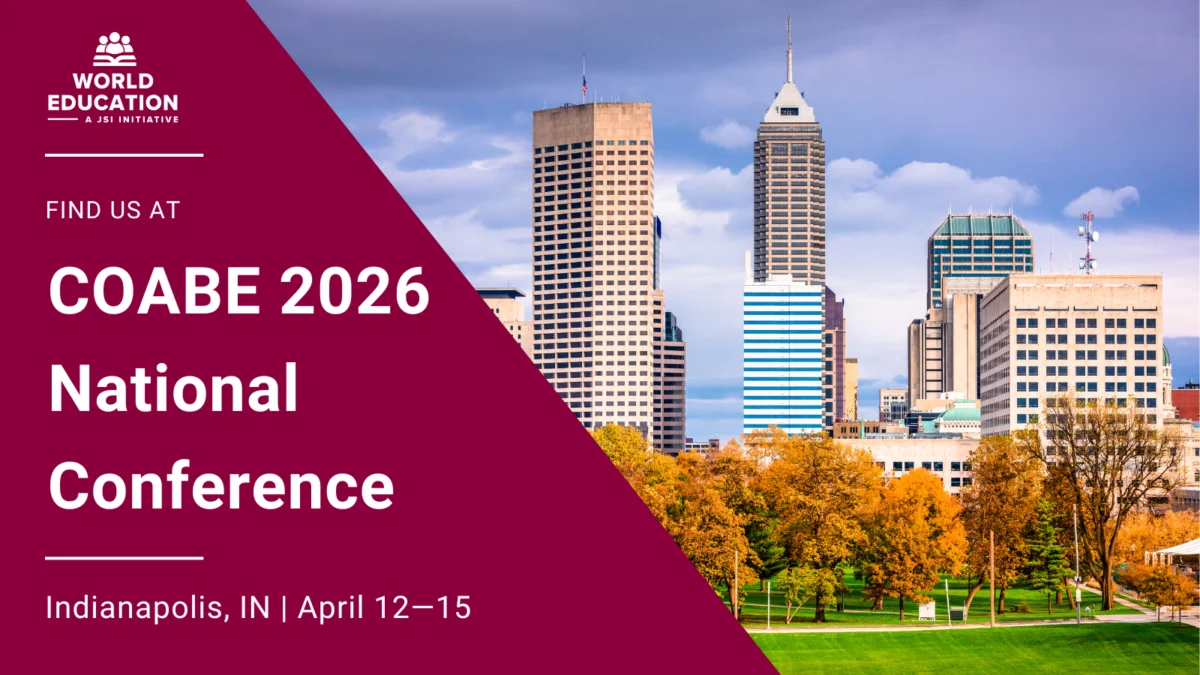
World Education, a prominent initiative of JSI, has announced its extensive participation in the upcoming Coalition on Adult Basic Education (COABE) 2026 National Conference. Scheduled to take place from April 12 to April 15, 2026, in Indianapolis, Indiana, the conference serves as a premier gathering for adult education practitioners, administrators, and policymakers. World Education’s presence at the event underscores its commitment to advancing digital equity, professional development, and the integration of emerging technologies within the adult education sector. As the landscape of global labor markets shifts toward digital-first environments, the insights shared by World Education’s experts are expected to provide a roadmap for educators navigating the complexities of the modern classroom.
The COABE National Conference is widely recognized as the largest professional development event for adult educators in the United States. Each year, it draws thousands of attendees who are dedicated to improving the lives of the nearly 36 million adults in the U.S. who struggle with basic reading, writing, and math skills. In 2026, the focus is sharply tuned toward the "Future of Work," a theme that aligns with World Education’s ongoing research and implementation strategies. By presenting a series of workshops and sessions, World Education aims to bridge the gap between theoretical research and classroom practice, ensuring that adult learners are not left behind in the rapid transition to an AI-driven economy.
A Strategic Focus on Digital Literacy and AI Integration
The core of World Education’s contribution to the 2026 conference lies in its focus on digital literacy. According to data from the Program for the International Assessment of Adult Competencies (PIAAC), approximately 16% of U.S. adults lack basic digital literacy skills, while many more lack the "digital resilience" necessary to adapt to new technologies. World Education’s sessions are designed to address these deficiencies directly, providing educators with the tools to foster these essential skills in their students.
A significant highlight of the conference will be the exploration of Generative Artificial Intelligence (GenAI). As AI continues to reshape industries ranging from healthcare to manufacturing, World Education is taking a proactive stance on how these tools can be leveraged for educational equity. Experts will discuss how GenAI can be used to create personalized learning materials, fill resource gaps in underfunded programs, and prepare students for a workforce where AI literacy is becoming a standard requirement.
Detailed Chronology of World Education Sessions
The four-day event will feature a robust schedule of presentations led by World Education’s subject matter experts. These sessions are designed to be accessible to both in-person attendees at the JW Marriott Indianapolis and virtual participants worldwide, reflecting the organization’s commitment to inclusive knowledge sharing.
Monday, April 13: Bridging the Digital Divide
The first full day of programming begins with a focus on practical frameworks for digital skill development. At 8:00 AM, Jeff Goumas will lead a session titled "Using BRIDGES Skills Checklists to Drive Digital Skills Development in Any Context." The BRIDGES framework has become a cornerstone for programs seeking to standardize digital literacy assessments across diverse learning environments. This session will provide attendees with a structured approach to identifying student needs and tracking progress.
Following this, at 11:50 AM, Sandy Goodman and Catalina González will present "From Policy to Practice: Implementation Lessons from Boston’s Digital Literacy Initiative." This session will offer a deep dive into a case study of urban education reform, illustrating how municipal policy can be translated into effective classroom strategies. The presentation is expected to highlight the importance of multi-stakeholder collaboration, involving city government, local non-profits, and educational institutions.
The afternoon of April 13 will see a collaborative session at 3:50 PM featuring Jen Vanek and Jeff Goumas, alongside representatives from the American Institutes for Research (AIR). Titled "Practical Solutions from Research: Digital Tools to Support Teaching and Learning from the CREATE Network," this session will bridge the gap between academic research and practitioner needs. The CREATE Network is a federally funded initiative aimed at identifying evidence-based practices in adult education, and this presentation will unveil the latest findings regarding digital tool efficacy.
Tuesday, April 14: The AI Frontier and Open Resources
Tuesday’s schedule shifts toward the transformative power of AI and open-source curricula. Rachel Riggs, a leading voice in educational technology, will open the day at 8:00 AM with "Aligning AI Literacy with Learning and Work Goals in Adult Ed." Riggs will argue that AI literacy should not be viewed as an elective skill but as a fundamental competency for career advancement in the 21st century.
At 11:50 AM, Jen Vanek and Jeff Goumas will return to the stage with Stephen Sireci from UMass Amherst to discuss "Free and Open Online Literacy Curriculum: Leveraging SkillBlox and ASAP for Adult Readers." SkillBlox has gained significant traction as a platform that allows educators to curate and share free digital learning resources, effectively lowering the cost barrier for both programs and students.
The 2:00 PM time slot features two concurrent sessions, highlighting the depth of World Education’s expertise. In Room 206, Vanek and Goumas will join Stephanie Cronen and Neha Nanda from AIR to present "Practitioner-Friendly Findings: How to Leverage Free Research-based Resources to Teach In-Demand Skills." Simultaneously, in the JW Grand Ballroom 3, Rachel Riggs will lead "Generative AI and the EdTech Maker Space: Leveraging GenAI to Fill Learning Resource Gaps." This session will demonstrate how educators can use AI to generate high-quality instructional content on the fly, a vital capability for teachers working with limited budgets.
Wednesday, April 15: Maximizing Impact through Professional Development
The final day of the conference focuses on the sustainability of educational initiatives through professional development. At 11:50 AM, Dani Scherer will present "Maximum Impact Professional Development: A Three-Pronged Approach." Scherer’s model emphasizes that for technology integration to be successful, professional development must be ongoing, collaborative, and directly tied to classroom outcomes.
The afternoon sessions will be led by Eliana Stanislawski. At 1:30 PM, she will present "EdTech in Action: Structuring a Digital Literacy Learning Series for Adult Educators," followed by "Engaging Strategies for Online Instruction of Literacy-Level Adults" at 3:00 PM. These sessions are particularly relevant as many adult education programs continue to offer hybrid or fully remote learning options. Stanislawski’s research focuses on how to keep learners with lower literacy levels engaged in digital environments, a group that is often the most vulnerable to dropping out of online programs.
Broader Implications for the Adult Education Sector
The presence of World Education at COABE 2026 is indicative of a broader shift in the adult education sector toward data-driven and technology-integrated instruction. For decades, adult education was often sidelined in national conversations about technology and innovation. However, the sessions planned for Indianapolis suggest that the sector is now at the forefront of exploring how AI and digital tools can promote social mobility.
The emphasis on "open resources" and "free curricula" is a direct response to the chronic underfunding of adult education. In the United States, federal funding through the Workforce Innovation and Opportunity Act (WIOA) often falls short of the actual demand for services. By championing tools like SkillBlox and the EdTech Maker Space, World Education is providing a survival strategy for programs that must do more with less.
Furthermore, the focus on AI literacy reflects a growing realization that the "digital divide" is no longer just about access to hardware or the internet; it is about the "usage gap." As high-wage jobs increasingly require the ability to interact with AI systems, providing this training to adult learners—many of whom are immigrants, displaced workers, or individuals from low-income backgrounds—is a critical component of economic justice.
Official Perspectives and Industry Reactions
While the conference is still on the horizon, industry leaders have already noted the significance of World Education’s planned contributions. Educational technology analysts suggest that the integration of the BRIDGES Skills Checklists into mainstream adult education could standardize how workforce readiness is measured across state lines.
"World Education’s work with the CREATE Network and their focus on GenAI represents the next evolution of adult basic education," noted a representative from a leading educational non-profit. "They are moving beyond basic computer literacy and into the realm of digital resilience, which is what the modern workforce actually demands."
World Education itself views the COABE conference as an opportunity to foster "enduring partnerships." The organization’s mission extends beyond individual classroom success; it aims to strengthen entire education systems. By offering services in program design, applied research, and policy development, World Education positions itself as a strategic partner for state and local agencies looking to modernize their educational infrastructure.
Conclusion and Future Outlook
As the COABE 2026 National Conference approaches, the agenda set forth by World Education highlights a pivotal moment for adult education in America. The transition to Indianapolis represents more than just a geographic gathering; it is a conceptual convergence of research, technology, and social advocacy.
The data-driven approaches and technological frameworks presented by Jeff Goumas, Jen Vanek, Rachel Riggs, and their colleagues are expected to influence adult education curricula for years to come. By prioritizing AI literacy, digital equity, and robust professional development, World Education is ensuring that the adult learners of today are equipped for the economic realities of tomorrow. For practitioners and policymakers attending the event, the sessions offer a rare opportunity to engage with the cutting edge of educational innovation, providing the tools necessary to transform the lives of millions of adult learners across the nation.