
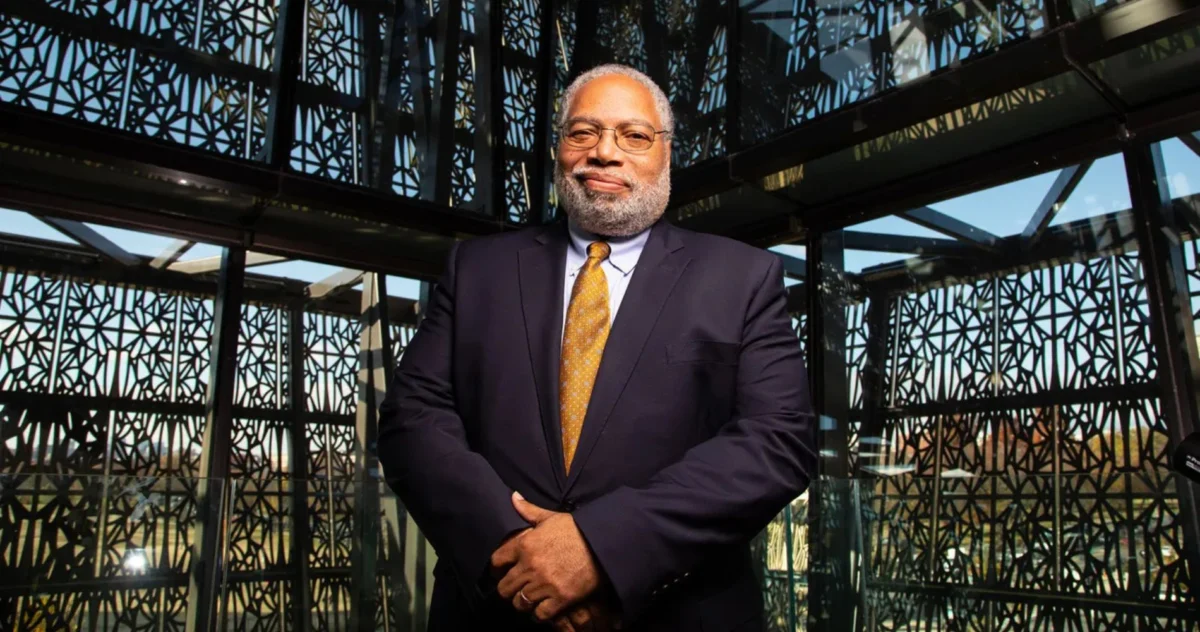
Lonnie G. Bunch III, the 14th Secretary of the Smithsonian Institution, announced this week that he will step down from his post at the end of the year, marking the conclusion of a seven-year tenure characterized by both historic expansion and intense political scrutiny. His departure from the world’s largest museum and research complex follows a sustained campaign by the Trump administration to exert influence over the institution’s curatorial decisions and historical narratives.
Chief Justice John G. Roberts Jr., acting in his capacity as the Smithsonian’s chancellor, issued a statement praising Mr. Bunch for his “wisdom, vision and leadership,” noting that he had “pursued excellence in the telling of our nation’s story.” While the announcement of his resignation has sparked widespread discussion regarding the future of the institution, the move comes as the culmination of nearly four decades of service Bunch has dedicated to the Smithsonian’s mission.
A Legacy of Institutional Growth and Historical Advocacy
Mr. Bunch’s journey with the Smithsonian began in 1978, shortly after he earned his Ph.D. in American and African American history. His initial role as an education specialist at the National Air and Space Museum served as the foundation for a career that would eventually reshape the institution’s approach to cultural representation. Throughout his career, he has been a consistent advocate for the idea that American history is not a monolithic narrative but a multifaceted tapestry that must include the contributions and struggles of all its citizens.
In 2005, Mr. Bunch achieved a significant milestone by becoming the founding director of the National Museum of African American History and Culture. His efforts were instrumental in securing bipartisan support, navigating the complexities of congressional funding, and managing private donations to launch the museum in 2016. The museum quickly became a cultural touchstone, drawing 1.6 million visitors in the last year alone, solidifying its place as one of the most visited destinations on the National Mall.
When he was appointed Secretary of the Smithsonian in 2019, he made history as the first African American and the first professional historian to lead the institution. His tenure has been marked by a commitment to transparency and inclusivity, famously noting at his installation that while the Smithsonian once refused to allow Frederick Douglass to speak during the Civil War, it had evolved into a space where such voices are central to the American experience.
The Chronology of Conflict with the Administration
The tensions between the Smithsonian and the executive branch reached a boiling point over the last 18 months, characterized by a series of administrative actions and public criticisms.
- March 2025: The Trump administration issued an executive order aimed at "restoring truth and sanity to American history," which specifically targeted federal institutions like the Smithsonian. The order accused these entities of promoting narratives that framed Western values as "inherently harmful."
- August 2025: President Trump called for a "comprehensive internal review" of all Smithsonian museums, publicly decrying the focus on the history of slavery as being "out of control."
- July 2026: The administration released a formal report characterizing the National Museum of American History as a site of "extreme political activism," a claim that was met with sharp rebuke from the broader historical and academic community.
- September 2026: Following months of defensive maneuvering and public correspondence regarding the integrity of museum scholarship, Mr. Bunch announced his resignation.
Public Trust and the Role of Museums
Recent data from YouGov and other independent researchers underscore a widening gap between public perception of museums and the executive branch’s current legislative agenda. Polling conducted in August 2025 revealed that 37% of Americans have visited a Smithsonian museum, and a significant majority—84%—believe it is essential for museums to present an accurate, comprehensive history that includes difficult subjects like slavery, systemic racism, and inequality.
Furthermore, these institutions are held in high regard by the public. When measured for trustworthiness, museums consistently rank at 7.3 out of 10, placing them near the top of public confidence indices, often far surpassing the federal government, which frequently polls at 4.5. This trust is built on the public’s desire for an objective, research-driven account of the past, free from political interference. As noted by Susie Wilkening, a lead researcher in museum trends, the public generally views the manipulation of museum content for political gain as an overreach.
Institutional Responses and Academic Defense
The broader academic community has rallied around Mr. Bunch, viewing his resignation as a symptom of a larger, systemic threat to cultural independence. The Organization of American Historians (OAH) issued a formal statement condemning the White House’s July report, characterizing the administration’s pressure as an attempt to "turn back the clock" on historical inquiry.
Samuel J. Redman, a professor of history at the University of Massachusetts Amherst, described Mr. Bunch’s leadership as a profile in "candor, bravery and thoughtfulness." Sarah Weicksel, executive director of the American Historical Association, expressed profound concern, stating that the anxiety surrounding Bunch’s departure is a direct "testament to his commitment to protecting the Smithsonian’s independence."
The administration’s pressure has not been limited to the Smithsonian. Similar actions have been observed across the federal landscape:
- National Park Service: Exhibits detailing the lives of enslaved people at historic sites have been removed or altered.
- State Department: Artworks deemed "aesthetically terrifying" or politically unaligned with the administration’s vision have been removed from public display.
- Defense Department: The restoration of Confederate names to military installations and the sanitization of historical context regarding the Confederacy represent a concerted effort to reshape public commemoration.
Future Implications for the Smithsonian
The resignation of Mr. Bunch leaves the Smithsonian at a critical crossroads. While he successfully advanced the planning and fundraising for the forthcoming Smithsonian American Women’s History Museum and the National Museum of the American Latino, the institutional climate remains fraught with uncertainty.
For his part, Mr. Bunch has remained steadfast in his defense of the institution’s core mission. In his farewell correspondence to staff, he emphasized that the Smithsonian must serve as a repository of knowledge that provides "understanding, clarity, education, hope and a bit of joy." He argued that the bravery of the American people is reflected in their ability to confront their history, noting, "I will stand against wind and tide to prevent history from being erased, softened and made palatable."
As the search for the 15th Secretary begins, the institution faces the challenge of maintaining its academic independence while navigating a political environment that increasingly views the curation of history as an extension of partisan policy. The legacy of Mr. Bunch will likely be defined by his refusal to compromise on the necessity of "telling the fullness of America’s story," a principle that now serves as the benchmark against which his successor will be measured.
The Smithsonian remains, by mandate and tradition, the nation’s primary custodian of its collective memory. Whether that memory remains a space for critical, complex inquiry or shifts toward a more curated, singular narrative remains the central question for the institution as it enters this period of transition. For now, the loss of a leader who prioritized the "uncompromising commitment to scholarship" signals a potential shift in the institutional landscape of Washington D.C., with ripple effects that will be felt throughout the global museum community.




