
Three years have passed since the events of October 7, 2023, a date that fundamentally altered the geopolitical landscape of the Middle East and triggered a profound humanitarian crisis with global reverberations. As the anniversary passes, humanitarian organizations like HIAS are reflecting on the enduring trauma, the persistence of displacement, and the necessity of maintaining universal standards of human dignity in an increasingly fractured political climate. The period since the initial Hamas-led attack on Israel and the subsequent military campaign in Gaza has been marked by staggering civilian casualties, massive internal displacement, and a regional destabilization that continues to challenge the international community’s ability to provide effective aid.
Chronology of the Crisis
The escalation began on October 7, 2023, when thousands of militants crossed into southern Israel from the Gaza Strip, resulting in the deaths of approximately 1,200 people—mostly civilians—and the abduction of over 240 hostages. In immediate response, the Israeli government declared a state of war, launching a sustained aerial bombardment and, subsequently, a large-scale ground invasion of the Gaza Strip aimed at dismantling Hamas’ military and governance capabilities.
By early 2024, the scale of destruction in Gaza had reached unprecedented levels. Infrastructure, including hospitals, schools, and housing, was largely reduced to rubble, forcing the majority of Gaza’s 2.3 million residents to flee their homes multiple times. Throughout 2025 and into 2026, the situation has remained volatile, with intermittent ceasefires failing to address the long-term structural needs of the displaced populations. The conflict also expanded, involving hostilities along the northern border with Lebanon and rising tensions across the West Bank, creating a multi-front humanitarian emergency that has taxed international aid agencies to their limits.
Data and Humanitarian Impact
The statistics detailing the human cost of the conflict are sobering. According to reports from the United Nations Office for the Coordination of Humanitarian Affairs (OCHA) and local health authorities, the death toll in Gaza has exceeded 40,000, with thousands more missing under the debris. The displaced population in Gaza faces a chronic lack of access to clean water, sanitation, and adequate nutrition.
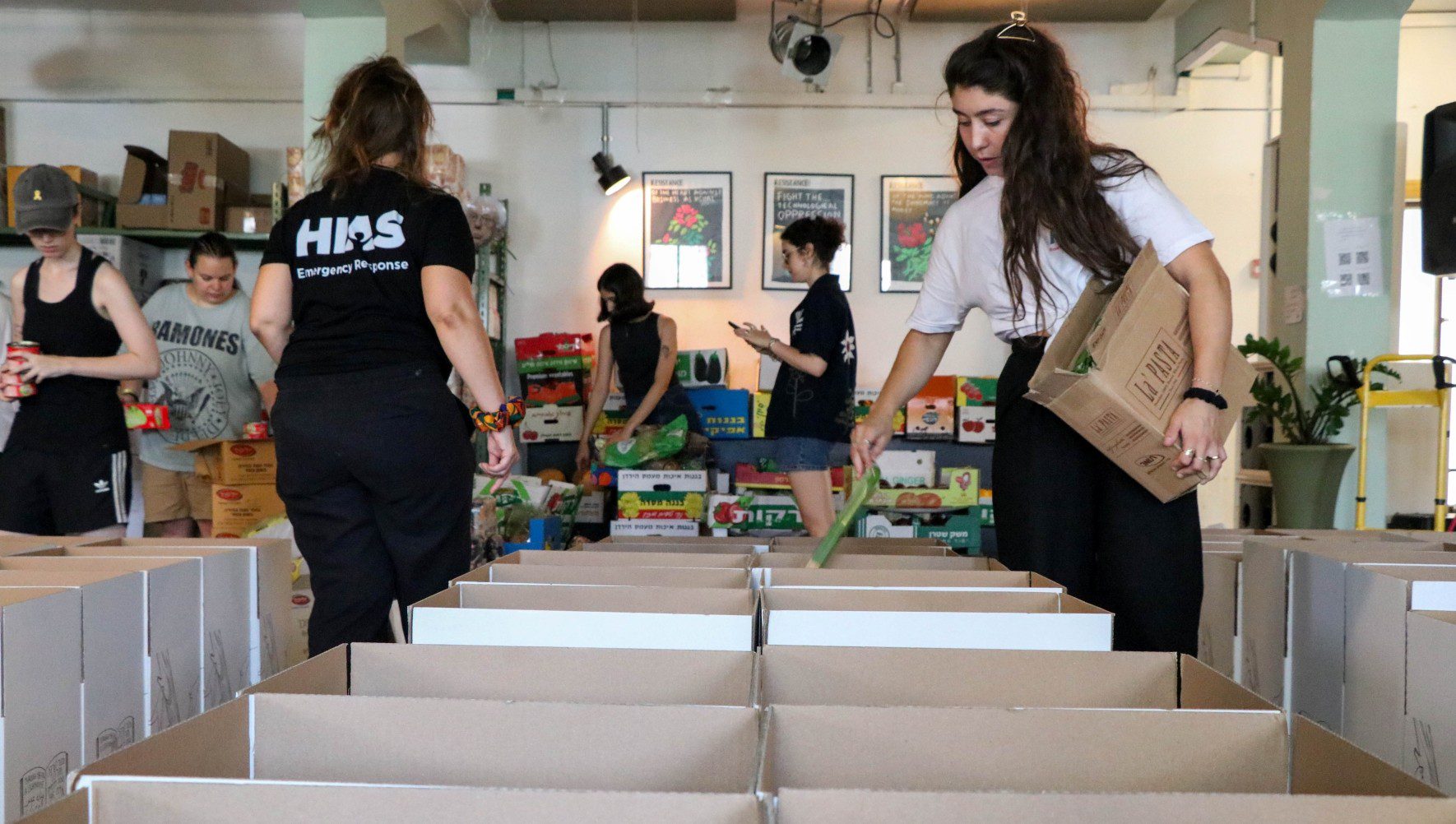
In Israel, the trauma extends beyond the immediate victims of the October 7 attack. Thousands of Israelis remain displaced from border communities in the north and south, facing long-term economic and psychological instability. For aid organizations, the challenge has been to navigate a landscape where political polarization often complicates the delivery of essential supplies. HIAS, which has a long-standing history of protecting displaced persons, has focused its efforts on both sides of the conflict and within affected communities. The organization’s work in Israel, for example, has pivoted toward supporting asylum seekers and economically vulnerable populations who were disproportionately impacted by the economic paralysis that followed the outbreak of war.
The Challenge of Universal Empathy
In the current discourse, there is a growing concern regarding the "selective application of empathy." Sociopolitical observers note that public support for humanitarian intervention is frequently filtered through partisan lenses. When suffering is contextualized only through the political affiliation of the victim, the fundamental principle of universal human dignity is undermined.
Rabbi Sarah Bassin, writing from the perspective of a humanitarian practitioner, notes that the moral disorientation experienced by many in the wake of October 7 stems from this very fragmentation of empathy. The tragedy of the conflict is that it has forced a binary choice upon many observers: either to focus exclusively on the trauma of the Israeli victims or to focus exclusively on the humanitarian catastrophe in Gaza. However, humanitarian principles, as articulated by the Geneva Conventions and international humanitarian law, mandate that aid and protection be provided based on need alone, regardless of nationality, ethnicity, or political allegiance.
Institutional Responses and Advocacy
International aid agencies, including HIAS, have consistently called for the protection of civilians and the unimpeded flow of humanitarian aid. This advocacy is not merely political; it is a logistical and moral imperative. The security of aid workers has become a primary concern, as the conflict has seen record numbers of humanitarian personnel killed in the line of duty.
The organization’s focus on the "small kernel of human kindness," a phrase borrowed from the works of Vasily Grossman, highlights the necessity of maintaining operational neutrality. By prioritizing the immediate needs of those who have lost everything—whether in a kibbutz in southern Israel or a refugee camp in Gaza—these organizations serve as a stabilizing force. They argue that if the world abandons the concept of universal humanity, the cycle of violence will only become more difficult to break.

Broader Implications and Future Outlook
The implications of the past three years are far-reaching. The normalization of mass trauma and the erosion of international norms regarding the protection of civilians present a long-term challenge to global stability. As the international community looks toward the future, the primary focus must be on reconstruction and the restoration of a baseline of human security.
- Reconstruction: Beyond the immediate cessation of hostilities, there is a need for a massive, multi-year investment in rebuilding infrastructure, healthcare, and educational systems in the region.
- Psychological Recovery: The intergenerational trauma created by these three years of violence will require specialized mental health support for millions of people.
- Restoration of Diplomatic Channels: Humanitarian aid is a stopgap measure, not a solution. Real progress depends on diplomatic efforts that address the underlying grievances of both Israelis and Palestinians, ensuring that security and sovereignty are not viewed as zero-sum outcomes.
Bearing Witness as a Moral Imperative
For those on the ground, the work of the last three years has been defined by a commitment to "bearing witness." This involves documenting the stories of those who have suffered and ensuring that their humanity is recognized. In an era where disinformation and narrative warfare often cloud the reality of events, the role of humanitarian actors in providing objective, ground-level data is more critical than ever.
The anniversary serves as a reminder that the "moral disorientation" mentioned by practitioners is not a permanent state, but a call to action. By doubling down on the commitment to human dignity—even when it is unpopular or politically inconvenient—humanitarian organizations are attempting to lay the foundation for a more resilient future. The goal is to move from a state of crisis management to one of sustainable peace, where the safety of a child in Gaza or a senior citizen in Israel is treated with equal gravity.
As the international community continues to grapple with the legacy of October 7, the focus must remain on the individuals whose lives have been permanently altered. The "detailed, logistical work" of NGOs provides the only real barrier against the total collapse of societal structures. Ultimately, the survival of the humanitarian spirit depends on the ability of the international community to transcend tribal boundaries and reassert the truth that all human life possesses inherent, non-negotiable value.
Conclusion: The Path Toward Stability
Three years after the onset of this conflict, the region remains at a crossroads. The humanitarian sector continues to operate in an environment where even the most basic acts of kindness—distributing food, water, and hygiene supplies—are fraught with complexity. However, it is precisely this work that maintains the hope for a future that is not defined by constant war. By focusing on the tangible, immediate needs of the displaced and the traumatized, organizations like HIAS are performing a vital service: maintaining the belief that, despite the overwhelming scale of the tragedy, human kindness can still influence the trajectory of history. The challenge for the coming years will be to transform this localized, daily commitment into a broader, more durable regional peace.




