
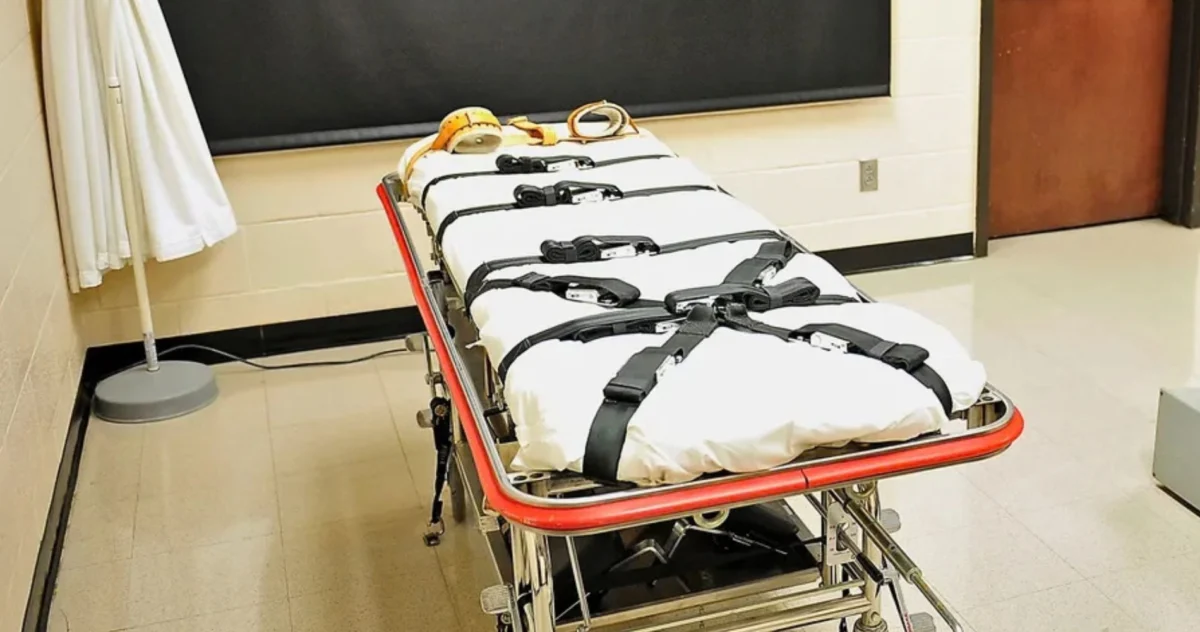
Christa Pike remains hospitalized this morning, surviving a harrowing and botched attempt by the State of Tennessee to execute her by lethal injection yesterday. The 50-year-old inmate, who has spent decades on death row for a 1995 murder committed when she was just 18, was subjected to a prolonged and painful procedure that has reignited national debates regarding the humanity and reliability of capital punishment protocols.
Her legal representatives, who have yet to be granted access to her or receive a formal update on her medical status, issued a scathing statement early this morning. They described the event as the culmination of long-standing systemic failures, citing "difficult vein access, blown veins, degraded pentobarbital, and a complete lack of emergency medical care" when the procedure inevitably veered from the state’s established, yet highly secretive, protocol.
A Chronology of the Failed Execution
The attempt to execute Ms. Pike followed a turbulent legal battle that reached the highest levels of the judiciary. On the morning of the scheduled execution, the U.S. Court of Appeals for the Sixth Circuit granted a stay, citing the need to address critical, unresolved legal challenges regarding her conviction. However, the State of Tennessee appealed directly to the U.S. Supreme Court, which vacated the stay shortly before 6:00 p.m. local time, clearing the path for the Department of Correction to proceed.
Witnesses, including members of the media, were brought into the viewing chamber at 6:41 p.m., with the blinds opening at 7:26 p.m. What followed was a disturbing departure from standard procedures. According to reports from the scene, the execution team struggled significantly to establish venous access. Randy Spivey, an attorney for Ms. Pike present in the chamber, observed seven needles being inserted into her left arm, noting that at least one appeared to be visibly bent upon extraction.
Throughout the process, Ms. Pike was heard by witnesses to be conscious, vocal, and in visible distress. WKRN reporter Tori Gessner, an experienced observer of capital punishment proceedings, noted that the situation was entirely abnormal. "My arm feels like it’s about to bust. One spot is really throbbing," Ms. Pike was heard saying before the blinds were closed at 7:46 p.m. When the blinds reopened three minutes later, she remained conscious, exhibiting signs of respiratory distress, including snoring and audible choking sounds. The blinds were closed again at 8:05 p.m., and journalists were eventually removed from the facility at 8:53 p.m., even as Ms. Pike’s breathing could still be heard over the microphone.
Medical Concerns and Systemic Oversight
The failure of the execution appears to have been foreseeable. In August, medical experts had warned the Tennessee Department of Correction that Ms. Pike suffered from a specific blood condition—one that increases the risk of clotting and renders veins small and difficult to access. Despite these clear warnings, the state proceeded with a protocol that critics argue is fundamentally ill-equipped to handle complex medical profiles.
This incident marks the second time in less than five months that Tennessee has failed to successfully carry out an execution. In May 2026, the state attempted to execute Tony Carruthers; that effort was eventually aborted after executioners failed to secure venous access despite multiple, agonizing attempts that resulted in significant physical trauma.
The pattern of "botched" procedures is not new to the state. In 2022, Governor Bill Lee declared a moratorium on all executions following the aborted attempt to execute Oscar Smith. That investigation ultimately led to the firing of two high-ranking corrections officials after it was discovered that the state had failed to test lethal injection chemicals for endotoxins, violating its own safety protocols. The revelation that the state had neglected to provide the supplying pharmacy with its own execution guidelines underscored a profound culture of operational negligence.
Legal and Human Rights Implications
Beyond the immediate mechanics of the botched execution, the case of Christa Pike highlights the intersection of trauma, mental health, and the justice system. Convicted for the 1995 murder of her classmate, Colleen Slemmer, Ms. Pike was sentenced to death despite her young age and a background defined by extreme, documented abuse.
Psychological evaluations have since revealed that Ms. Pike endured years of systemic sexual, physical, and mental trauma, starting from early childhood. Despite this, the jury that sentenced her to death was never presented with evidence of her history of abuse—a failure that her legal team argues constituted a violation of her constitutional right to effective assistance of counsel.
For years, the State of Tennessee successfully argued that Ms. Pike had fabricated these claims of abuse. However, prosecutors have recently conceded that her history of childhood sexual assault and rape is, in fact, accurate. This concession serves as the foundation for her current legal challenges, as her attorneys argue that the state’s previous mischaracterizations tainted both the original trial and subsequent federal appeals.
The Response from State Leadership
In the wake of yesterday’s failure, Governor Bill Lee announced a pause on all scheduled executions in Tennessee for the remainder of the year. The governor has called for a "comprehensive, third-party review" of the Department of Correction’s procedures. However, critics suggest that repeated reviews have thus far failed to resolve the fundamental issues inherent in the state’s execution practices.
Justice Sonia Sotomayor, writing in her dissent regarding the Supreme Court’s decision to vacate the stay of execution, emphasized the gravity of the situation. "I see no reason to short-circuit the ordinary process of appellate review, particularly in light of the grave consequences of an erroneous decision," she wrote. She noted that the state’s rush to execute Ms. Pike before her legal challenges could be fully vetted ignored her "fundamental interest in her own life."
The Broader Context of Lethal Injection
The incident in Tennessee contributes to a growing body of evidence regarding the unreliability of lethal injection as a method of execution. Medical experts and autopsy reports have frequently suggested that the three-drug cocktail utilized by many states can cause severe, unconstitutional pain, including sensations of drowning, suffocation, and being burned alive, if the initial anesthetic fails to render the inmate completely unconscious.
The Death Penalty Information Center has noted that as the use of the death penalty for minors and those with severe mental health issues becomes increasingly scrutinized, the protocols used to carry out these sentences have become more secretive and less transparent. The lack of transparency in Tennessee, where the state remains shielded by laws that keep the identities of execution team members and drug suppliers anonymous, has further complicated efforts to hold the government accountable.
As the state prepares for yet another third-party review, the question remains whether these investigations will lead to meaningful reform or if the current system is beyond correction. For now, Christa Pike remains in medical custody, a survivor of an unprecedented failure in state-sanctioned lethal force. The implications of this botched procedure are likely to reverberate through the legal system for years, potentially challenging the constitutionality of Tennessee’s current capital punishment framework on a national level.
As the state of Tennessee reassesses its position, the eyes of the public and the judiciary remain fixed on the intersection of procedural secrecy, state liability, and the ethical limits of the death penalty in a modern society. The history of the state’s recent failed executions suggests a pattern that transcends individual cases, pointing toward a systemic inability to execute human beings without inflicting the kind of "torturous pain" that the Eighth Amendment was designed to prevent. Whether this most recent failure serves as a catalyst for a permanent end to the practice or merely another temporary pause in a cycle of litigation and failure remains to be seen.




