In an era defined by intensifying economic volatility and shifting social paradigms, Professor Kate Pickett officially launched her latest work, The Good Society, during a high-profile virtual event on February 4, 2026. Hosted in collaboration with the progressive advocacy group Compass, the launch drew an international audience of over 500 attendees, signaling a robust public appetite for systemic alternatives to current socioeconomic models. The event featured a panel of prominent intellectual and political figures, including environmental columnist George Monbiot, Green Party Member of Parliament Caroline Lucas, and the distinguished academic and peer Baroness Ruth Lister. The convergence of these voices underscored the book’s central premise: that achieving a "good society" requires a holistic integration of economic equality, environmental sustainability, and democratic renewal.
The launch serves as a significant milestone for Professor Pickett, who has spent nearly two decades at the forefront of inequality research. Since the 2009 publication of her seminal work, The Spirit Level, co-authored with Richard Wilkinson, Pickett has argued that high levels of inequality are the root cause of a wide array of social and health problems. The Good Society represents the next evolution of this research, moving from a diagnosis of societal ills toward a practical roadmap for institutional and cultural transformation. The event was not merely a promotional exercise but a strategic assembly of minds tasked with translating Pickett’s academic findings into actionable political and social movements.
Chronology of the Event and Theoretical Framework
The proceedings commenced with an introduction by the organizers at Compass, an organization dedicated to "good society" politics—a framework that prioritizes human well-being and environmental health over the singular pursuit of Gross Domestic Product (GDP) growth. Professor Pickett opened the session by outlining the motivations behind her new book, reflecting on the seventeen years since she helped found the Equality Trust in 2009. She noted that while the evidence supporting the benefits of equality has grown exponentially, the implementation of policies to achieve it has often been stymied by political inertia and entrenched economic interests.
Following the opening remarks, the panel engaged in a structured dialogue. Baroness Ruth Lister provided a sociological perspective, emphasizing the necessity of dignity and agency for those living in poverty. George Monbiot followed with an analysis of how concentrated wealth directly correlates with environmental degradation, arguing that a "good society" is impossible without a radical restructuring of our relationship with the natural world. Caroline Lucas concluded the panel contributions by discussing the legislative hurdles and opportunities for these ideas within the current parliamentary landscape, advocating for a cross-party consensus on wellbeing-based economics.
The Foundation of The Equality Trust and Historical Context
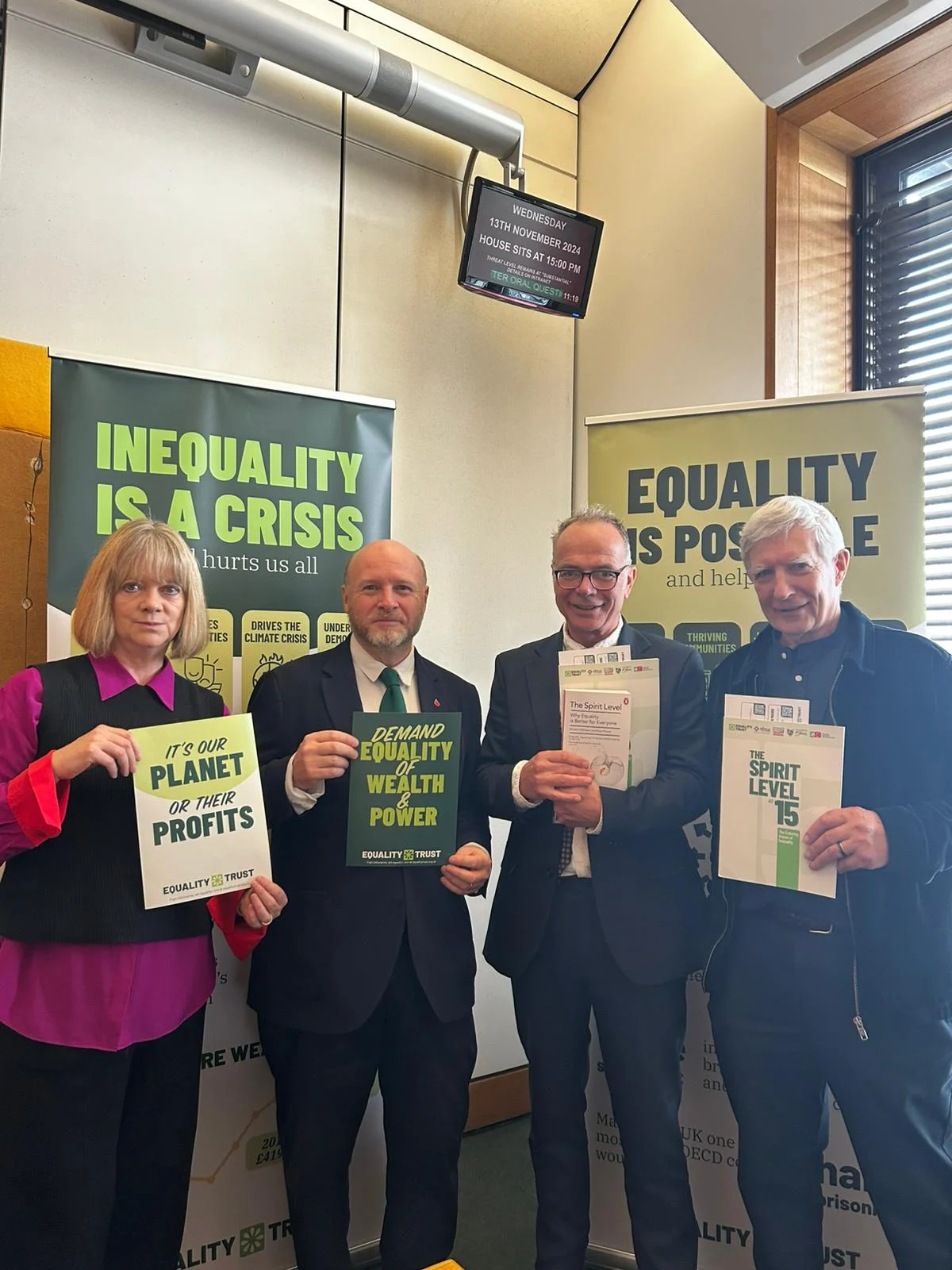
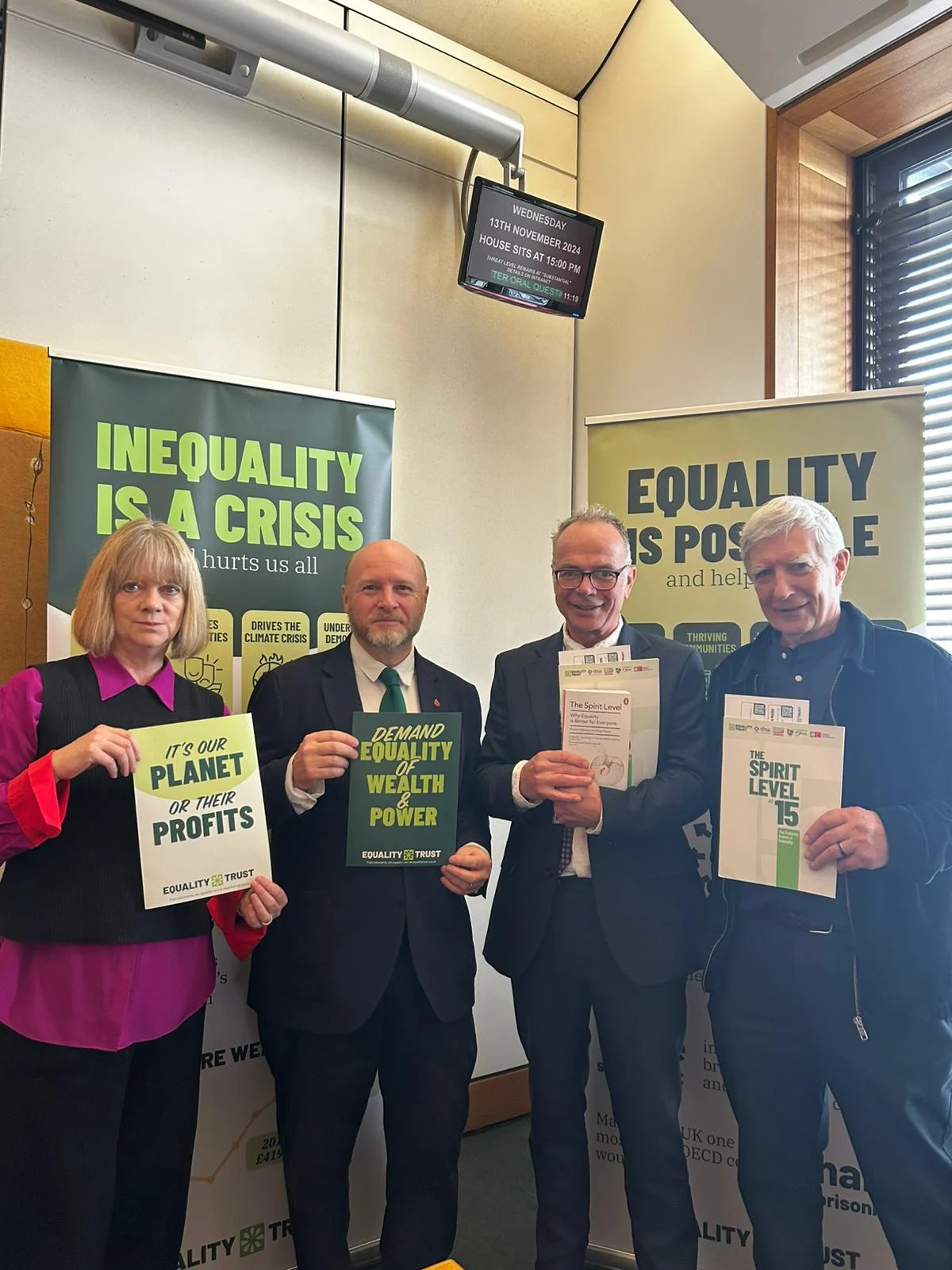
To understand the weight of Professor Pickett’s latest publication, it is essential to consider the historical trajectory of her work. In 2009, Pickett and Wilkinson published research that fundamentally altered the global conversation on wealth distribution. Their findings demonstrated that in more equal societies, health outcomes are better, crime rates are lower, and social mobility is higher. This research led to the establishment of the Equality Trust, a UK-based charity that campaigns for the reduction of social and economic inequality.
Since 2009, the global landscape has faced multiple crises, including the 2008 financial crash, the COVID-19 pandemic, and the ongoing climate emergency. Each of these events has disproportionately affected the most vulnerable members of society, further widening the gap between the ultra-wealthy and the rest of the population. The Good Society arrives at a time when the "Spirit Level" effect—the correlation between inequality and social dysfunction—has become more pronounced. Pickett’s new book addresses these modern complexities, integrating the "inner level" of psychological well-being with the "outer level" of structural economic reform.
Supporting Data: The State of Global Inequality in 2026
The urgency of the themes discussed at the launch is supported by a wealth of contemporary data. As of early 2026, global wealth inequality remains at historic highs. Reports from various international NGOs and economic monitors indicate that the wealthiest 1% of the global population continues to own more than 45% of all household wealth, while the bottom 50% owns less than 1%. In the United Kingdom, specifically, the Gini coefficient—a standard measure of income inequality—has remained stubbornly high, despite various government initiatives.
Data from the Equality Trust suggests that the UK remains one of the most unequal countries in the developed world. This disparity has tangible consequences:
- Health Outcomes: Life expectancy in the most deprived areas of the UK is nearly a decade lower than in the most affluent areas.
- Social Trust: Surveys indicate that social trust is significantly lower in regions with high income disparity, leading to increased political polarization.
- Economic Productivity: Recent studies by the OECD suggest that high levels of inequality can drag down GDP growth by limiting the educational and economic opportunities of a large segment of the population.
Professor Pickett’s book utilizes this data to argue that reducing inequality is not just a moral imperative but an economic necessity for long-term stability.
Perspectives from the Panel: Monbiot, Lucas, and Lister
The inclusion of George Monbiot, Caroline Lucas, and Baroness Ruth Lister provided a multi-dimensional critique of the current status quo. George Monbiot’s contribution focused on the concept of "private luxury and public plenty." He argued that the current economic model encourages the accumulation of private wealth at the expense of public infrastructure and the environment. Monbiot’s analysis suggests that the path to a good society involves reclaiming the "commons"—natural resources and public spaces that should be managed for the benefit of all rather than the profit of a few.
Caroline Lucas, representing the political vanguard of the green movement, emphasized the need for a "Green New Deal" that is inherently egalitarian. She noted that environmental policies often fail when they are perceived as a burden on the working class. By integrating Pickett’s equality-driven approach, Lucas argues that climate action can become a tool for social justice, creating high-quality jobs and improving public services.
Baroness Ruth Lister brought a focus on the "poverty of participation." She argued that a good society must ensure that every citizen has the resources and the right to participate fully in the democratic process. Lister’s work on the "citizenship" of those in poverty complements Pickett’s findings by highlighting how economic inequality erodes the democratic fabric of a nation.
Analysis of Implications: A Roadmap for Policy Reform
The Good Society proposes several systemic shifts that are likely to influence policy debates in the coming years. One of the primary implications of Pickett’s work is the move toward "Universal Basic Services" (UBS). Unlike Universal Basic Income (UBI), which provides cash transfers, UBS focuses on providing free, high-quality access to essential services such as transport, internet, and healthcare. Proponents argue that UBS is a more efficient way to reduce the cost of living and ensure a floor of dignity for all citizens.
Furthermore, the book advocates for radical tax reform. This includes the implementation of wealth taxes, higher marginal income tax rates for top earners, and the closing of corporate tax loopholes. The goal is not merely to raise revenue but to "pre-distribute" wealth by encouraging employee ownership models and strengthening collective bargaining rights. By changing the structure of the economy before taxes and transfers occur, Pickett argues that societies can become more equal by design.
Public Reception and Future Outlook
The attendance of over 500 participants at the online launch reflects a growing movement of "equality activists" and concerned citizens who are looking for alternatives to neoliberal orthodoxy. The event recording, which has since been distributed across various social media platforms, continues to garner views, suggesting that the book’s message is resonating beyond academic circles.
The Equality Trust and Compass have indicated that this launch is the beginning of a broader campaign. In the coming months, a series of workshops and regional meetings are planned to discuss how the principles of The Good Society can be applied at the local government level. There is also an emerging interest from international policy think tanks, particularly in Northern Europe and New Zealand, where "well-being budgets" have already begun to gain traction.
Conclusion: The Path Toward the Good Society
Professor Kate Pickett’s The Good Society arrives at a critical juncture in human history. As the world grapples with the twin challenges of inequality and ecological collapse, the book provides a evidence-based argument that these issues are inextricably linked. The launch event on February 4, 2026, demonstrated that there is not only a theoretical basis for change but also a significant and growing political will to pursue it.
By bringing together voices from the fields of environment, politics, and social policy, the launch of The Good Society underscored a vital truth: that the pursuit of equality is the foundation upon which all other social goals rest. Whether through the reform of tax systems, the expansion of public services, or the revitalization of democratic institutions, the roadmap laid out by Professor Pickett offers a vision of a future that is not only possible but necessary for the survival and flourishing of modern civilization. The success of this vision will depend on the ability of movements like the Equality Trust and Compass to turn these academic insights into a sustained and inclusive political reality.