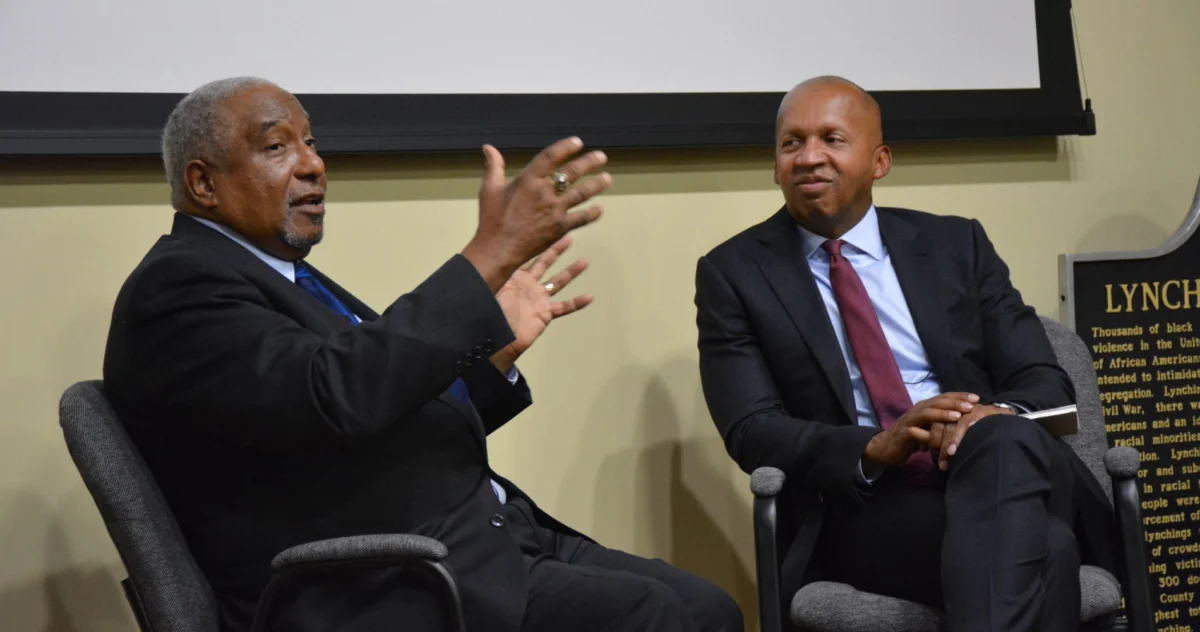
Dr. Bernard LaFayette Jr., a towering figure in the American Civil Rights Movement whose unwavering commitment to nonviolence laid critical groundwork for landmark legislative victories, passed away at the age of 85 following a heart attack on March 5 at his home in Tuskegee, Alabama. His death marks the loss of a strategist, educator, and global evangelist for peace who dedicated his life to advancing social justice through the principles of nonviolent direct action. Dr. LaFayette’s pioneering efforts in Selma, Alabama, were instrumental in galvanizing national support that culminated in the passage of the Voting Rights Act of 1965, a cornerstone of American democracy.
Early Life and a Defining Vow Against Injustice
Born in Tampa, Florida, in 1940, Bernard LaFayette Jr.’s path to activism was forged in the crucible of systemic racial discrimination. At the tender age of seven, he experienced a profound and scarring encounter with the brutal realities of Jim Crow segregation, a system of laws and customs designed to enforce racial hierarchy and oppression across the American South. The incident occurred while he was riding a segregated streetcar in downtown Tampa with his maternal grandmother, Rozelia Forrester, affectionately known as Ma Foster. Under the prevailing racist regulations, Black passengers were compelled to pay their fare at the front of the trolley, then disembark and reboard through the rear door.
As Ma Foster and young Bernard attempted to reboard, the trolley driver, with callous disregard, abruptly pulled away, throwing his grandmother to the ground. The sight of his beloved Ma Foster falling, humiliated and injured, seared itself into LaFayette’s memory. In his poignant memoir, In Peace and Freedom: My Journey in Selma, he recounted the moment with visceral clarity: “I felt like a sword cut me in half, and I vowed I would do something about this problem one day.” This deeply emotional experience, which he later described as filling him “with an emotional feeling that [he] would never forget,” solidified his resolve. It was, as he recalled, “the moment that caused me to decide that I was going to use my life to fight against the segregation system.” True to his word, he joined the National Association for the Advancement of Colored People (NAACP) at the remarkably young age of 12, beginning a lifelong crusade against racial injustice. This early exposure to the dehumanizing impact of segregation provided the moral compass for his subsequent leadership in the nonviolent movement.
Formative Years and the Nashville Movement
Ma Foster, recognizing her grandson’s innate moral compass and leadership potential, insisted he pursue a path of ministry, sending him to the American Baptist Seminary in Nashville, Tennessee. It was there, as a 19-year-old freshman, that LaFayette’s commitment to nonviolence transitioned from a personal vow to a strategic philosophy. Alongside his roommate, the future Congressman John Lewis, LaFayette immersed himself in intensive workshops on nonviolent resistance, learning from revered mentors such as the Rev. James Lawson. Lawson, a leading theoretician and practitioner of nonviolence, had studied the teachings of Mahatma Gandhi and dedicated himself to applying these principles to the American Civil Rights Movement. LaFayette also attended the legendary Highlander Folk School, a crucial training ground for civil rights activists that fostered interracial cooperation and grassroots organizing.
These workshops instilled in LaFayette and his peers a deep understanding of nonviolence not merely as the absence of violence, but as a powerful, active force for social change, requiring immense discipline, courage, and moral fortitude. This training quickly bore fruit. In early 1960, LaFayette, Lewis, Diane Nash, James Bevel, and other Nashville students launched a meticulously planned and executed nonviolent sit-in campaign to desegregate downtown lunch counters. Their unwavering discipline in the face of harassment, arrests, and violence, coupled with strategic boycotts, ultimately led to Nashville becoming the first major Southern city to desegregate its downtown facilities. The success of the Nashville campaign propelled these young activists into national prominence, making them foundational leaders in the Student Nonviolent Coordinating Committee (SNCC), which they helped establish in April 1960. SNCC quickly became a dynamic and influential organization, known for its grassroots organizing and its commitment to empowering local communities.
The Perilous Freedom Rides and Imprisonment
LaFayette’s commitment to challenging segregation extended beyond sit-ins. In 2020, during his eulogy for John Lewis, President Barack Obama recounted a lesser-known but equally courageous act of defiance by the two roommates. Weeks after the Supreme Court’s landmark ruling in Boynton v. Virginia (1960), which prohibited racial segregation in interstate travel facilities, LaFayette and Lewis chose to test the ruling. Traveling home for Christmas break, Lewis headed to Troy, Alabama, and LaFayette to Tampa, Florida. They integrated a Greyhound bus by sitting in the front, a direct challenge to the deeply entrenched segregation of public transportation. Their audacious act provoked the enraged bus driver to storm off the bus and into bus stations at every stop throughout the night, leaving the young men isolated and vulnerable to unknown threats. Obama lauded their courage, stating, “Imagine the courage of two people… on their own, to challenge an entire infrastructure of oppression. Nobody was there to protect them. There were no camera crews to record events.” This incident foreshadowed the more organized and brutally confrontational Freedom Rides that would follow.
The following year, in May 1961, a broader group of interracial students, known as the Freedom Riders, embarked on a mission to test the enforcement of Boynton v. Virginia across the Deep South. Their journey quickly devolved into a nightmare of mob violence in Anniston and Birmingham, Alabama, forcing them to abandon their planned ride to New Orleans. Unwilling to let the forces of hate triumph, Dr. LaFayette, John Lewis, and other members of the Nashville movement made a pivotal decision: they would continue the mission. On May 20, 1961, when their bus arrived in Montgomery, Alabama, over 300 white supremacists awaited them at the Greyhound station. The mob, reportedly promised a period of police non-interference, launched a savage attack, brutally beating the Freedom Riders with baseball bats, hammers, and pipes, as local police stood by, refusing to intervene.
Despite the horrific violence, LaFayette and his comrades held steadfast to their nonviolent principles. “We didn’t run; we didn’t fight back,” Dr. LaFayette wrote in his memoir. “We got back up when slammed to the ground, and looked our attackers directly in the eyes, fighting violence with nonviolence.” This unwavering adherence to nonviolence in the face of extreme brutality was a hallmark of the movement and a testament to LaFayette’s profound conviction. From Montgomery, the Freedom Riders pressed on to Jackson, Mississippi, where Dr. LaFayette was arrested. He endured more than a month of incarceration at the infamous Parchman Farm prison, a notoriously brutal state penitentiary where hundreds of civil rights activists were held under deplorable conditions. His experience at Parchman, alongside countless other young activists, further hardened his resolve.
Following the Freedom Rides, Dr. LaFayette made the pivotal decision to leave college and dedicate himself full-time to the movement. He later reflected on this intense period, telling The Associated Press in 2021, “We lived through this, but this was our daily lives. When you think about it, we weren’t trying to make history or trying to rewrite history. We were responding to the problems of the particular time.” This humility underscored his focus on immediate action and tangible change rather than historical recognition.
Pioneering the Selma Campaign: "I’ll Take Selma"
As SNCC expanded its voter registration projects across the South, Selma, Alabama, was initially deemed too perilous due to its entrenched white supremacist power structure and history of violence against Black citizens. Dallas County, where Selma is located, had a Black majority population but virtually no Black voters, thanks to discriminatory practices like poll taxes, literacy tests, and intimidation. Yet, LaFayette, undeterred by the danger, saw an opportunity for profound change. “I’ll take Selma,” he famously told SNCC leader Jim Forman. In 1963, he and his wife, Colia Liddell Lafayette, herself a prominent civil rights activist, moved to Selma to spearhead SNCC’s Alabama Voter Registration Campaign.
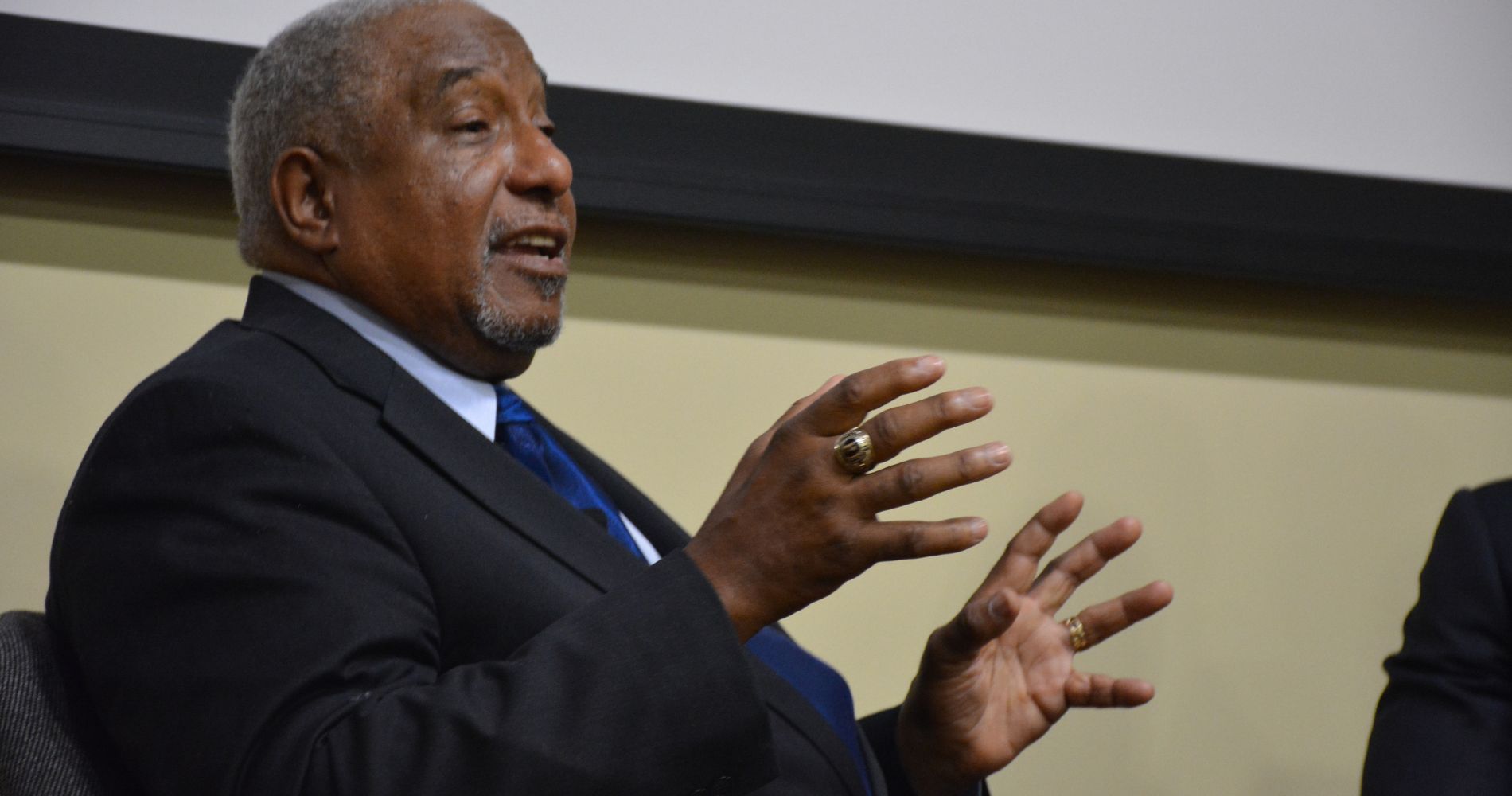
As director, Dr. LaFayette embarked on the painstaking, often dangerous work of grassroots organizing. He collaborated closely with local organizations, such as the Dallas County Voters League, which had been founded in the 1930s by S.W. and Amelia Boynton, stalwarts of the local Black community. LaFayette’s strategy was methodical and deeply respectful of local autonomy: he took “time to develop local leadership and to bring various levels of leadership together in a way that they were able to sustain themselves through the struggle.” This approach of empowering local voices and building indigenous leadership was crucial for the long-term success of the movement. He described in his memoir the arduous process of going door-to-door, quietly and gradually building confidence, community, and momentum among Black residents who had long been denied their fundamental right to vote. This patient, persistent work laid the essential groundwork that would ultimately lead to the historic Selma to Montgomery marches in 1965.
The risks LaFayette took were immense. On June 12, 1963, the same night civil rights leader Medgar Evers was assassinated in his driveway in Mississippi, Dr. LaFayette himself was targeted. He was brutally beaten outside his Selma home by a white assailant armed with a gun. His cries for help brought his neighbor, also armed with a rifle, to his aid. Standing between the two armed men, LaFayette later recounted feeling “an extraordinary sense of internal strength instead of fear.” In a testament to his profound commitment to nonviolence, he persuaded his neighbor not to shoot and looked his assailant directly in the eyes. He believed nonviolence was a fight “to win that person over, a struggle of the human spirit.” Miraculously, he persuaded both men to lower their weapons. The following day, as reported by The New York Times, he defiantly wore his bloodied shirt to work, a powerful symbol to the community that he was not afraid and would not be intimidated. This act of profound courage resonated deeply, strengthening the resolve of the nascent voter registration movement. By 1965, LaFayette had been arrested 10 times in four Southern states and had endured multiple beatings by both white civilians and law enforcement. His unwavering commitment to nonviolence in the face of such constant peril exemplified the moral courage required to dismantle systemic injustice.
The Road to the Voting Rights Act
While Dr. LaFayette had meticulously laid the groundwork for the Selma to Montgomery march, he was in Chicago on March 7, 1965, working on a new project for the Rev. Dr. Martin Luther King Jr., when the infamous events of “Bloody Sunday” unfolded. On that day, state and local police brutally attacked hundreds of nonviolent civil rights protesters with billy clubs, whips, and tear gas as they attempted to march across the Edmund Pettus Bridge, bound for Montgomery to demand voting rights. The horrifying spectacle, broadcast nationally, galvanized public opinion and ignited widespread support for voting rights legislation among lawmakers and President Lyndon B. Johnson.
Though not present on Bloody Sunday, LaFayette’s strategic efforts in Selma had created the conditions for the march. He quickly organized a contingent of activists from Chicago to travel to Selma, joining thousands of demonstrators two weeks later for the historic 54-mile march to Montgomery. The sheer numbers and unwavering determination of the marchers, combined with the moral outrage generated by Bloody Sunday, pressured Congress into action. On August 6, 1965, President Johnson signed the Voting Rights Act into law, a monumental achievement that outlawed discriminatory voting practices and dramatically expanded Black voter registration across the South. In Dallas County, where LaFayette had worked so diligently, Black voter registration skyrocketed from a negligible percentage to a significant majority in just a few years, fundamentally reshaping the political landscape.
Post-Selma Activism and Global Reach
Following the passage of the Voting Rights Act, Dr. LaFayette continued his tireless advocacy. He joined the Southern Christian Leadership Conference (SCLC) in Chicago, where he trained young Black leaders in the Chicago Freedom Movement, focusing on issues of housing and economic justice. Mary Lou Finley, a professor emerita at Antioch University Seattle who worked with him, noted that “The tenant protections we have today are really a direct outcome of that work in Chicago.” His advocacy also extended to public health, as he successfully persuaded the city to implement the nation’s first mass screening program for lead poisoning, addressing a critical environmental justice issue disproportionately affecting marginalized communities.
In 2015, during a discussion with Bryan Stevenson of the Equal Justice Initiative, Dr. LaFayette recounted how Dr. King personally recruited him to become the national coordinator of the Poor People’s Campaign in 1968. King told him, “This is going to be my last campaign. And we are going for broke.” LaFayette immediately traveled to Atlanta to strategize for this ambitious campaign, which aimed to address poverty and economic inequality across racial lines. On the morning of Dr. King’s assassination on April 4, 1968, LaFayette was in Memphis with King, who imparted a final, profound instruction: the need “to institutionalize and internationalize nonviolence.”
Dr. LaFayette devoted the remainder of his life to fulfilling this charge, becoming, as SNCC described, “one of the most widely recognized authorities on strategies for nonviolent social change and one of the leading exponents of nonviolent direct action in the world.” After completing his bachelor’s degree at American Baptist, he pursued higher education, earning a master’s and a doctorate from Harvard University. His academic and activist careers merged as he led the Center for Nonviolence and Peace Studies at the University of Rhode Island, chaired the Consortium on Peace Research, and conducted extensive nonviolence training programs globally.
His international work was truly transformative. Former U.S. Ambassador to the United Nations Andrew Young recalled, “Bernard did work in Latin America. He did nonviolence workshops in South Africa with the African National Congress. He went to Nigeria when the civil war was happening there. Bernard literally went everywhere he was invited as sort of a global prophet of nonviolence.” Through his teaching and training, Dr. LaFayette disseminated the principles of nonviolent resistance to freedom movements and peace advocates across continents, demonstrating the universal applicability and power of the philosophy he had championed since childhood.
Legacy and Enduring Tributes
The passing of Dr. Bernard LaFayette Jr. has prompted an outpouring of tributes from leaders and institutions recognizing his profound and lasting impact. On the House floor, U.S. Rep. Terri Sewell honored him as an “extraordinary man who had extraordinary talents and extraordinary courage” and who “placed himself on the front lines of the struggle for civil rights, risking life and limb to challenge injustice and dismantle segregation across the South.” Sewell emphasized his close collaboration with Dr. King, stating that he “helped to advocate a philosophy of nonviolent social change that moved our nation closer to its founding promise of liberty and justice for all.”
Steven Reed, the first Black Mayor of Montgomery, Alabama, highlighted the tangible results of LaFayette’s work: “Generations of Americans have the right to vote today because Bernard LaFayette refused to yield to fear.” Mayor Reed added, “His example challenges each of us to stand firm in the face of injustice, to lead with compassion, and to carry forward the work he and so many others began. We honor his legacy not only with our words, but with our continued commitment to building a more just, equitable, and hopeful future.”
Dr. LaFayette’s life was a testament to his profound belief in the transformative power of nonviolence. He taught that the principles of peace and freedom were not merely ideals but actionable strategies for fundamental societal change. His work ensured that the lessons learned in the crucible of the American Civil Rights Movement would inspire and empower activists globally. In his memoir, reflecting on the constant death threats he faced, Dr. LaFayette wrote that these experiences taught him that the true value of life “lies not in longevity, but in what people do to give it significance.” By this measure, Bernard LaFayette Jr. lived a life of immeasurable significance, leaving an indelible mark on the landscape of social justice and human rights, a legacy that continues to resonate and inspire. His vision of a world transformed by nonviolence remains a beacon for future generations striving for a more just and equitable society.